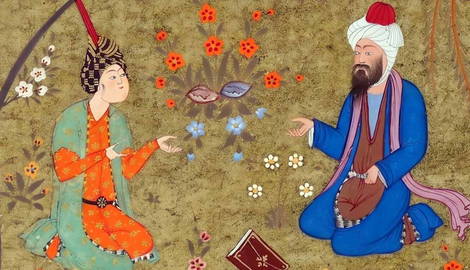

During his ten years of wandering and solitude, al-Ghazālī lived austerely and forewent ordinary comforts. He authored many of his important works during this period and sought spiritual advancement through Sufi practices. In his final years, he immersed himself in contemplation and became a revered master of Sufism. Every moment of his life, until the end, was filled with acts of devotion in preparation for his union with the Beloved.
The Mysterious Last Morning of an Islamic Luminary
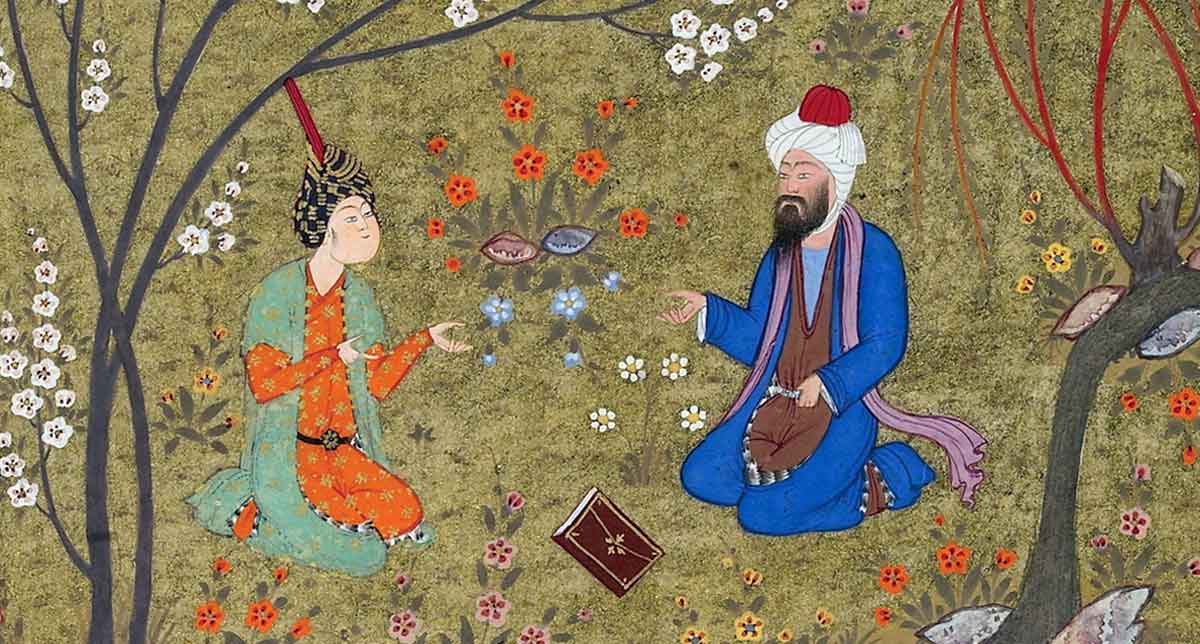
Ahmad, al-Ghazālī ’s younger brother, recounts his death: On a quiet Monday morning in December 1111 AD, in the Persian city of Tus, al-Ghazālī performed his ablutions and offered prayers. He then asked for his burial shroud, kissed it, and pressed it against his eyes, saying, “I hear and obey the call to go to the King.” He then rested his feet pointing toward Mecca and was taken up to the heavens by God.
According to a well-known spiritual tradition, al-Ghazālī told his companions that three men would come out from the Iraqi desert; two of them would wash his body, while the third would offer the funeral prayer. After the prayer, the men vanished as mysteriously as they had appeared.
His followers later discovered a poem he had composed on his final night, either beneath his pillow or beside him. Titled Qul li-ikhwani (“Say to My Brothers”), it contains his final words on life and death.
The Radical Message of the Verse Found Beneath the Pillow
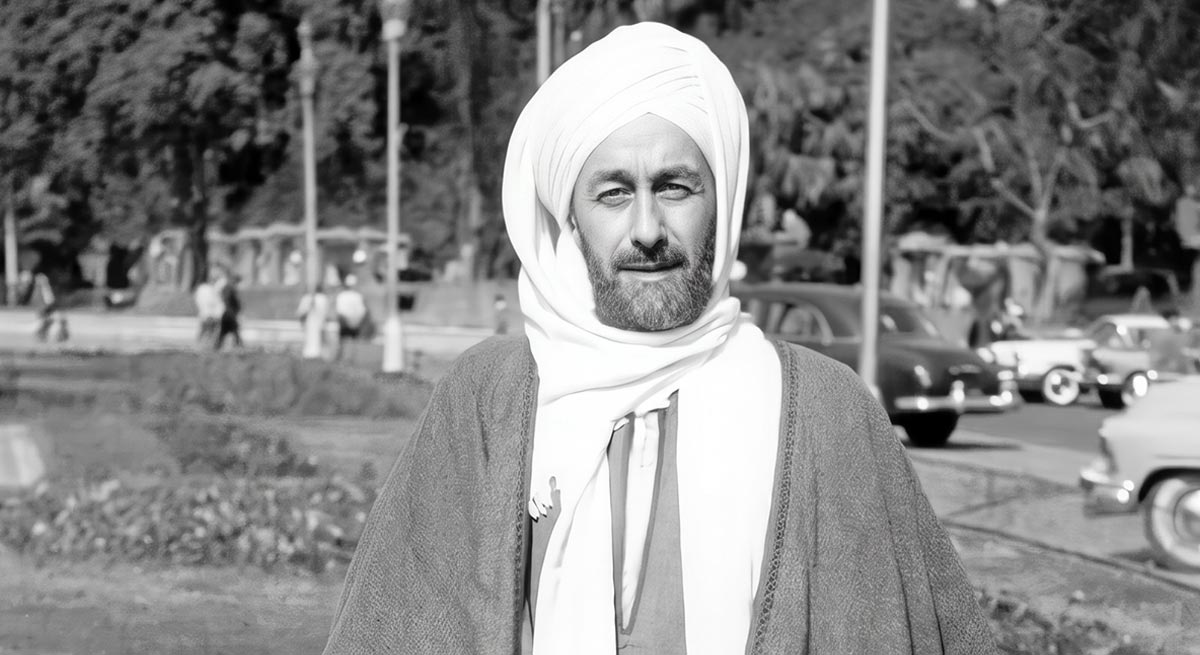
The opening lines of the poem called upon his companions to cease their mourning and weeping. The translation by Dr. Martin Lings, who was taught by C.S. Lewis at Magdalen College, Oxford, reads as follows:
Say unto brethren when they see me dead,
And weep for me, lamenting me in sadness:
“Think ye I am this corpse ye are to bury?
I swear by God, this dead one is not I.”
Al-Ghazālī vividly describes his body as a “talisman of dust,” an imprisoning shell, a temporary garment, and a broken birdcage from which his true identity had been freed.
Islamic teaching prescribes how to prepare for death and how bodies are to be readied for burial. These observances include, among others, the reverential washing of the body with clean water and soap or ground lotus leaves (Sidr); shrouding the body in a white cotton or linen cloth (Kafan); performing the funeral prayer prior to burial; observing burial customs and grave placement; and observing the three-day mourning period (Hidaad), as well as visiting graves to pray for and remember the deceased.
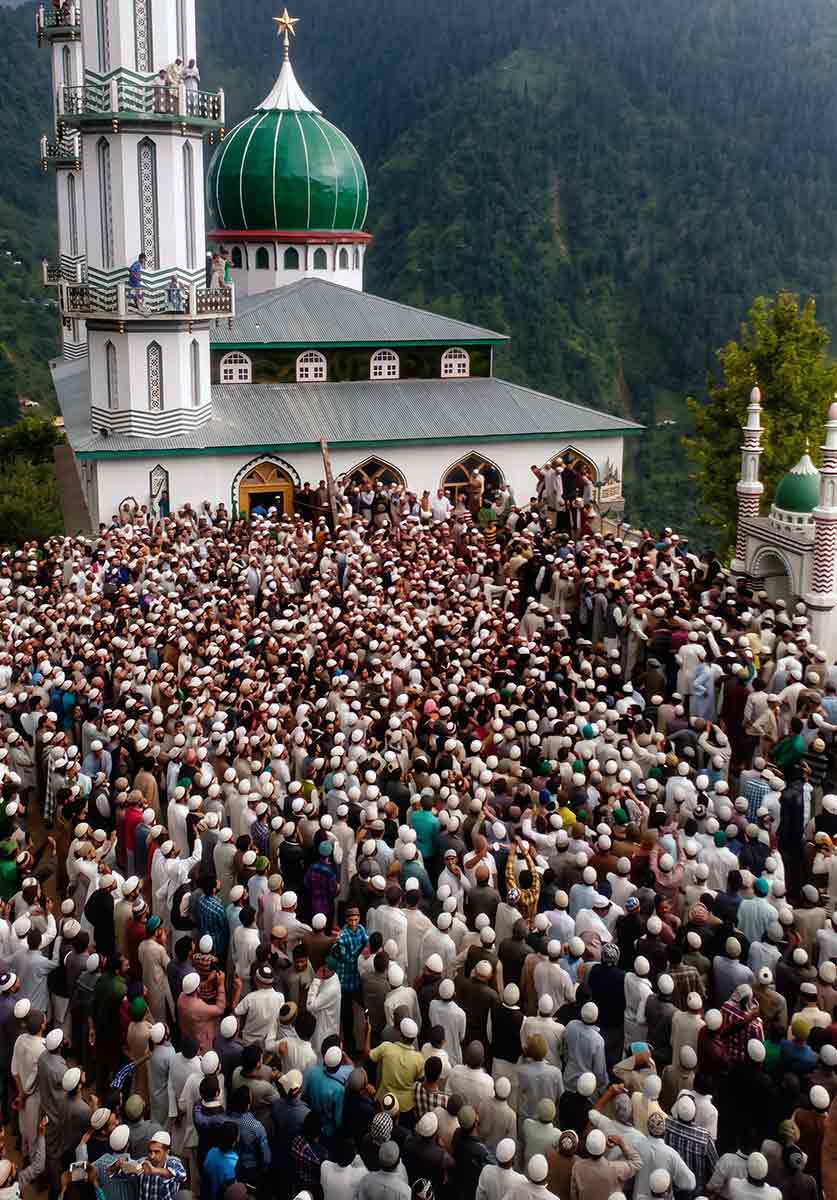
Imagine the shock al-Ghazālī ’s readers must have felt when he urged them not to grieve for him or mourn his passing (reminiscent of Socrates’ final words in the Crito). Al-Ghazālī recommended sleeping on one’s right side, following the practice (Sunnah) of the Prophet Muhammad, while facing the qibla, thereby anticipating the body’s positioning in the grave according to Islamic rites. He also advised reflecting on mortality and the impermanence of the body. Like other Sufi mystics, he passionately contemplated and meditated on death, viewing life as a pilgrimage toward unending life with God.
Challenging Orthodox Views on Death and the Afterlife
While exegetes offered various interpretations and engaged in debates, orthodox medieval Islamic scholars often held a literal and legalistic view of the afterlife. Drawing on sacred and cosmological models, they envisaged the Seven Heavens as vertically nested celestial spheres for the righteous, and the Seven Hells as descending in tiers for the unrighteous, corresponding to the severity of their crimes.
Philosophers such as Avicenna (Ibn Sīnā) and al-Ghazālī (though they disagreed on philosophical matters as well) focused on the importance of cultivating intellectual and moral habits of virtue in this life—specifically, those of contemplation. By doing so, the self-subsisting substance of the soul is polished and purified, allowing it to avoid the spiritual anguish of bodily attachment and effortlessly attain disembodied continuous spiritual communion with the Divine. Al-Ghazālī believed the afterlife was a state of union with God for the repentant, the supreme spiritual delight of which was the Beatific Vision.
In his deathbed poem, al-Ghazālī declared that he was effectively dead while alive and would gratefully attain true life in his death (again, reminiscent of Socrates’ teaching that philosophy is preparation for death). Although not all their teachings align, the 12th-century Persian philosopher and mystic ‘Ayn al-Quḍāt similarly experienced a crisis of certainty. Like al-Ghazālī, he regarded the human intellect and senses as blind when it came to perceiving the realm transcendent to this one. ‘Ayn al-Quḍāt was imprisoned in Baghdad on charges of heresy and publicly executed in his hometown of Hamadan on May 6/7, 1131, at the behest of Sultan Maḥmūd ibn Malikshāh.
Both thinkers believed in a higher form of intuitive knowledge acquired through inner insight, through the heart, implying that an inward path, and not exclusively ritual observance, is the true way to God.
The Final Triumph of Mysticism Over Legalism?
Al-Ghazālī ’s lifelong intellectual effort lay in synthesizing Islamic jurisprudence and Sufism. He clearly did not think of them as opposites, but facets of the same jewel. Yet his final words give prominence to Sufism and its concept of Fana, describing the stages of the ego’s dissolution to attain unveiled proximity to God.
The legacy of this poem endures, having alchemized a moment of somber mortality into a celebrated lyrical work of ultimate liberation.