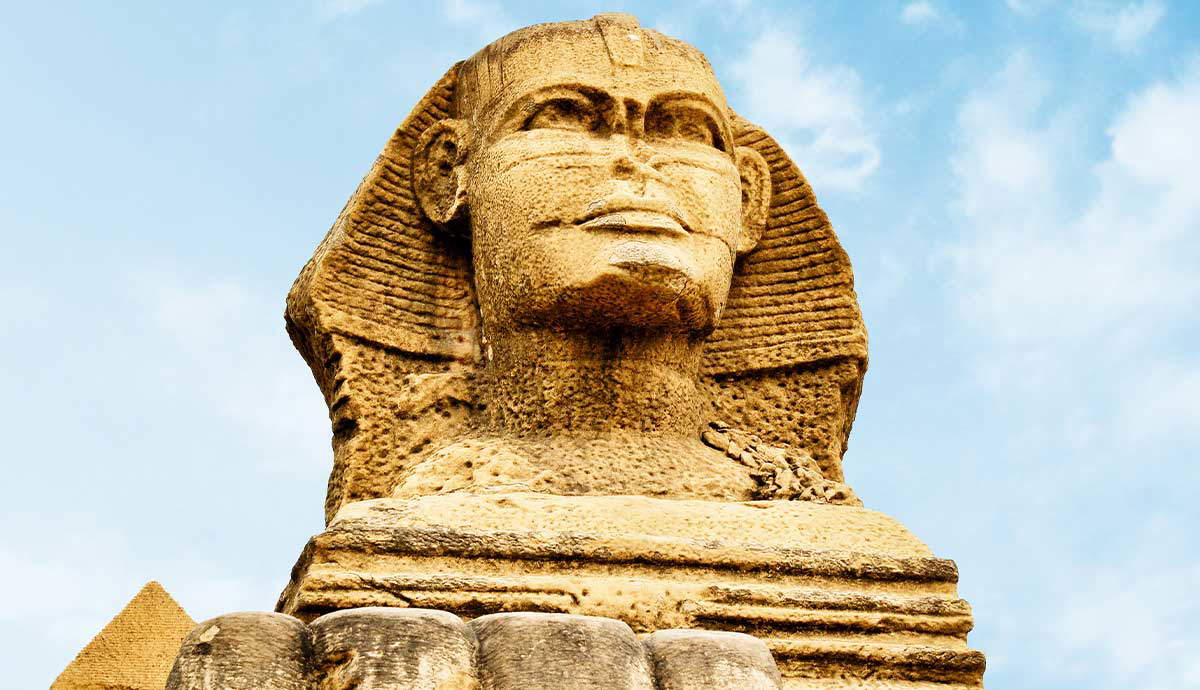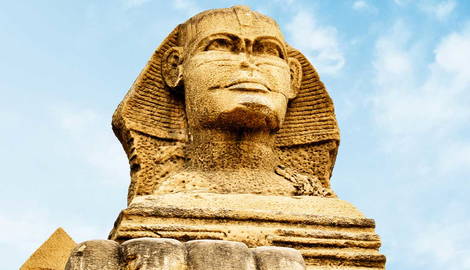

For centuries, tourists and scholars have stood before the Great Sphinx of Giza, captivated by its imposing scale and mysterious face. Built by Pharaoh Khafre (c. 2558-2532 BC) during Egypt’s Fourth Dynasty of the Old Kingdom, the Sphinx was intended as an eternal symbol of royal authority. But how did this towering guardian lose its nose, and was its creator truly the ruthless tyrant ancient chroniclers claimed?
When Was the Great Sphinx of Giza Built?
The Great Sphinx is one of Egypt’s oldest stone monuments, dating to the Old Kingdom, which spanned the third to the sixth dynasties, roughly 2686-2181 BC. Historians consider it a golden period for ancient Egypt. The first Egyptian pyramid was built during this period in the reign of Pharaoh Djoser of the Third Dynasty, around 2600 BC. After securing Egypt’s borders through military campaigns, Djoser ordered the construction of what became known as the Step Pyramid, which served as the model for future pyramids.
Under the relative stability of the Fourth Dynasty, pyramid building flourished, beginning under its first king, Sneferu. These newer structures were built with smooth triangular sides. Sneferu’s son, Khufu, built the famous Great Pyramid at Giza, the largest building in the ancient world. Following Khufu came the reign of Khafre. Under Khafre’s rule, another grand pyramid was built, almost as tall as the Great Pyramid. It is generally believed that the Great Sphinx was also erected during Pharaoh Khafre’s reign, making it around 4,500 years old. Khafre’s son, Menkaure, built the third, smallest pyramid at Giza.
Who Was Pharaoh Khafre?
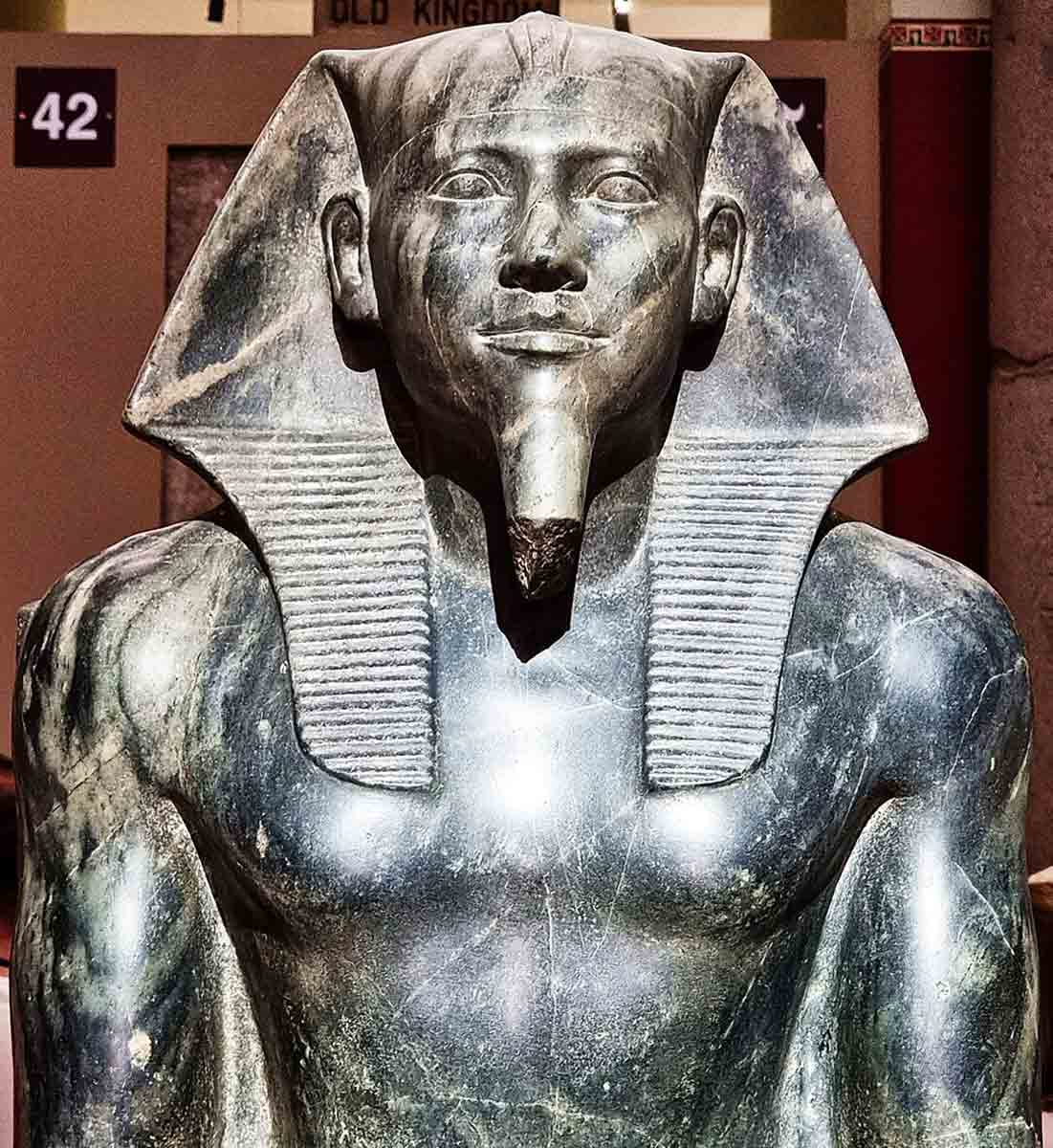
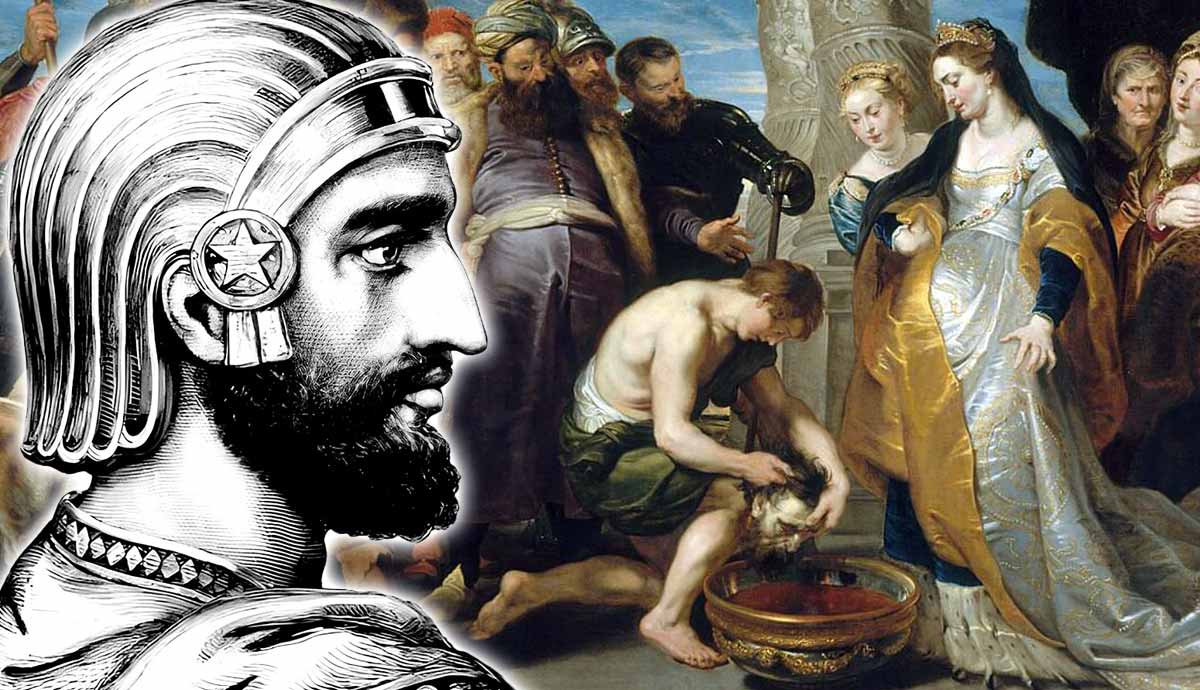
Khafre ruled Egypt from around 2558-2532 BC. He took power following the death of his brother, Djedefre. Although the circumstances of Djedefre’s death are unclear, some scholars speculate that Khafre violently killed his older sibling. The name Khafre means “appearing like Ra,” the sun god of Egypt. Like many pharaohs, Khafre had several wives and many children, including Menkaure, who succeeded him to the throne.
The tombs of nobles reveal evidence that Egypt prospered during Khafre’s reign. Indeed, Egyptian artifacts found in Northern Africa and Western Asia suggest that Egypt under Khafre was active in trade and diplomacy. There were no known military campaigns at the time, and Egypt appears to have enjoyed relative peace, allowing large-scale building projects to take place.
Although Khafre’s reign is known for political stability, ancient Greek historians portrayed the Old Kingdom pharaoh as ruthless. There are few contemporary sources, but later writings by Manetho, Herodotus, and Diodorus claim Khafre was a cruel tyrant. However, these later accounts may be somewhat inaccurate. Whatever the case, Khafre’s reign was full of grand architectural achievements.
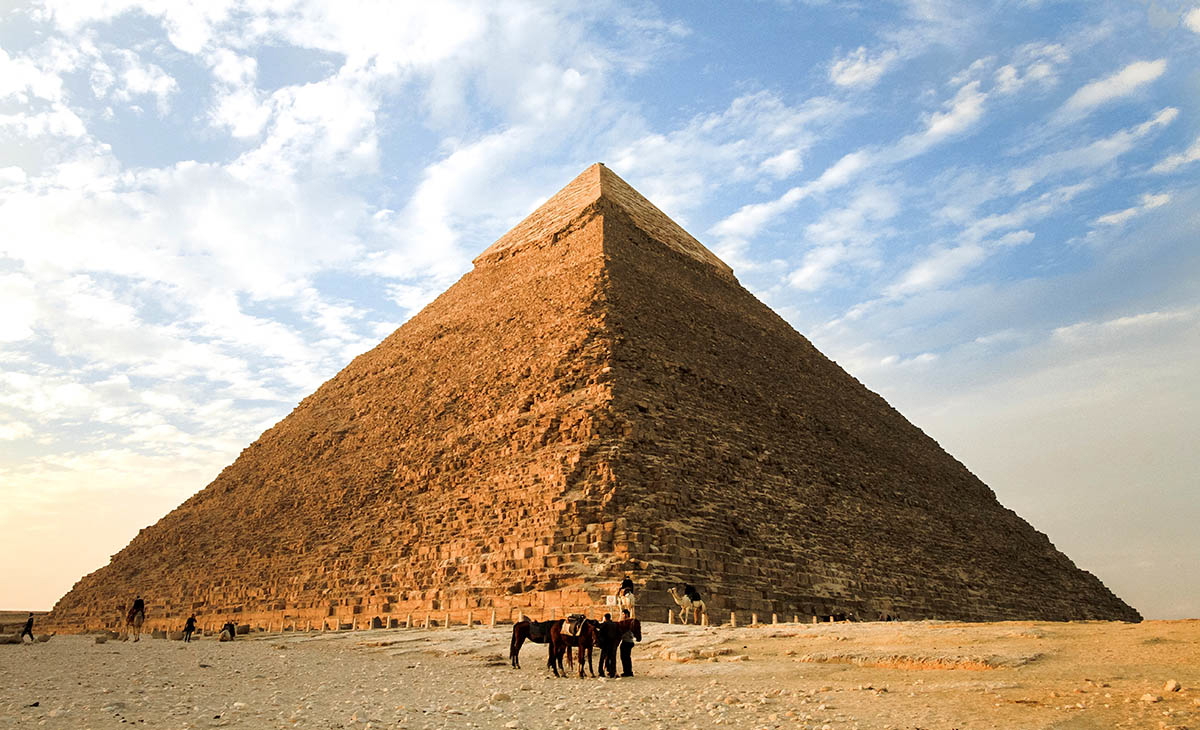
Besides the Great Sphinx, Khafre’s pyramid is his most notable achievement. This construction was unusual in that the pyramid was also linked to a causeway, a mortuary temple, and the Sphinx. Besides Khafre’s tomb in the pyramid, these other structures glorified Khafre’s power and divinity.
One feature that makes Khafre’s pyramid even more unique is that part of the original limestone casing still covers its top. During the Old Kingdom, Khafre’s whole pyramid was covered in bright limestone. This gave the object a smooth, polished appearance that glinted in the sun.
Can a Connection with Khafre Be Verified?
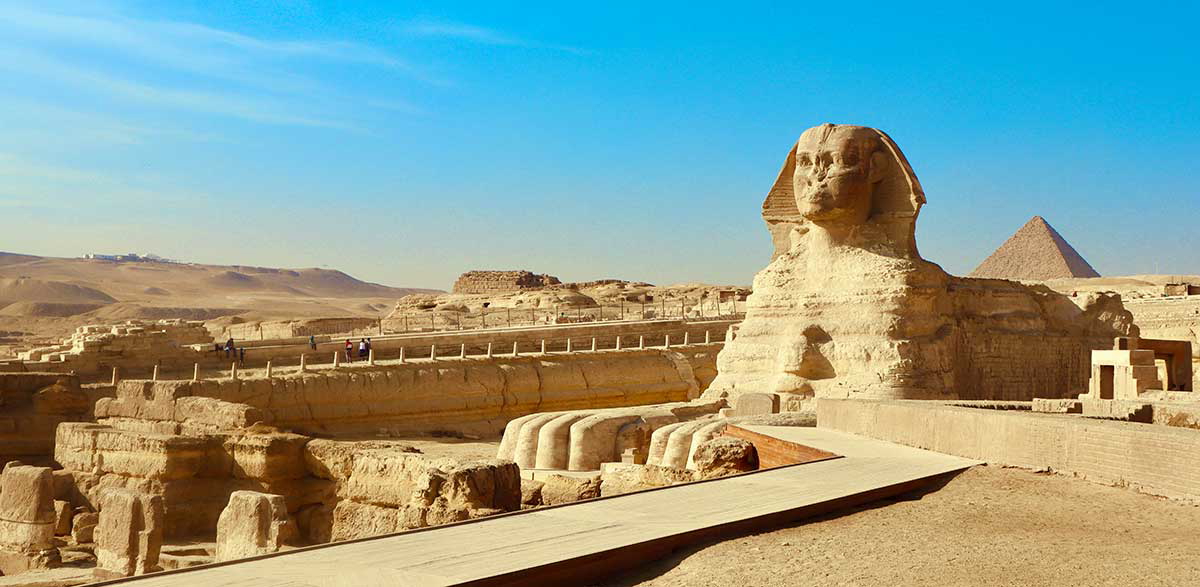
Despite the Sphinx’s popularity, the limestone structure remains an enigma. Most mainstream Egyptologists believe its face was modeled on that of Pharaoh Khafre. The problem is that no direct historical texts or other concrete artifacts from the time of construction exist. The only documentation about the Great Sphinx of Giza dates from much later. In fact, the Sphinx was likely still under development at the time of Khafre’s death.
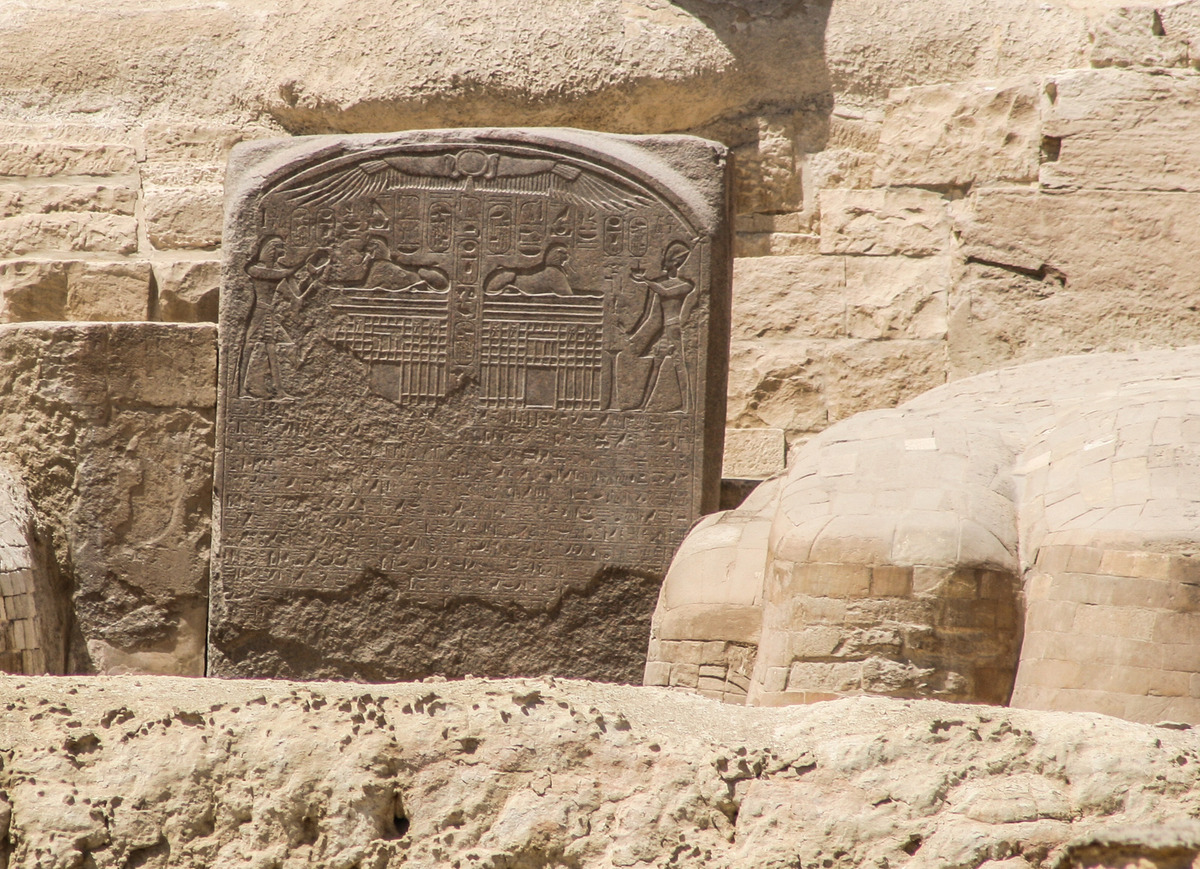
The oldest direct evidence dates from the New Kingdom. Pharaoh Thutmose IV built the Dream Stele by the Sphinx’s paws around 1401 BC. The Stele describes a dream Thutmose had about seizing the throne of Egypt. Most importantly, the inscription on the Stele links the Sphinx to Pharaoh Khafre.
This connection is supported by the fact that the Sphinx and Khafre’s pyramid are linked architecturally. Plus, archaeologists discovered that the limestone used for the bedrock was the same for both the Sphinx and the Khafre pyramid.
Unfortunately, as with many ancient buildings, robbers looted Khafre’s tomb of most artifacts. However, archaeologists believe there were once openings in the pyramid walls that would have housed sphinx-like statues of the king. There is no indication that any earlier pharaohs constructed the Great Sphinx.
Despite major erosion, the Sphinx still depicts a pharaoh’s face. A famous statue of Khafre has features similar to those of the Sphinx. Furthermore, a lion’s body with a pharaoh’s head facing the powerful sun represented a divine solar connection. Khafre’s reign emphasized a solar relation, with the pharaoh “appearing like Ra,” making him a logical candidate to erect the statue.
Creation of the Great Sphinx
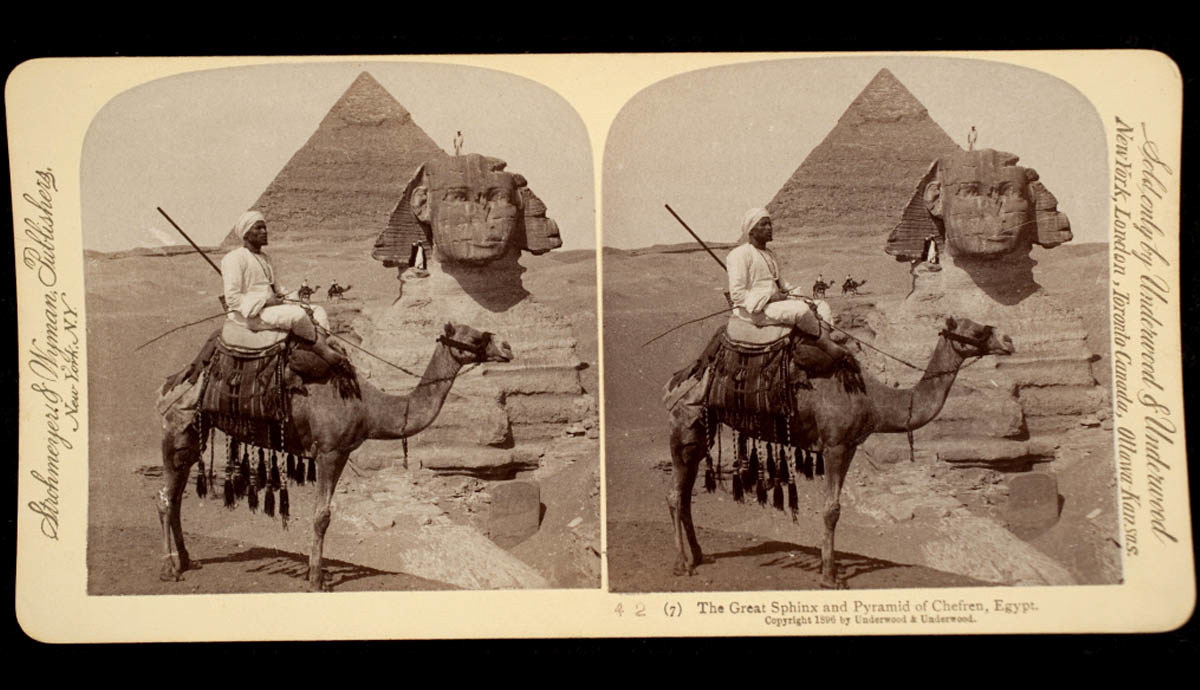
Unlike the ancient pyramids, contemporary research suggests the Great Sphinx’s foundation was formed by natural elements. In other words, the ancient Egyptians carved the figure of a lion with a pharaoh’s head out of an already established limestone bedrock ridge, sculpted over time by wind. The Sphinx measures 240 feet long and 66 feet high, making it the largest sculpture in the world.
Researchers believe the Sphinx was originally painted in vibrant colors. As late as the Roman period, Pliny the Elder described the statue as painted a bright red. This contrasted with the white-painted stones of the nearby Great Pyramids.
The Sphinx was probably constructed by the same workers who built the pyramids, which historians suggest were professional, skilled craftsmen rather than slaves. They lived in a 17-acre temporary city that supplied food and materials, and where they were accompanied by their families.
What Happened to the Sphinx’s Nose?
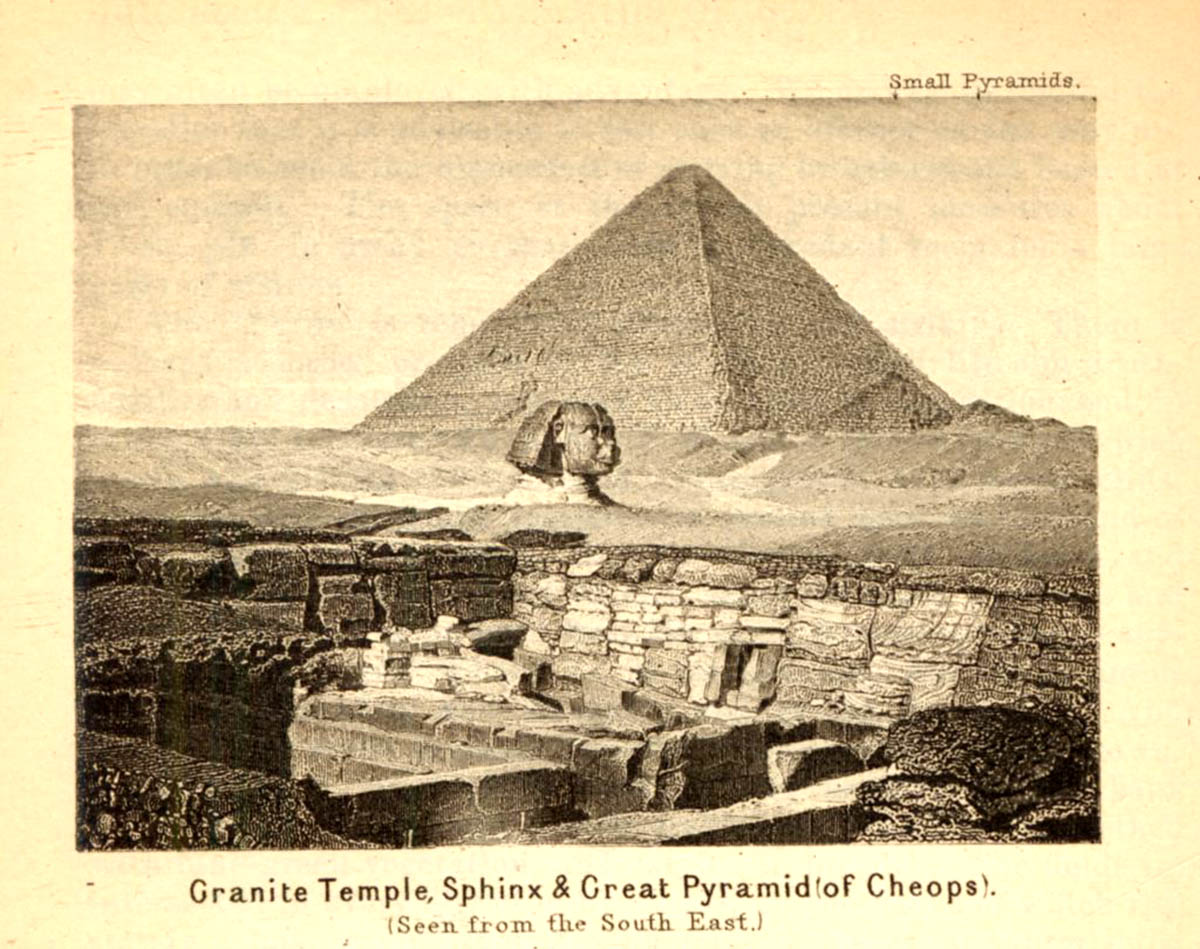
The Sphinx has outlasted many empires and civilizations. Most of the decay over the centuries was due to natural forces, such as wind and rain, which removed parts of the sculpture and rock. However, humans removed the statue’s nose.
There are numerous legends about what caused the Sphinx to lose its nose. One theory claims that French soldiers under Napoleon Bonaparte shot off the nose with artillery in 1798. But historical sketches by Frederic Louis Norden from 1737 show the Sphinx already lacking a nose decades before Napoleon was born.
The 15th-century Egyptian historian Taqi al-Din al-Maqrizi recorded that in 1378, Muhammad Sa’im al-Dahr, a Muslim Sufi leader in the region, removed the nose. At the time, the local Egyptian peasants continued to practice folk traditions centered around the Great Sphinx, which they called Abul-Hol, meaning “Father of Terror.” They believed that the monument acted as a guardian that regulated the annual flooding of the Nile, so farmers made ritual offerings at its base.
Viewing these practices as pagan idolatry, Sa’im al-Dahr took it upon himself to eradicate the ritual by smashing the nose off the Sphinx’s face with a chisel. Archaeology supports this account, as there are clear chisel marks around the bridge and nostrils of the nose.
The local population was outraged by the desecration, so they seized Sa’im al-Dahr and lynched him for his vandalism. Al-Maqrizi also noted that following the defacement, sand dunes began rapidly encroaching upon the cultivated farmland of Giza. The local farmers attributed this environmental disaster directly to the act of sacrilege against the Sphinx.
Symbolism of the Great Sphinx
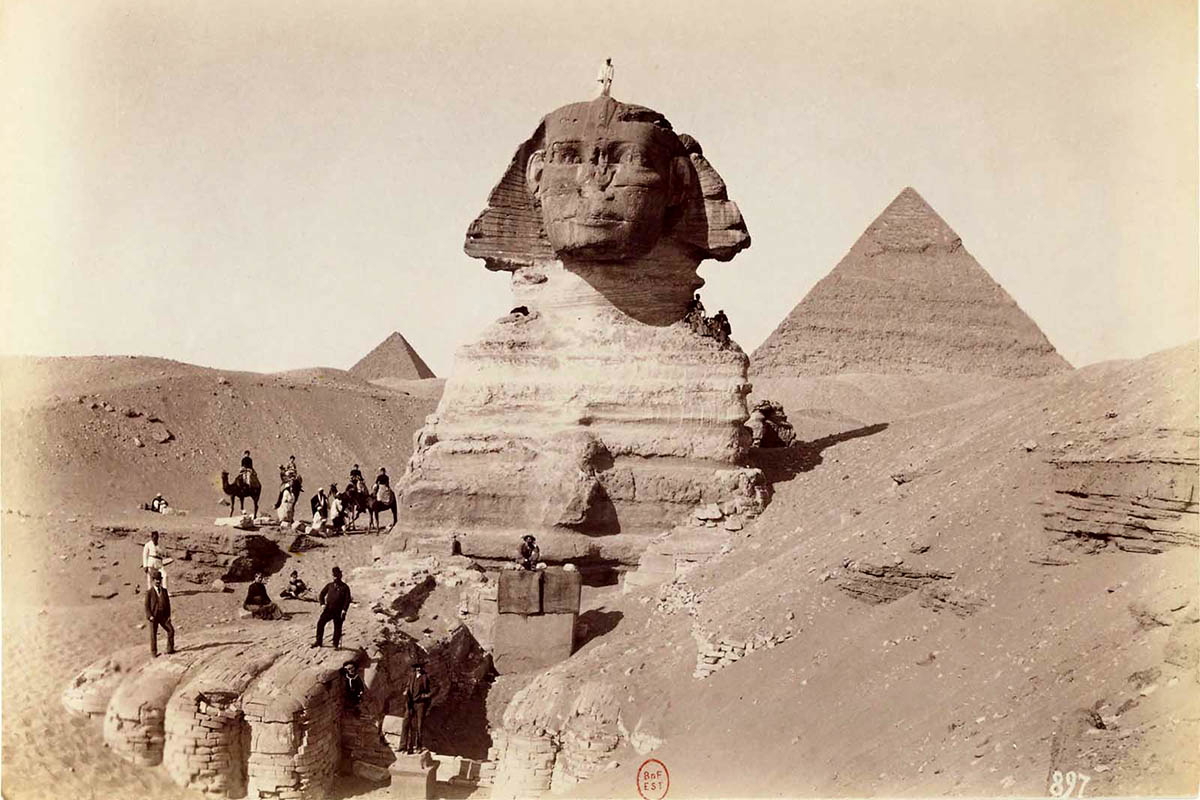
The exact reason Pharaoh Khafre built the Sphinx may never be known. It was likely symbolized a royal protector, as Sphinx-style objects were often found near temple entrances and royal burial sites. Another reason may relate to the summer equinox. The Great Sphinx lines up with the Great Pyramid of Khufu and Khafre’s pyramid with the position of the sun at its highest point in the sky during the summer equinox. This suggests a connection with the Egyptian supreme sun god Ra.
Probably carved in the likeness of Khafre, the Great Sphinx was built to portray the pharaoh’s immense power and strength. However, the Sphinx fell into neglect over the centuries between its construction and the time of Tuthmose IV and his Dream Stele. The pharaoh records that the god Horemakhet appeared to him in a dream, complaining that the shifting desert sands were choking his body, that of the Great Sphinx. Horemakhet said that if Thutmose cleared the sand and restored the monument, the god would bestow upon him the crown of Upper and Lower Egypt.
This suggests that the Sphinx was neglected before that time, and that by the New Kingdom, it was associated with the sun god Horemakhet, Horus of the Horizon, looking toward the rising sun, symbolizing daily rebirth, royal resurrection, and eternal life. There is also evidence that the Sphinx was worshiped during the New Kingdom. Pharaoh Amenhotep II (father of Thutmose IV) built a dedicated mud-brick temple to Horemakhet to the northeast of the Sphinx enclosure. Pharaohs including Seti I, Ramesses II, and Tutankhamun added shrines, stelae, and relief carvings around the Sphinx, dedicating athletic victories, royal hunts, and military campaigns to the god.
As Levantine soldiers, merchants, and workers settled near Memphis, they associated Horemakhet with Hauron, a Canaanite god of the desert and protection. This led to a blended deity Hauron-Horemakhet, who was invoked in private votive tablets left by everyday citizens praying for personal health, protection, and agricultural fertility.
While the Great Sphinx, with the body of a lion and the head of a man, is Egypt’s most famous, other important Egyptian sphinxes survive. The Criosphinx is a ram-headed sphinx associated with the god Amun-Ra and representing fertility, creation, and hidden power. They lined the avenue between the Karnak and Luxor Temples. The Hieracosphinx was falcon-headed and was associated with Horus, usually a falcon-headed god, representing victory and divine vigilance.
The Greek Sphinx
Built out of rock, workers constructed the Great Sphinx to last. Although many monuments have crumbled, the Sphinx remains intact after thousands of years. The hot, arid climate helps to preserve the structure. Still, the Sphinx survived earthquakes, windstorms, and flash floods in the past. Today, new challenges include pollution, climate change, and issues with underground sewage.
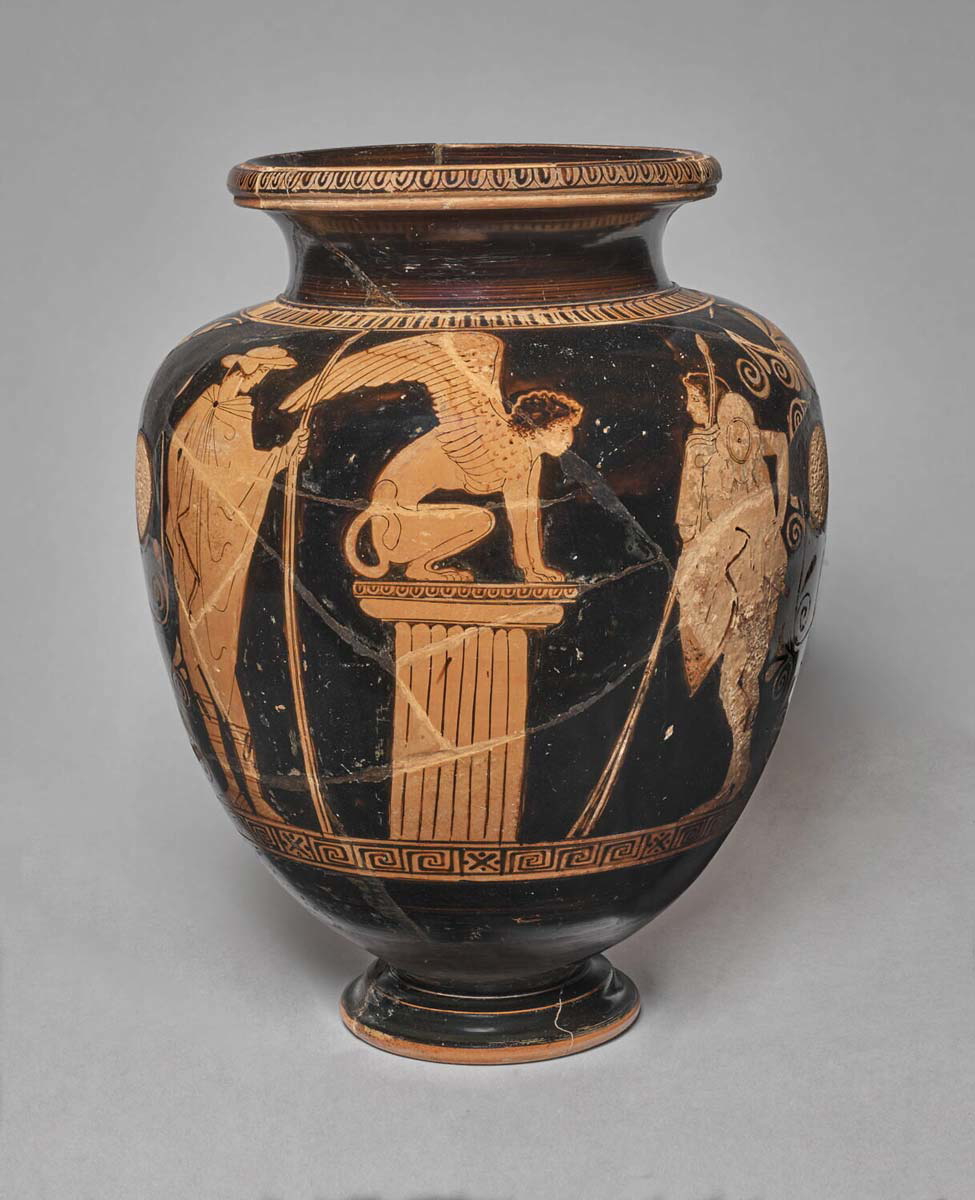
The Great Sphinx of Giza has remained a subject of myth and mystery for thousands of years. Long after it was built, the ancient Greeks adopted it into their own mythology. In the Greek story, the Sphinx guarded the entrance to the city of Thebes. Anyone unable to solve the mystery of the Sphinx could not pass through and lost their life.