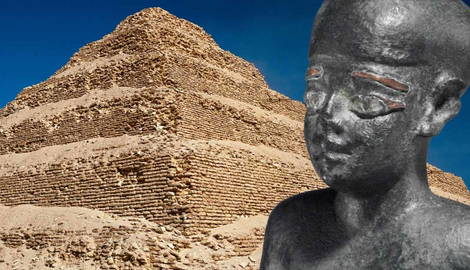

More than 4,600 years ago, a commoner named Imhotep rose through ancient Egypt’s administrative ranks to become the pharaoh’s chief architect, priest, and chancellor. His name was inscribed next to the pharaoh’s own on important monuments, showing his immense influence. Owing to his many accomplishments, including the construction of Egypt’s first pyramid, Imhotep was hailed as a sage and eventually raised to the status of a god, associated with medicine and scribal arts.
Egypt in the Early Dynastic Period
The Early Dynastic Period began with the unification of Upper and Lower Egypt under the leadership of the pharaoh. The new centralized government expanded to administer the large and diverse territory. The Egyptians did not use money. All taxes were in the form of agricultural surplus, which supported the pharaoh, his administration, and full-time specialists such as craftsmen.
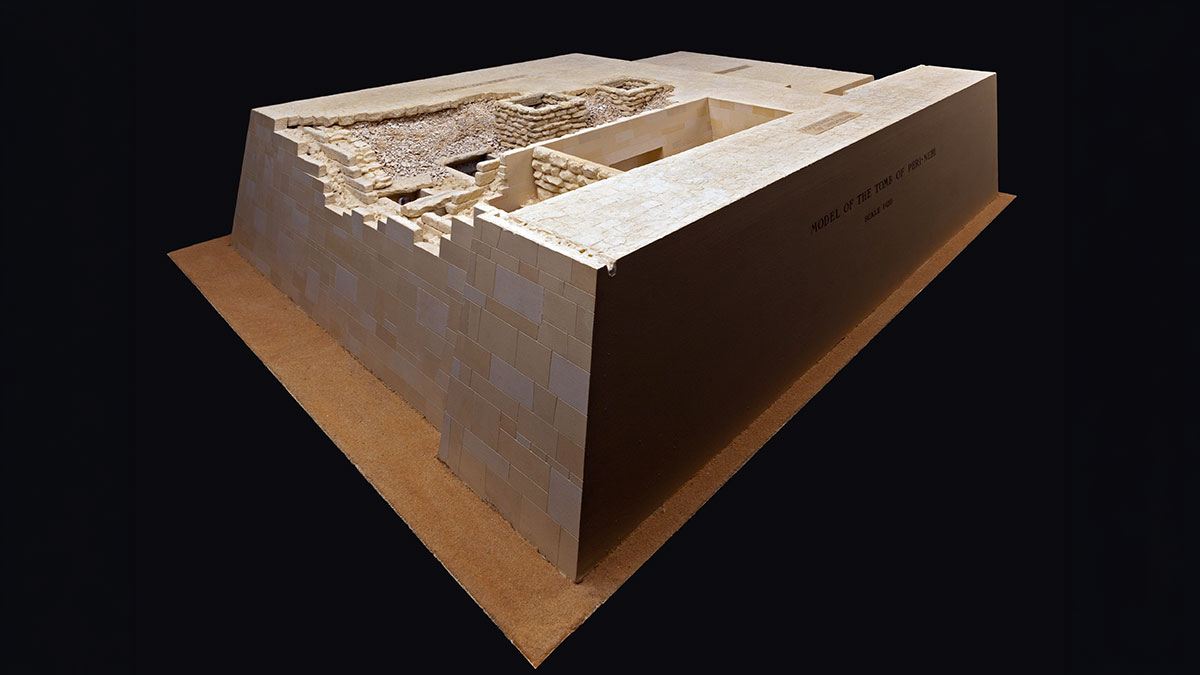
It was during this time that Egypt’s famous mortuary cult became prevalent. In North Saqqara, large, flat-roofed, mudbrick superstructures called mastabas housed the remains of local elites. The term mastaba comes from Arabic, meaning “bench,” which is what these tombs resembled. This sort of tomb was common for the upper classes, including the pharaoh. They consisted of both the tomb itself and a ceremonial enclosure surrounding it.
At Abydos, where the early royal tombs were located, the best surviving examples of monumental structures are the royal funerary enclosures reaching at least 10 feet tall, built of mudbrick. One hypothesis is that the surrounding enclosures were designed to be purposefully dismantled following the pharaoh’s death, symbolically transferring it for his use in the afterlife. The only enclosure remaining belonged to Khasekhemwy, the last pharaoh of the 2nd dynasty (c. 2890-2686 BC). This may indicate a time when there was a move towards more permanent royal funerary structures. This development would set the stage for Imhotep’s career.
The Third Dynasty and the Reign of Djoser
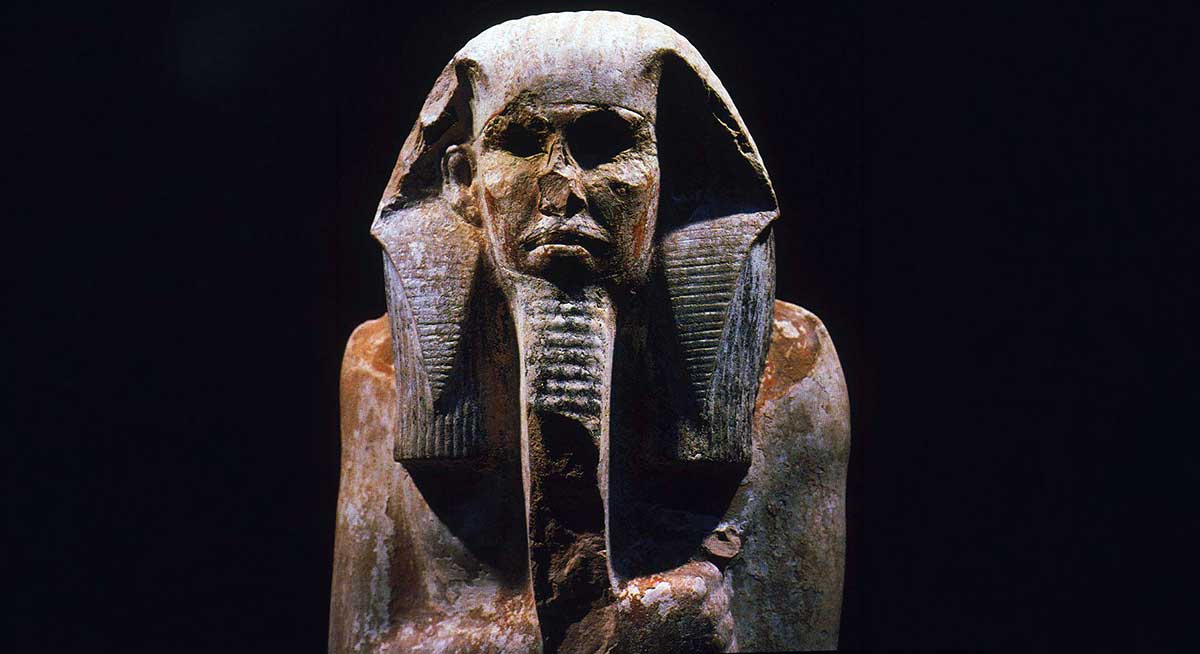
A seal of the pharaoh Djoser was found in Khasekhemwy’s tomb, suggesting that he succeeded the 2nd Dynasty pharaoh and completed his tomb. Djoser was likely the previous pharaoh’s son, given that Khasekhemwy’s wife, Nimaathap, was called in her sealings “King’s Mother.” Nevertheless, Djoser is considered the founder of the new 3rd dynasty (c. 2686-2613 BC).
The 3rd dynasty saw royal tombs move from Abydos to Saqqara, where they took on a more monumental form. Sadly, not much is known of Djoser’s reign, but he was evidently considered to be an important figure for the Egyptians themselves. In a manuscript called the Turin King-list, or Royal Canon of Turin, the entry containing Djoser’s name was recorded in red ink, which was used to highlight certain words like headings or summations; usually, only the initial word was in red. Djoser’s entire entry was highlighted in red, emphasizing his importance.
Today, Djoser is mostly known for the stepped pyramid at Saqqara, now called the Step Pyramid of Djoser, which was the first monumental architecture built in stone. Before Djoser, stone was used in certain elements of architecture, but never formed the entire structure. Behind this unprecedented change stood the king’s chief architect and administrator, Imhotep.
Who Was Imhotep?
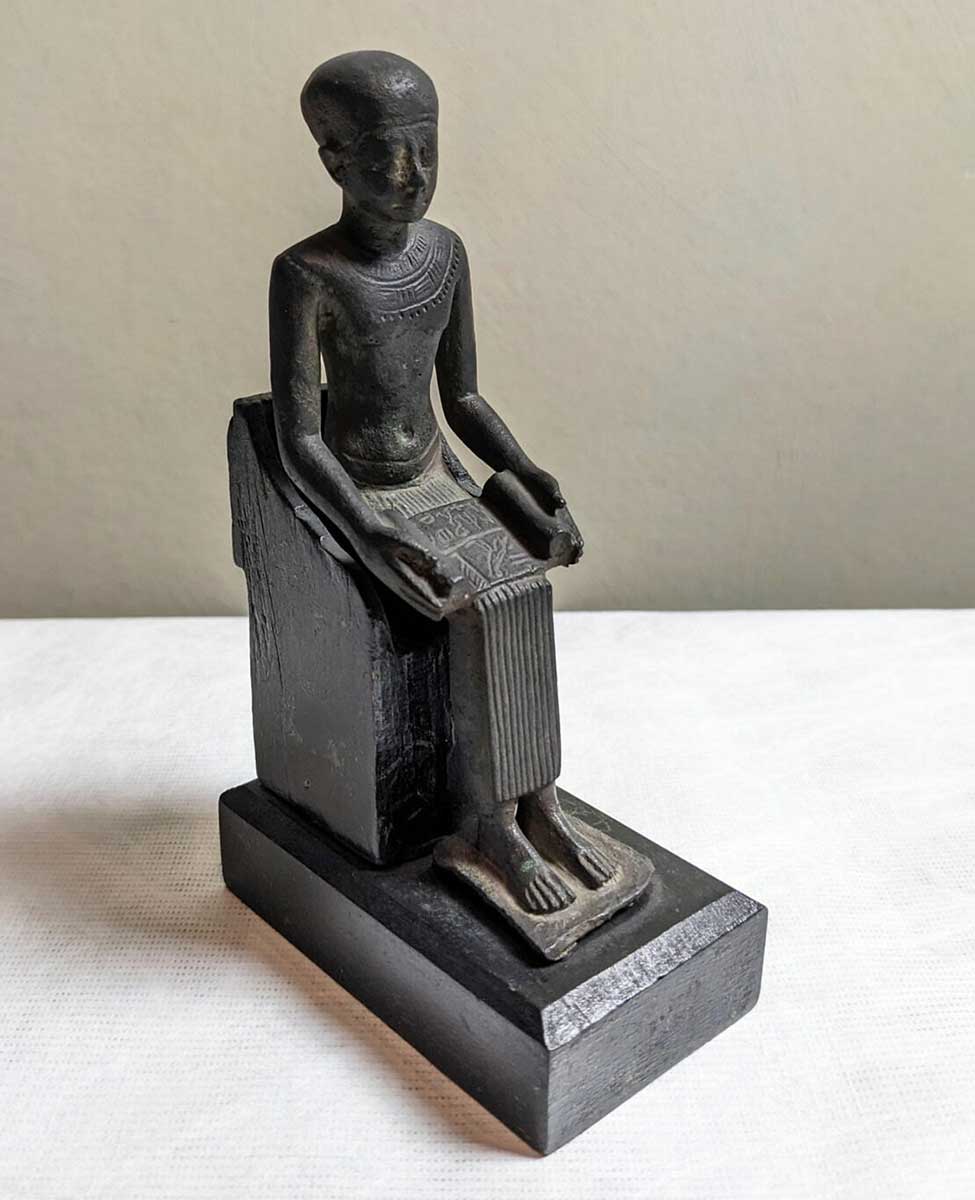
Imhotep is credited with creating the Step Pyramid at Saqqara, the first monumental building of its kind and the precursor to the later Great Pyramids at Giza.
The earliest attestation of Imhotep’s name is on the base of the statue of the pharaoh Djoser. On this inscription, he is given the titles: Chancellor, First after the King, Administrator of the Great Palace, Nobleman, High Priest at Heliopolis, Chief Sculptor, and Vase-Maker. These clearly show the high regard the pharaoh had for him.
He was generally considered a commoner, which makes his reputation all the more impressive. However, it is also possible that he was Djoser’s son or was somehow related to the pharaoh.
By the Late Period (c. 664-332 BC), he was regarded as a sage and a genius, and eventually even as the son of the god, Ptah. He was also linked with the later sage Amenhotep-son-of-Hapu, a high official of the reign of Amenhotep III. Both were considered deified patrons of physicians and scribes.
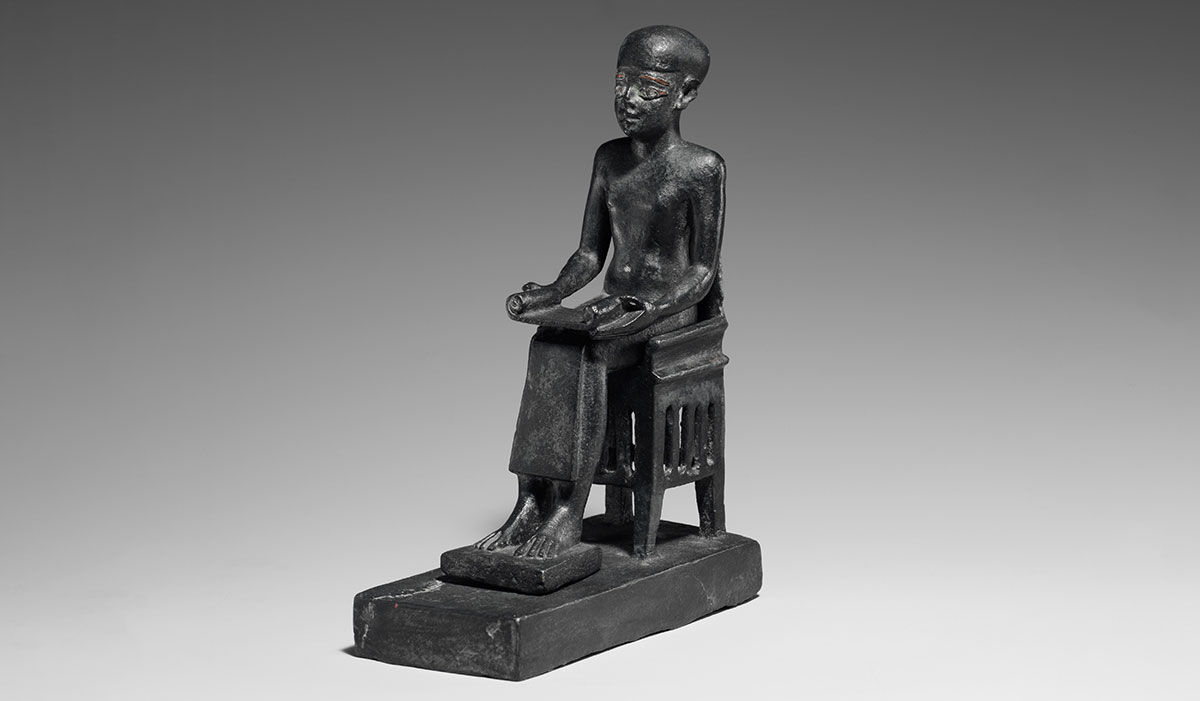
No tomb with Imhotep’s name has been found, but he likely would have been buried in North Saqqara. Two tombs attributed to the 3rd Dynasty have been discovered in the area that have a different rotation to the surrounding tombs but are aligned with the Step Pyramid. This suggests that they were connected with Djoser, and perhaps Imhotep.
Another piece of evidence that suggests Imhotep may be buried in this area is that it lies above the later temple complex of the Sacred Animal Necropolis, where baboons sacred to Thoth were buried. As a patron of learning, Imhotep was associated with Thoth, and votive offerings in his image were regularly deposited in the temple. However, the absence of any textual evidence makes this purely speculative.
The Step Pyramid of Djoser
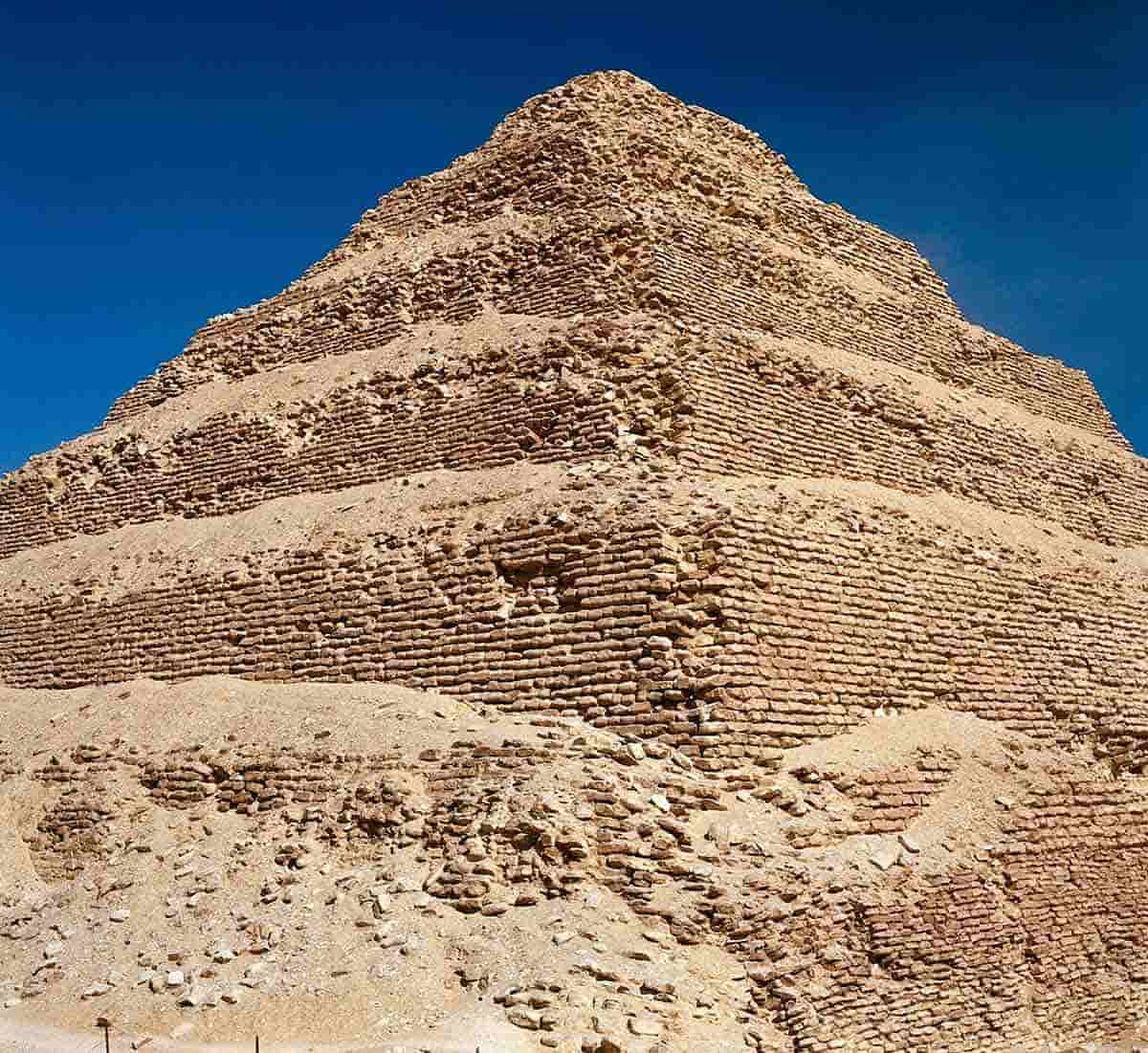
The Step Pyramid of Djoser is not only the first pyramid in Egypt, and not only the first large-scale stone structure in Egypt, but the first known monumental stone structure in the world. The importance of the structure cannot be understated. It signifies the capacity of the state to control and organize both material and human resources in a way that was impossible before.
The Step Pyramid complex covers an area of 15 hectares, surrounded by niched limestone walls. The original construction plan for the pyramid was changed several times, and it was built in six stages. It was first built as a square mastaba, which is already uncommon for a mastaba, and then expanded on all sides. The structure was then expanded again on the east side, giving it the typical rectangular shape. The next two stages of construction built it upwards to four steps, and then six.
The reason for the change in shape from a mastaba to a pyramid is still debated. A prevailing theory is that the pyramid may have been supposed to represent a massive staircase to heaven that was described in the later Pyramid Texts. It could have also been a solar monument given the pharaoh’s connection to the sun-god Ra and Imhotep’s position as high priest of the god.
Architectural Legacy
With his Step Pyramid, Imhotep started an age of pyramid building and architectural experimentation. Sneferu, the first king of the 4th Dynasty (c. 2613-2494 BC), built three pyramids in his lifetime. First was the Maidum Pyramid, which was constructed as a true, four-sided pyramid, but was suddenly abandoned in the middle of his reign. It was suggested that it collapsed, but there is no evidence to support this.
Sneferu then constructed the so-called Bent Pyramid, which, as its name might suggest, started at a 55-degree incline in its lower courses and then suddenly changed to a 44-degree incline in the upper courses. The reason for this change in slope was that the interior core of the pyramid was unstable, and the architects needed to make modifications.
The final pyramid was the North Pyramid, a true pyramid with a much more solid core to support the structure.
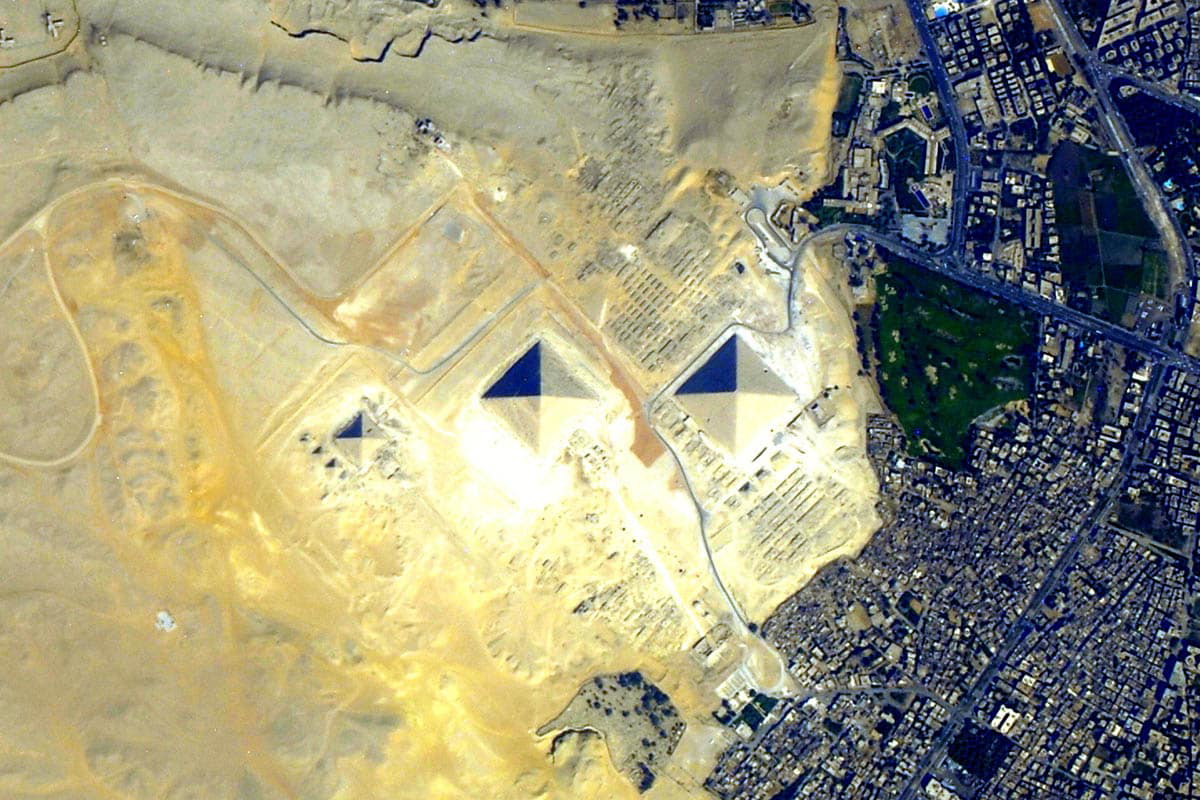
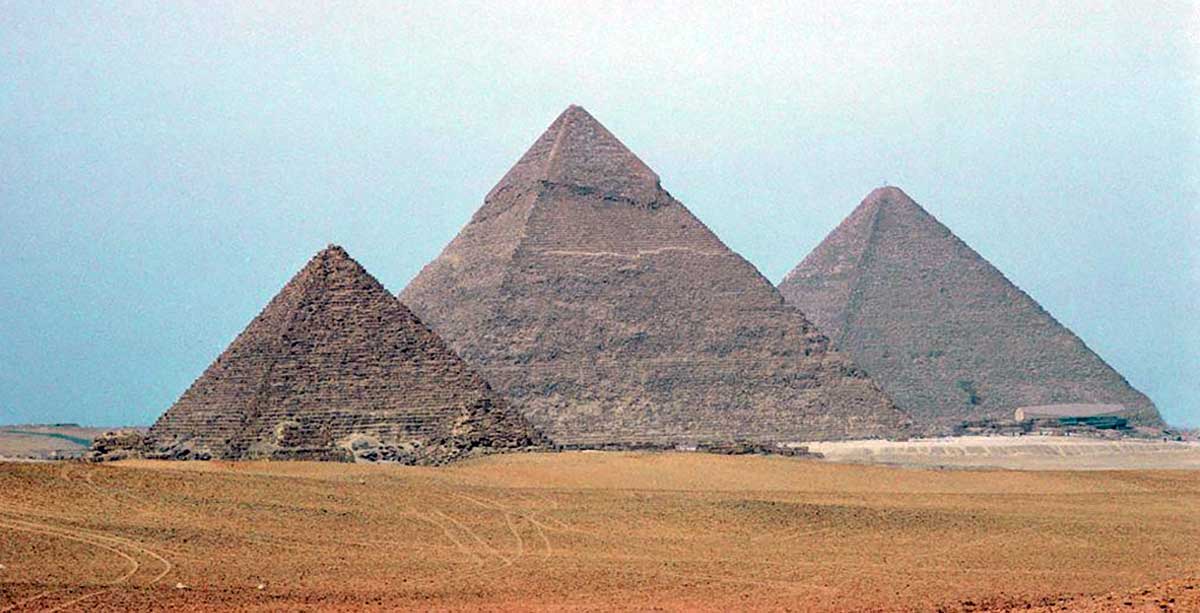
The most obvious legacies of Imhotep’s architectural innovation are the Great Pyramids of Giza. Khufu, the son of Sneferu, built the first pyramid, the Great Pyramid. The base of the pyramid covers 5.3 hectares, and each side faces one of the four cardinal points. It reached a towering height of 146.7 meters and was covered in brilliant white limestone.
Khafra, the son of Khufu, built the second pyramid at Giza. Despite visually appearing taller than Khufu’s pyramid, Khafra’s is actually shorter. Measuring 143.5 meters. The optical illusion is caused by its construction being on higher ground. There is a slight twist near the top, indicating that there was an issue with getting the four corners to meet.
The third pyramid belonged to Menkaura, though it was never finished. It was also much smaller than its predecessors, being only 65 meters tall and each side only half the length of Khufu and Khafra’s.
Cult of Imhotep
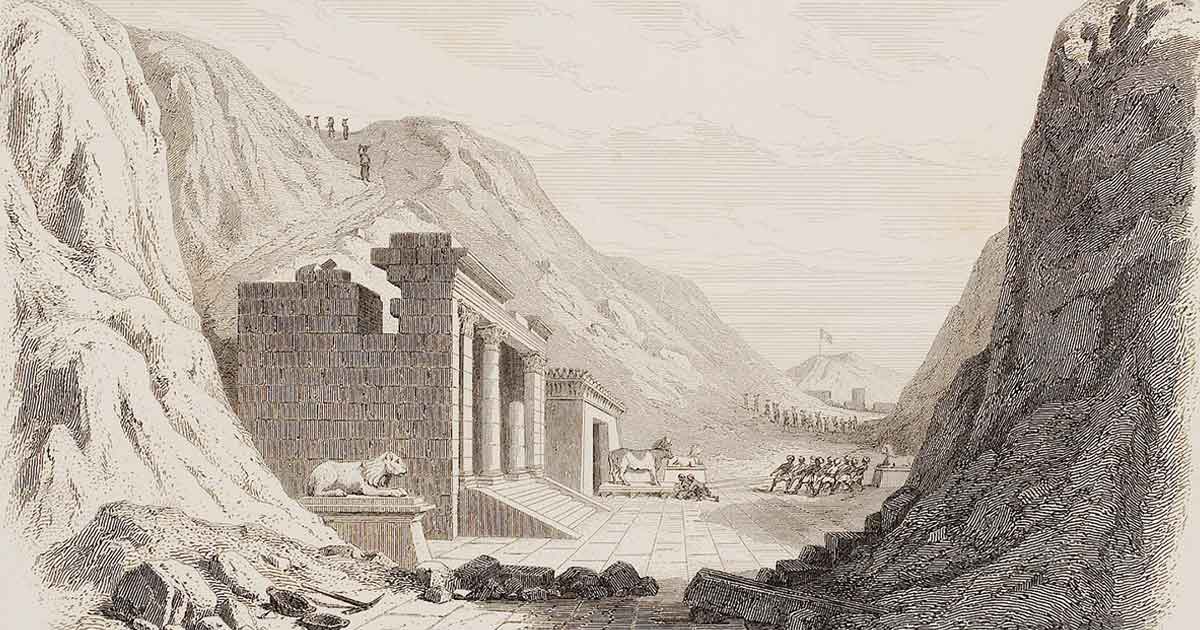
Imhotep was not solely remembered as an architect, but as a patron of medicine and learning. It was his many accomplishments that led to him being considered a god. He was considered a benevolent god who could help the needy and sometimes given the epithet “Beneficent.”
The cult of Imhotep was widespread across Egypt. It had centers in Memphis, Saqqara, Armant, Dendera, and Aswan. Later sources retroactively grant Imhotep a semi-divine status, and he was fully deified by the Ptolemaic Period. In Thebes, there is evidence of Imhotep’s worship up until the 1st century AD.
On the western side of Thebes, at Deir el Bahari, a small chapel was hollowed out behind the sanctuary built during the reign of Queen Hatshepsut. Greek graffiti shows that people traveled to his temple in search of healing alongside other gods like Amenhotep and Hygieia. His cult was practiced within the temple of Ptah, an Egyptian creator god who conceived the world and was considered the patron of craftsmen.
Though he had a strong presence in Thebes, his main cult center was near the Necropolis at Memphis. At the time, he was worshiped in conjunction with Asclepius, the Greek god of medicine. Greek sources hint at the existence of a temple called the Asclepion in North Saqqara, but no archaeological evidence for the temple has been found.
Greco-Roman Comparison
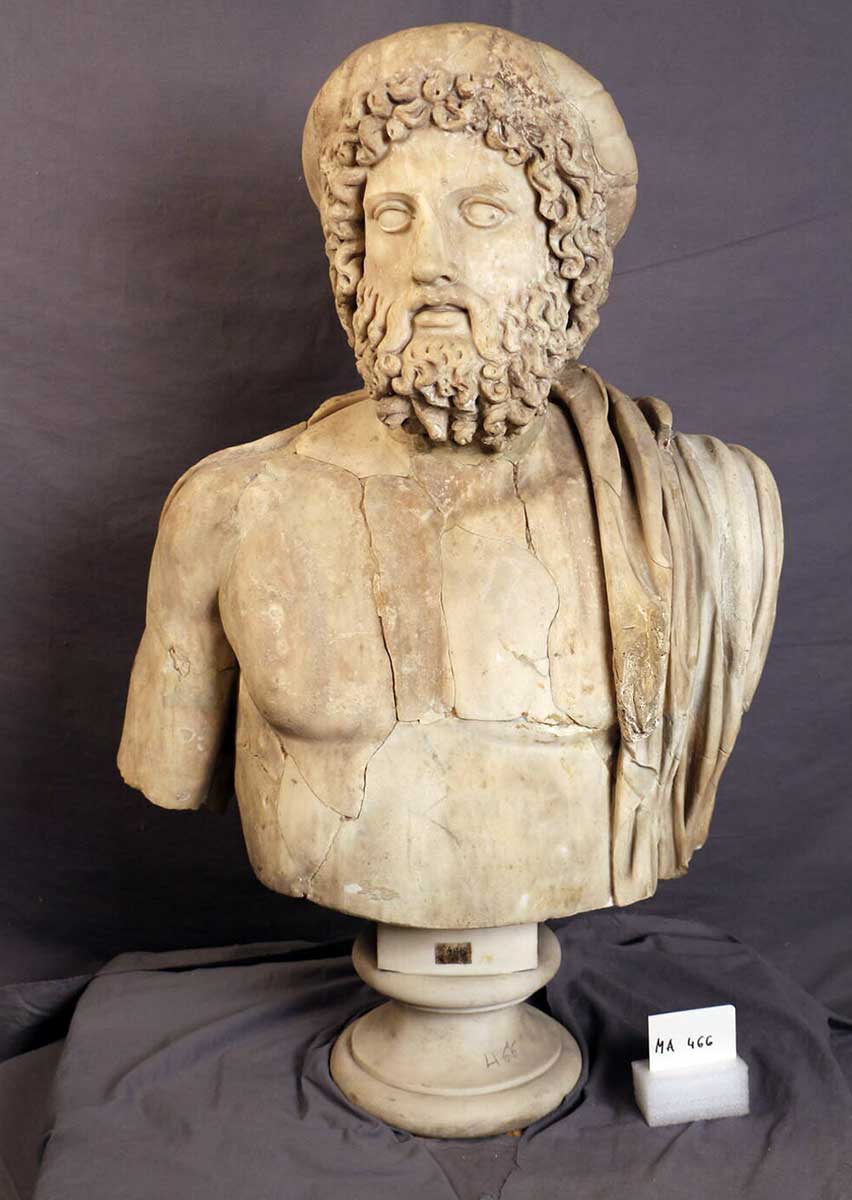
In the Hellenistic period, Imhotep was identified by the Greeks as their god Asclepius. This is clearly shown in a 2nd-century AD text called the Oxyrhynchus Papyri, where the son of Ptah, Imouthes, another name for Imhotep, is directly compared with Asclepius.
The section, Oxyrhynchus 1381, is thought to have been written by a high-ranking judicial official named Nechautes. He told a story of a time the god appeared to his mother in dreams and told her how to cure a disease she suffered from. Nechautes himself also entreated the god for healing when he was afflicted by a pain in his side. He developed a fever and fell into a half-sleep. While he slept, his mother had a vision of a tall figure in a shining raiment carrying a book in his left hand. When he woke, his fever was cured. When his mother told him what she had seen, he anticipated her story because he had seen the same in a dream. Nechautes then directly names Asclepius and Imhotep, uniting them as the same deity.
“And as the discoverer of this art, Asclepius, greatest of gods and my teacher, thou art distinguished by the thanks of all men. For every gift of a votive offering or sacrifice lasts only for the immediate moment, and presently perishes, while a written record is an undying meed of gratitude, from time to time renewing its youth in the memory. Every Greek tongue will tell thy story, and every Greek man will worship the son of Ptah, Imouthes.”
Sources
- Dodson, A. (2021). “The Third Dynasty,” The First Pharaohs: Their Lives and Afterlives, pp. 63–110. The American University in Cairo Press.
- Kákosy, L. (1968). “Imhotep and Amenhotep Son of Hapu as Patrons of the Dead,” Acta Orientalia Academiae Scientiarum Hungaricae, 21(1), 109–117.
- Kolta, K. S., & Hommel, H. (1973). “Imhotep und die Medizin,” Sudhoffs Archiv, 57(3), 245–254.
- Ryholt, K. (2004). “The Turin King List,” Ägypten Und Levante, 14, 135–155.
- Teeter, E. (1995). “Amunhotep Son of Hapu at Medinet Habu,” The Journal of Egyptian Archaeology, 81, 232–236.
- Verner, M., & Hawass, Z. (2001). “The Third Dynasty,” The Pyramids (New and Revised): The Archaeology and History of Egypt’s Iconic Monuments, pp. 67–116. The American University in Cairo Press.