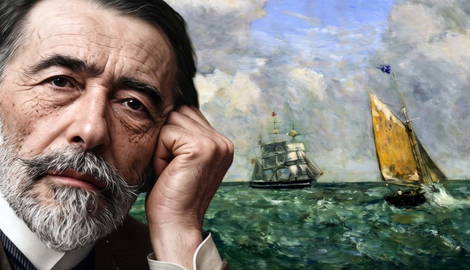

Joseph Conrad spent his childhood exiled from his homeland in a Russian penal town due to his parents’ revolutionary activities. He became his uncle’s ward. Rather than serve in the Imperial Russian military, Conrad fled to France. Depressed and in debt, Conrad attempted suicide yet survived. Realizing the impediments to a maritime career in France were insurmountable, Conrad joined the British merchant marine. He traveled the world, working in Borneo, the Malay Peninsula, and the Congo. These experiences became the source material for his literary career.
Born in Imperialist-Occupied Poland
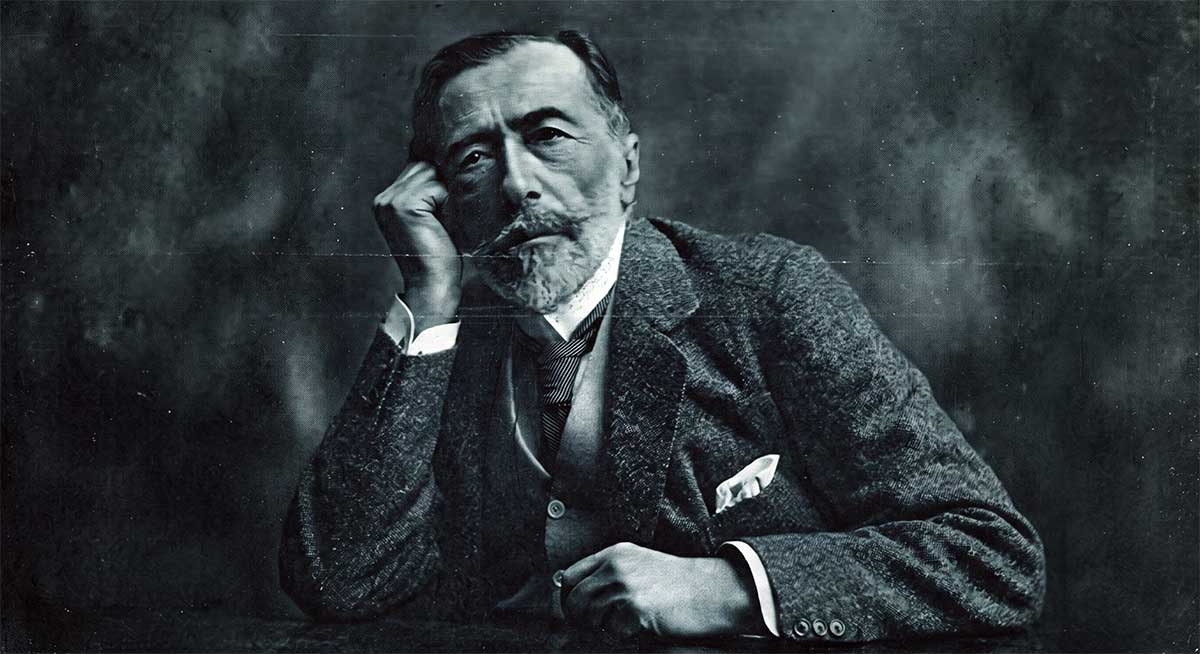
Jozef Teodor Konrad Nalecz Korzeniowski was born December 3, 1857, in Berdichev, in Polish Ukraine, to parents Apollo and Eva Korzeniowski. He was named after Konrad Wallenrod, the hero of Polish Romantic poet Adam Mickiewicz’s poem of the same name. Berdichev, which was then one of the region’s largest cities, was cosmopolitan.
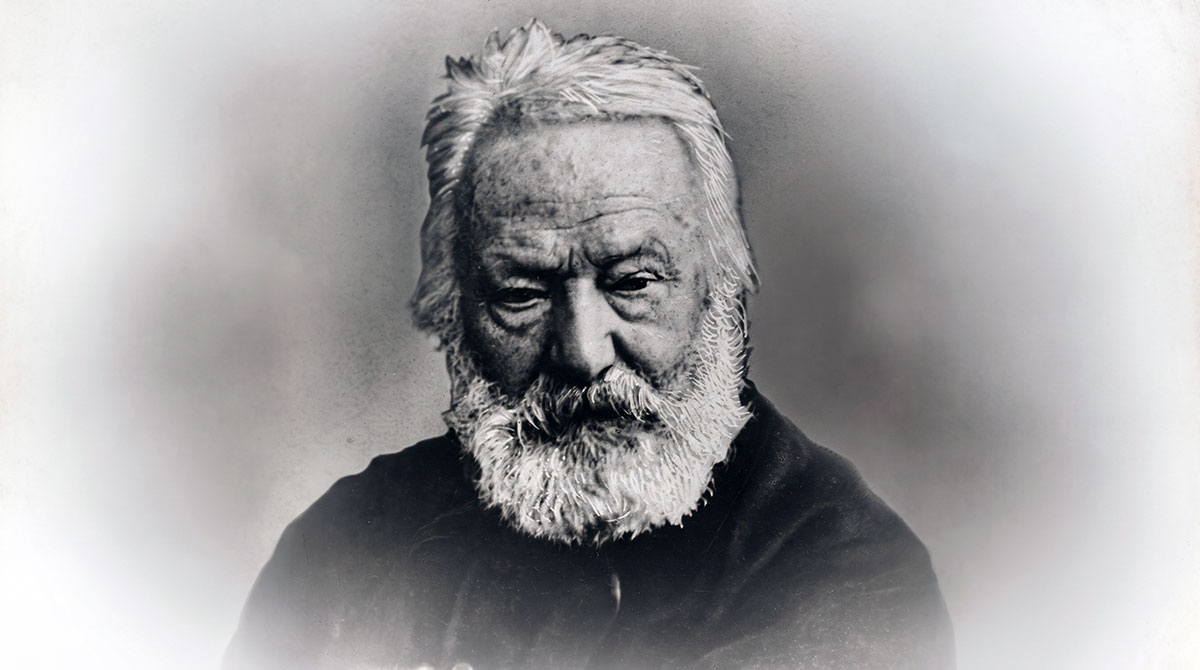
Apollo was a poet and translator. Among his translations were Victor Hugo’s Toilers of the Sea, William Shakespeare’s The Comedy of Errors, and Charles Dickens’ Hard Times. Both of his parents were Polish nationalists and members of the szlachta, which is the Polish nobility. Poland, however, was not an independent country, nor had it been for the past 62 years. Instead, Poland was subjugated and partitioned between three imperialist powers: Austria-Hungary, Prussia, and Russia.
Apollo agitated for Polish independence in his writings and clandestine activities. As a consequence, in 1861 Apollo was arrested by the Russian police and imprisoned in the Warsaw Citadel. He was tried and sentenced to exile, as was his wife.
Orphaned and Exiled
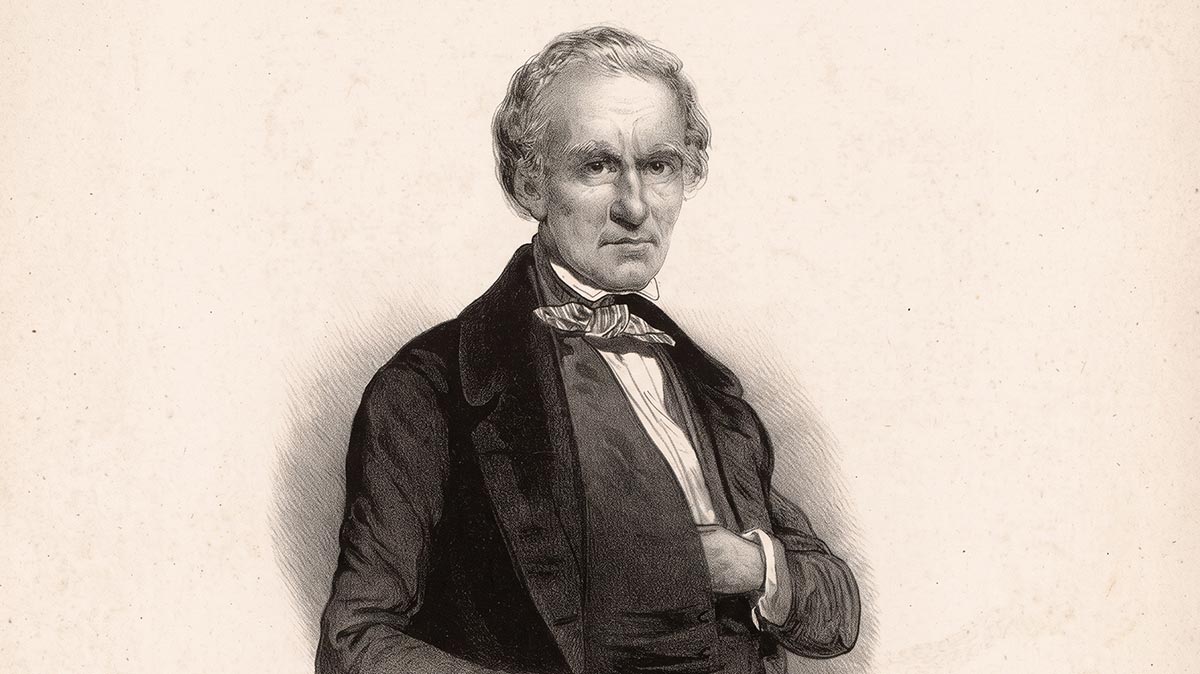
Conrad was only three years old when his family was escorted by Cossacks into exile in Vologda. Years spent in the penal town had a devastating effect on the health of the entire family. Conrad’s mother died of tuberculosis when he was seven years old. His father died of the same condition when he was eleven. Often ill and suffering from epilepsy, Conrad was taken in by his uncle Tadeusz Bobrowski. As a young man, Conrad was nervous, sensitive, and sarcastic; character traits he retained for the rest of his life.
Conrad moved to Cracow, Poland, to live with Tadeusz. There, he attended school. James Fenimore Cooper and Walter Scott were two of his favorite novelists. His favorite subject was geography. Despite his intelligence, Conrad did not complete high school. Instead, at the age of sixteen, he left Poland with the hope of joining the French merchant marine.
His reasons for doing so were threefold. Firstly, his doctors believed proximity to the sea would improve his health. Secondly, by leaving Russian-occupied Poland before military age, Conrad avoided being conscripted. As the son of political prisoners, Conrad would have been treated harshly in the Imperial Russian military. Thirdly, three and a half million Polish people emigrated from the country prior to World War I. Many chose France, an enemy of two of the three imperialist powers occupying Poland, as their new home.
Using family contacts in Marseilles and the allowance he received from Uncle Tadeusz, Conrad secured work on French ships as an observer, apprentice seaman, and steward. He traveled on voyages to Colombia, Venezuela, Martinique, St. Thomas, and Haiti. When not at sea, Conrad spent his time ashore gambling and incurring debt. Additionally, he became a participant in the Carlist War by smuggling arms for the ultra-reactionary Spanish rebels. The Carlist Wars were fought due to a dispute regarding who was the rightful heir to the Spanish throne. Spanish rebels supported Don Carlos de Bourbon’s claim.
A Failed Suicide Attempt and Life at Sea
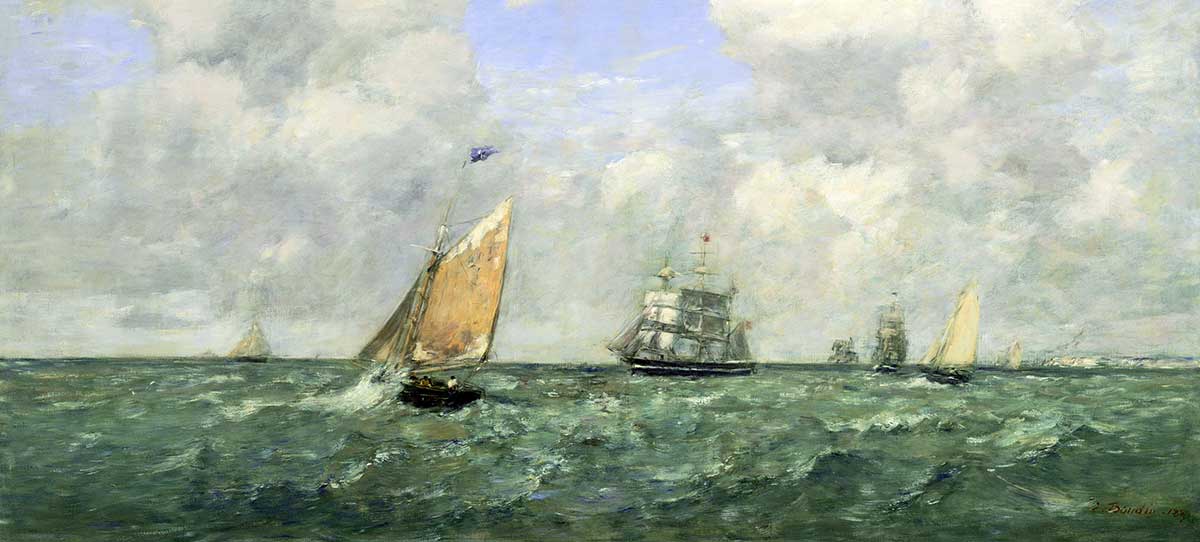
When Conrad ran afoul of the law, it was for a different reason. The French Office of Military Conscription launched an investigation into Conrad’s background. Upon learning that he had not served in the Russian military nor obtained permission from the Russian consul to work at sea, the French government prohibited Conrad from accepting future work on French vessels. Unable to work, Conrad gambled his allowance from Uncle Tadeusz on another gun smuggling venture for Spanish rebels. After the venture failed, Conrad borrowed money from his friend Richard Fecht and promptly lost all of it gambling at a casino in Monte Carlo. Deeply depressed, Conrad shot himself in the chest. Conrad survived his suicide attempt, perhaps because Richard Fecht found him and sent for help. Tadeusz settled his debts. And it was agreed, to preserve Conrad’s honor, that the scar across Conrad’s chest and shoulder was caused by a duel.
With no hope for a future in the French merchant marine, Conrad left for England. In the British merchant marine, he worked as an ordinary seaman, night-watchman, third-mate, second-mate, first-mate, and master. To advance in his British nautical career, Conrad took arduous written and oral examinations. These examinations tested a seaman’s knowledge of arithmetic, logarithms, and nautical astronomy. He had to know how to find longitude by the sun and latitude by the stars. He had to know the different light and fog signals and the effect a ship’s iron had on a compass. The seaman was tested on his knowledge of winds and currents, ropes and knotting, stowage, and rigging. The seaman had to provide a character reference attesting to his sobriety and good conduct. Conrad passed each of his nautical examinations, reaching the highest position obtainable in the British merchant marines: master. On top of this accomplishment, Conrad became a naturalized British citizen in 1886.
The Horror of King Leopold’s Congo
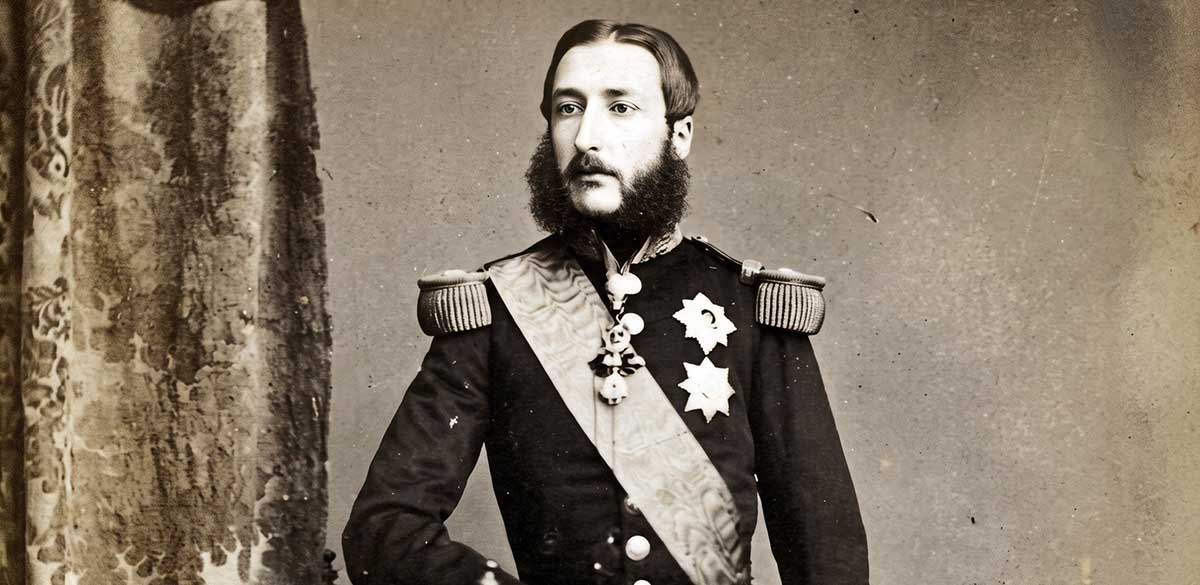
The ships Conrad sailed on included full-rigged sailing ships, wooden barques, iron sailing ships, iron barques, and steamships. Conrad lived through the transition from wind-powered sea vessels to steam-powered ones. He sailed on voyages across the Mediterranean to Italy, Greece, and Turkey. In Asia, he sailed to Singapore, Siam (modern-day Thailand), Borneo, and the Malay Peninsula. In Africa, Conrad sailed to Sierra Leone, Benin, the Ivory Coast, and the Congo. Over the course of his nautical career, Conrad contracted fever and dysentery. He also suffered from rheumatism and gout.
On his experience in the Congo, Conrad wrote for the National Geographic Magazine that what took place there was the “…vilest scramble for loot that ever disfigured the history of human conscience and geographical exploration.” Ivory and rubber were two of the natural resources violently extracted from the Congo to enrich the personal fortune of King Leopold II of Belgium.
In Congo, Conrad befriended Roger Casement, a member of the British Consular Service who reported on the atrocities committed against the Congolese by Europeans in the country. Casement’s report on the exploitation and enslavement of the Congolese substantiates disturbing details found in Conrad’s novel Heart of Darkness. The character Mr. Kurtz is a composite of real people: trading company agent Georges Antoine Klein, ivory trader Arthur Hodister, and Belgian military Captain Leon Rom.
Domestic Life, Literary Friendships, and World War I
Though Heart of Darkness is considered a modernist classic of 20th-century English literature, the novella was not a commercial success. Throughout his career as a writer, Conrad struggled financially. Writing in English did not come easily to him. Rather, he described it as an excruciating process. Despite his mastery of the English language in its written form, he spoke English with a very strong Polish accent. This, along with his physical appearance, resulted in his being ridiculed by xenophobic Englishmen.
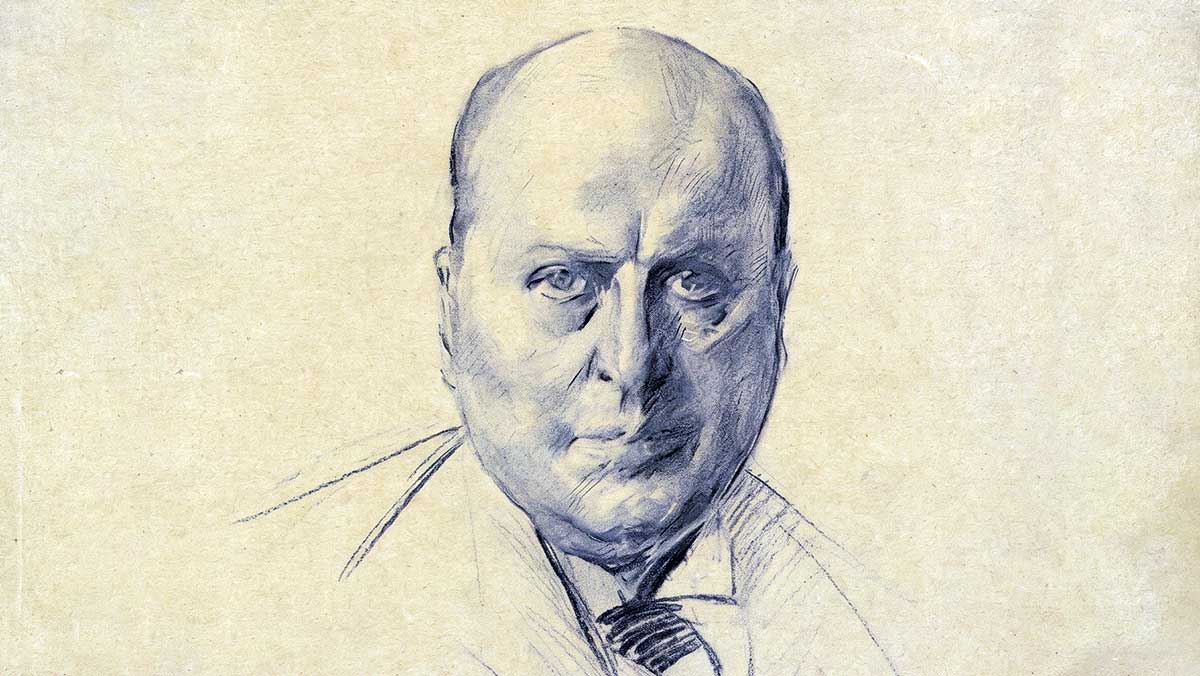
In 1896, Conrad married Englishwoman Jessie George. Together, they had two sons, Borys and John. Conrad’s domestic and literary career were intertwined. He often hosted friends Stephen Crane, Ford Madox Ford, and R.B. Cunninghame Graham at his house, and he visited Henry James at his home. Conrad mentored Gérard Jean Aubry, Norman Douglas, and Hugh Walpole.
After decades in exile, Conrad decided to return to Austria-Hungary-controlled Poland for a visit with his family. They arrived in 1914, just before the outbreak of World War I. When the Great War commenced, they were at risk of capture and internment due to their British citizenship. The Conrads were forced to flee the country. They escaped thanks to the help of American Ambassador Frederick Penfield.
Polish Independence, the Russian Revolution, and the Collapse of Empires
World War I ended in 1918. An unforeseen result of the war was that Poland finally gained its independence from foreign rule. The Russian Revolution during World War I brought an end to Imperial Czarist Russia. The Austrian Empire collapsed because of the war, and the German Empire was collapsing.
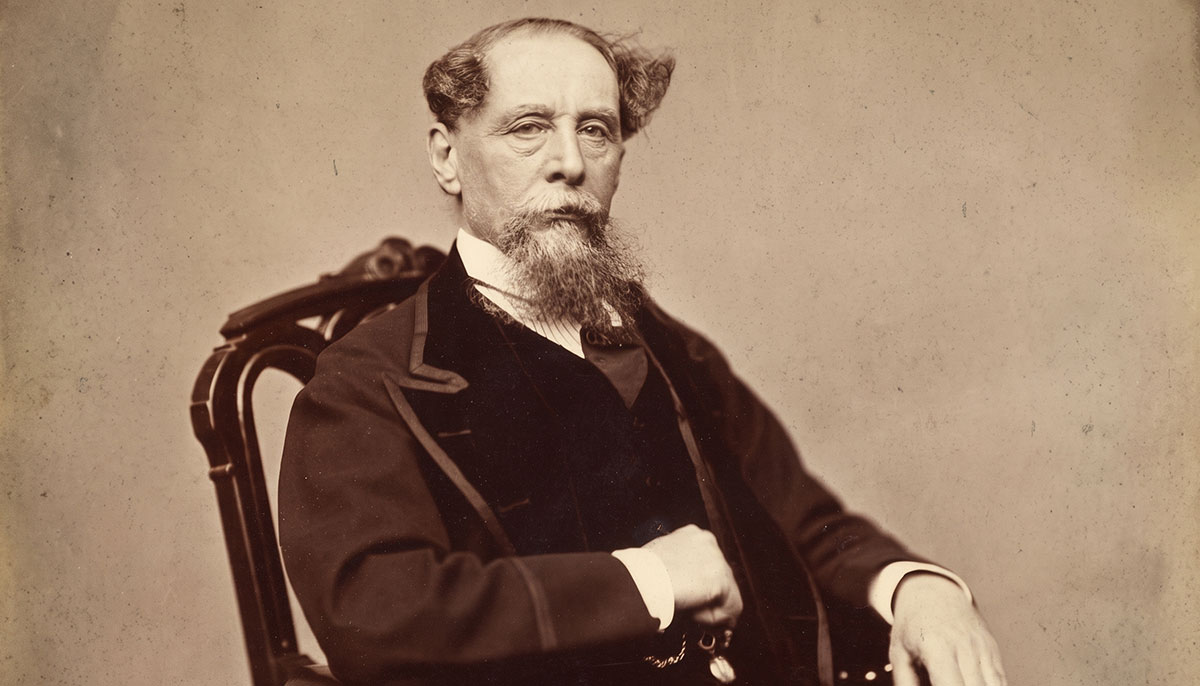
After the war, at the behest of publisher Frank Doubleday, Conrad traveled to the United States to generate publicity. Charles Dickens and Oscar Wilde both engaged in lecture tours in the U.S. prior to Conrad’s excursion. By comparison, Conrad’s foray was no triumph. He gave a lecture in New York City at railroad baron Arthur Curtiss James’ 5th Avenue mansion. Frank Doubleday noted in his memoirs that Conrad, before giving his lecture, “was in a state of nervous collapse, and I was not far behind.” One year later, the British government offered Conrad knighthood. He declined the honor and died later that year at the age of sixty-six.
A Controversial Legacy
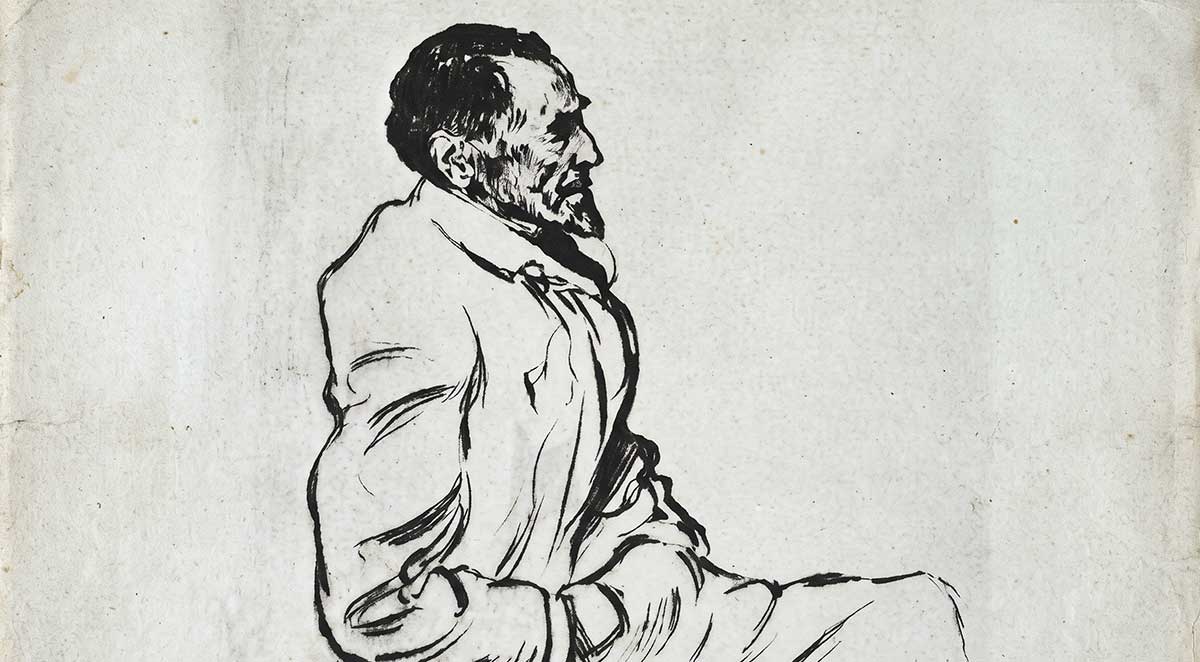
In 1975, University of Massachusetts Amherst Visiting Professor Chinua Achebe launched a scathing critique of Joseph Conrad in his lecture and essay An Image of Africa: Racism in Conrad’s “Heart of Darkness.” His essay forever changed the way Conrad is taught in academia. Professor Achebe asserted, “… Joseph Conrad was a thoroughgoing racist.” In writing Heart of Darkness, it is true that Conrad used racial slurs that are hurtful to people of African descent. To keep things in perspective, since the 1902 publication of Heart of Darkness, these slurs continue to be read and heard today in music, novels, and movies. Unfortunately, in his critique of Heart of Darkness, Professor Achebe commits the fallacy of conflating Joseph Conrad, the author, with Marlow, one of Conrad’s fictional characters.
Unlike his contemporary Rudyard Kipling, Conrad criticizes imperialism and the entrenched belief that the West brought light, progress, and civilization to Africa. Instead, Heart of Darkness depicts the utter collapse of Mr. Kurtz’s moral sensibility in Africa. In the novel, Conrad makes a point of writing “all Europe contributed to the making of Kurtz.”
Like Professor Achebe, Columbia University Professor Edward Said examined Conrad’s work, writing a critique titled “Two Visions in Heart of Darkness,” which appears in his book Culture and Imperialism. His analysis is more even-handed than Achebe’s, however. Professor Said acknowledges that the novel is a “…severe critique of […] imperialism…” At the same time, Professor Said observes, “Conrad’s tragic limitation is that even though he could see clearly that on one level imperialism was essentially pure dominance and land-grabbing, he could not then conclude that imperialism had to end so that natives could lead lives free from European domination.” Elsewhere, Professor Said writes, “As I have said, Conrad does not give us the sense that he could imagine a fully realized alternative to imperialism…”
Joseph Conrad was a seaman and a novelist, not a political theorist or a statesman. As the orphaned son of political prisoners, his worldview was pessimistic. The Polish exile could not envision an alternative to imperialism any more than he could envision an independent Poland.