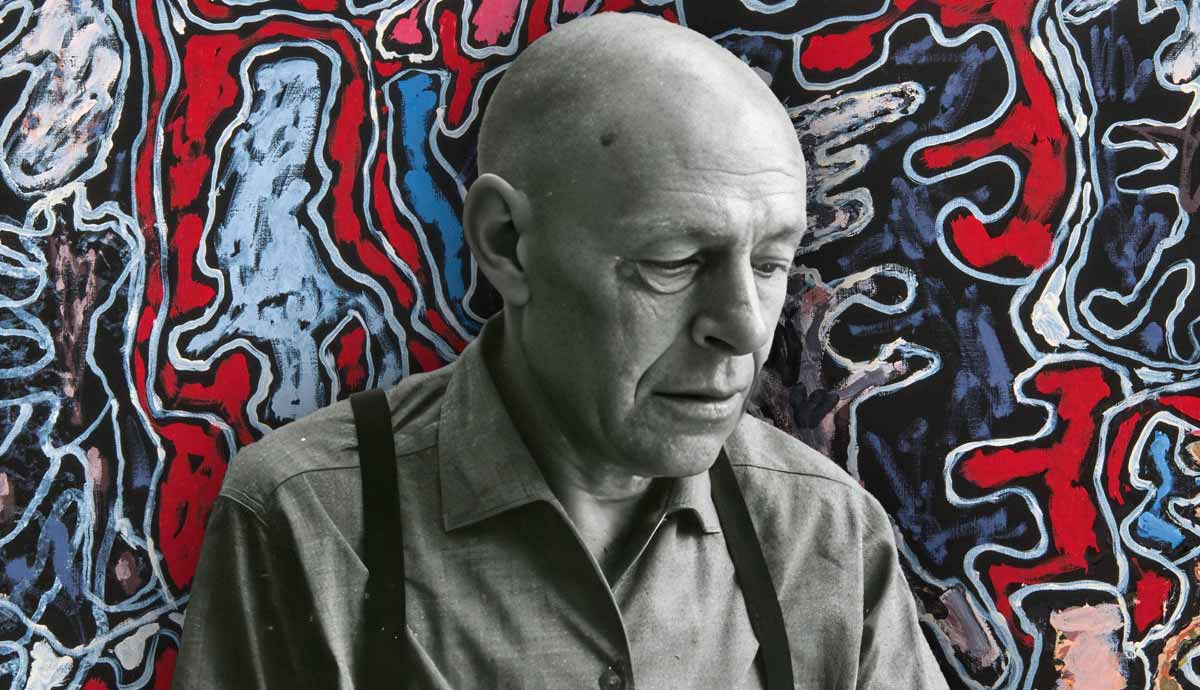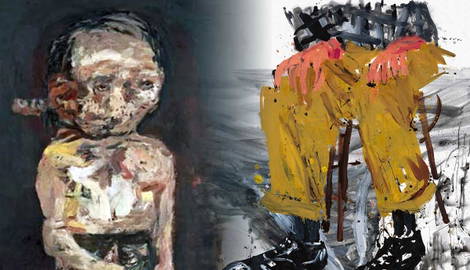

Georg Baselitz, who died in April 2026 at the age of 88, was one of the most influential German painters of the postwar era. Raised in what became East Germany, he moved to the West after being expelled from an East Berlin art school that drilled its students in Socialist Realism. As a Neo-Expressionist and a painter of human figures, Baselitz shook up modern art in 1969 by painting his subjects upside down, forcing viewers to look at the painting itself rather than what it depicted. Here are nine facts about the controversial painter who turned art on its head.
1. Georg Baselitz Is Not His Real Name
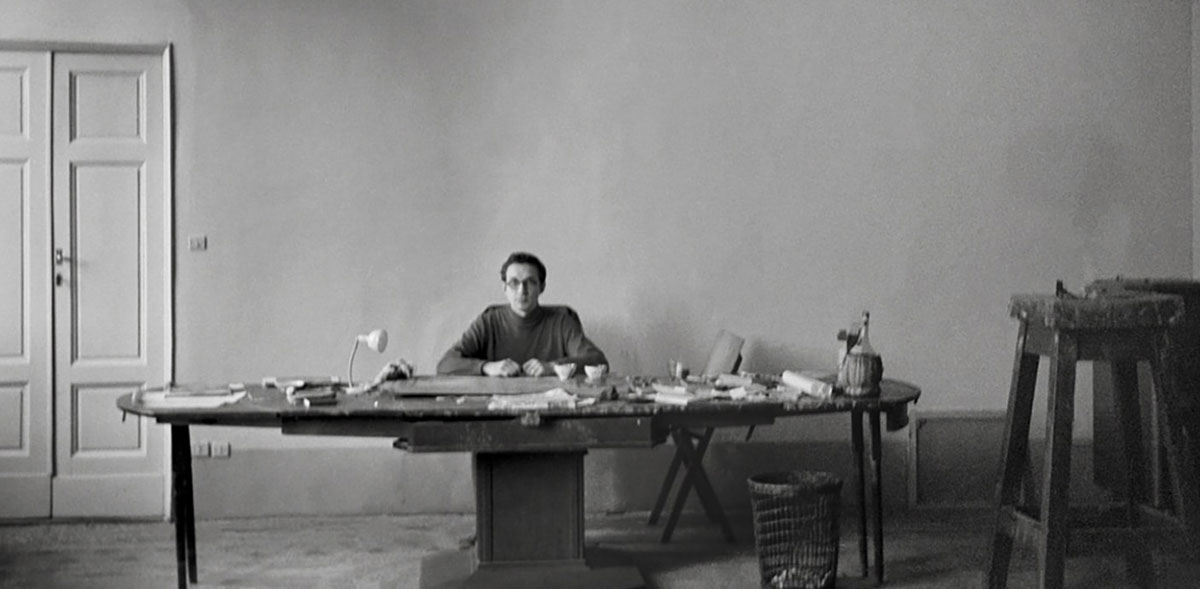
Georg Baselitz, known as one of the most controversial and influential artists of post-war Germany, was born Hans-Georg Bruno Kern in Deutschbaselitz, a village in Upper Lusatia, a region of Saxony near today’s Polish border. Born in 1938, Baselitz witnessed and realized the complexity of his upbringing and the cultural landscape he was born into almost instantly. He experienced the Allied bombing of Dresden in February 1945, which he later recalled as “horrendous, the dead, the half-dead everywhere.” He grew up amidst ruins and devastated lands, unsure of the future and surrounded by the social and political climate that changed in an instant. His father, Johannes Kern, was the village schoolteacher and a Nazi Party member, and after the war he was banned from teaching, so Baselitz’s mother took over his classes.
2. He Was Expelled From an Art Academy in East Germany
In 1956, Baselitz enrolled in the East Berlin Academy of Visual and Applied Arts. At the time, he developed an interest in Cubism that was not supported by the official doctrine and, after just two semesters, was expelled for his supposed “sociopolitical immaturity.” In 1957, he moved to West Berlin, where he continued his art studies at the Hochschule für Bildende Künste in a more progressive atmosphere, and in 1961 he adopted the name Baselitz in honor of his birthplace.
At the time of the artist’s education, the German artistic scene was a rather confused space. The cultural policies of the Third Reich destroyed almost all sources of artistic innovation and weeded out the influence of so-called degenerate modern art forms like Expressionism and abstraction. The Soviet authorities in East Berlin actively installed the rules of Socialist Realism as the only acceptable artistic doctrine. West German art, for their part, eagerly accepted the influences of American and French art but struggled to make it relevant in the local intellectual climate.
3. His Origins Forged His Artistic Myth
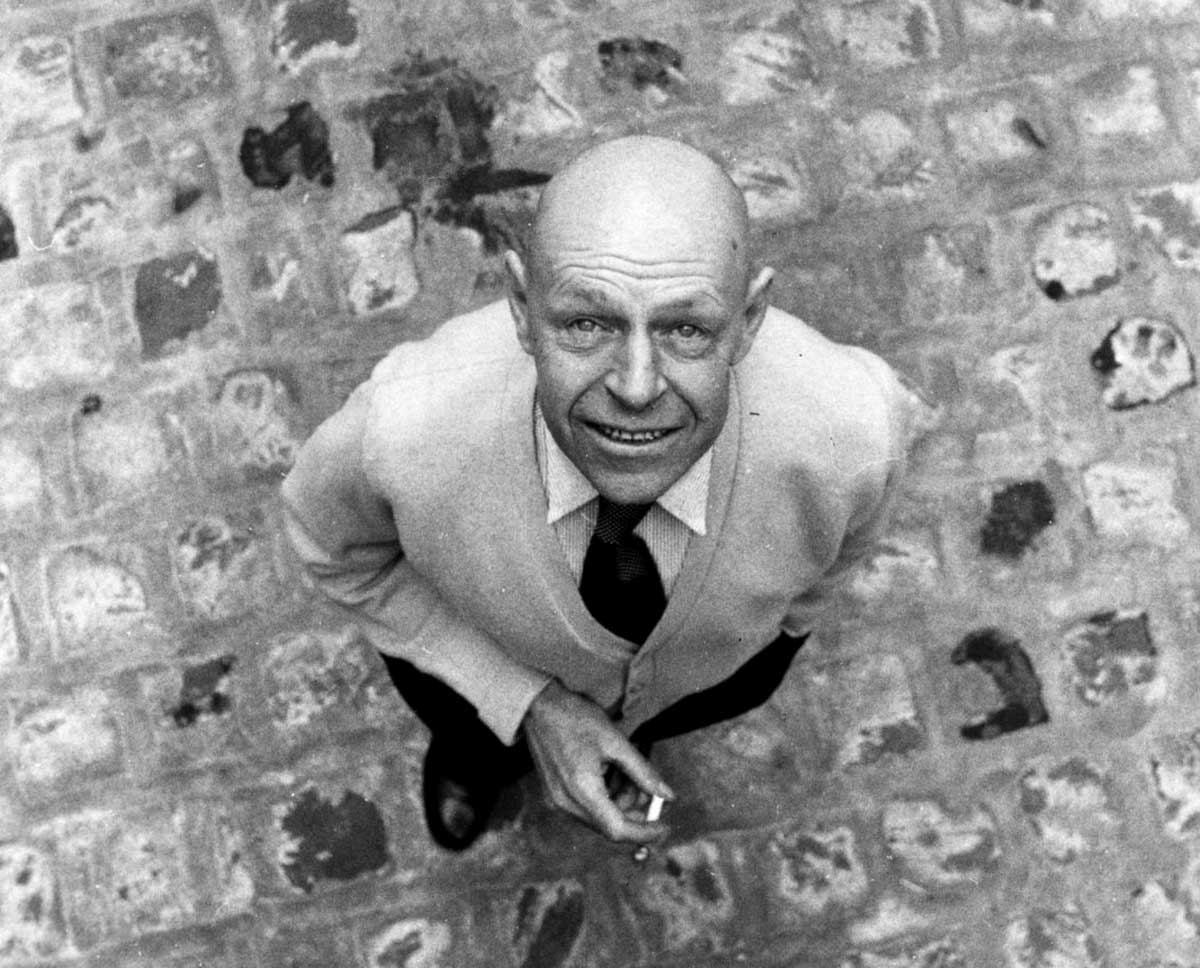
At the time of Baselitz’s escape, the Berlin Wall had not yet been erected, and millions of East German residents had a relatively high chance to escape to the West. The wall was finally constructed in 1961, right before Baselitz’s career began to unfold. Upon his arrival, Baselitz felt like an alien or a savage who had come from the woods into civilization. That moment became the basis for Baselitz’s mythmaking of himself as the raw romantic and a perpetual outsider. Instead of integrating into society, he highlighted his identity as an East German in the West, even changing his name to reflect his origins.
Baselitz deliberately began painting with muddy tones, smudged strokes, and often vulgar subject matter to highlight his confusion, primordial anger, and “primitive” impulses. He was partly inspired by Jean Dubuffet, who collected and championed Art Brut, the raw work of untrained artists, many of them marginalized or living in psychiatric institutions. Both Dubuffet and Baselitz aimed to recreate the pure artistic spirit unspoiled by art education and the art market.
4. He Is One of the Leading Figures of Neo-Expressionism
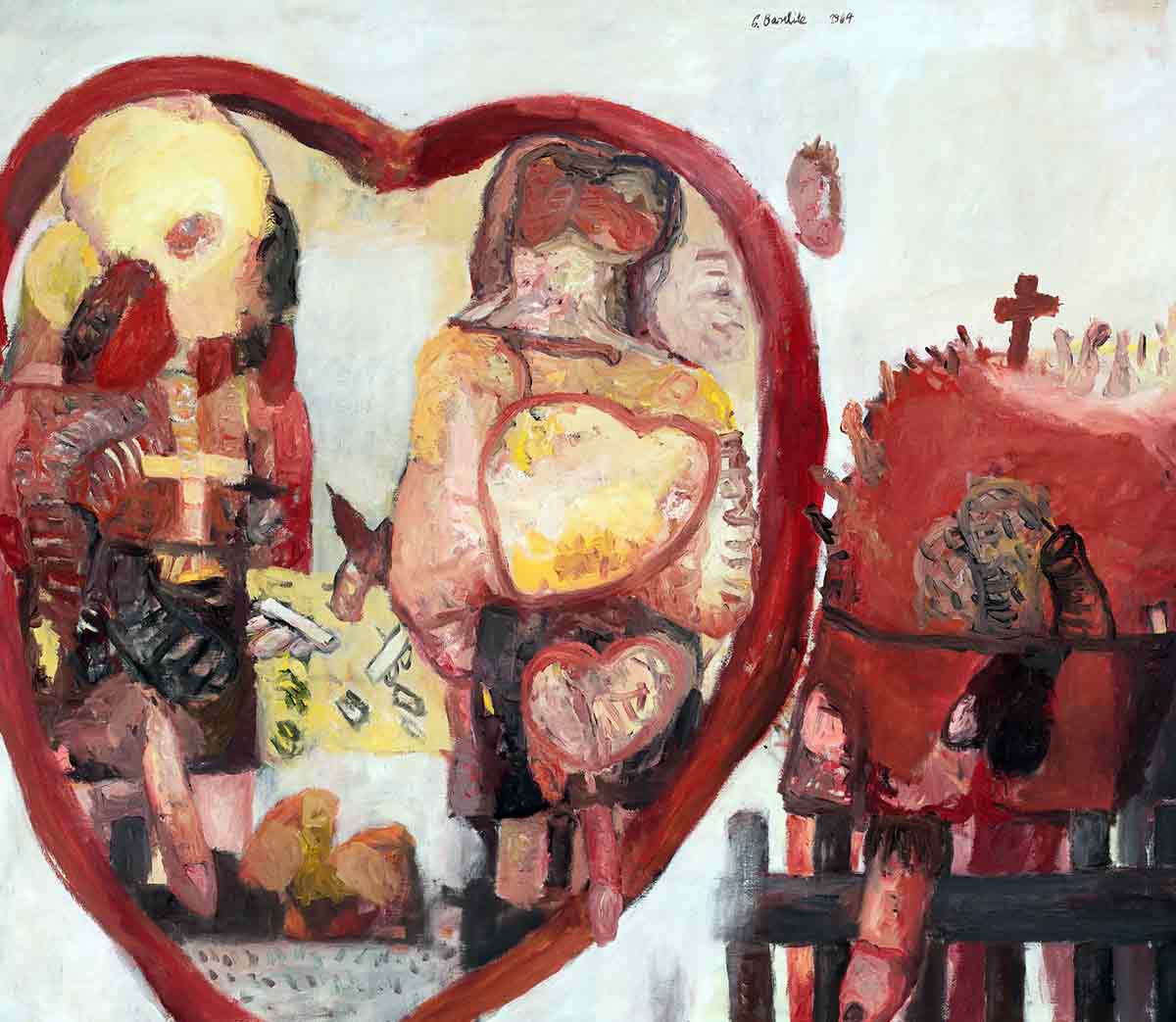
Baselitz observed the global popularity of Abstract Expressionist art but deemed it useless for the German artistic scene. He believed that German art had to make a full circle and come back to its peak form that was cut short by the Nazis. German Expressionism, in his opinion, combined the specific cultural worldview of his native land (with all its complex legacy) and the most progressive and expressive forms of art of its time like African sculpture.
Neo-Expressionism’s harsh aesthetics, smudged thick paint, and messy lines were a rebellion against the clean Minimalist and Conceptual art that had dominated the 1960s and 1970s. Instead of precise geometry and intellectual musings, Neo-Expressionist artists presented raw emotion and individualist expression that rarely contained any metaphysical complexity. Instead, the act of painting was treated as worthy of attention on its own, with obvious brushwork and imperfect lines. Ironically, Neo-Expressionism brought on a cult following by some art critics, who wrote about philosophical interpretations of such works.
Alongside younger German painters such as Anselm Kiefer, Baselitz became one of the biggest names in the international art world in the 1980s.
5. Baselitz Brought Individual Human Figure Back Into Modern Art
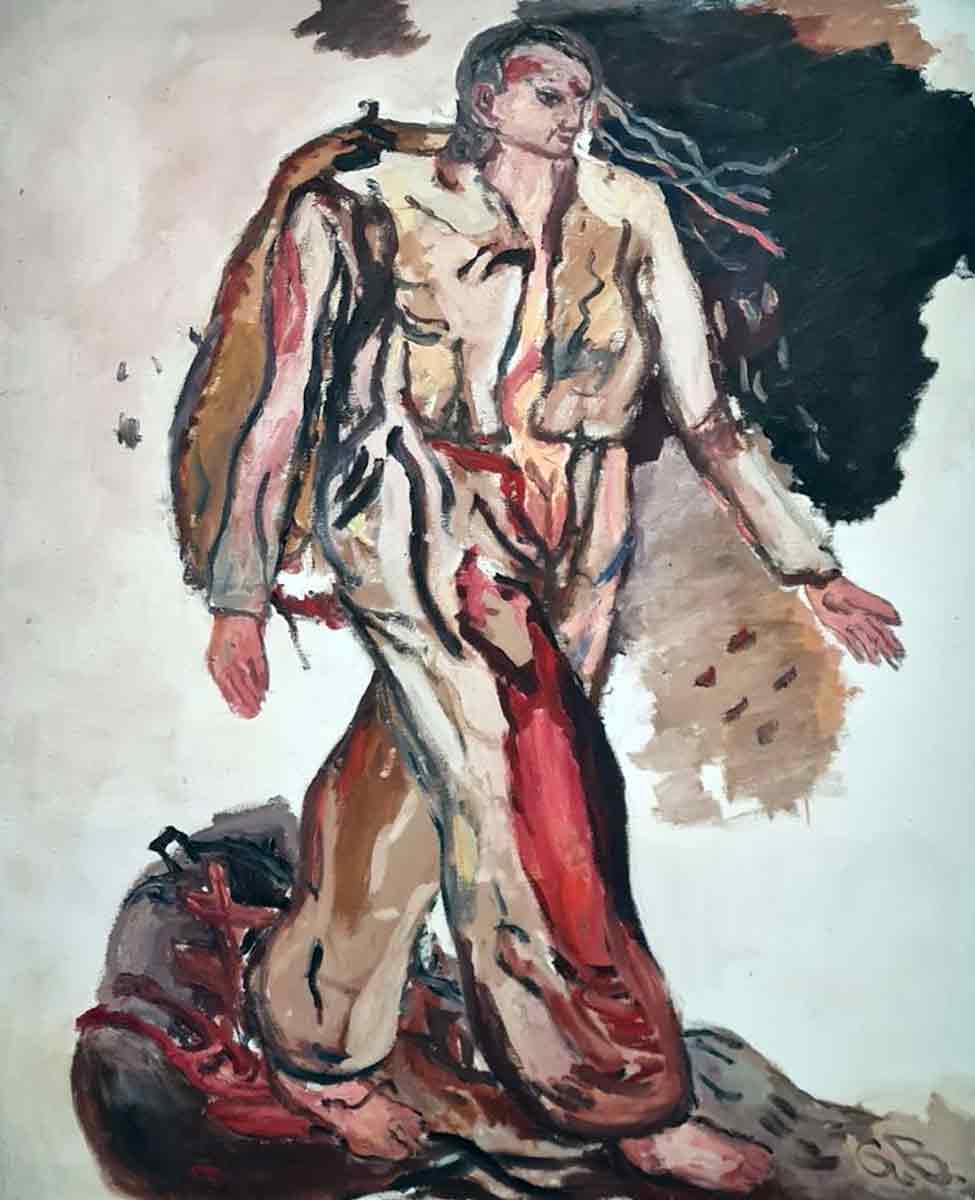
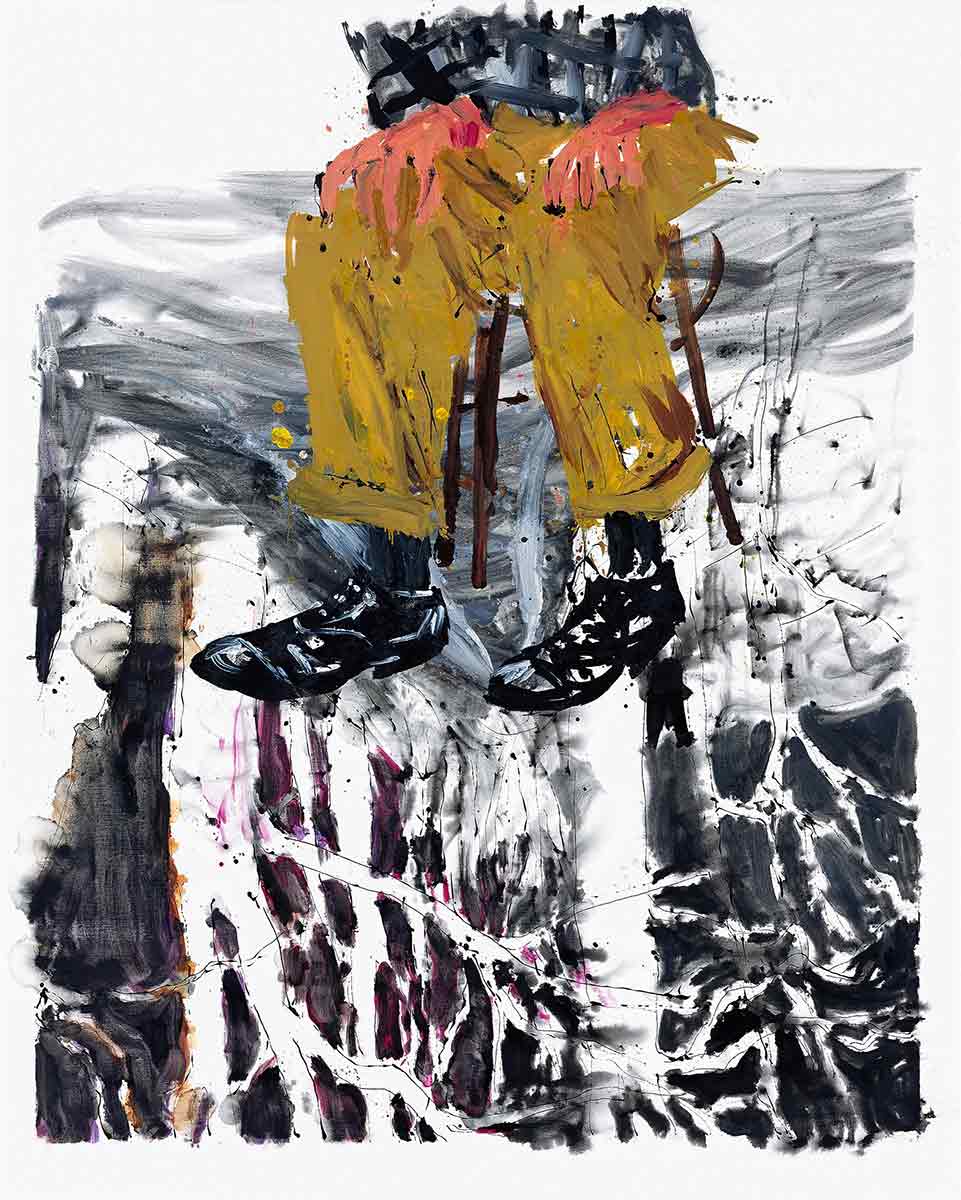
After decades of abstract art dominating the market, Georg Baselitz and other artists of his generation longed for something more personal, individualistic, and human-centered. An individual human figure, in its simultaneous simplicity and complexity, became the center of Baselitz’s art. His early works that represented human bodies in their non-aestheticized, distinctively physical form, clearly referenced the works of Théodore Géricault and Chaïm Soutine.
Another key influence in Baselitz’s work came from Italian Mannerism with its distorted expressive forms, combined with demonstrative messiness of line and crude subjects. The deliberate ugliness of his figure questions the entire concept of human painting in Western art. His Heroes series of 1965 and 1966, also called the New Types, is far removed from glorious heroic figures reflected in the history of art and look broken, defunct, and disintegrating.
6. His First Solo Show Caused a Scandal
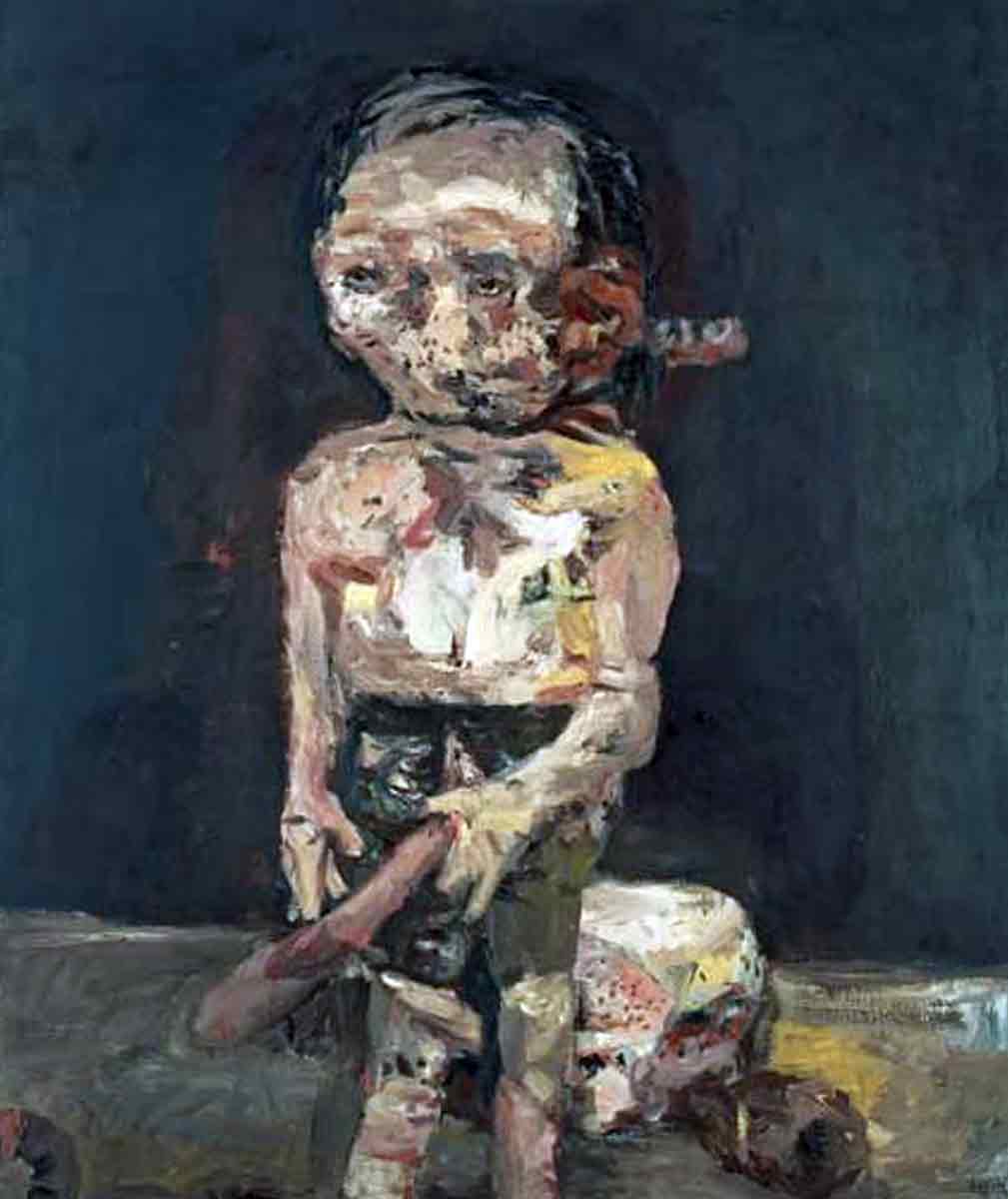
In October 1963, Baselitz opened his first solo show in West Berlin. The critics were outraged by the pornographic and repulsive paintings and even called for the immediate closure of the show. Two days after the opening, the public prosecutor seized two of the most provocative paintings, The Big Night Down the Drain and The Naked Man, for obscenity. A friend of gallerist Michael Werner had apparently tipped off the press about the seizure in advance, turning a publicity stunt into a self-fulfilling prophecy. The court case dragged on until 1965, and it sealed Baselitz’s reputation as a provocateur.
7. Baselitz Is Known for Turning Paintings Upside Down
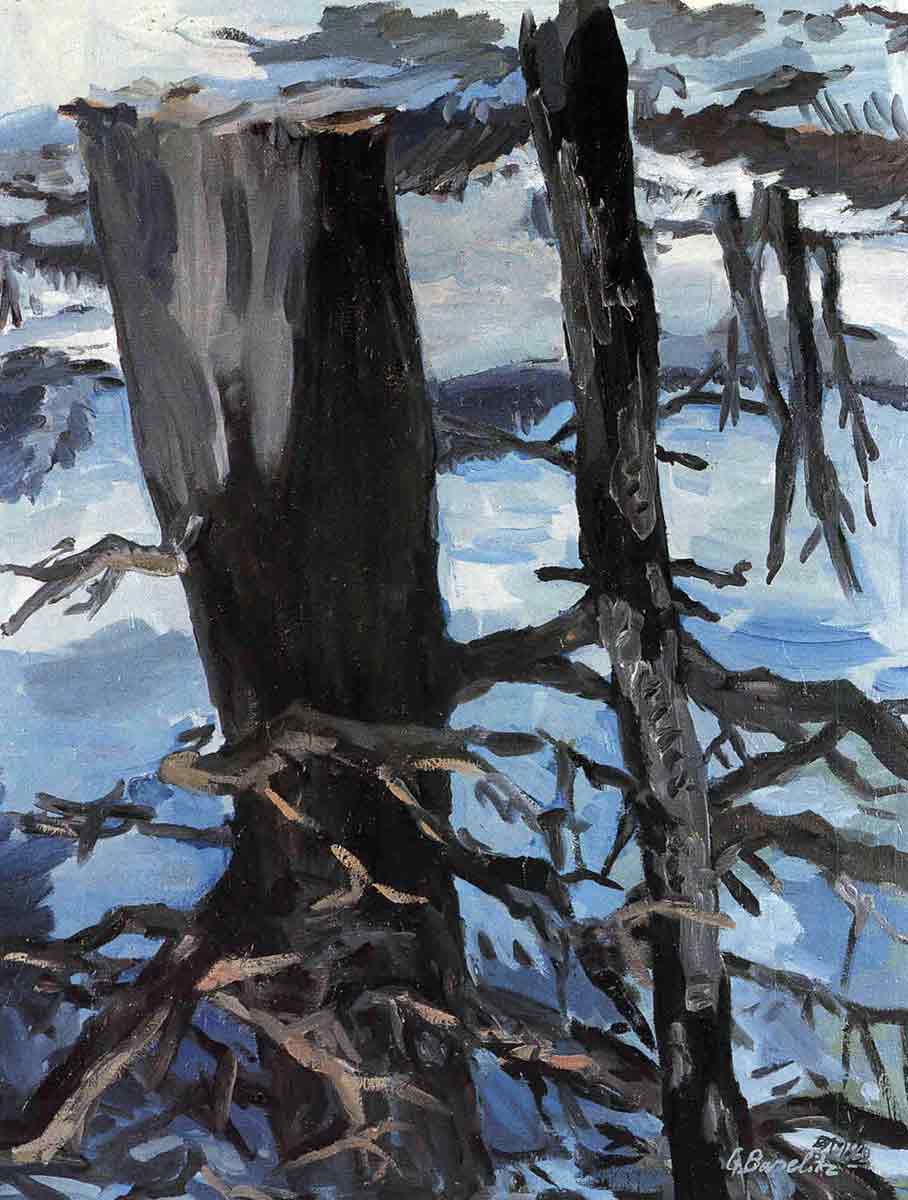
One of the most famous features of Baselitz’s art is his overturned paintings. Traditional and rather simple images like portraits or landscapes opened a new visual dimension when inverted, suddenly presenting a struggle for the viewer. Baselitz painted them upside down from the start, so the motif became a pretext for color and form. In any case, trivial subjects often overlooked in galleries suddenly revealed new aesthetic and emotional angles in them.
Baselitz’s first overturned painting was a landscape inspired by a work by Louis Ferdinand von Rayski, an almost forgotten 19th-century painter. A reproduction of von Rayski’s painting Wermsdorf Woods (c. 1859) hung in the school Baselitz attended in Kamenz and was forever imprinted in his memory. For his first inverted work, The Wood on Its Head (1969), the artist painted that forest upside down.
8. Baselitz’s Attitude Towards Women Artists Is Upsetting
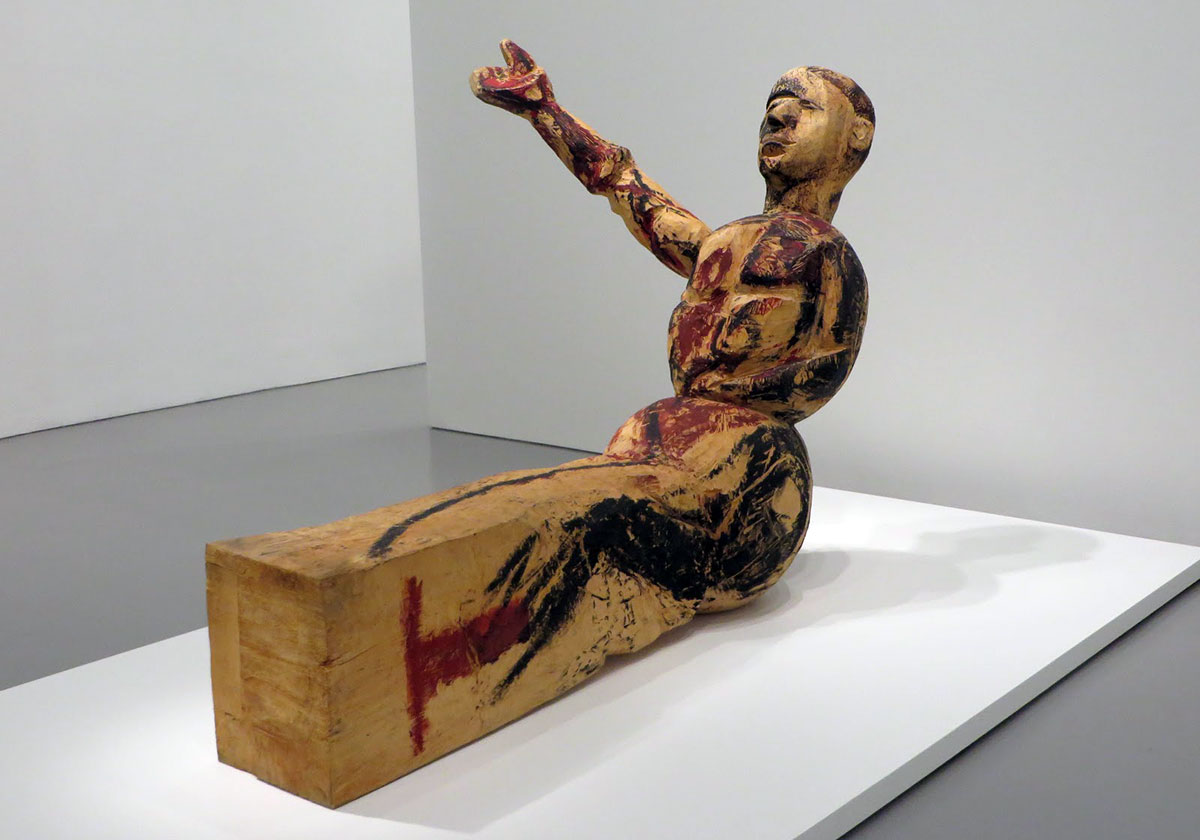
Unfortunately, the ability to make outstanding modern art does not always come with a respectful attitude. Late in his career, Baselitz stirred controversy with dismissive remarks about women artists. In a 2013 Der Spiegel interview, he said that “women don’t paint very well,” naming Agnes Martin and Paula Modersohn-Becker as exceptions while adding that the latter was “no Picasso, no Modigliani and no Gauguin,” and claimed that women “simply don’t pass the test… the market test.”
He repeated the claim to the Guardian in 2015, insisting that “the market doesn’t lie,” and stood by it again in 2022.
Baselitz flatly ignored centuries of political and social barriers that prevented women from achieving the same success that male artists did. Moreover, his choice to equate artistic merit with art market fluctuations was similarly quite controversial and reflected his inherent biases and a belief in an ill-functioning system of art trade.
9. Georg Baselitz Embodied the Myth of the Modernist Genius
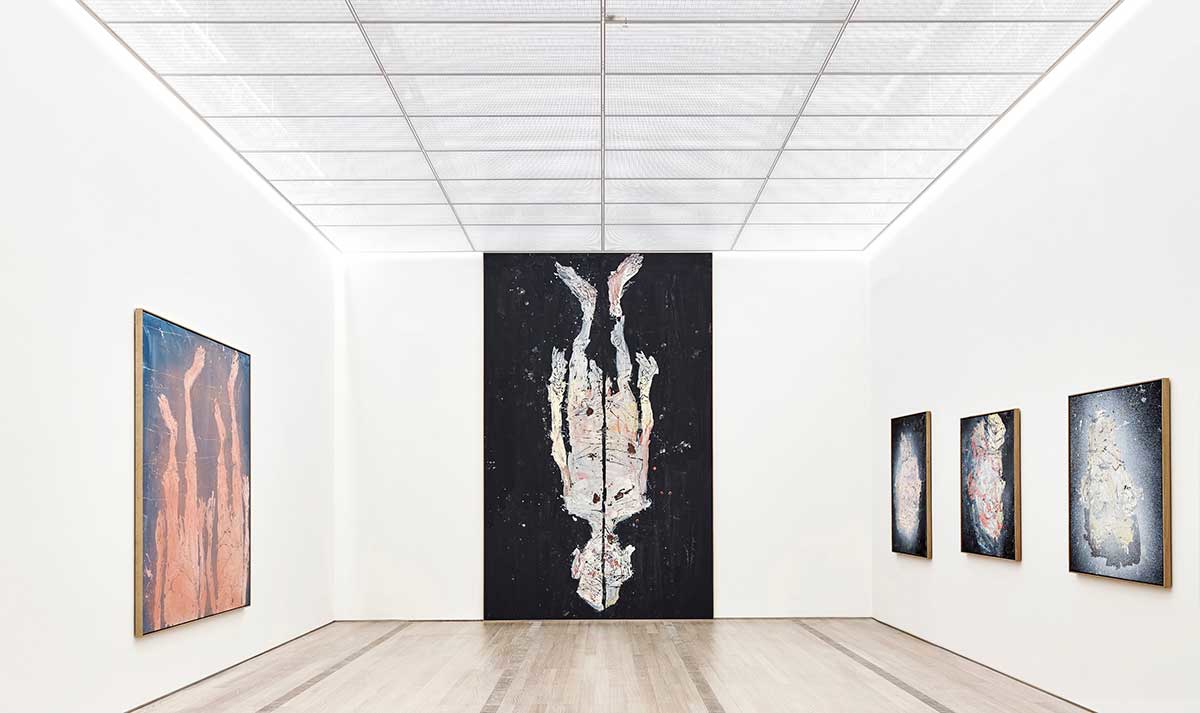
Baselitz kept working almost to the end, painting from a wheelchair with brushes on long poles, and his market stayed strong, with records of £7.47 million for the painting With Red Flag (1965) in 2017 and $11.24 million for the 1990 sculpture Women of Dresden, Visit from Prague in 2022. In all his grandiosity, his artistic myth and the way of work seem to represent an era in art that is mostly over. He described painting as an aggressive and masculine action in a way similar to Jackson Pollock and Pablo Picasso, who compared art-making to a violent sexual act. Like Picasso, Baselitz was an avid collector of African art, but his perspective of looking at and borrowing from it did not seem to surpass that of the great Cubist. His attitude towards women artists, as well as his highly individualistic art is clearly symptomatic of the climate he developed in.
His final years brought a run of major exhibitions, including a 2021 retrospective at the Centre Pompidou in Paris and Feet First at the Munch Museum in Oslo in 2025, which explored his lifelong fascination with Edvard Munch. He died days before Eroi d’Oro (Heroes of Gold), a show of his last gold-ground paintings, opened at Venice’s Fondazione Giorgio Cini during the 2026 Biennale, and London’s White Cube followed with Back Again, his first posthumous exhibition.
Personalities like these, repeatedly criticized and dissected in present-day art shows and publications, seem to be relics from the past. As contemporary art moves towards a diversity of voices, methods, and ideas, the myth of the lone, misogynistic genius is fading. Still, despite the controversy, the influence of Georg Baselitz and his bold approach to painting remains visible in contemporary art.