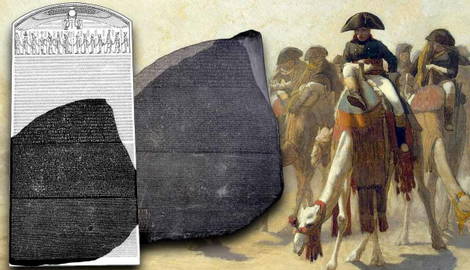

Napoleon Bonaparte’s expedition to Egypt and Syria (1798–1801) boosted his political ambitions as he demonstrated his military skills, instituted administrative reforms, and began scientific explorations that transformed European understanding of ancient Egypt. The British alliance with the Ottoman Turks prevented the French from establishing a long-term occupation of Egypt. However, the French legacy of government reform, scholarly innovation, and cultural pride laid the foundations of modern Egypt.
Why Did Napoleon Go to Egypt?
By 1798, the French Republic, under the Directory, had defeated its principal internal and external enemies. While the British Royal Navy continued to dominate the seas, French armies under the command of talented generals such as Napoleon Bonaparte had defeated enemies on the continent.
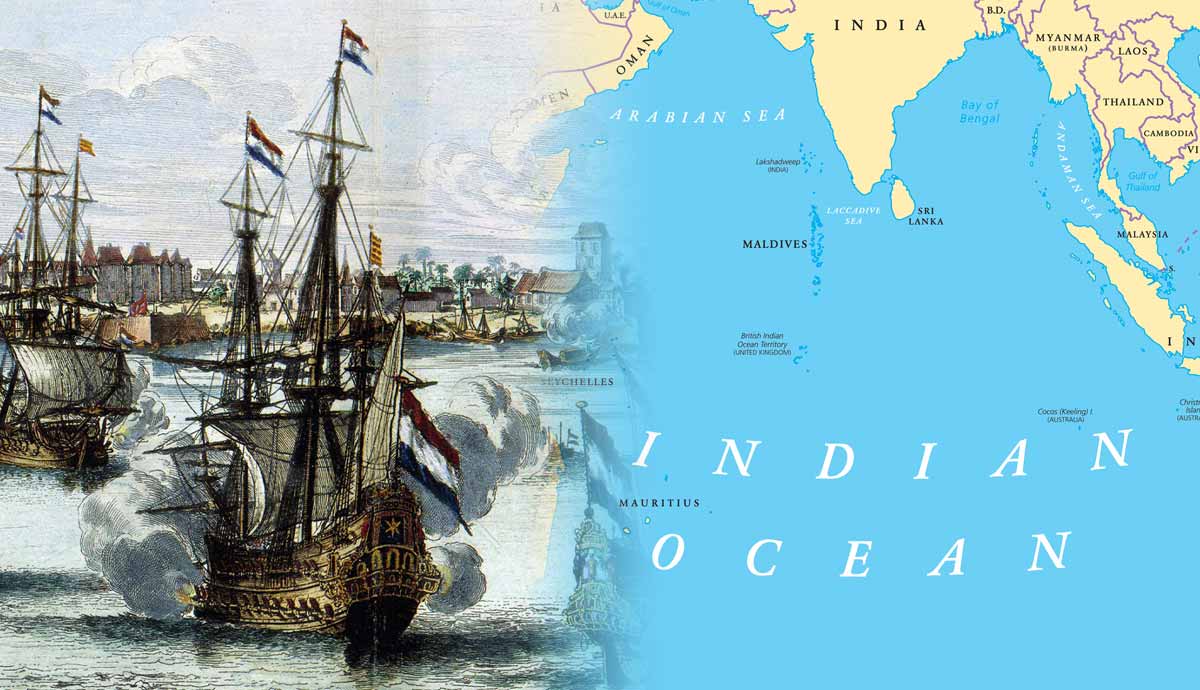
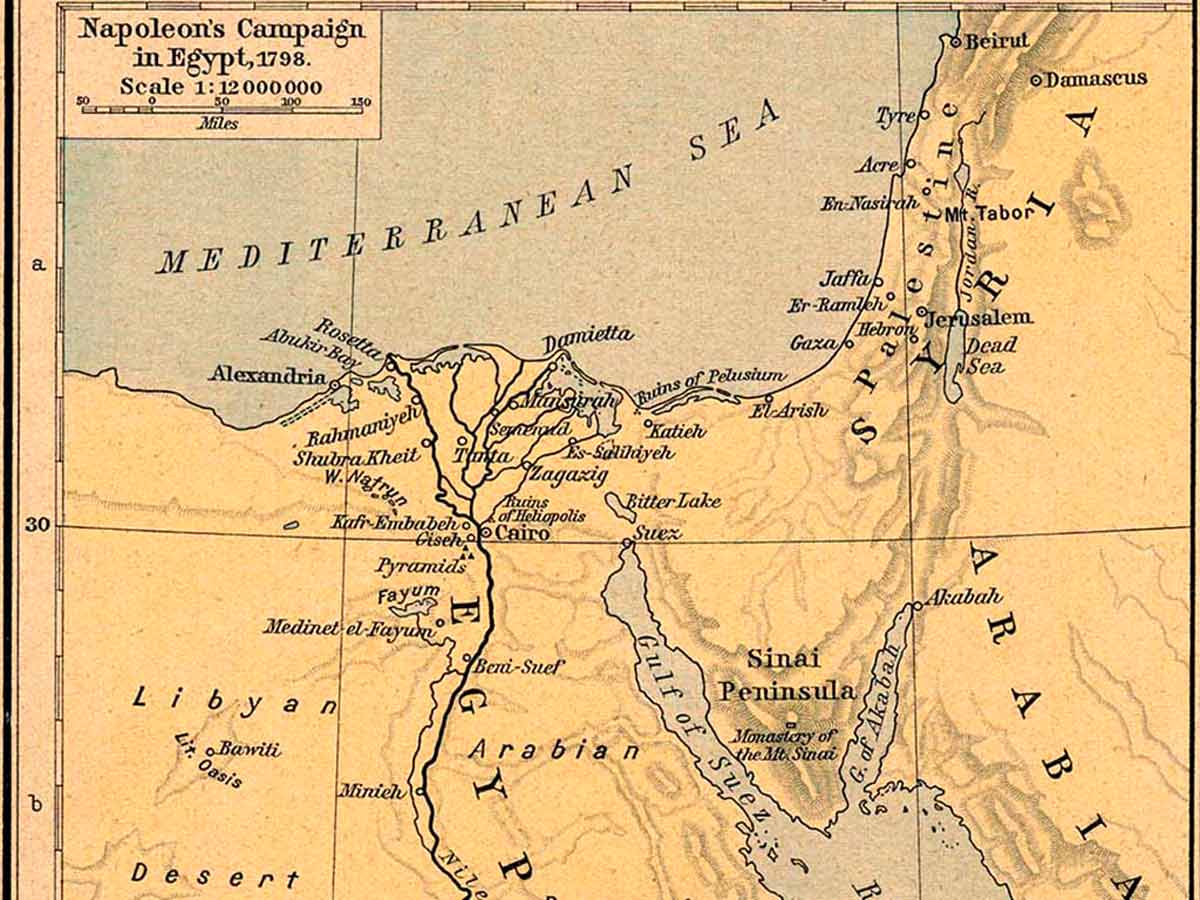
While Napoleon lobbied for an army to invade Britain, his battlefield success caused anxiety among leaders of the Directory, who feared that he might overthrow them. To keep him at arm’s length, they offered him command of a campaign in Egypt. This would further French ambitions to expand their influence in the Middle East and the Indian Ocean trade while cutting Britain off from its Indian colonies.
Napoleon accepted the command and hoped to emulate Alexander the Great and Julius Caesar by conquering Egypt. Aside from the strategic advantages of the campaign, Napoleon was a patron of science who hoped to further the understanding of ancient Egyptian art and history.
The Struggle Over Malta
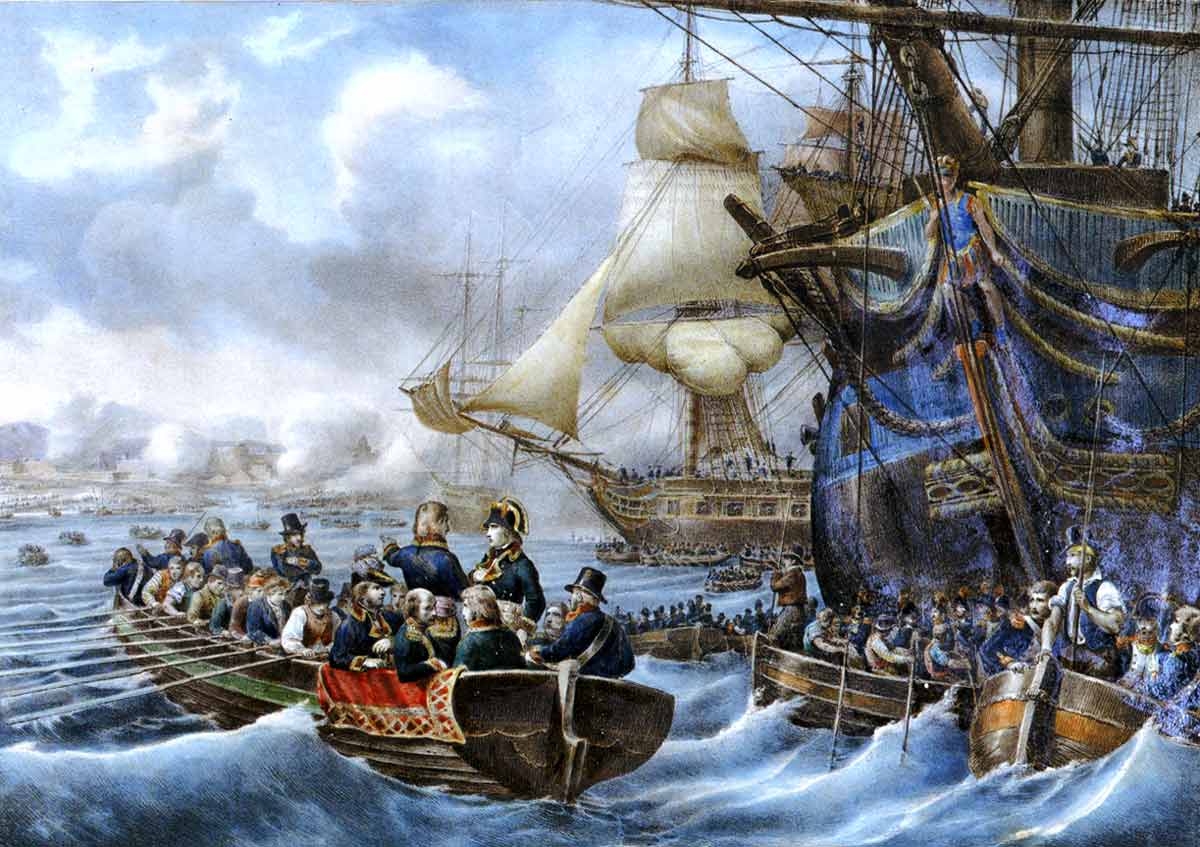
Napoleon’s Army of the Orient included men from the Army of Italy, whom he had led to impressive victories against the Austrian Empire in 1796-97. They were escorted across the Mediterranean by a fleet commanded by François-Paul Brueys d’Aigalliers, a highly regarded French admiral, with 13,000 sailors and 13 ships of the line.
The first stage of Napoleon’s plan was to seize the strategic island of Malta, which would otherwise serve as a base for the Royal Navy’s Mediterranean Squadron, under the command of the talented Rear Admiral Horatio Nelson.
Nelson intended to intercept the French fleet, but storms and bad luck allowed the French to outmaneuver him. After failing to prevent Napoleon from leaving the port of Toulon, Nelson correctly surmised that Napoleon was headed for Egypt but arrived in Alexandria while Napoleon was still in Malta.
Napoleon arrived in Malta on June 9. The troops secured the island without significant resistance from the Maltese knights. After three days, Grand Master Ferdinand von Hompesch zu Bolheim surrendered on June 11.
Napoleon left Malta after ordering the seizure of gold, silver, and precious stones from the island’s churches to pay his troops. Before his departure, he enacted extensive reforms in education, administration, and social organization based on the laws and ideals of the French Revolution.
Napoleon Defeats the Mamluks
On the morning of July 1, the Armée d’Orient arrived off the Egyptian coast and began landing its soldiers a few miles west of Alexandria. This was the first European army to set foot in the Middle East since the Crusades. Outnumbered and outgunned, Alexandria surrendered. The French rapidly secured their position and marched on Cairo.
Napoleon marked his arrival with a proclamation to the Egyptian people. He portrayed himself as a liberator and assured them of his good intentions and regard for their rights. “People of Egypt,” he asserted, “you will be told that I have come to destroy your religion; do not believe it! I have come to restore your rights, to punish the usurpers. I respect God, His Prophet, and the Qur’an.” (Rogan, p. 4)
Cairo’s leading intellectuals viewed Napoleon’s assurances skeptically. The scholar Al-Jabarti’s cynical account made light of the proclamation. He dismissed Napoleon’s profession of respect for Islam, its Prophet, and scripture as “a derangement of his mind, and an excess of foolishness” (Rogan, p. 4).
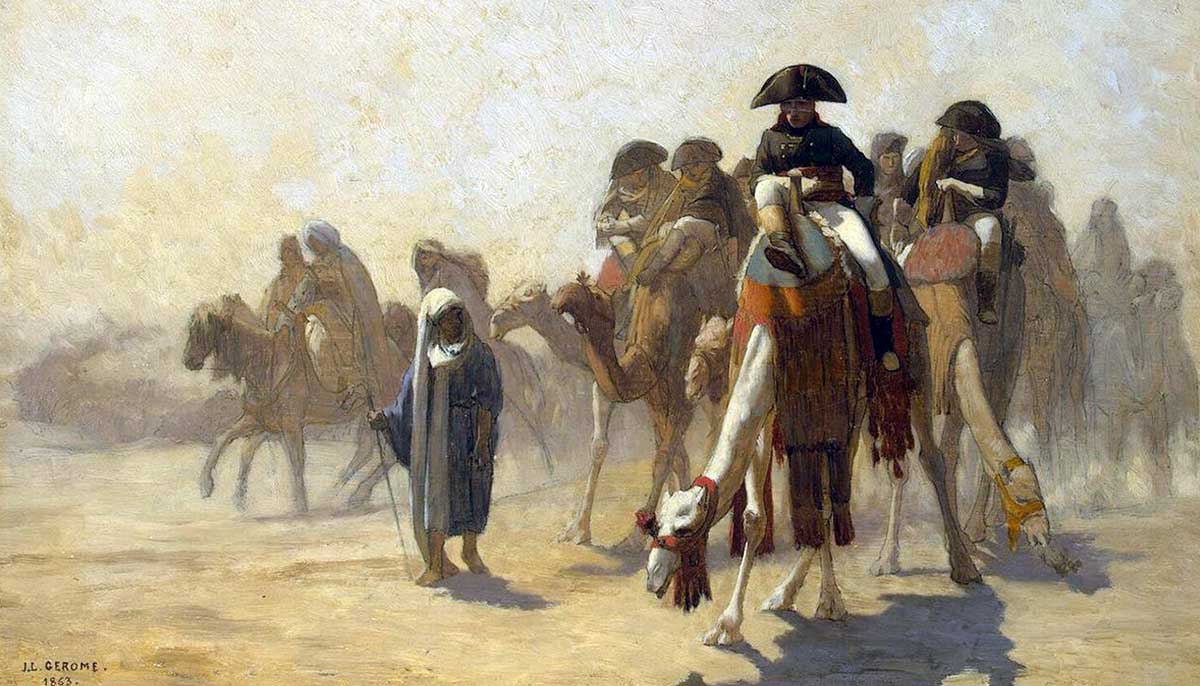
Lacking shelter, canteens, and water, Napoleon’s men were ill-prepared for the burning desert sun on the march to Cairo. After three days in the stifling heat, they reached the Nile River, where the Mamluk ruler Murad Bey waited with 10,000 Mamluks. Fortunately for Napoleon and his men, the Mamluks, though brave, were arrogant and underestimated the modern French army.
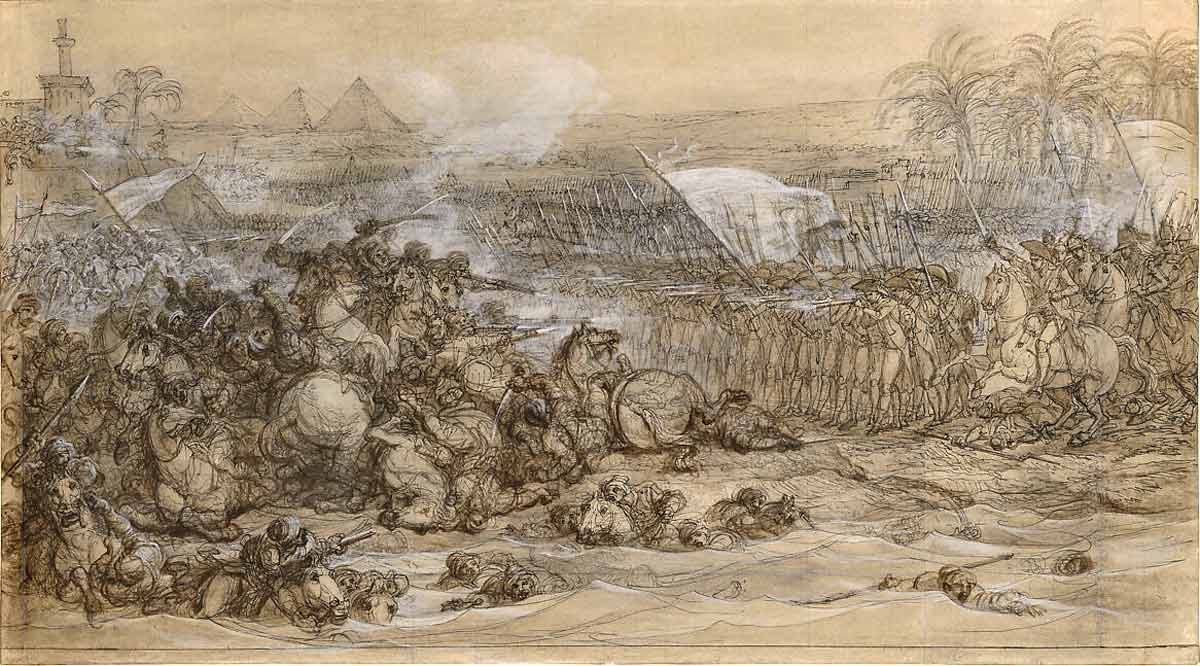
Napoleon deployed his infantry in hollow squares, protecting his men from cavalry charges from all directions while enabling them to unleash volleys of musket fire that decimated the surprised Mamluks. Their cold steel and frontal charges were no match for the squares’ firepower.
Two days later, on July 21, 1798, near Cairo, the Mamluks challenged the French at the Battle of the Pyramids. Although the pyramids of Giza were barely visible on the horizon, Napoleon emphasized the historical significance of the setting as he told his troops: “Forty centuries of history look down upon you.” Once again, the Mamluks charged at the French with drawn swords, only to face the overwhelming power of modern firearms. Murad Bey lost several thousand men while French casualties numbered less than a hundred.
The following day, a delegation from Cairo surrendered the city to Napoleon, who made his triumphal entry two days later. Napoleon believed that Cairo would flourish under French administration, but he failed to anticipate the naval disaster that was about to unfold.
The Destruction of the French Fleet
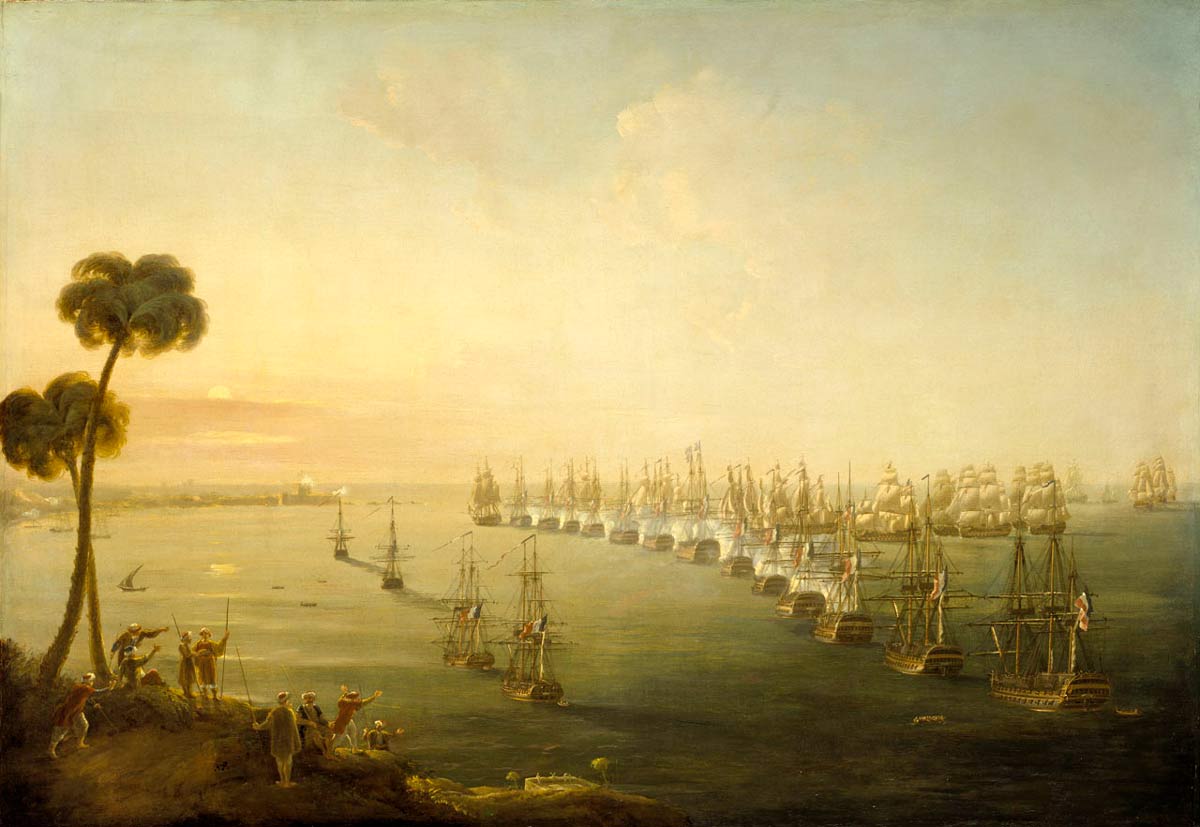
French Admiral Brueys, commander of the fleet at Aboukir Bay, turned the French victories to disaster through carelessness. Napoleon had ordered Brueys to enter Alexandria’s harbor, provision his ships quickly, and sail to the island of Corfu. Brueys and his inexperienced officers lined up their ships without positioning them for mutual protection.
This error proved decisive when Admiral Nelson discovered the French ships at anchor in Egypt. Seeing the vessels in an awkward position, Nelson attacked from both sides during the Battle of the Nile. Admiral Brueys was killed, and his flagship Orient exploded dramatically late in the evening of August 1, 1798.
The explosion was so loud and visually stunning that sailors from both sides paused fighting to watch in horror and awe. This defeat left Napoleon’s troops without supplies and reinforcements from France. French naval power in the Mediterranean never recovered from this decisive defeat.
Napoleon’s Administration of Egypt
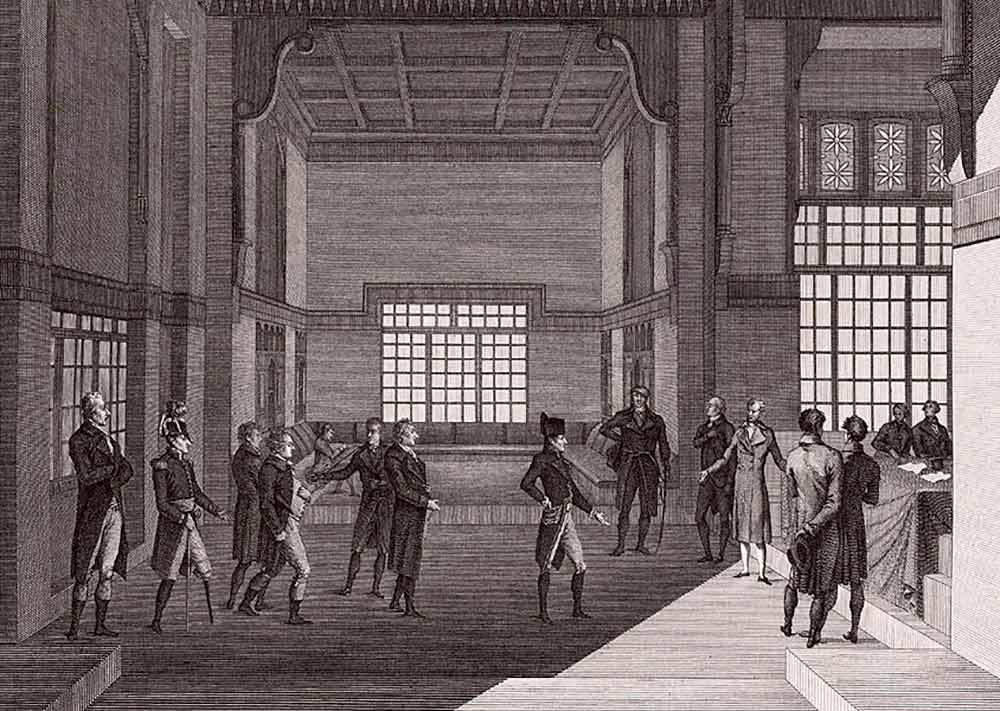
By August 22, Napoleon had formulated a program to address the needs of Cairo’s 300,000+ people, who suffered from the unpredictable Nile floods and droughts. He initiated a new French administration, began minting money, introduced a system of taxation based on wealth, implemented street lighting, and established a land registry. To increase the efficiency of Egyptian agriculture, windmills would replace hand querns and higher value crops were introduced to supplement familiar grains.
One of Napoleon’s most significant accomplishments was founding the Institute of Egypt in Cairo in 1798. The Institute brought together scientists, scholars, and artists to study Egyptian culture, history, and natural environment. Scholars produced Description of Egypt, a comprehensive report on Egyptology and ancient civilization that documented Egyptian antiquities and provided the basis for archaeological investigation.
Napoleon’s administration introduced European philosophies that replaced Ottoman influence in Egyptian society. French military superiority inspired a desire for Western technological innovations and modern engineering to benefit the country.
Resistance to French Rule
Though Napoleon was the master of Cairo, Ottoman armies under Ibrahim Bey and Murad Bey remained at large. Ibrahim Bey and his 2,000 cavalrymen administered the adjacent Sharqiyah Province, with its capital at Bilbeis. Napoleon decided to attack Ibrahim because he had taken gold and other valuable treasures from Cairo.
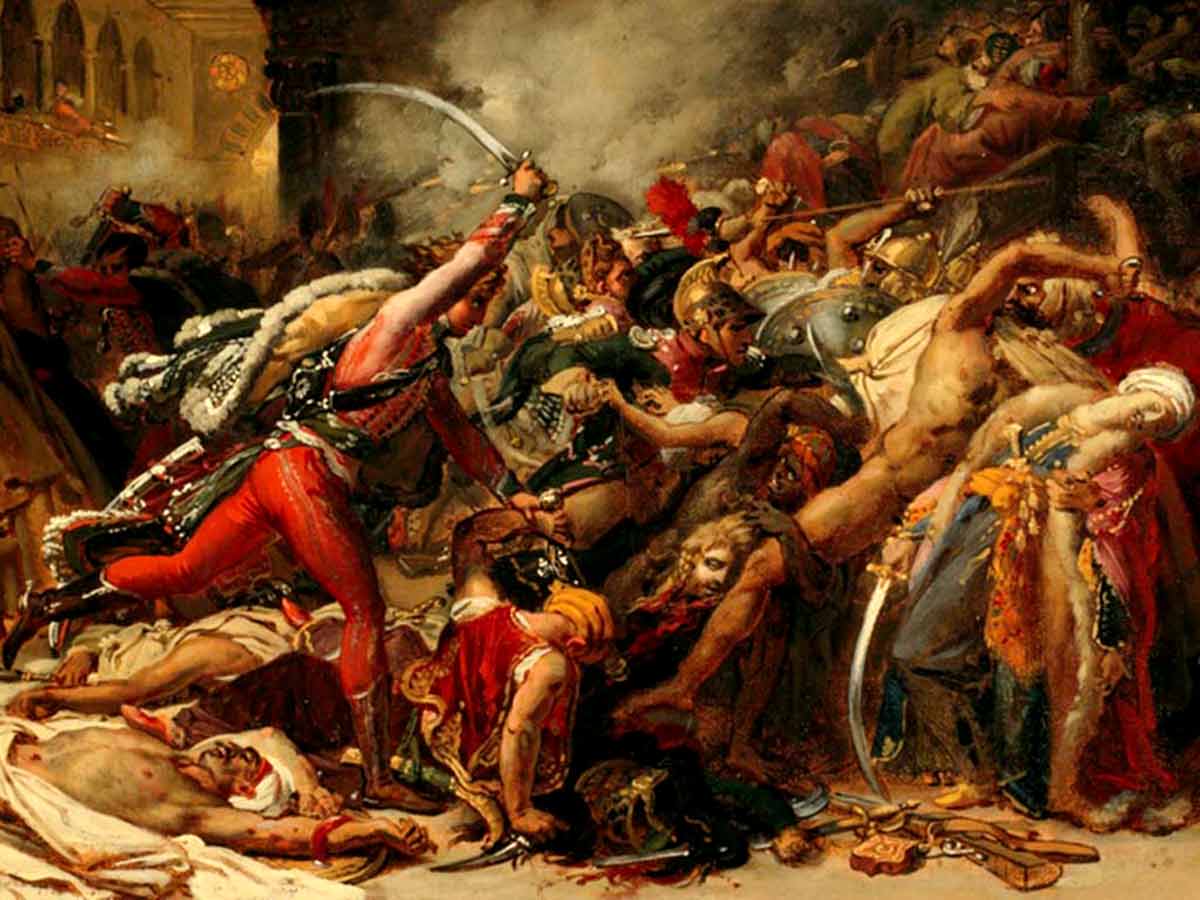
Meanwhile, Napoleon faced growing discontent inside Cairo. The Ottoman sultan issued a firman or proclamation that encouraged resistance to French rule. By October 21, the city of Cairo was in full revolt. The muezzins’ call from the minarets summoned the faithful to action, and the streets descended into pandemonium.
The disturbances continued throughout the day. After sunset, the insurgents erected impromptu barricades to seal all approaches to the Al-Azhar Mosque complex, where the inner courtyard was filled with hundreds of armed rebels. With the French troops surrounded in the Citadel, Napoleon ordered the garrison to break out into the Al-Azhar district and issued brutal orders to “kill all who are in the mosque” (Strathern, p. 243).
By the night of October 22, the insurrection was over. Among the hundreds of French casualties was Napoleon’s Polish friend and aide-de-camp Józef Sułkowski. Napoleon’s claim that only 1,000 citizens of Cairo died did not include the Christians and Jews who were slaughtered by the mob.
Victory and Defeat in the Syrian Campaign
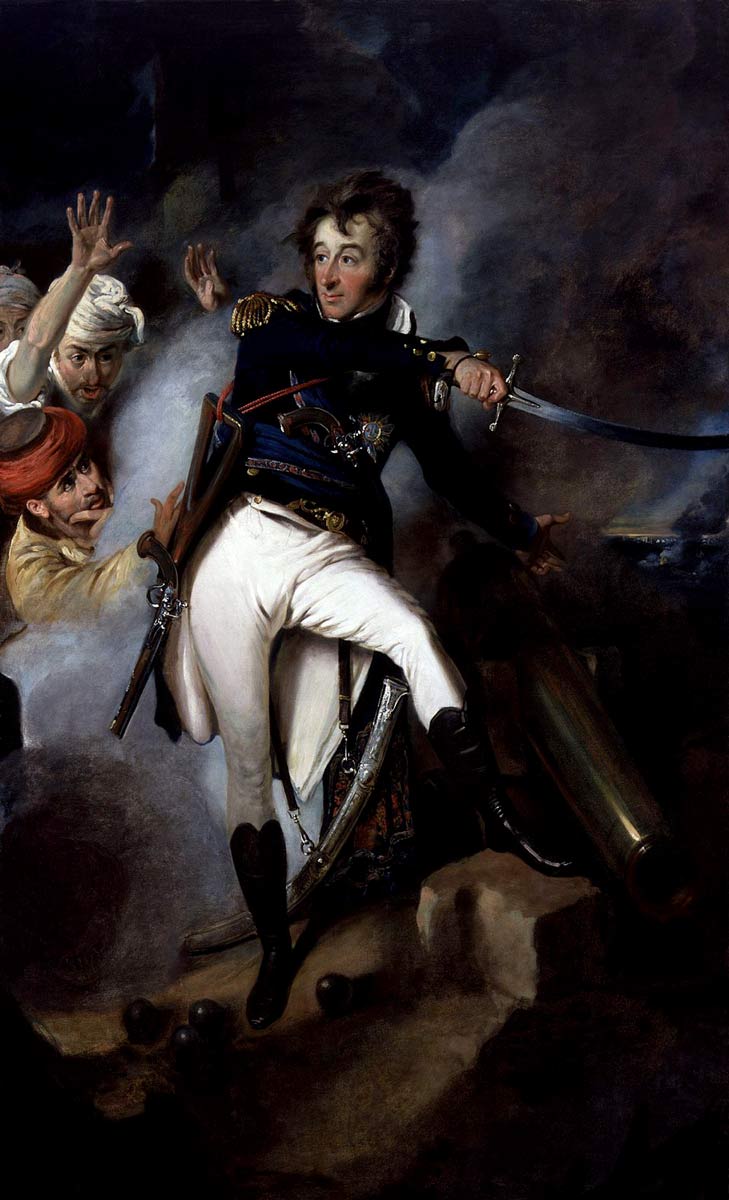
Alongside the threats within Egypt, Napoleon faced a major threat from two large Ottoman armies from land and sea. Napoleon planned to march into Syria to destroy the Turkish army approaching by land before returning to Egypt to confront the reinforcements by sea.
Napoleon’s 14,000 men arrived at the fortress of El-Arish in the Sinai Peninsula and secured its surrender after two weeks. The French took 2,000 prisoners, but Napoleon lacked the manpower to effectively supervise them. He released the prisoners after they took an oath promising not to take up arms against the French again, but the prisoners failed to honor their undertakings.
Napoleon continued his march to the coastal city of Jaffa where he took 4,000 prisoners, many of whom were the same men who had sworn to lay down their arms at Gaza. Napoleon felt he had no choice but to execute the prisoners. Reports of Napoleon’s brutality motivated local Muslims to fight more tenaciously.
Napoleon’s army met its match at the Siege of Acre as the Ottoman garrison under the command of Djezzar Pasha supported by a British Royal Navy force led by Sir Sidney Smith thwarted Napoleon’s plans. After two months, the French abandoned the siege and returned to Egypt. The French were forced to push many of their cannons into the sea and abandon men suffering from the plague in outlying villages. Nevertheless, Napoleon returned into Cairo as if the Syrian campaign had been an overwhelming success.
Napoleon Abandons His Army
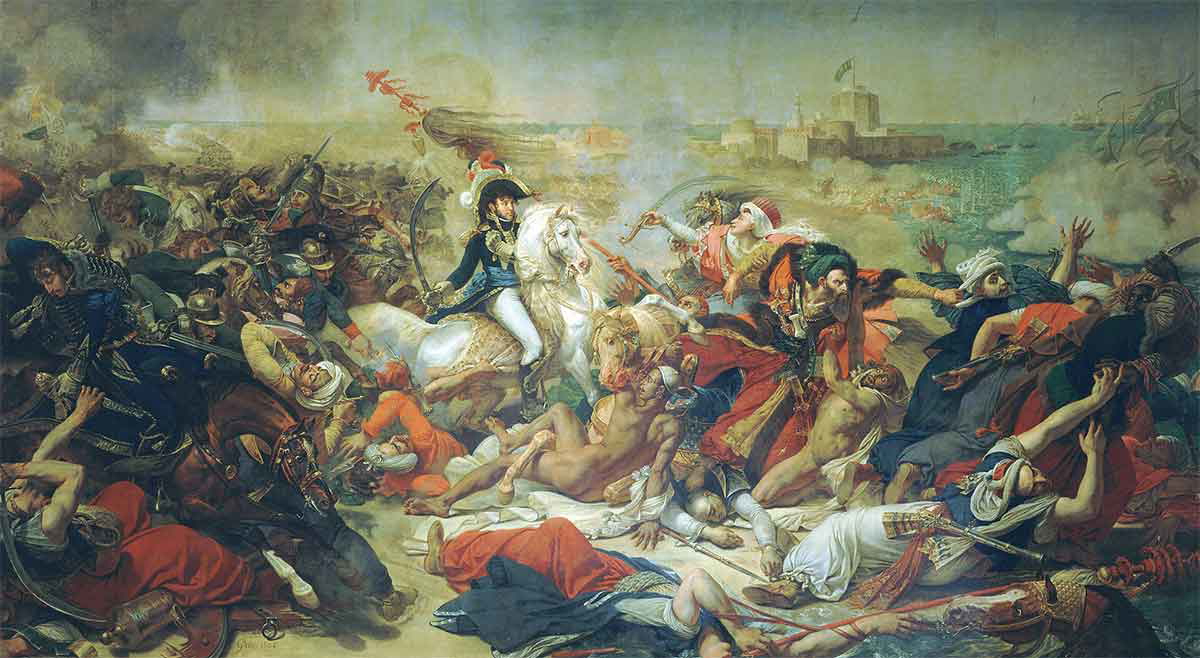
On July 11, 1799, the Turkish army arrived near Aboukir with protection from the Royal Navy. Napoleon called up all available resources, and with the dashing Joachim Murat, he defeated the larger enemy force of Turks and Mamelukes at the second Battle of Aboukir. Although this victory gave the French time to regroup, Napoleon left Egypt with a small group of close confidantes and transferred command of the army to General Jean-Baptiste Kléber.
While Napoleon returned to France and overthrew the Directory in the Coup of 18 Brumaire, General Kléber was assassinated by an Egyptian student in June 1800. The Army of the Orient was eventually defeated by the British in 1801 and repatriated to France.
The Legacy of Napoleon’s Egyptian Campaign
During the Egyptian campaign, Napoleon was not only accompanied by soldiers but also hundreds of artists and scientists. Napoleon’s naturalists, artists, and geographers kept detailed records that became the basis for new approaches to Egyptology in Europe. The Egyptian campaign also transformed European art and architecture as Egyptian motifs became increasingly popular in furniture and interior design.
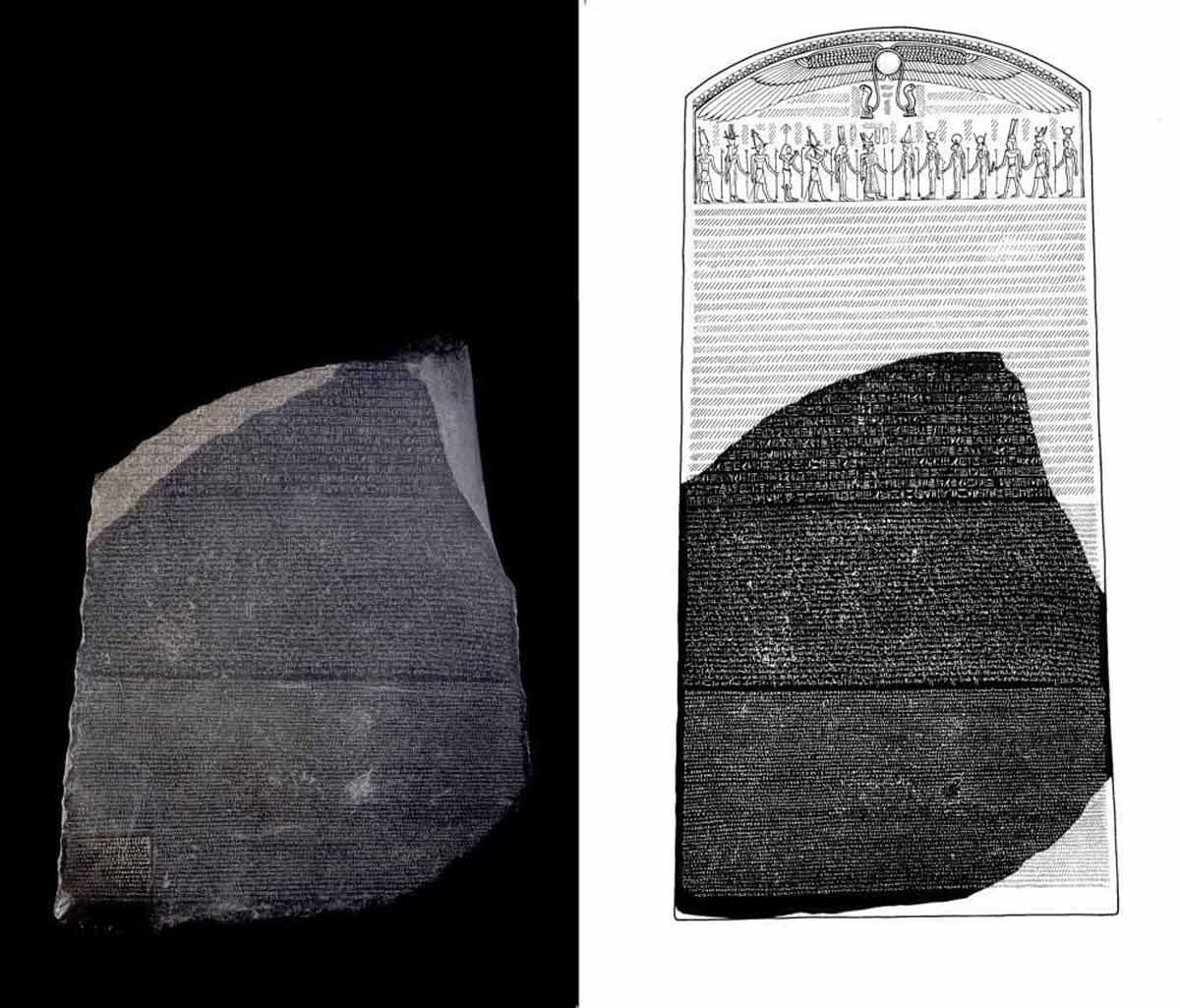
The most significant cultural accomplishment of the campaign was the discovery of the Rosetta Stone in 1799. After the French defeat in 1801, British troops took the Rosetta Stone to London for research and display at the British Museum, but copies were already available in France.
The stone was inscribed in three different written languages: Greek, Egyptian Demotic, and Hieroglyphic. French linguist Jean-François Champollion deciphered the meaning of the hieroglyphic writings and published his translation in 1822. His work significantly enhanced the interpretation of Egyptian history.
The brief French occupation of Egypt contributed to the modernization of military and government administration. Although the French forces were eventually expelled, Napoleon’s victories on the battlefield shook the Egyptians’ sense of cultural superiority.
Napoleon’s introduction of European ideas and advanced modern technology led to the birth of Modern Egypt as an independent entity (Rogan, p. 64). After the French departed, an ambitious Ottoman commander of Albanian extraction by the name of Muhammad Ali seized power in Egypt and enjoyed considerable autonomy from the authorities in Istanbul.
Sources
- Rogan, E. L. (2011). The Arabs: A History. Basic Books.
- Strathern, P. (2009). Napoleon in Egypt. Bantam Books.