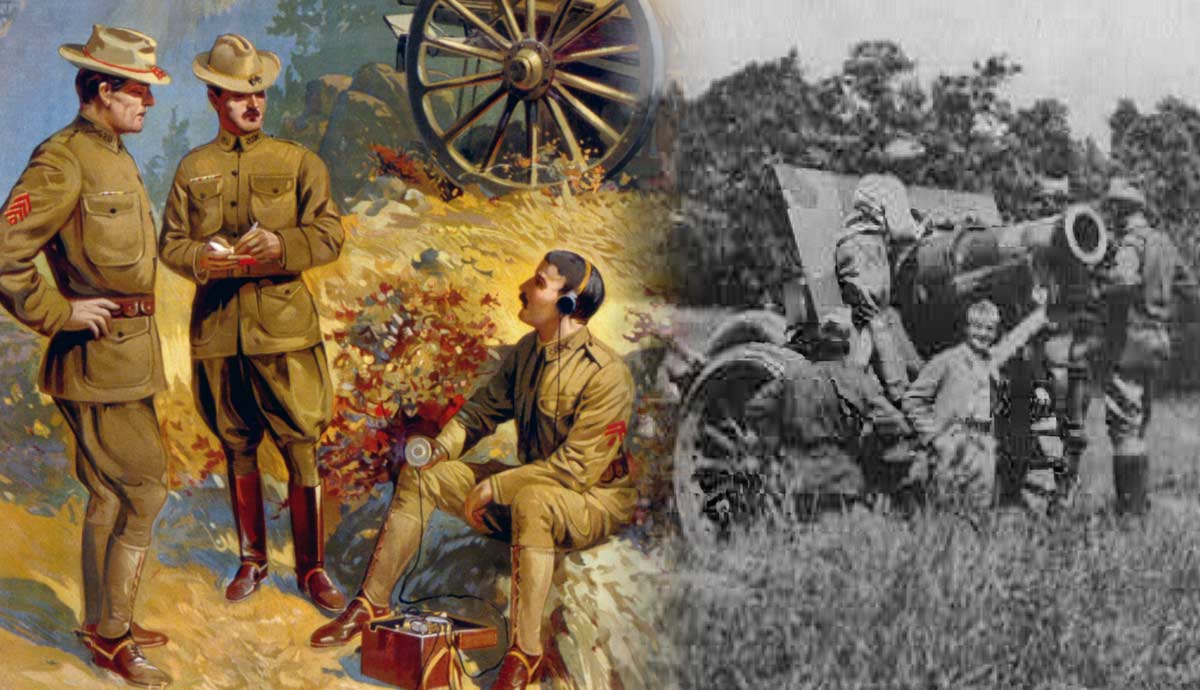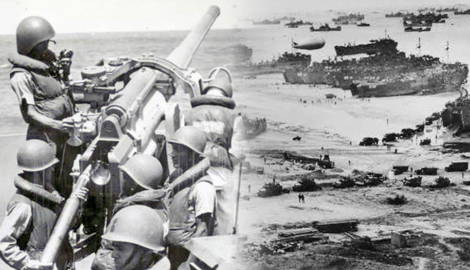

No conflict in human history witnessed warfare on as many fronts or with as many advanced weapon systems as World War II. Officially beginning in 1939 after the German invasion of Poland, over 100 million uniformed personnel from 30 countries waged war via direct infantry combat, aerial bombing campaigns, naval actions, and covert espionage. While these methods helped the Allies counter Axis aggression in Europe, the Pacific, and North Africa, few assets brought as much destruction as American artillery.
Growing Axis Momentum
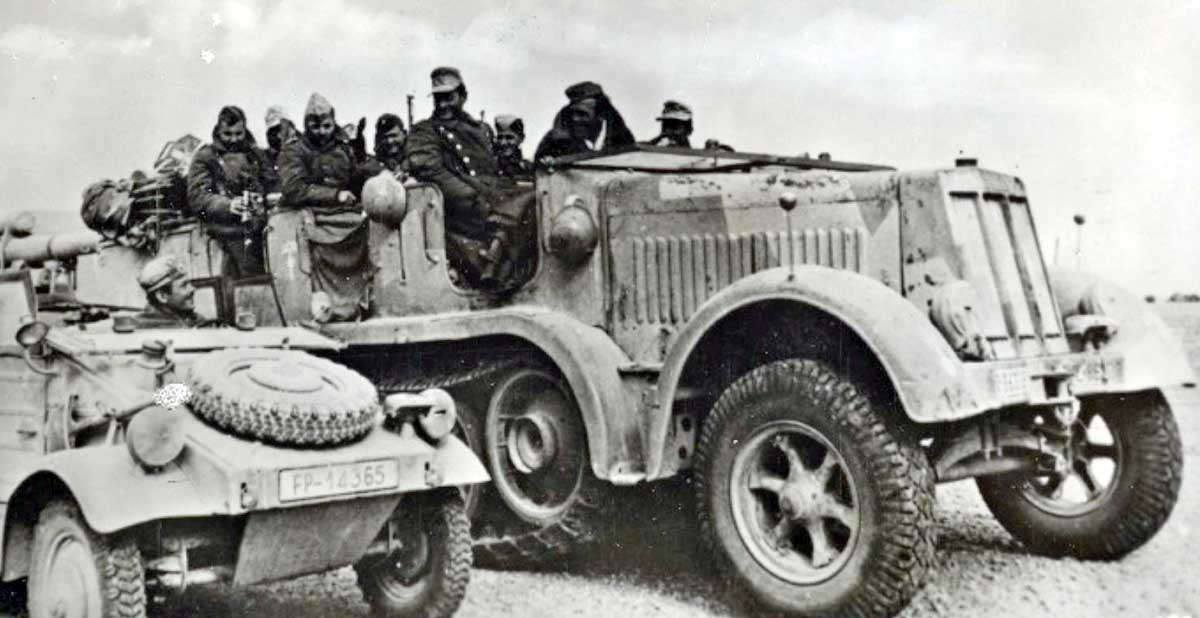
Prior to the United States entering World War II in late 1941, the Axis powers were off to a blistering start that worried Allied leaders. After quickly conquering Poland via blitzkrieg tactics, Germany marched west. By mid-1940, Adolf Hitler controlled Denmark, Luxembourg, Belgium, Norway, France, and the Netherlands. Fueled by two decades of resentment following defeat in World War I and grievances from the perceived injustices of the Treaty of Versailles, Germany continued its campaign across Western Europe. By 1941, Nazi Germany occupied much of mainland Europe.
Hitler’s counterpart in Italy, Benito Mussolini, extended the Axis front into North Africa and the Balkans with German support, gaining a foothold in Egypt and Libya. Similarly, Japan tightened its grip on key territories in the Pacific and Southeast Asia including large parts of China, Korea, Taiwan, Vietnam, the Philippines, and Thailand.
Determined to dissuade the United States from joining Allied partners, Germany, Italy, and Japan signed the Tripartite Pact in 1940, outwardly portraying a unified front to the sleeping giant. By late 1941, however, Japanese-American negotiations reached a stalemate, leading Japanese Prime Minister Tojo to surprise the world by attacking the United States Pacific Fleet at Pearl Harbor without a declaration of war.
America Enters the War
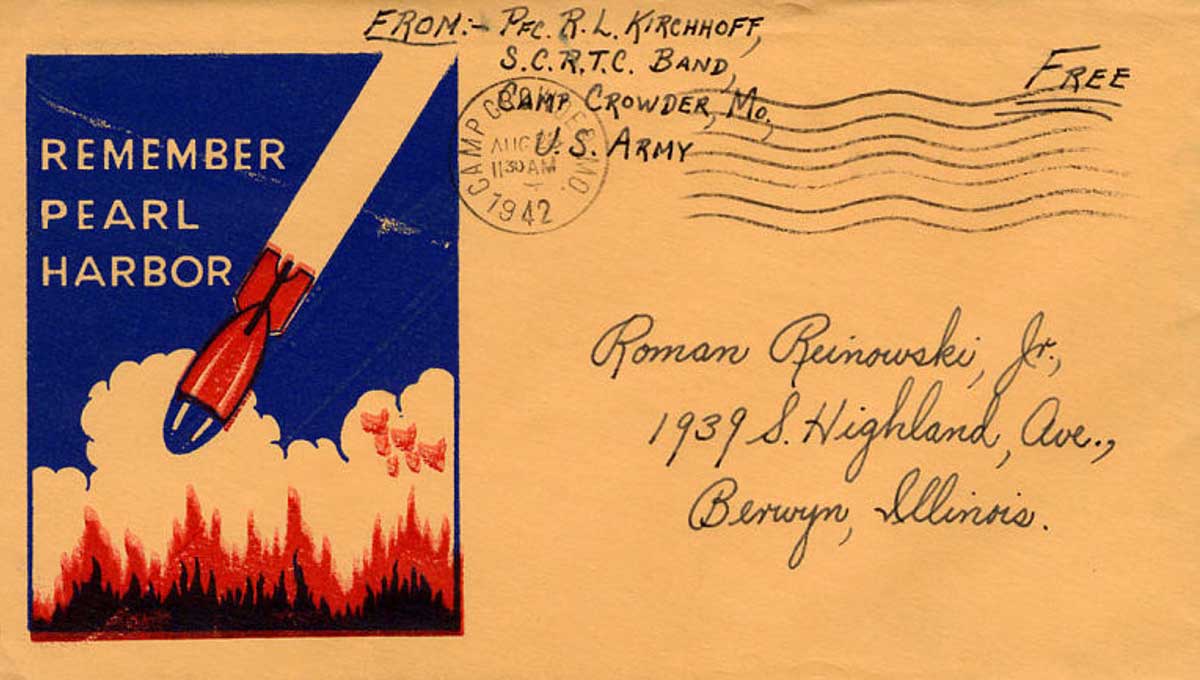
On December 7, 1941, Japan executed a surprise bombardment against key military installations across the island of Oahu, Hawaii, from aircraft carriers staged nearly 250 miles north of the island. Although not destined for American statehood for another 18 years, the island housed thousands of United States armed forces personnel. In addition to its devastating aerial raid on Pearl Harbor, the Japanese neutralized targets at Hickam Airfield, Wheeler Airfield, Bellows Airfield, Kāne’ohe Naval Air Station, Schofield Barracks, and Ewa Marine Corps Air Station.
The attack on Pearl Harbor was not only a surprise to American commanders who overlooked possible attack indicators, but even Hitler was unaware of the Japanese plans. After continuous torpedo strafes and precise bombardments, over 2,400 Americans were killed and 1,100 were wounded on the day which, in the words of President Franklin D. Roosevelt, would “live in infamy.”
Little did the United States know that its first shots of World War II would be fired against the Japanese on the otherwise calm December morning. For America’s artillerymen, Pearl Harbor represented the first chance for them to prove their worth against the foe. During the attack, the United States destroyed 29 Japanese planes, led by American anti-aircraft crews and the few fighter pilots who managed to take off amid the chaos. Allied artillery assets continued their strong showing shortly after Pearl Harbor.
North Africa
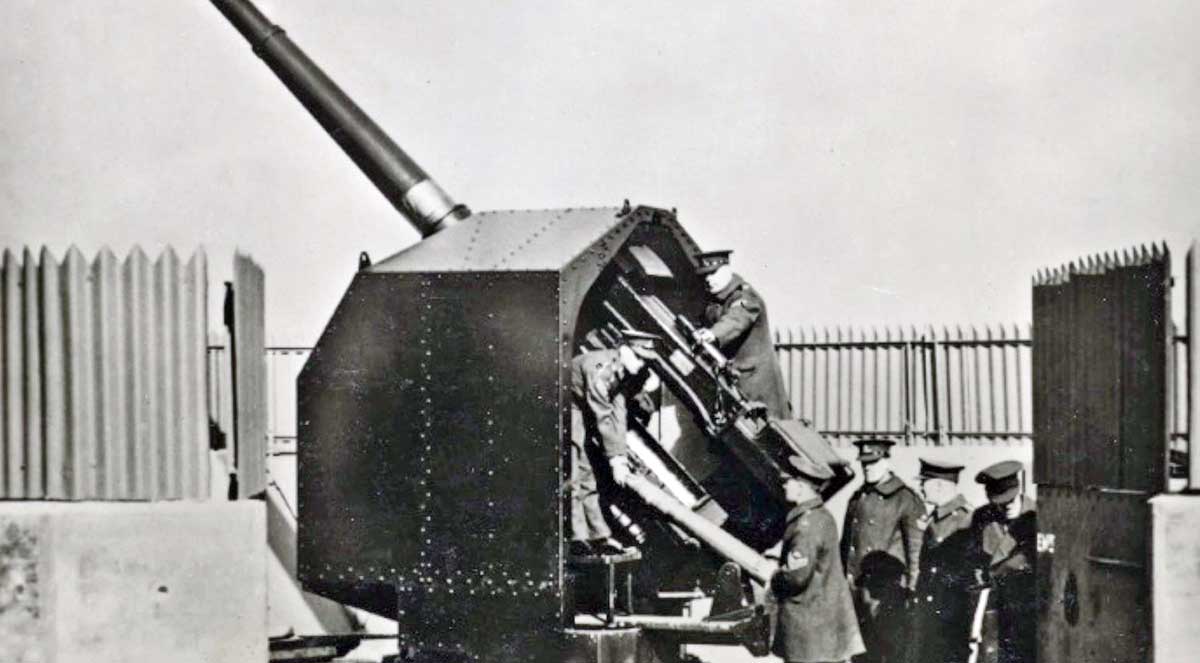
For many American service personnel, North Africa represented the first taste of fighting the enemy after Pearl Harbor. In November 1942, the Allies launched Operation Torch with landings on the beaches of Morocco and Algeria, marking the first major campaign in Africa. Artillery proved vital during the assault. From pre-landing bombardments to continued indirect fire support, field and naval artillery missions allowed the Allies to capture the beachheads, supply depots, and transportation centers.
North African terrain presented numerous challenges for effective artillery deployment. Gun crews faced extreme heat during the daytime and freezing temperatures at night which affected both the men and the howitzers they operated. Weather conditions were complicated by sandstorms and dust which demanded constant maintenance and obscured fields of vision, making effective observation, coordination, and delivery of projectiles an arduous task. Lastly, water scarcity jeopardized not only dehydrated soldiers, but also affected cooling and mixing techniques for artillery equipment, systems, and ammunition.
Despite these logistical setbacks, American artillery evolved to adapt to the harsh terrain. By adding specialized filters to howitzers, creating scheduled maintenance processes, and acclimating to the desert, the Allies countered German advances during the 1942 Tunisian Campaign and Battle of Kasserine Pass in 1943. These successes through hardship in North Africa permitted the Allies to penetrate north into Europe through the invasion of Sicily via Operation Husky in July 1943.
Europe
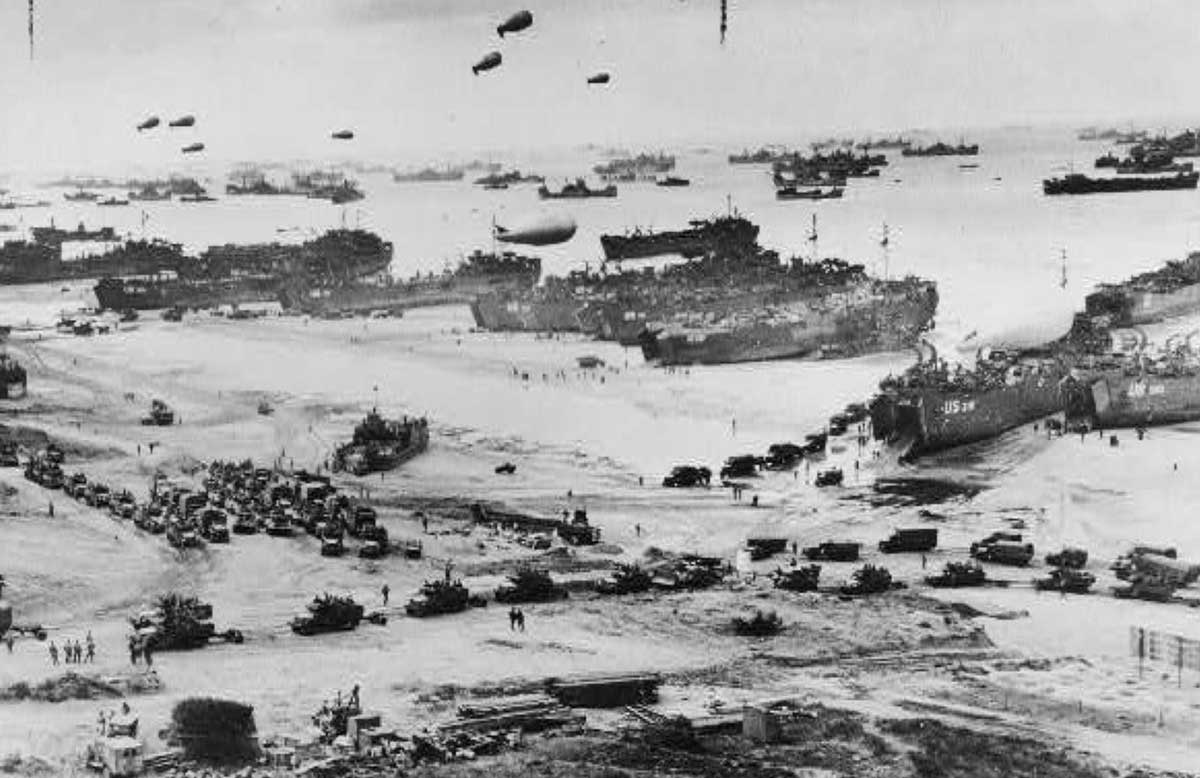
One of the most important contributions made by Allied artillery was during the D-Day landings in Normandy. The accumulation of months of planning, Operation Overlord delivered Allied troops into mainland Europe to liberate France and begin the final push of countering Axis fighters back into Germany. Prior to the assault, naval bombardments weakened the German artillery positions and machine gun nests as Allied infantrymen disembarked from their landing crafts. Projectile craters caused by friendly artillery also provided cover and concealment for the troops on the beaches of Normandy.
Once on land, field artillery crews immediately supported the assault. With 105mm howitzers and their larger 155mm counterparts, gun crews disrupted German defenses for hours with high-explosive munitions. Allied victories continued into the winter of 1944. During the Battle of the Bulge, Germany launched their surprise assault with tremendous artillery barrages. Prepared for counterfire operations, American gun crews quickly returned fire on German batteries. Successful defense of Axis offensives through harsh conditions in early 1945 allowed the Allies to retain key terrain in Bastogne and St. Vith.
By March 1945, the Allies were well positioned to cross the Rhine River into Germany. There, American howitzers initiated Operation Plunder with over 5,000 artillery pieces to weaken German defenses near the crossing. Indirect fire also supported the largest airborne operation of World War II, Operation Varsity, to allow safe landing for American and British troops. The Allies were now securely on German soil.
The Pacific
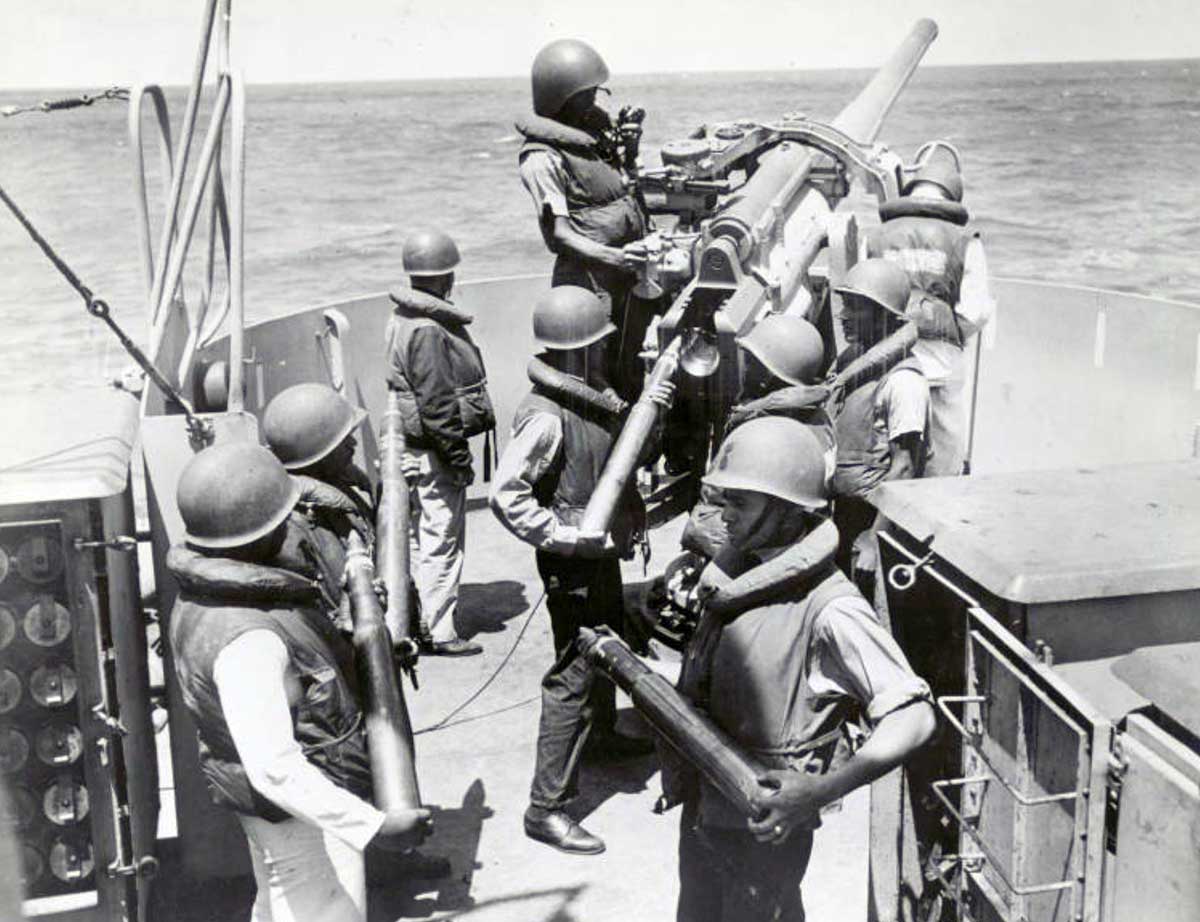
Although the Allies faced difficulties in emplacing artillery in North Africa and Europe, few fronts presented challenges to similar levels as the Pacific Theater. In many cases, field artillery could not be deployed in time to support Allied island-hopping campaigns. Despite its limited use, American artillery did help the Allies defend the vital airstrip at Henderson Field during the Battle of Guadalcanal, maintaining control of the key island.
As a result of dense jungle terrain and limited transportation infrastructure which impeded the operation of artillery on land, naval bombardments were far more commonly employed to support infantry operations. US naval artillery decimated Japanese defenses prior to the amphibious assault at the 1943 Battle of Tarawa and the 1944 Battle of Saipan.
American artillery was heavily exploited during the 1945 Battles of Iwo Jima and Okinawa, two of the most significant encounters of the Pacific Theater. At Iwo Jima, the Japanese defenses took the form of underground networks of bunkers and trenches. Artillery fire from land and sea, specifically from the USS Iowa and USS New Jersey, heavily weakened these otherwise unreachable fortifications to soften the defenses prior to assault on land.
Once on shore, Marines used mobile artillery pieces including 75mm pack howitzers and 105mm guns to rain fire from above. At Okinawa, over 1,500 artillery pieces, including naval guns and field-based 105mm and 155mm howitzers, combined to overwhelm the Japanese defenders prior to the land assault. The United States military’s Tenth Army alone fired over 1.1 million rounds against Japanese defenders during the battle.
Legacy
American involvement in World War II allowed the US military to utilize fire direction centers, a method of centralizing precise calculations for indirect fire from removed operations hubs introduced in the 1930s. By receiving targeting information such as enemy locations, dispositions, sizes, and movements from forward observers on the battlefield via radio communication, fire direction centers could account for hazardous terrain, assign fire to the best-positioned batteries, and ensure gun crews were given the most accurate information possible. The successes of fire direction centers during World War II ensured their continued employment in wartime, and the method is still used by the United States today.
Although artillery was instrumental in defeating the Axis powers and restoring freedom to much of the world, its effects negatively affected soldiers mentally and physically. Known as shell shock during World War I and post-traumatic stress disorder in modern times, combat fatigue plagued troops on both sides of conflict by inflicting immense mental anguish and exhaustion.
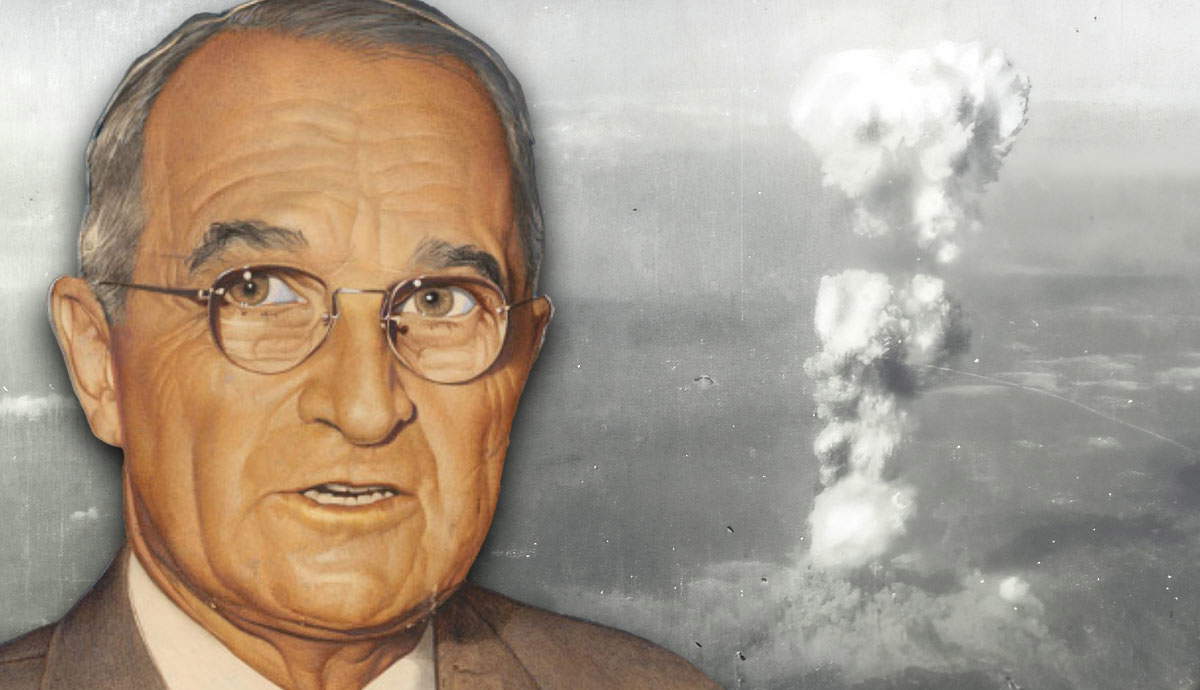
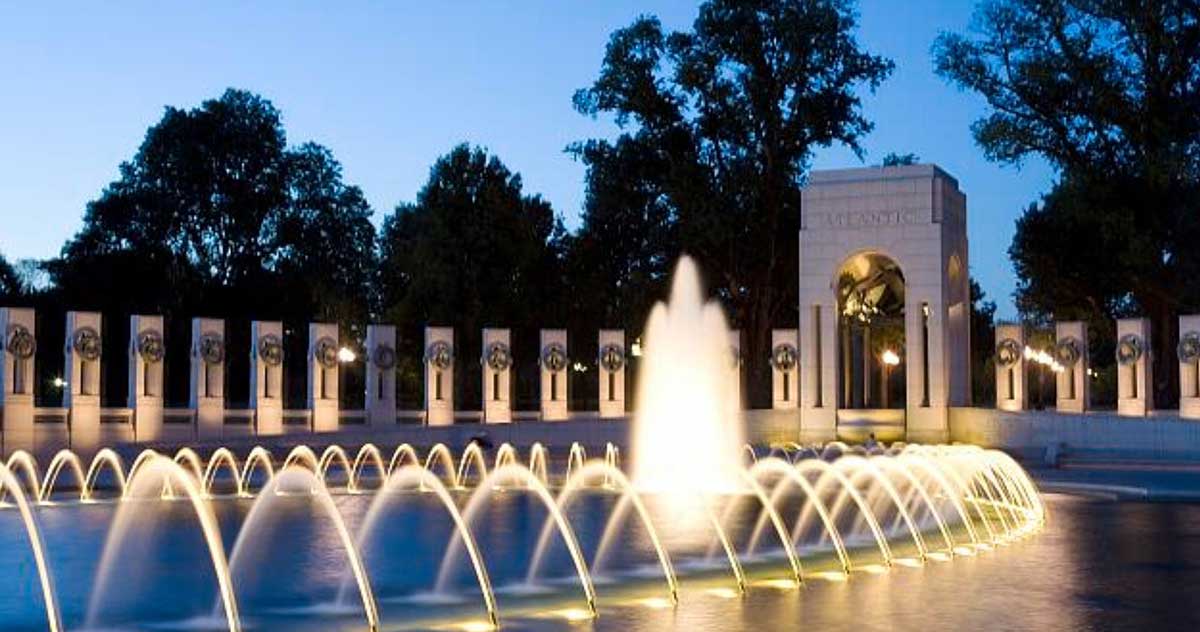
The contribution of Allied artillery during World War II is undeniable. In fact, General Patton attributed Allied victory solely to artillery. As the deadliest weapon systems in the most destructive conflict in human history, the importance of artillery in achieving Allied victory cannot be understated. In September 1945, President Harry Truman, who served in World War I as an artillery officer, controversially authorized the atomic bombing of the Japanese cities of Hiroshima and Nagasaki in an effort to end the war. He justified his decision based on the expected loss of life on both sides during the planned invasion of the Japanese home islands.