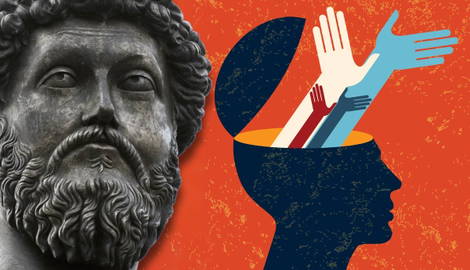

The Stoics gave us many wonderful ideas on how to squeeze the most juice out of our lives, but they paid little attention to how we relate to other human beings. The things I’ll discuss in this article were introduced by philosophers who lived more than two thousand years ago, but they’re equally, if not more, relevant in today’s societies. The popular idea about what Stoicism is these days boils down to something like the following: Someone insults you? You keep your cool. You lose your job, or someone breaks up with you? Focus on what you control, and let go of what you can’t. You get the point. However, their views on cosmopolitanism could make us think more deeply about our reality than typical pop-psychology interpretations.
Stoic Cosmopolitanism Says Moral Concern Should Never Stop Expanding
Underneath all the talk about discipline and control as well as its relevance for our everyday life, the Stoics gave us one of the most profound and not-much-talked-about rules for life in ancient philosophy. And that idea is called cosmopolitanism, and the practice of oikeiōsis, which roughly translates to “affinity,” or “making one’s own,” and I will explain it in detail below.
At its core, the idea is remarkably simple. Your moral concern should not stop with yourself. It extends to your friends, family, the broader world, and humanity itself. And, most importantly, it should never stop expanding.
Several approaches to cosmopolitanism are worth discussing here. They belong to the Cynics, the early Stoics, and the Roman Stoics, evolving across roughly five centuries of philosophy. They share many similarities, but also a few key differences. Still, I believe taking bits and parts of each may offer an important outlook on our reality, struck by a migration and refugee crisis.
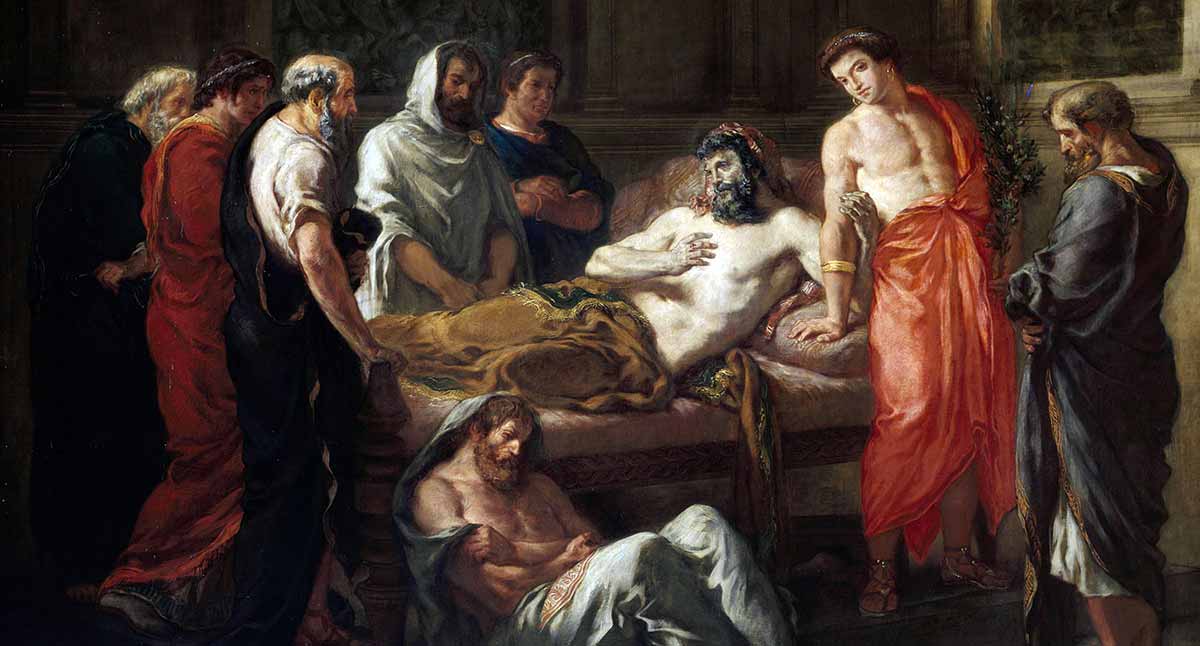
The line that captures the stakes belongs to Marcus Aurelius, Roman emperor and one of the most famous Stoics of all time: “What harms the hive cannot help the bee” (Meditations 6.54). The individual and the collective are inseparable. That is an extraordinary claim, given the period in which it was recorded.
In the ancient world, identities were overwhelmingly local. If you were a Roman, an Athenian, or a Spartan, that was basically all you were. This determined every aspect of your life, whether political or social. You belonged to the city; you belonged to the tribe.
Diogenes Called Himself a Citizen of the World and Meant It
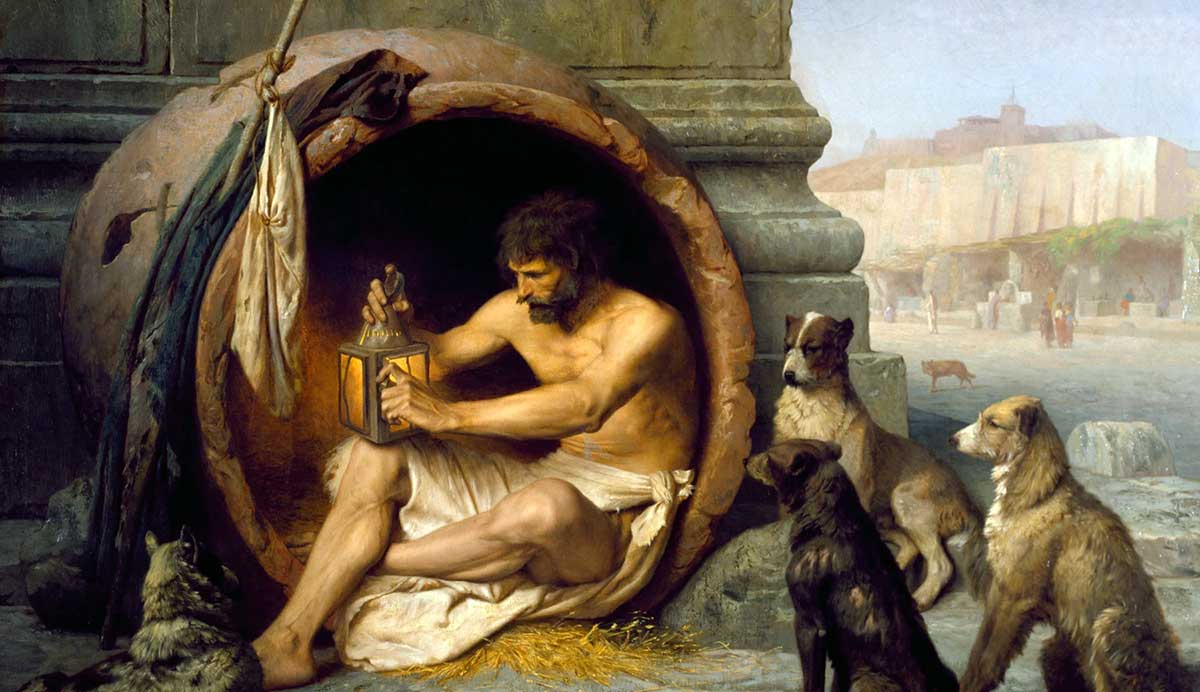
Here the Cynics enter the picture. The Cynics held that the purpose of life is virtue, lived simply, according to nature, and free from social constraints. They are famous for rejecting the pursuit of material possessions and the desire for wealth or social recognition. The main figure here is Diogenes, the most famous Cynic and the person who allegedly coined the term cosmopolitan. Asked by an acquaintance where he came from, Diogenes, who was born in Sinope, a city on the Black Sea, allegedly replied: “I am a citizen of the world (kosmopolitēs)” (Diogenes Laertius 6.63).
In a world organized around the city, that claim was subversive. If your moral community has no border, the city loses its monopoly on your loyalty. It is forward-thinking even now, and it is hard to imagine it passing without protest then.

My favorite exchange, though, is with Alexander the Great. When the famous Macedonian king supposedly stood before him and offered to grant him any wish, Diogenes reportedly asked Alexander to move because he was blocking his sunlight (Diogenes Laertius 6.38). What a character. Diogenes was famously a man of few possessions, and he often mocked wealthy people and their way of living, taking Cynicism to its logical extreme. In the modern day and age, he would probably be considered a lunatic. But that is beside the point.
Nowadays, the notion of cosmopolitanism is tied to people who travel a lot, speak multiple languages, or are die-hard fans of niche French films from the 1930s. That is not what Diogenes, or the Cynics for that matter, really meant. They simply believed that territories cannot, and should not, confine one’s moral responsibility and obligation. Who cares whether you are from Greece, the United States, or Macedonia? You are a citizen of the world.
Zeno Grounded World Citizenship in the Rational Order of the Cosmos
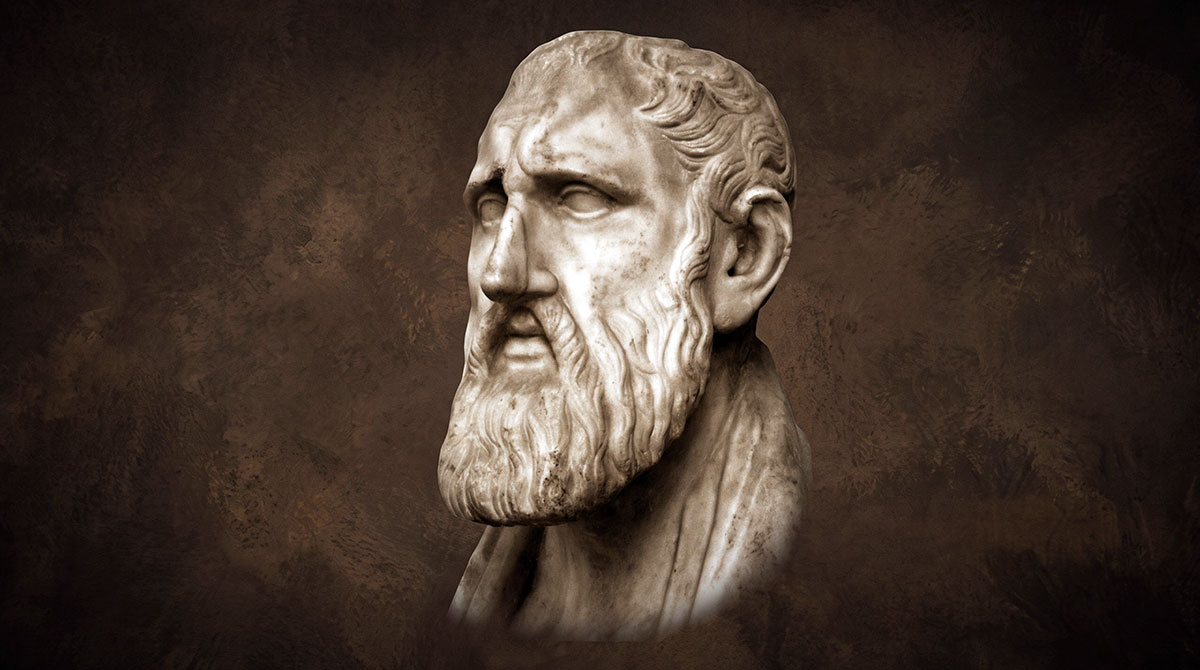
Another famous figure who built the foundations of early Stoicism and further evolved the meaning of cosmopolitanism was Zeno of Citium. Zeno was one of the founding fathers of Stoicism. After studying under several important philosophers, including the Cynic Crates, he began teaching his own philosophy around 300 BCE. He taught it in a public colonnade in Athens called the Painted Porch, or Stoa Poikile. His followers were called the Stoikoi, or people of the Stoa.

Now, while he was certainly influenced by Cynics and their thoughts on the world, Zeno went further than Diogenes and created a system around the idea of cosmopolitanism, a system that included psychology, ethics, theology, logic, and the study of nature itself.
Whereas the Cynics and Diogenes were busy dishing out one-liners about how they didn’t belong to any nation, city, or social category you can think of, Zeno and his followers started to expand that notion and discussed the importance of world citizenship. Zeno and the early Stoics also believed that the universe was governed by a rational order, or logos, and that it was an interconnected whole.
So if the universe was governed by reason, then it makes sense that perhaps the whole world could be thought of as one enormous community, a cosmopolis. Now, scholars debate whether Zeno extended this meaning to each and every living person, or just those who live according to reason and virtue, but still, the deeper meaning can be extracted: your birthplace cannot define your ultimate moral community.
Alright, so we’re all part of the same interconnected community. But why would you actually care about someone thousands of miles away from where you are, a person you do not know and have never seen or talked to?
That brings us to the concept of oikeiōsis.
Oikeiōsis Explains Why You Should Care About Distant Strangers
By now we’ve only teased the concept of oikeiōsis, or “making one’s own.” It’s a concept that beautifully describes what the Stoics meant by cosmopolitanism or being a citizen of the world.
I think the easiest way to describe it is to go back to how we all start our journey on Earth. When we’re born, our world is incredibly confined to our own well-being. As babies, the only thing we’re concerned about is being fed and being nurtured. We’re also occasionally amazed by the giants walking around us, tending to all of our needs.
But as we grow up, our worlds expand. We enter relationships; we create families. More importantly, we care so much about parents, siblings, and children that we often put their well-being before our own. Herein lies a crucial point the Stoics made: our human concern does not have to remain trapped inside of us as self-contained individuals. Another person can hypothetically become “one of our own.”
The Stoics weren’t saying that a stranger thousands of miles away should be as important to you as your mother. They simply said that the distance doesn’t make that person morally worthless.
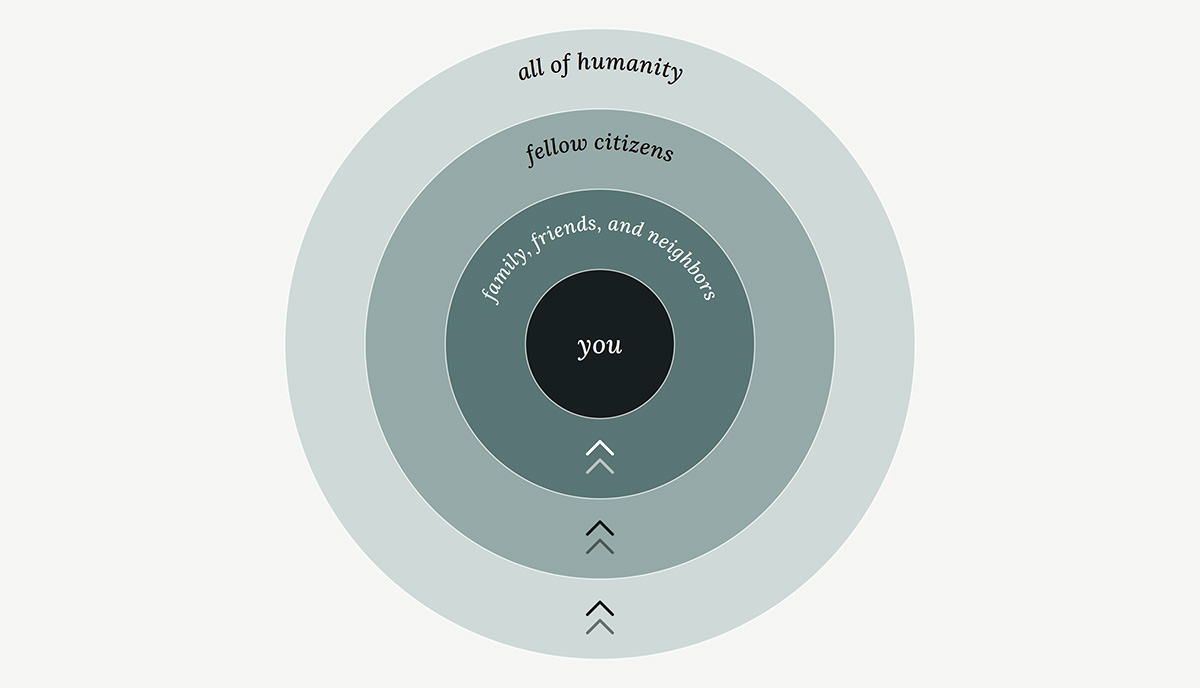
The philosopher Hierocles offers a perfect illustration of oikeiōsis. Say you’re standing at the center of several circles. The smallest one contains you. The next contains your immediate family, friends, and neighbors; the next contains your fellow citizens; and eventually, the entire human race. Hierocles suggested that your task in life is to draw those distant circles inward, so you’re able to treat the people in those circles like you treat those who are close.
And this does not mean that you ought to leave your home today and hug strangers all over the city. It just means that you should never allow those outer circles to completely disappear from your inner compass.
Seneca and Marcus Aurelius Made Cosmopolitanism a Duty, Not a Slogan

By the time Stoicism reached Roman thinkers like Seneca, Epictetus, and Marcus Aurelius centuries later, this idea of cosmopolitanism had gained great traction. The Roman Stoics increasingly treated every person in the world, all human beings, as members of the cosmopolis because of their shared rational nature, while also allowing them to keep their connections to their cities and immediate communities.
Seneca explains this far better than I could. He says that your local community gives you specific duties, but the broader community, the one in the distant circles, keeps you from thinking that your moral responsibilities cease once you cross the border (On Leisure 4.1).
Which brings us back to Marcus Aurelius and the hive. You cannot expect to flourish while the community around you crumbles. This is especially important in today’s interconnected world, where different races, ethnicities, nationalities, and religions can be bundled into a single community, although one could argue that technology has left us all the more alienated. Marcus held that nature made human beings to cooperate with one another (Meditations 2.1).
So what is cosmopolitanism about?
Stoicism is about controlling yourself. On the other hand, cosmopolitanism is about expanding yourself. Beyond everything discussed so far, I believe this combo boils down to one thing: empathy for other people, strangers or not. When others suffer, we suffer. We have grown reckless as a globalized society, rushing to assume we have more in common with people who think and look like us. That is how we create enemies, not loving neighbors.