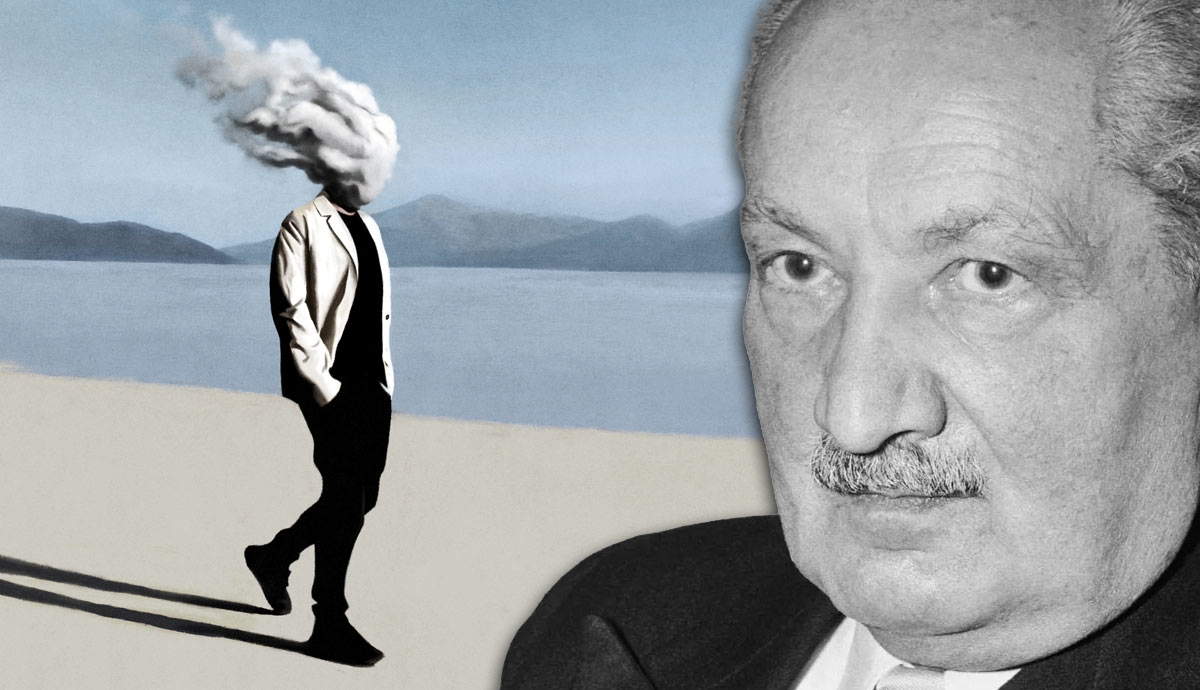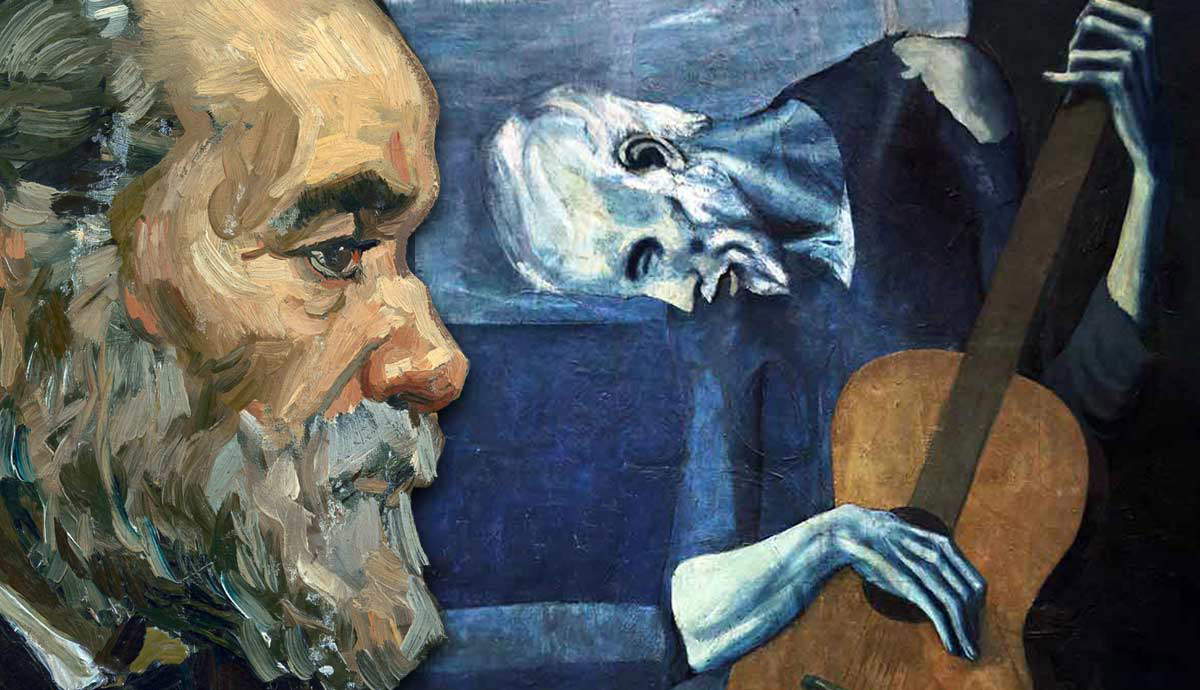

When you gaze long into an abyss, Nietzsche famously warned, the abyss also gazes into you. Nietzsche believed the modern West was heading straight toward that abyss, and that most of us would not survive the crossing with our sense of meaning intact. Decades later, on the other side of the globe, a Japanese philosopher named Nishitani Keiji took Nietzsche’s warning and arrived at a stranger, somewhat crazier response. Don’t just stare at the abyss from the edge—walk through it.
Nietzsche, who was not a nihilist, diagnosed Western civilization with the sickness of nihilism. But according to Nishitani, he was not quite successful at procuring the remedy. Nishitani suggests that we can, in fact, pass through nothingness without feeling despair. Quite the opposite, it might be the key to a new kind of freedom.
Nietzsche Diagnosed the West’s Nihilism but Could Not Cure It

Nietzsche’s most famous provocation was the declaration that God is dead. This was more than a claim to atheism, which was already well in fashion at the time in Europe. The underlying message is that the civilization, which built its entire structure of meaning and morality on a specific epistemological foundation, was about to lose that very foundation.
For centuries, the West had organized itself around a transcendent idea of order that guaranteed some extrinsic measure of value. Once that collapsed, Nietzsche saw an abyss opening beneath everyone’s feet; some would notice it; others would remain in denial.
As predicted, most people drifted into passive nihilism, a silent exhaustion where desire collapses, nothing seems worth wanting, and nothing feels solid enough to build a sense of certainty, a sense of purpose. Nihilism is a kind of subdued crisis. A sense of flatness, as people sometimes say these days. One feels like Sisyphus, going through the motions of a job, a routine, a series of scheduled tasks, while doubt keeps boiling inside: None of this actually matters. Those are the symptoms, and nihilism is the diagnosis.
Nietzsche responds to nihilism with hostility. There is no need to mourn the collapse of inherited values. It is time for an active replacement: the reevaluation of all values. If there is no cosmic order orchestrating our lives from above, then meaning needs to be created from within, from below and deliberately, courageously, by individuals like you and me.
But self-overcoming is no small task, and anyone who dares to set out on this journey would be willing to become what Nietzsche called the Übermensch. The Übermensch must take full responsibility for inventing new values and putting them to practice at their own risk. It is an exhilarating, terrifying act of creation. It is a solitary human project, waged by a single will standing alone against an indifferent universe.
Nishitani Studied Under Heidegger, Then Took Nietzsche Further Than He Went
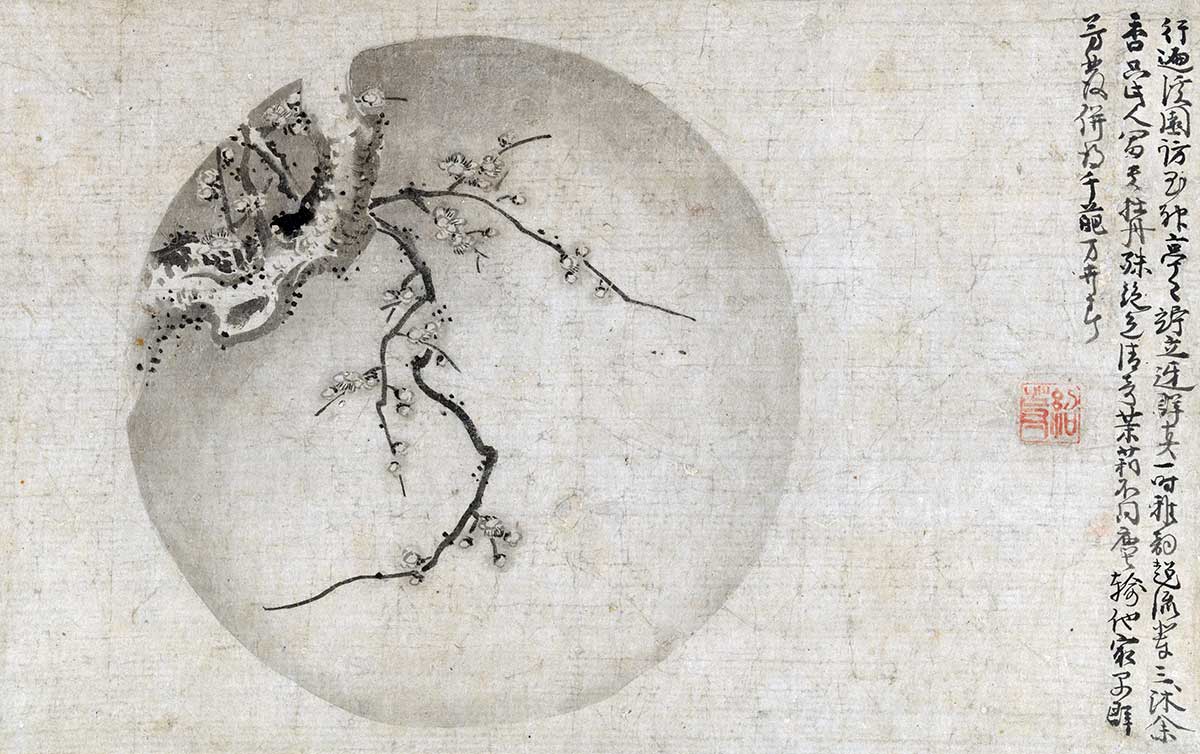
Nishitani Keiji studied under Martin Heidegger in Freiburg during the 1930s and became one of the towering figures of Japan’s Kyoto School. The Kyoto School was a twentieth-century movement in Japanese philosophy that fused Western ideas with Zen Buddhism. Just like Heidegger, Nishitani took Nietzsche as a serious inspiration. He considered him one of the very few Western thinkers who had actually reached the root of the modern crisis. But he also believed Nietzsche did not go far enough.
What Nietzsche called the abyss, Nishitani refers to as the field of nihility. It is the terrifying void that opens once every traditional certainty has been stripped away. Within the field, traditional certainties are removed, leaving behind the self fully isolated from the world. This is the groundlessness that Nietzsche countered with the will to power and the reevaluation of all values.
While paying proper respects to Nietzsche’s courage and creativity, Nishitani thought the answer was incomplete. Within the Nietzschean paradigm the field of nihility remains fundamentally personal, precisely because it is adversarial and ego-centered. It is still a confrontation between an isolated self and a hostile void, meaning the self, however bold and heroic, is nonetheless still clinging to itself.
Nishitani’s decisive move was to distinguish the field of nihility from something he termed the field of emptiness (sunyata). Where nihility is an abyss that isolates everything from everything else, emptiness is a field where the very same abyss becomes the ground of intimate connection. Nothing is annihilated in this modification. The boundary that made things feel separate and threatened starts to dissolve. What had seemed like a void reveals itself as the shared root beneath all things.
Nietzsche stared into the abyss and plunged himself into it. Nishitani, however, suggests that the abyss was never the final destination, but only a threshold.
Zen’s Great Doubt Turns Existential Crisis Into a Gateway
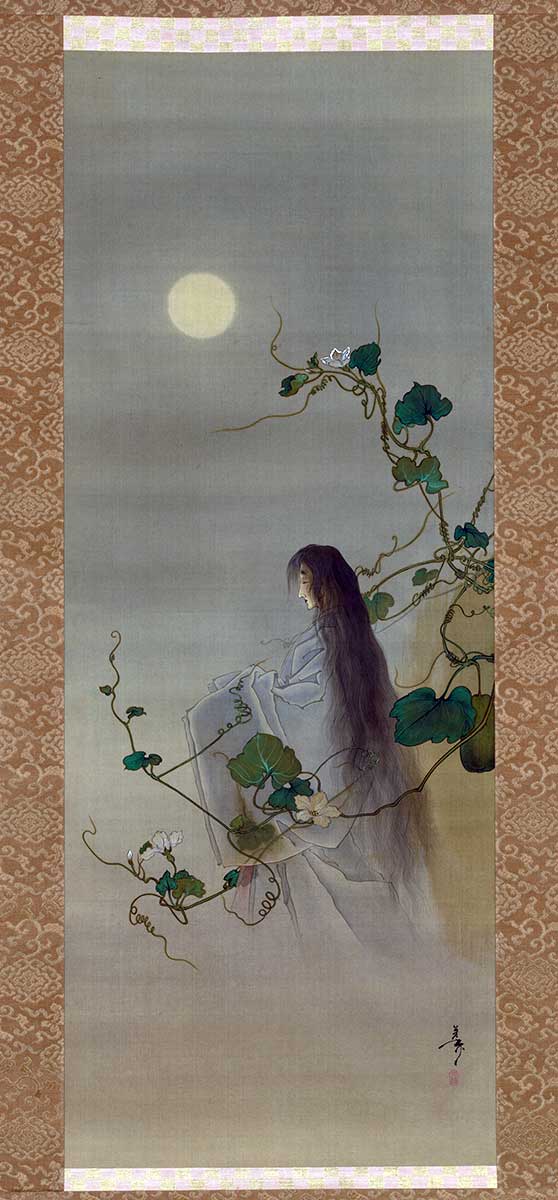
The counterpart to the Western notion of despair in the face of nothingness is the Zen Buddhist notion of the Great Doubt. Nishitani considered it to be one of the deepest resources Zen has to offer anyone caught in a modern existential crisis.
The Great Doubt is more than the ordinary kind of doubt that questions this or that belief. It is a doubt so total that the doubter and the thing doubted collapse into one another, until a person’s entire existence, along with the existence of everything around them, becomes a single, unanswerable question mark. In some ways, it’s similar to Cartesian doubt, but it reaches very different conclusions. One could argue that Descartes’s method of doubt was not radical enough in comparison.
If this is beginning to sound like a description of a psychotic mental breakdown, well, in some sense it is. Nonetheless, Nishitani was emphatic that the Great Doubt is not a psychological state to be diagnosed; in fact, medicalizing this experience may prove counterproductive. Think of it as a gateway, or a rite of passage. When someone stops treating their anxiety as a problem to be solved and follows the natural line of questioning—one that their anxiety activates, the rigid boundary between self and the world that was generating anxiety in the first place starts to give way.
So much modern suffering comes from defending a fixed sense of self: a job title, a reputation, a curated sense of who we are supposed to be. Nishitani’s insight is that this identity was never as solid. Realizing the emptiness that fails to sustain the self is not a loss, it is a release. Once the desperate project of protecting a fragile ego starts to loosen its grip, the person becomes capable of meeting each moment directly, without the constant background noise of having to justify and defend oneself.
Nishitani’s Emptiness Offers a Gentler Version of Nietzsche’s Amor Fati
My purpose in sharing this with you is to make sure the philosophy lessons do not stay locked inside philosophy seminars. Thus, you can help yourself rejoice and celebrate nothingness, rather than seeking synthetic escapes from the weight of existence.
Nietzsche had a practical test for living after the death of God: amor fati, or the love of one’s fate. Ask yourself: if you claim that you have overcome nihilism and you can affirm your life completely, then would you be willing to live it over again, in exactly the same form, over and over again, without alteration?
Nishitani’s field of emptiness gives that same demand a gentler, less combative shape. Instead of gritting your teeth and willing your fate into acceptance, you notice that the fate and the self experiencing it were never as separate from one another as they appeared.
A useful practice is trying to attune yourself to the specific texture of your own anxiety. Much of it, on inspection, turns out to be just your fragile ego colliding against its own boundaries. Working overtime to protect itself, bracing against a piece of criticism, a missed deadline, an unflattering comparison. The question worth asking in that moment is not how to win, but what exactly is being defended, and whether that thing was ever as solid as it felt.
From there, you can reframe uncertainty itself. Rather than experiencing an unplanned day or an unresolved outcome as a threat, it becomes an open field, closer to a journey, a blank canvas than a looming danger.