
As the 13th century drew to a close, Europe saw a decline in the authority of the church and its influence over everyday life. Instead of focusing solely on the spiritual aspect of life, humanism created a new intellectual viewpoint. This awakening to new ideas triggered what we call the Renaissance. Read on to discover the complete timeline of the Italian Renaissance.
1250 – 1399: The Proto-Renaissance
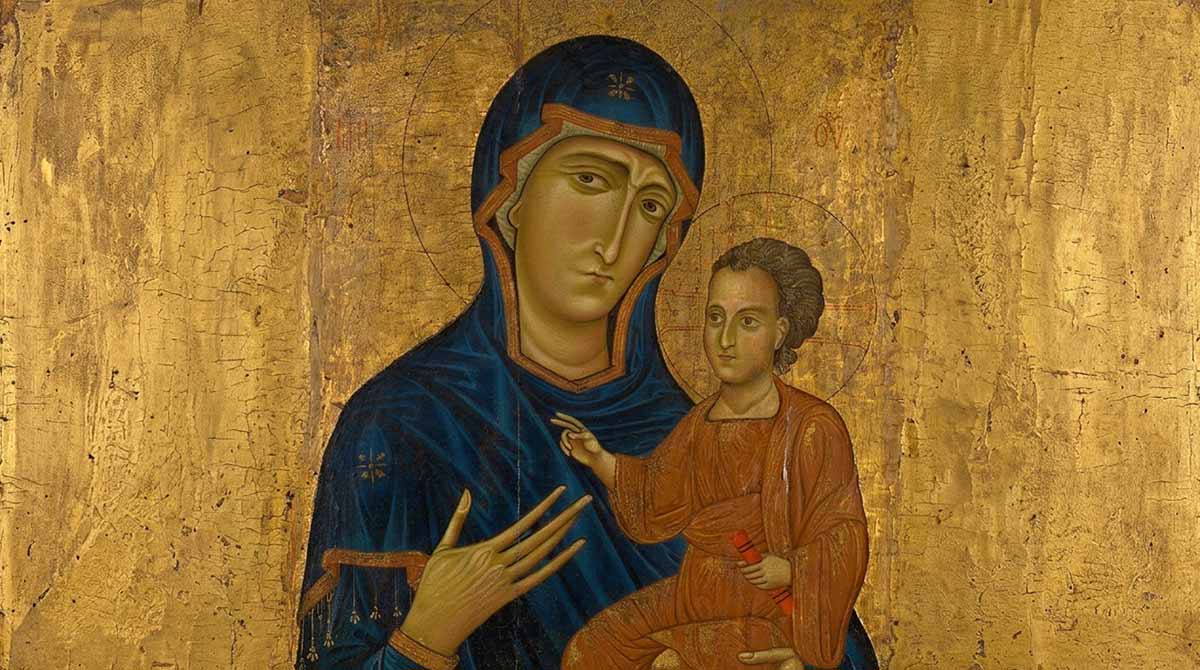
The dominant Byzantine Empire had begun its decline in the 11th century. In Constantinople and around the Empire, scholars of ancient Greco-Roman texts feared for themselves and their precious manuscripts and led an exodus to the West, ancient tracts in hand.
It was these manuscripts that, when studied particularly in northern Italy, were the catalyst for a new vein of thinking. Humanism, as it later became known, rekindled the focus on the individual and his role in society. In the visual arts, painting had, in previous centuries, focused primarily on religious instruction or been commissioned to decorate the private chapels of the rich in an effort to ensure a better life after death. It now began to reflect the ancient Greco-Roman ideals of human ambition and individualism.
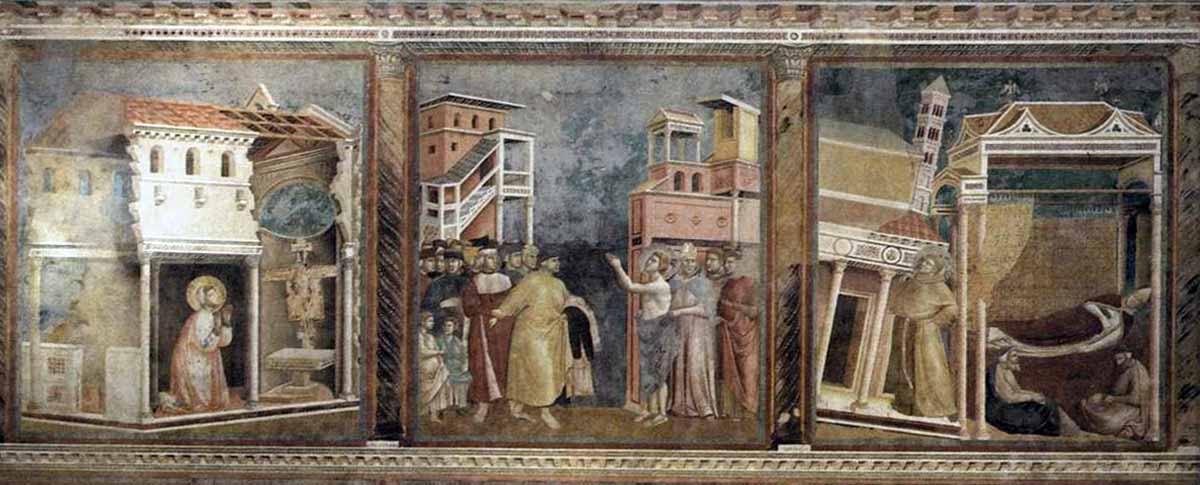
Giotto di Bondone was one of the first painters to seize upon the compositional freedom that a humanist approach to art offered. Abandoning the flat, gold-encrusted painting style of the Byzantine period, he focused on the individuals appearing in his work. He aimed to revive the way the human body had been depicted in antiquity, including facial expressions and emotions. In addition to the human aspect of their work, early Renaissance painters, like Giotto, began to explore perspective, giving their paintings depth that had been absent from the icons of Byzantine art. This Proto-Renaissance laid the foundations for the monumental changes to come in the 15th century.
Humanism: A New Version of Antiquity
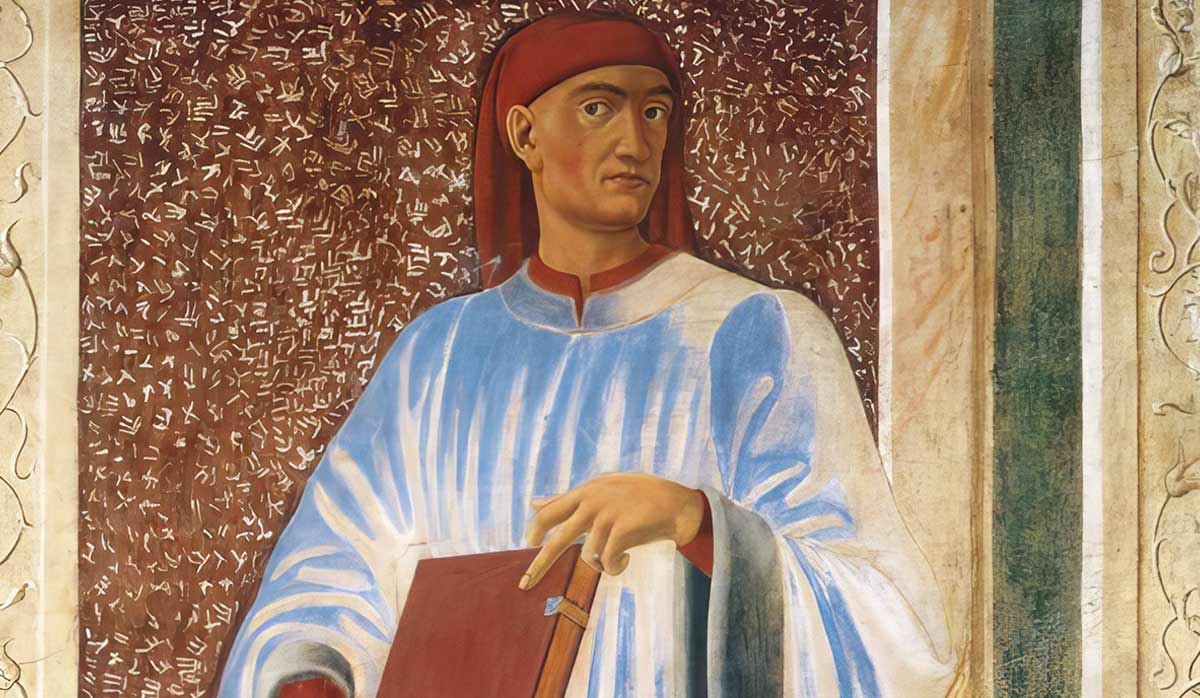
The 14th century dawned, and the Byzantine Empire grew ever weaker; scholars of ancient texts, poets, political leaders, and teachers such as Petrarch, Boccaccio, and Chrysoloras continued to collect and translate ancient manuscripts, rescued from the East. They consolidated the concept of humanism, cementing the idea of the individual’s possibilities of self-knowledge and self-improvement. Using the knowledge of antiquity and covering every aspect of human life from urban planning to morality to education, humanist thought took the northern Italian city-states, and in particular, Florence, by storm. Instead of accepting the ubiquitous religious instruction that had been the norm, intellectual Florentines now demanded a humanist education. It was this exposure to the reasoning of the ancient Greek and Roman philosophers that inspired a new view of the arts and literature focusing on the individual.
The City-State Rises
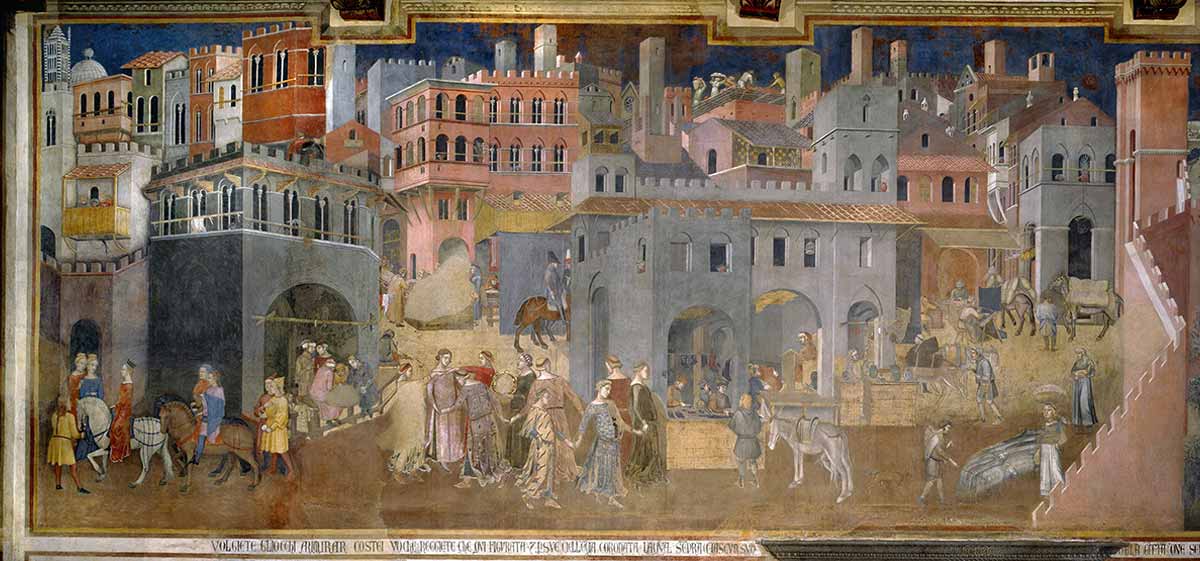
The city-states or republics of the Italian peninsula were at the crossroads of European and eastern trade in the 14th century. As trade flourished, families like the Medici established banking and money-lending centers in Florence and Siena before expanding across Europe.
Stepping away from monarchy and traditional religious doctrine toward a freer-thinking, republican lifestyle kindled the rebirth of ancient Greco-Roman artistic ideals. Ambrogio Lorenzetti’s fresco cycle, The Allegory of Good and Bad Government, in the Palazzo Pubblico in Siena, illustrated the attitudes of the city-states, emphasizing the efficient and fair running of a state free of religious and monarchical control. Religious artworks were still being created, but now a new, self-promoting style of art was developing. The increasingly wealthy leaders of city-states like Florence still commissioned pious paintings for chapels in prominent churches, but they also started a trend for portraits of themselves. Families like the Medici and the Strozzi not only wanted to control their cities financially, but they also wanted illustrious paintings of themselves to cement their identity in the public eye. They were the harbingers of self-promotion and publicity.
1400 – 1450: Florence Dominates, Europe Follows
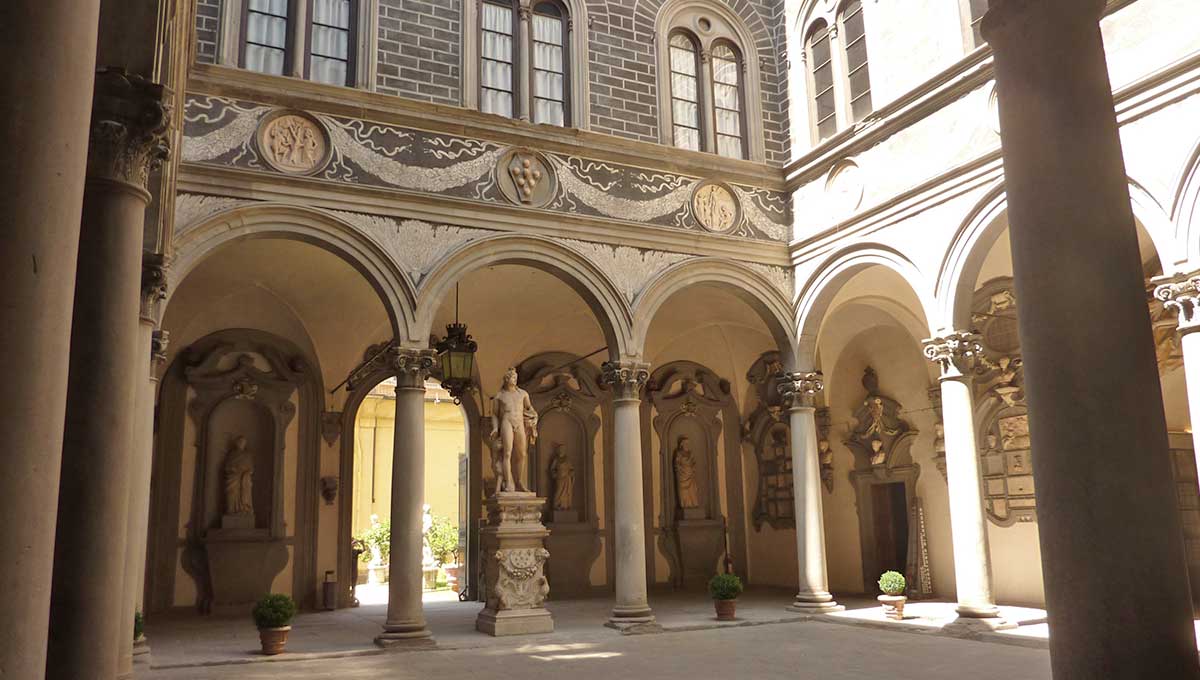
A perfect storm of money, new thinking, and a fierce pride in independence bore fruit in Florence in an unprecedented burst of patronage in the arts and science. The powerful merchant and banking class began to change not only the subject matter of art but also Florence’s architectural landscape. The elaborate palazzi of the trading families overtook the great homes of the former ruling classes. With the founding, in 1397, of the Medici Bank by Giovanni di Bicci de’ Medici, the Medici family saw its fortunes soar. They were one of the first to commission a private palazzo in the city, starting a trend that many wealthy families rushed to emulate. By the mid-1400s, the dynasty had established a rule over the Florentines that would continue, often thanks to judicious marriages into European royalty, into the 18th century.
1425: Masaccio’s Revolutionary Masterpiece
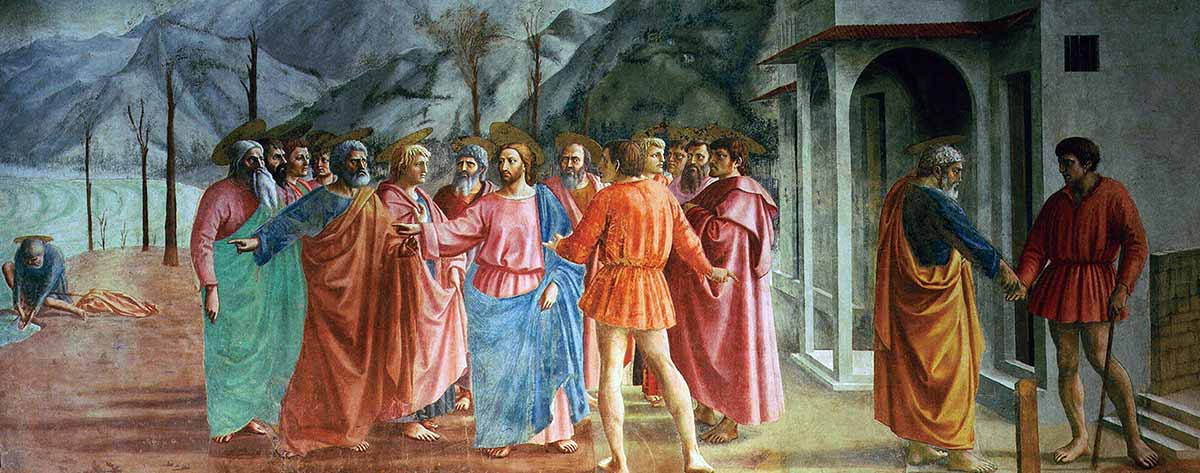
The Brancacci family, another Florentine dynasty, took religious art to another level. The patriarch of the family, diplomat Pietro, founded the Brancacci Chapel in Santa Maria del Carmine in Florence in the mid-14th century. However, it was Felice, a silk merchant and Pietro’s nephew, who commissioned a cycle of frescoes illustrating the life of Saint Peter, Pietro’s namesake, that later became known as the Sistine Chapel of the early Renaissance.
The Tribute Money, painted in 1425, is a masterpiece of early Renaissance painting. Masaccio’s style, full of emotion and realism, is a world away from Giotto’s first steps away from stiff Byzantine religious iconography. His use of perspective, chiaroscuro (the use of strong contrasts of light and dark to create depth), and three-dimensional modeling of people launched painting into a new era. Here was devotional art on a monumental scale and with a new purpose. It not only glorified God, but also associated that artwork with a particular family. Patronage of the arts had begun in earnest, and Florence was at its center.
Patronage as Publicity
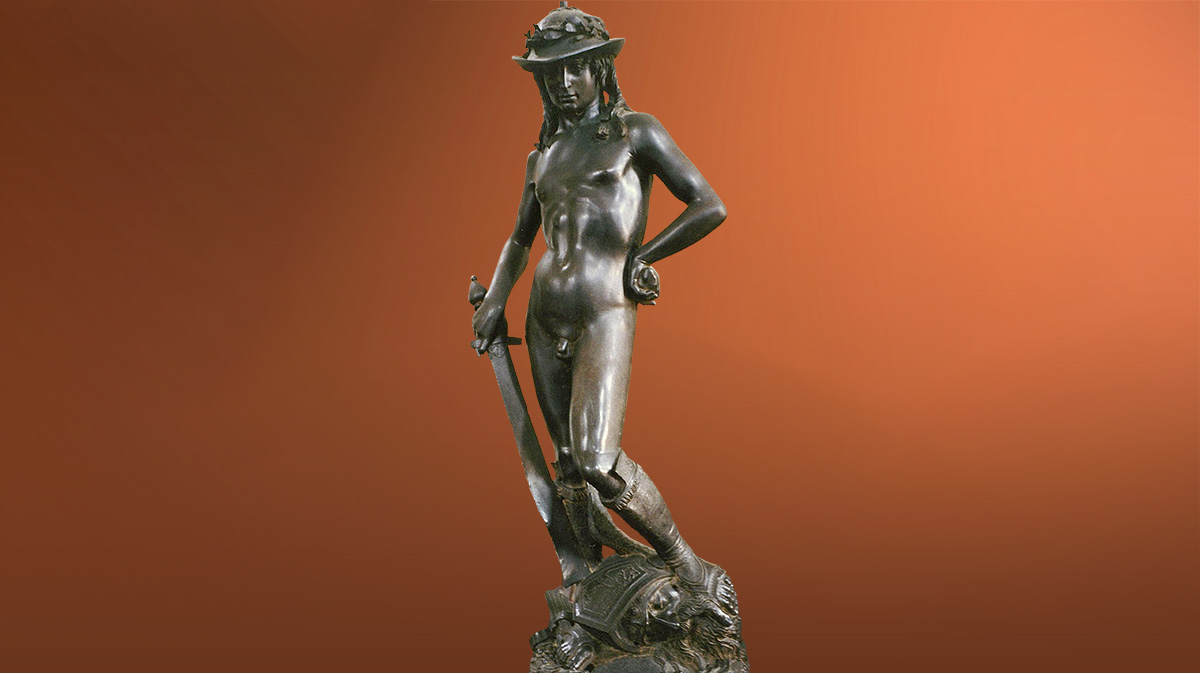
As Florentine business flourished, the city-state’s wealthiest families, having built luxurious palazzi, felt the need to create visual signs of their influence beyond painted images. Artists had traditionally made their living by painting religious works for the church and for individuals seeking devotional images for their homes. Sculpture was almost exclusively reserved for sacred spaces. It was unusual for private individuals to commission such artworks, other than memorial stonework. So, when, following the influence of humanism, the cult of the individual was adopted by the region’s rich banking and merchant families, the patronage of artists seemed like the perfect way to flex their influence.
Donatello was a product of the new wave of highly visible patronage. A student of classical sculpture and well-traveled throughout the artistic centers of Italy such as Siena and Rome, this master of the early Renaissance was the obvious choice to work for the Medici. His bronze statue of David, the first free-standing nude male sculpture since the Greco-Roman era, represented the Republic of Florence, characterizing its power over challengers to its rule. While heavily debated by scholars due to a lack of documentation, it is widely believed to have been commissioned by Cosimo de’ Medici for the Palazzo Medici courtyard. Regardless, the sculpture broke free of all tradition. David is young, sensuous, and unlike any other statue of the giant-slayer. Perhaps this was the Medici way of trumpeting its supremacy. Whatever the reason for the commission, the family and artists such as Donatello were paving the way for the birth of a new purpose for art.
1450 – 1500: Art Reflects Life
By 1453, the Ottomans had overthrown the remains of the Byzantine Empire, hastening the exodus of scholars bearing ancient texts from Constantinople. This influx of ancient knowledge into the Italian states enthused the Florentine leader Cosimo de’ Medici (or Cosimo the Elder) so much that he set up, around 1462, what would be referred to as the Platonic Academy, an informal group of scholars, artists, and others devoted to the study of Greco-Roman thought.
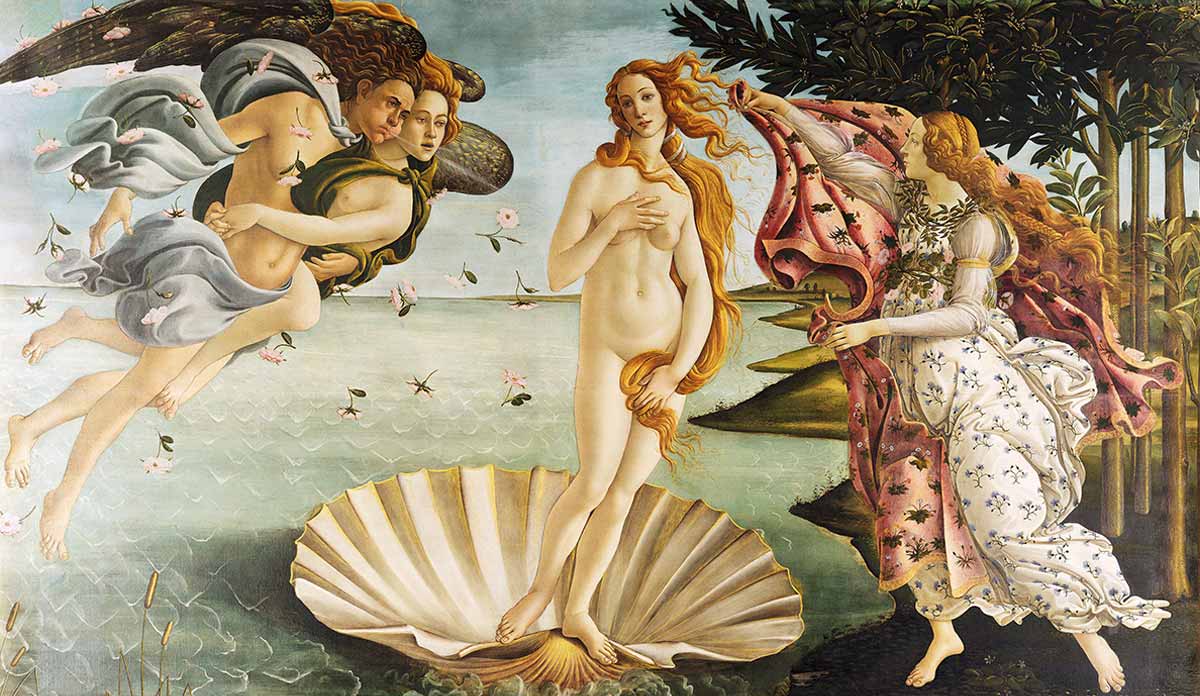
By the time Cosimo’s grandson, Lorenzo (known as il Magnifico), came to power in 1469, he was armed with an excellent humanist education and surrounded by his family’s coterie of philosophers and academics. Lorenzo, not as prolific a patron of the arts as his forebears, was known for his sponsorship and recommendation of artists and sculptors to his wealthy compatriots. It was during Lorenzo’s rule over Florence that a Medici favorite, Sandro Botticelli, received a commission that would change how art was viewed as well as its subject matter. The result of this commission was The Birth of Venus.
Botticelli’s masterpiece was a work of its time. Rather than painting on traditional wood or in fresco, Botticelli used canvas as a support for his work. This change in material was practical and not just a trend. It meant that paintings could be moved around and rehung in whichever palazzo their owners chose. Paintings became private possessions, often status symbols. Here, Venus is believed to be Simonetta Vespucci, a much-admired beauty in 15th-century Florence. Whereas in previous centuries, artists had depicted saints and gods, now the subjects were recognizable members of society. The themes of many paintings were suggested by Greco-Roman mythology. In this case, Botticelli has embraced the zeitgeist, producing a true Renaissance painting: he used canvas, his theme was ancient Greek, and his model was a local beauty.
The New Portraiture
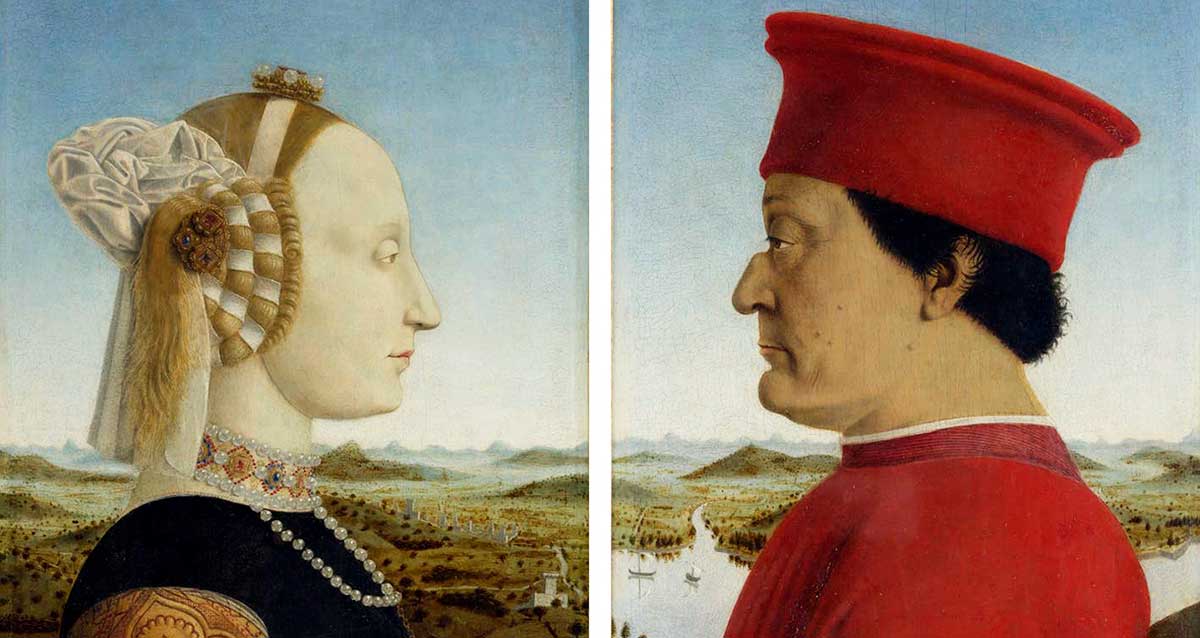
As the Renaissance flourished and its humanist influences endured, patrons of the arts revived the ancient idea of portraiture. Artists received commissions from dukes and doges, sultans and counts, all wanting to be immortalized through paint. As the 15th century wore on, these portraits became ever more sophisticated. Gone were the kneeling patrons at the side of the Virgin in a private chapel’s altarpiece. In their place were powerful, close-up images of some of the most powerful people in the Western and Eastern world.
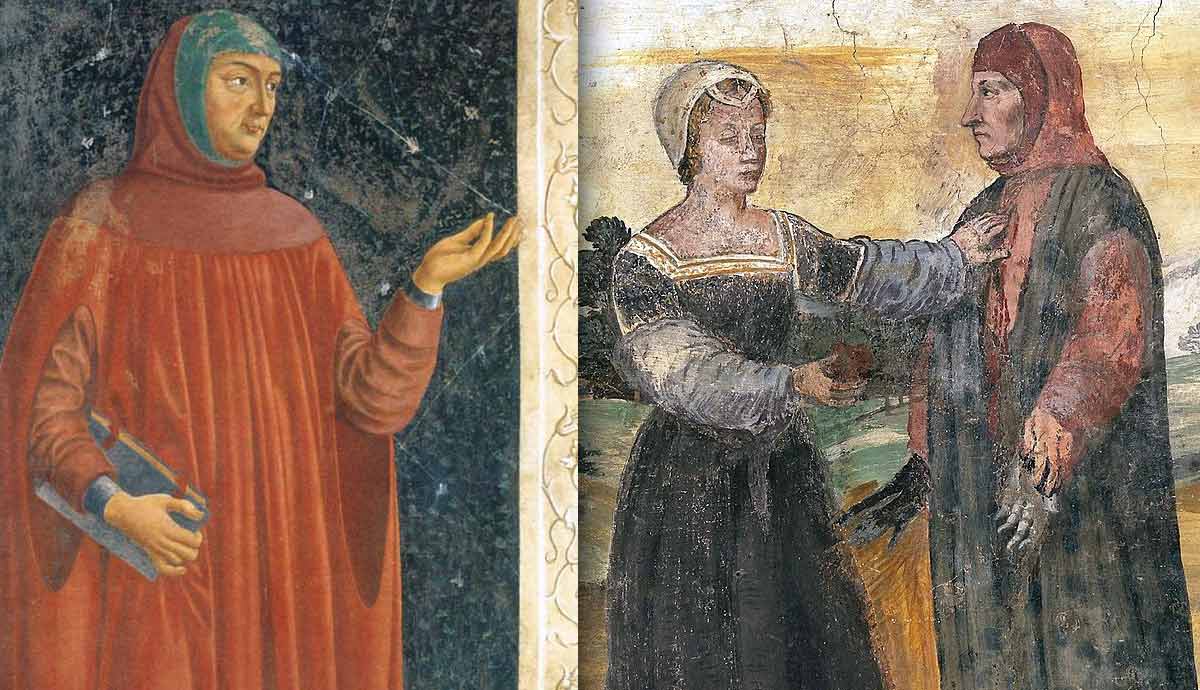
Depicting Federigo, Duke of Urbino, and his late wife Battista, this diptych owes much to the Roman tradition of celebrating military leaders on medals and in profile. Often believed to have been painted as a memorial following Battista’s death, the painting reflects the new wave in Italian art and society through its Roman-style composition and focus on the individual.
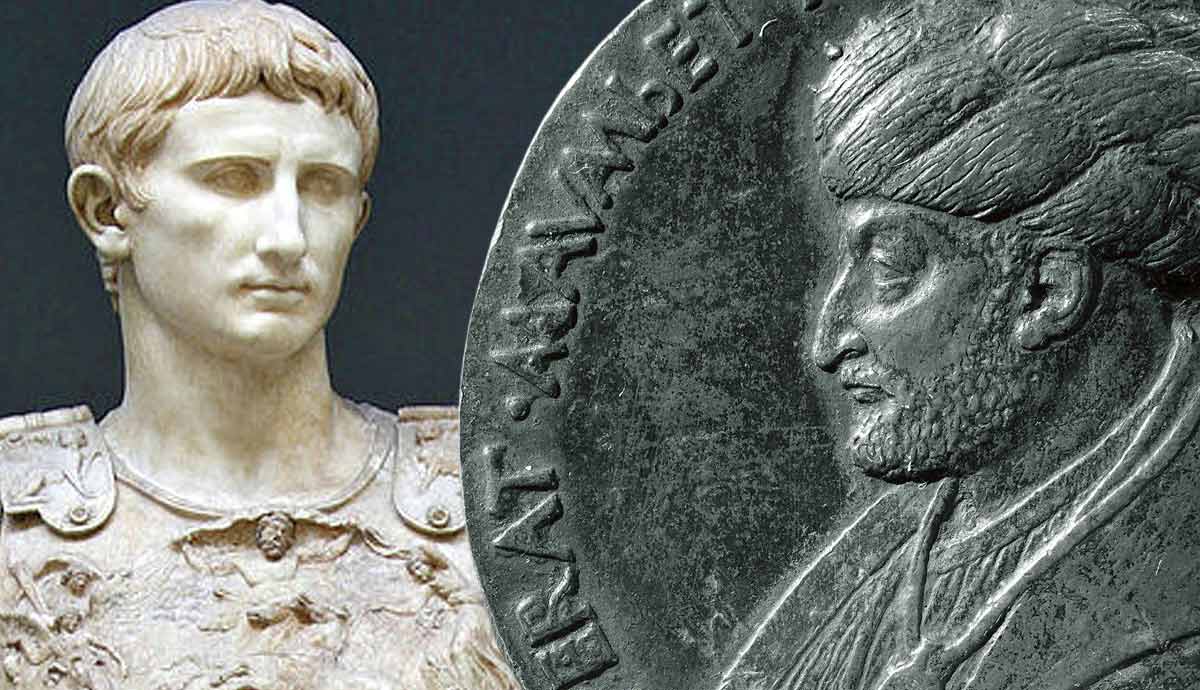
As the century progressed, so too did secular portraiture. Conqueror of Constantinople in 1453, the Ottoman Sultan Mehmet II sought to take advantage of a trade treaty brokered with the Venetian Republic. Influenced, perhaps, by the rise of portraiture in Italy, Mehmet requested that an Italian painter come to work at his court. The result of this was Venetian Gentile Bellini’s portrait of Mehmet, painted in 1480.
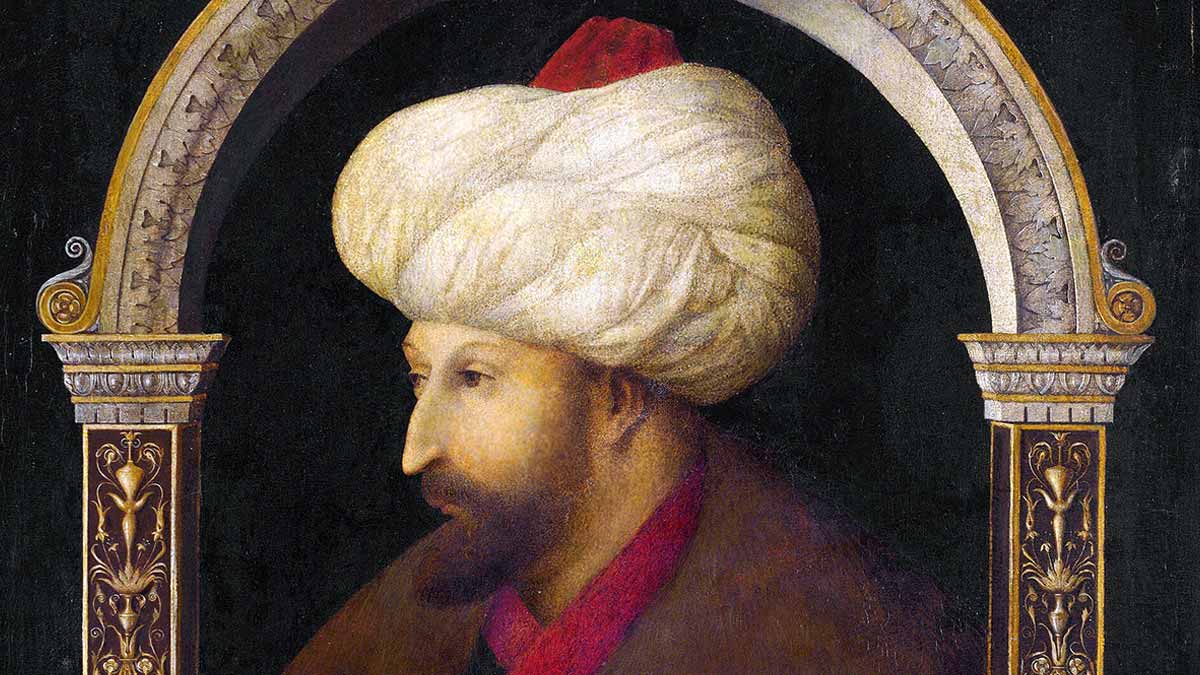
Portraiture changed in form and function over the course of the 15th century. Religious painting had not gone away. It was just that European society had changed. Those who ruled needed to have portable artworks by renowned artists that told people how important they were. The artist was about to enter a new phase in history, that of the celebrity.
1490 – 1520: The High Renaissance
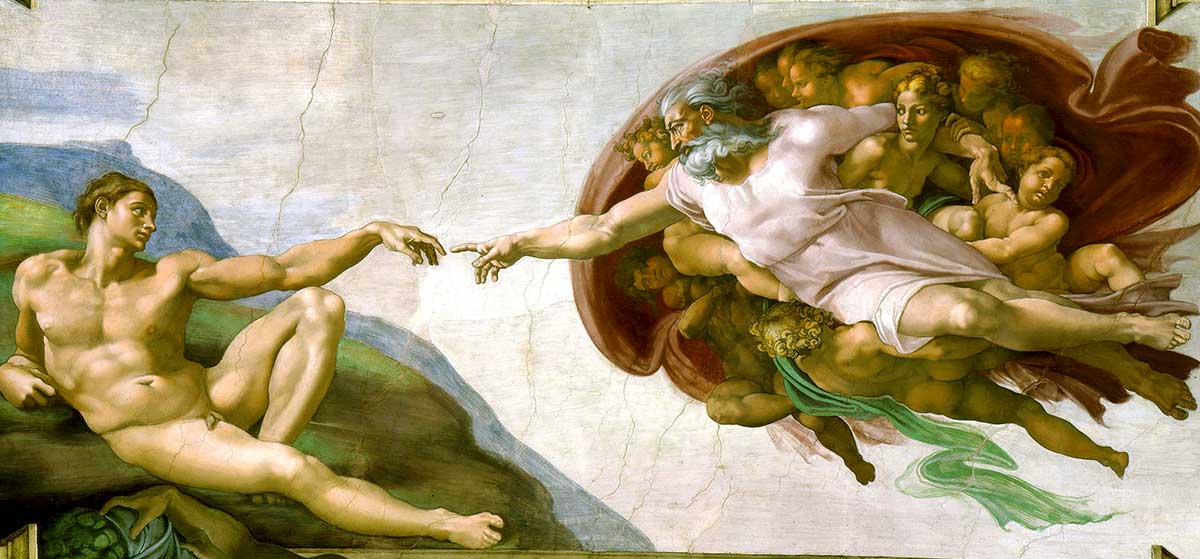
When we think of the Renaissance in art, it is often the great masters of the High Renaissance that spring to mind. Everyone knows Leonardo da Vinci, Michelangelo, and Raphael. In fact, the High Renaissance lasted only a few decades. Built upon the foundations of over a century of humanistic theory, the patronage of wealthy, educated patrons, and the undeniable skill and genius that they themselves possessed, these three great masters achieved illustrious heights in art that may never be surpassed.
Leonardo da Vinci: 1452 – 1519
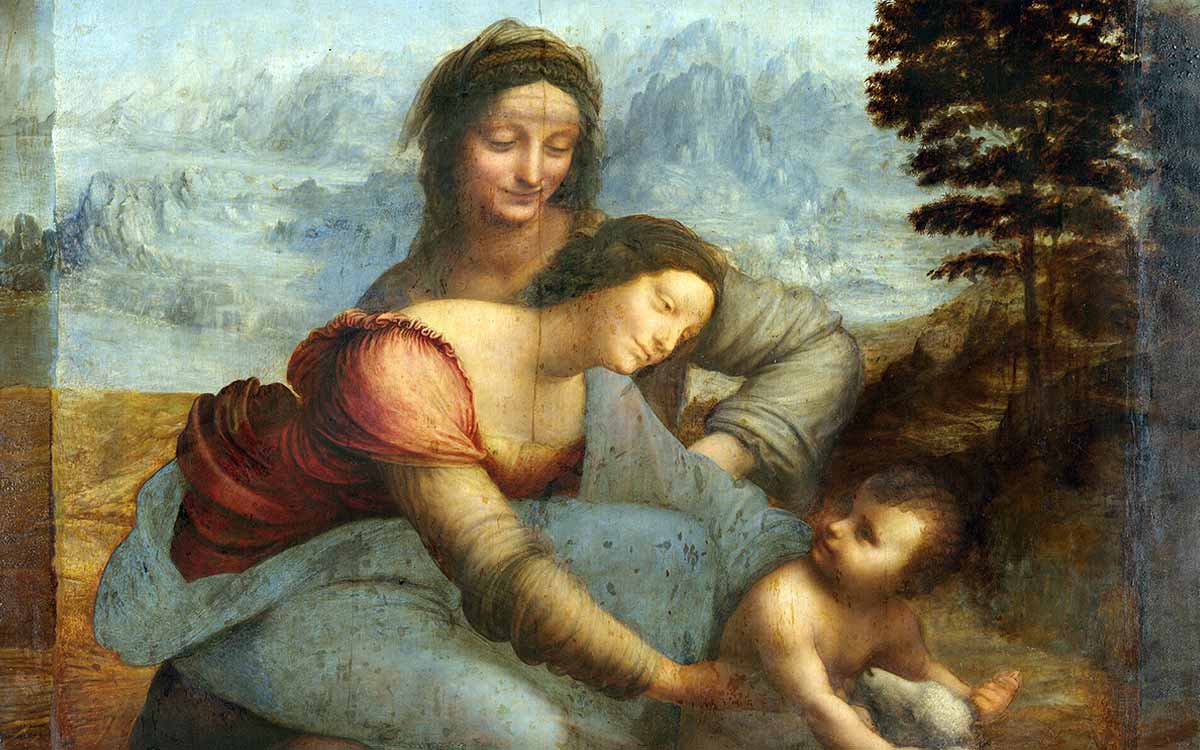
Despite the rise of secular art in the 14th and 15th centuries, religious artworks were still in demand at the beginning of the 16th-century. Although the great commercial families of the Italian states demanded portraits of themselves and commissioned scenes of ancient myth for their studioli, they needed to take care of the religious side of their lives. As we saw with the Brancacci Chapel, grand frescoes were popular. However, there was still a demand for the individual oil painting.
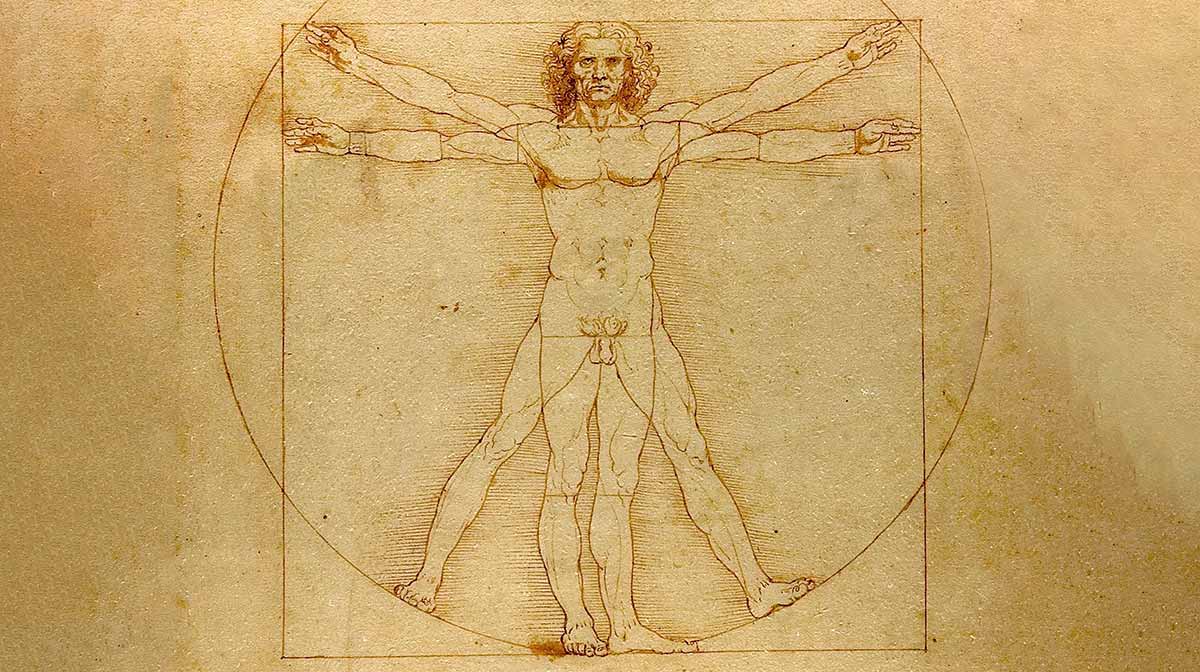
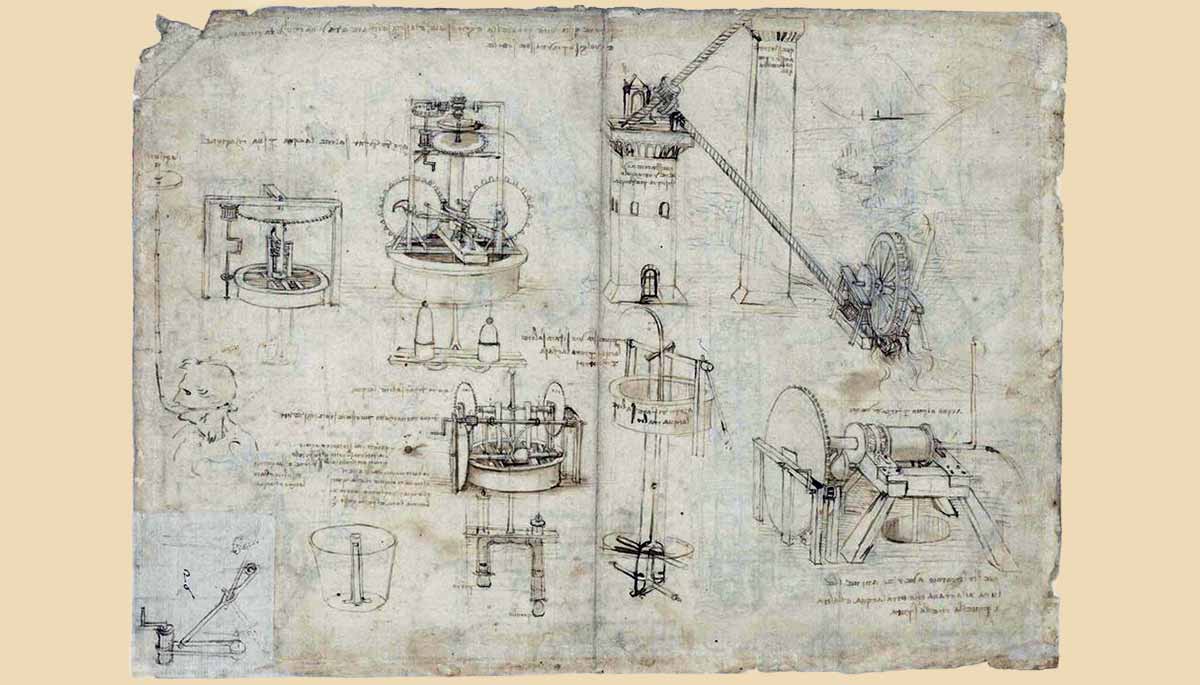
Leonardo grew up around Florence in the company of older artists such as Donatello, Verrocchio, and Botticelli. He was an exceptional polymath, known not only for his artworks but for his mathematical and engineering concepts, recorded in numerous notebooks. He is often considered a true Renaissance man who profited from the rise of humanism and its effects on society and the arts.
His painting style distilled the dramatic changes over the previous century or so in the execution of art. Compared with the early, simple, almost one-dimensional icon art of Byzantium, Leonardo’s figures feel alive. They are rounded, softened by his use of sfumato (a soft blending of lines), and full of gentle movement. His mastery of perspective and exacting detail testify to his reputation as the founder of the High Renaissance.
Michelangelo Buonarroti: 1475 – 1564
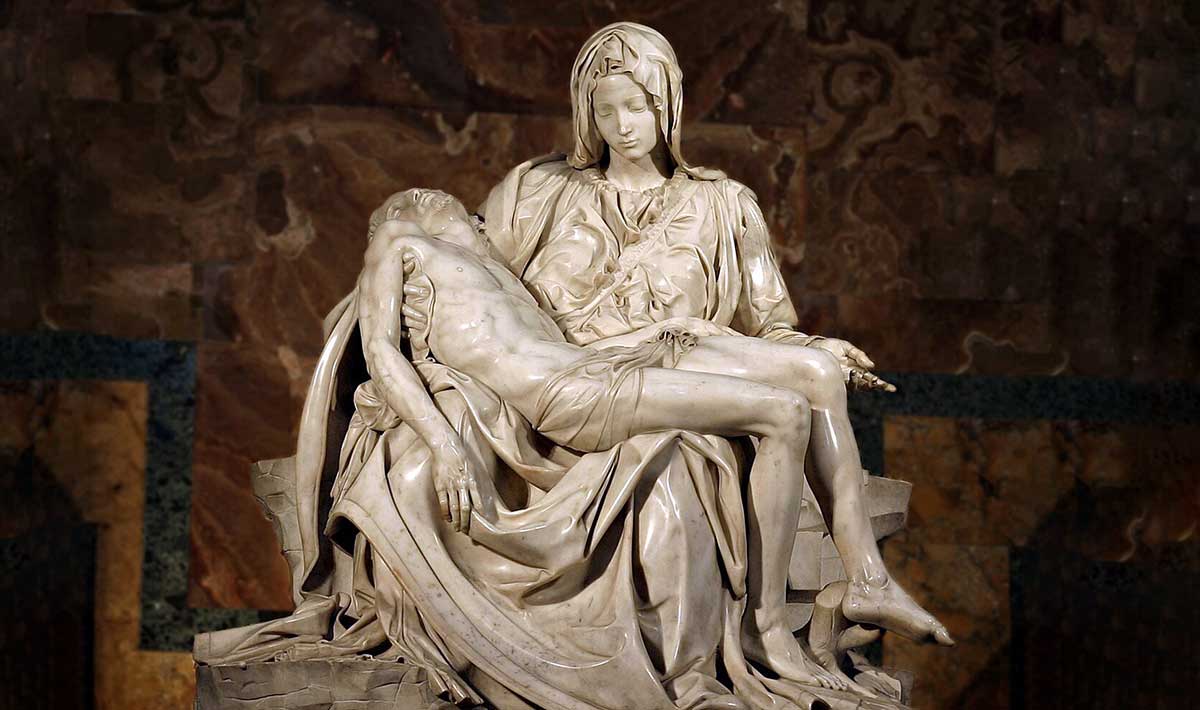
By the age of 24, Michelangelo Buonarroti had already been apprenticed in the workshop of Domenico Ghirlandaio, had studied in the Medici sculpture garden, and was a sculptor of growing renown. His travels to Bologna, Rome, and Florence exposed him to the finest art and the most forward-thinking minds.
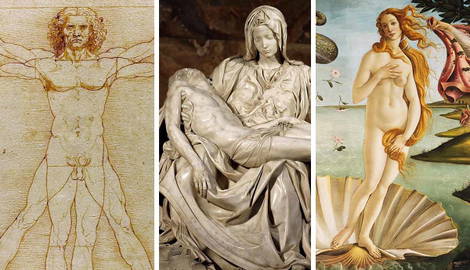
Commissioned by a French cardinal and ambassador to Rome and intended for the old Saint Peter’s Basilica, Michelangelo’s Pietà reflects his true genius. Known too for his painting of the ceiling of the Sistine Chapel, Michelangelo nevertheless thought of himself primarily as a sculptor. Although the subject matter is traditional Christian, the execution of the piece was revolutionary. Combining classical ideals typical of the humanist revival of ancient Greece and Rome with a naturalism which is astonishing when one considers it is carved from Carrara marble, Pietà is often considered to represent the beginning of the High Renaissance.
Raphael: 1483 – 1520
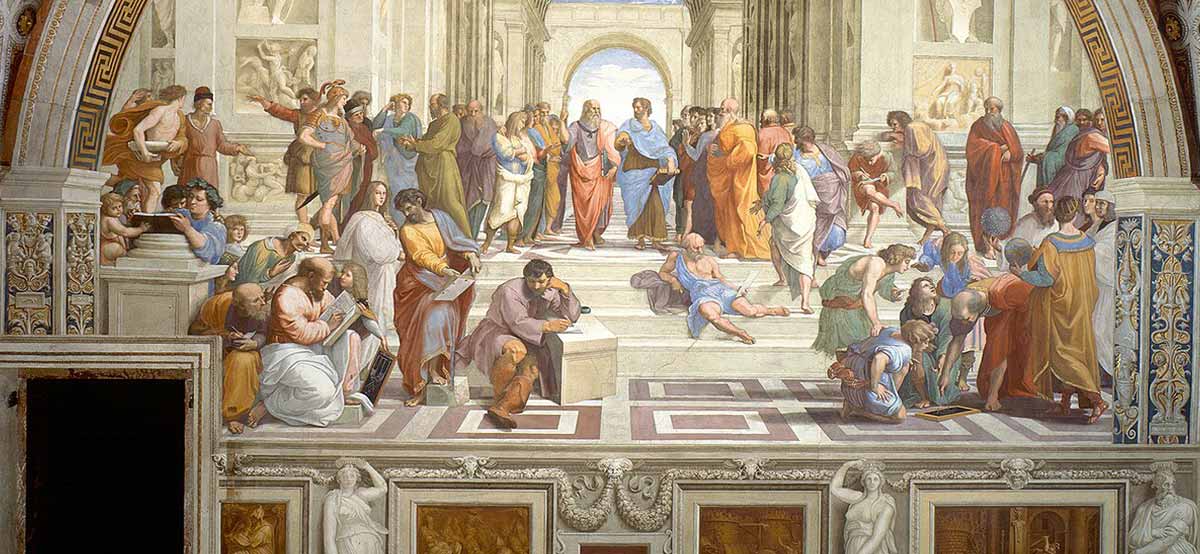
By the turn of the 16th-century, the High Renaissance was flourishing. Leonardo and Michelangelo were recognized as geniuses. Enter Raphael, an artist’s son, apprenticed at 17 to Perugino; his arrival in Florence and his encounters with Leonardo da Vinci refined his style and set him on the path to greatness.
In 1508, Pope Julius II commissioned Raphael to decorate a suite of papal rooms, the Stanze della Segnatura. The frescoes that Raphael created are among the finest artworks in the world to this day. Perhaps chief among them is The School of Athens. With perspective projection giving enormous depth to the composition, Raphael created a space within the fresco that includes many portraits of contemporary figures posing as some of the greatest philosophers, mathematicians, and scientists.
Central to the scene are Aristotle and Plato. Plato points upward as a reminder of the divine, with Aristotle pointing to the ground as the home of the natural sciences. It is widely believed that Plato was modeled on Leonardo, whereas elsewhere Heraclitus is Michelangelo. Although the full meaning and the identities of the characters depicted have been disputed over the centuries, it seems clear that Pope Julius II desired his rooms to speak of learning, discourse, and knowledge and that he felt that Raphael could create this effect. Influenced by the world he lived in, one of the rebirths of classical thinking and developments in every field of learning, the artist left us to marvel at the changes to the world during the Renaissance.
The death of Raphael in 1520 is often said to represent the end of the High Renaissance, with Michelangelo carrying on the ideology of the period into art’s next era, Mannerism. Looking at what came before Giotto and what came after him, it is clear why this period of colossal change in Western Europe is still recognized as a turning point for humanity’s pantheon of learning.