
As the waves tumbled into the boat, a strong wind rose up, caused by the geographical “wind tunnel” effect found on the Sea of Galilee. It was already the “Fourth Watch” (3:00 AM to 6:00 AM), the final hours of darkness before morning light would come.
Suddenly, someone caught a glimpse of a terrifying sight. There was a figure on the water, walking slowly towards the boat. “It is a ghost!” they cried, but Peter recognized the figure and faith replaced fear.
The Sea of Galilee: A 1st-Century Maritime Context
Near the end of Matthew 14, there’s a strange miracle written down where Jesus walks on the water towards the disciples, and Peter follows in his rabbi’s footsteps.
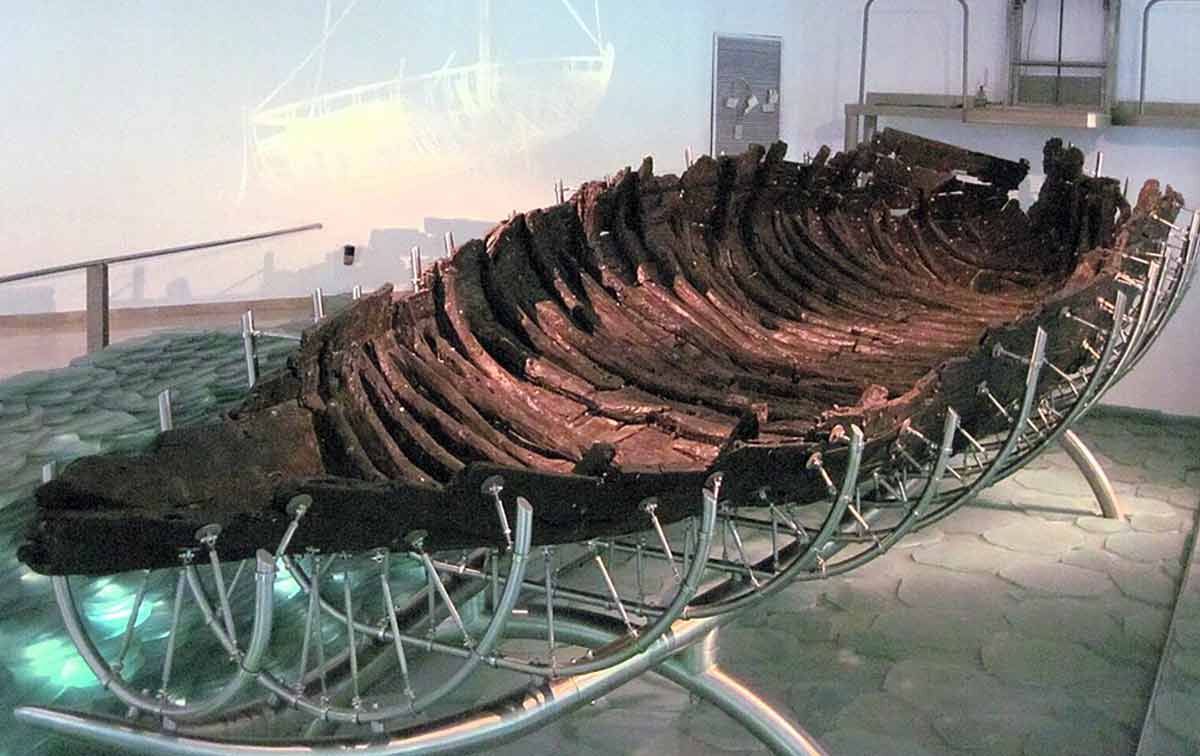
In 1986, when a severe drought caused water levels of that same lake to drop, archaeologists found what they named “Galilee Boat” – a historical find providing valuable insight into the context of this portion of Scripture. The boat dates back to the first century and is therefore a likely parallel to the one found in this story.
The Galilee boat is made from cedar and other wooden planks, roughly nailed together. It’s a shallow vessel, allowing the fishermen to be close to the water. Even professional fishermen would be genuinely terrified bracing the wind in such a boat.
The great miracle is grounded in this physical reality of a boat of that time found at the same site of this event, often mistaken for a parable.
The Symbolism of the Deep in the Ancient Mind
Upon recognizing Jesus, Peter called out to his rabbi: “Lord, if it’s you, tell me to come to you on the water.” (Matthew 14:28)
There’s a concept in Biblical Hebrew called ‘tehom’ (תְּהוֹם) which speaks about “chaos waters” of the creation account. The second verse in Genesis reads, “Now the earth was formless and empty, darkness was over the surface of the deep, and the Spirit of God was hovering over the waters.”
In ancient Near Eastern thought, walking on water was a prerogative reserved only for the Creator. Yet, when Jesus walked towards the disciples on that morning, something pivotal happened. Hearing Peter’s audacious request, Jesus simply responded with one word: “Come.”
Jesus calling Peter onto the water was an invitation to share in a “Divine” experience rather than just a survival tactic. The disciples would have understood the significance of stepping out of the boat.
Why Peter? The Psychology of the Impetuous Apostle
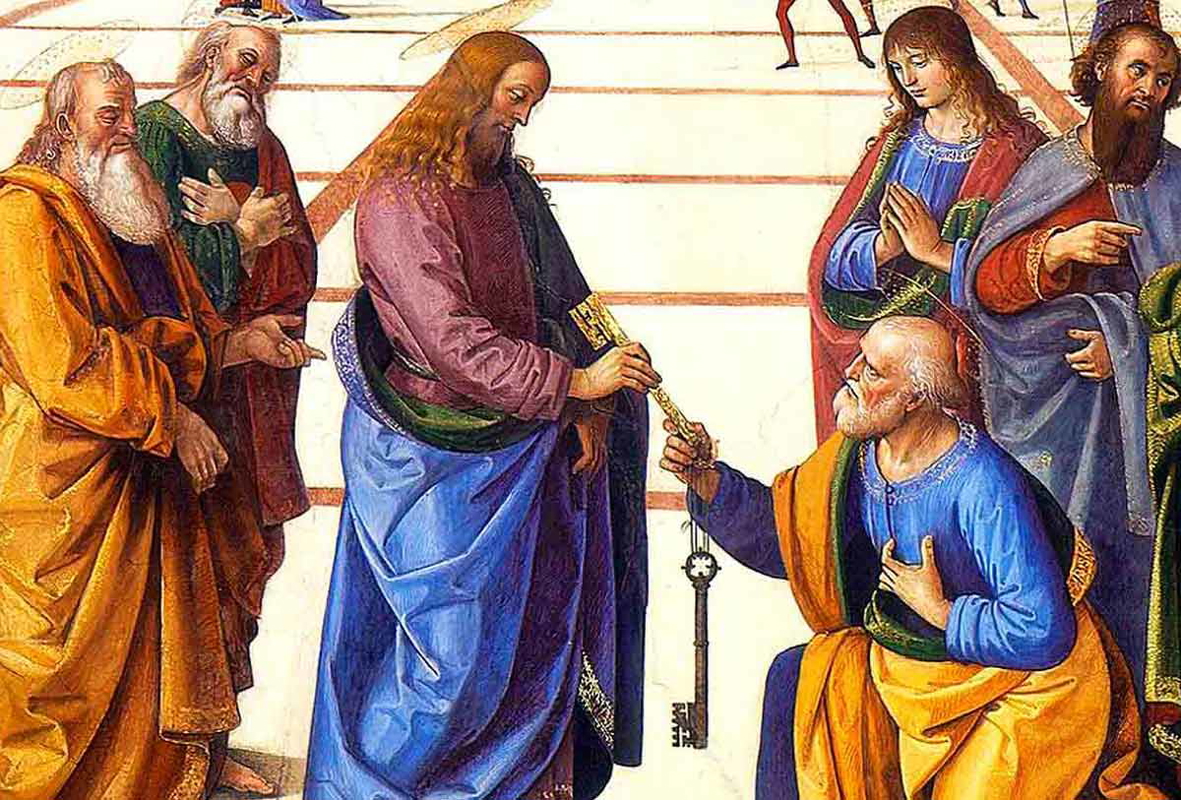
Many readers of the text wonder why Peter was the one to step out of the boat, but when you read the other Gospels, it becomes quite apparent. Peter is always the first to speak, the first to act, and the first to fail. In fact, his name was originally Simon, but Jesus decided to nickname him ‘Peter’, meaning “rock”, perhaps because he was so stubborn.
Jesus called Peter specifically to teach the difference between “enthusiasm” and “sustained faith.” At first, Peter’s feet were surprisingly confident as he walked toward Jesus impulsively, but it was when he took his eyes off his rabbi and looked at the wind that he began to sink.
The Sink: Wind, Waves, and Distraction
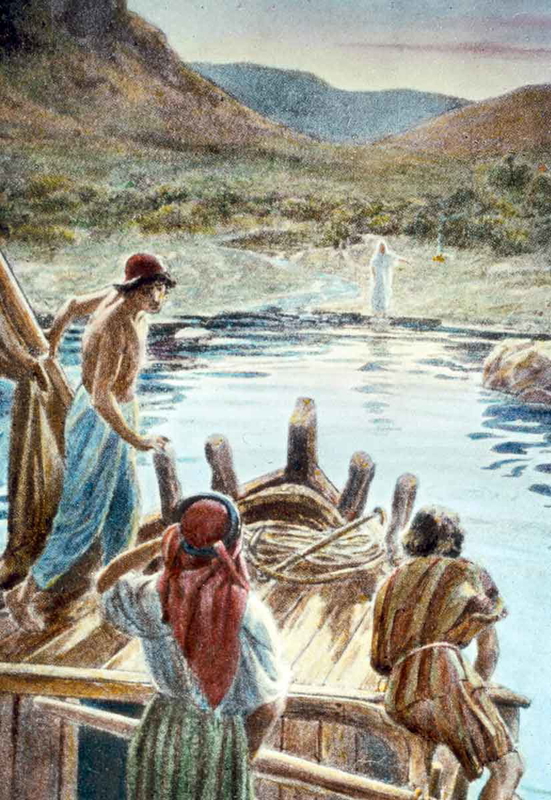
The Greek word ‘ischyron’ (ἰσχυρόν) describes the wind as boisterous, rough, or violent. The reality is that the Sea of Galilee has canyons on either side, creating a sort of ‘wind tunnel’ effect that meant sudden waves appeared as if out of nowhere. Peter begins to sink as soon as he notices the wind.
The spiritual or philosophical lesson has been interpreted in different ways:
On the one hand, the miracle didn’t fail because the physics changed, but because Peter’s focus shifted from the “Source” to the “Environment.” On the other hand, some have argued that it is better to remain in the safety of the boat (and see the boat as a metaphor for the Church). Jesus applies it to faith when he pulls a sinking Peter out of the water, grabbing his hand, and saying, “You of little faith, why did you doubt?”
Art History: Capturing the Reach for Help
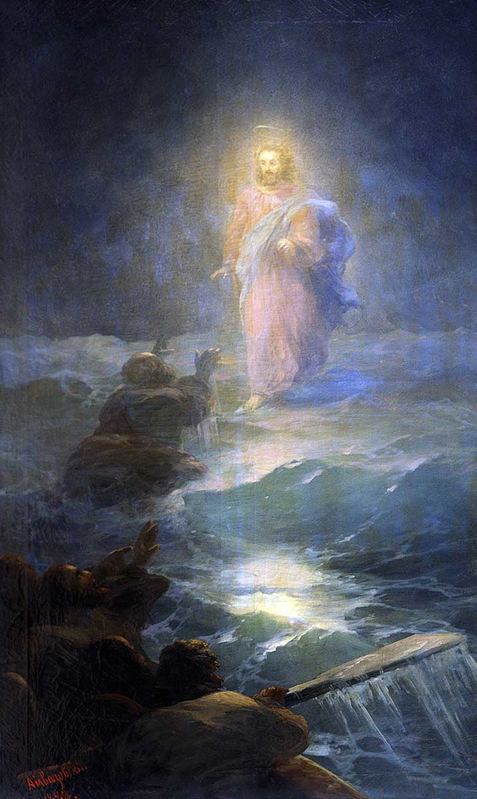
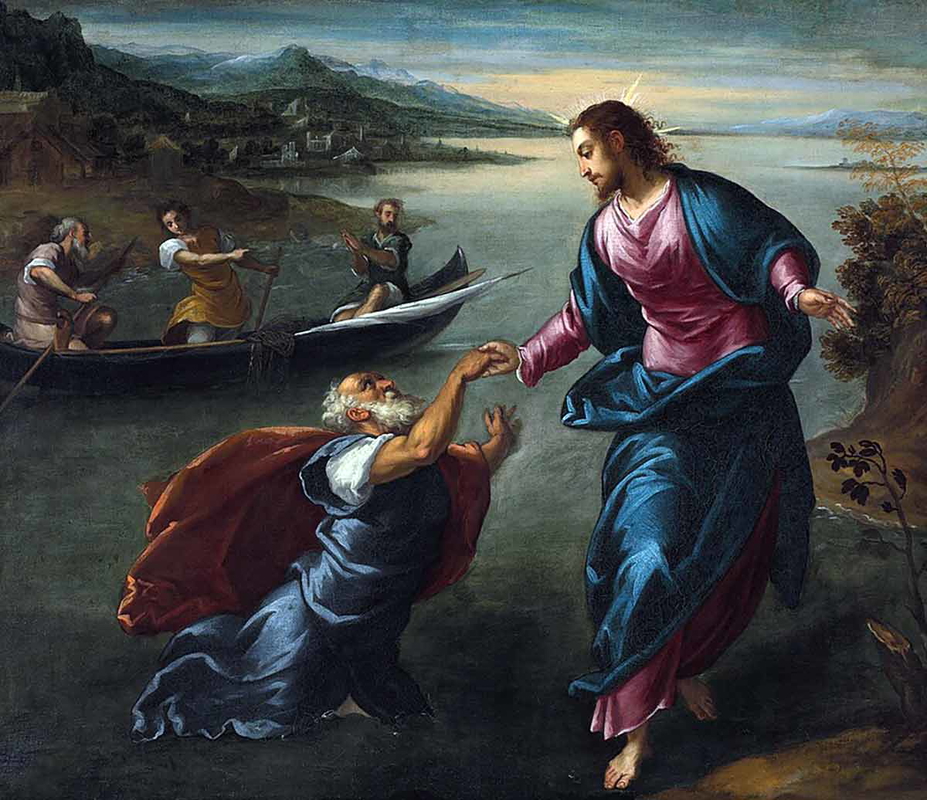
Like the other miracles, this scene has been depicted in various artistic interpretations. Early Christian art often focused on the safety of the boat (the Church), while Renaissance and Baroque artists focused on the physical tension of the “Hand of God” reaching down to save a sinking Peter.
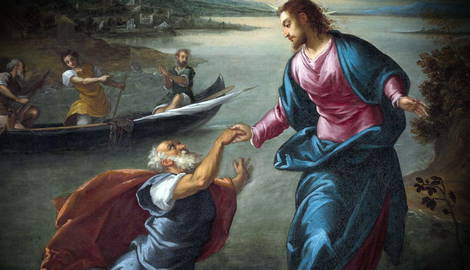
Ivan Aivazovsky’s dramatic maritime perspective (above) shows Jesus shining brightly as he walks towards a sinking Peter. At the bottom of the painting, the other disciples are seen, rowing for their lives.
Jacopo Tintoretto’s depiction of the event (below) takes a different approach. Tintoretto’s sense of motion is noteworthy as he uses mannerism to highlight key elements of the story. The halo around Peter’s head is especially noteworthy as he steps out of the boat and becomes like his rabbi for a moment.
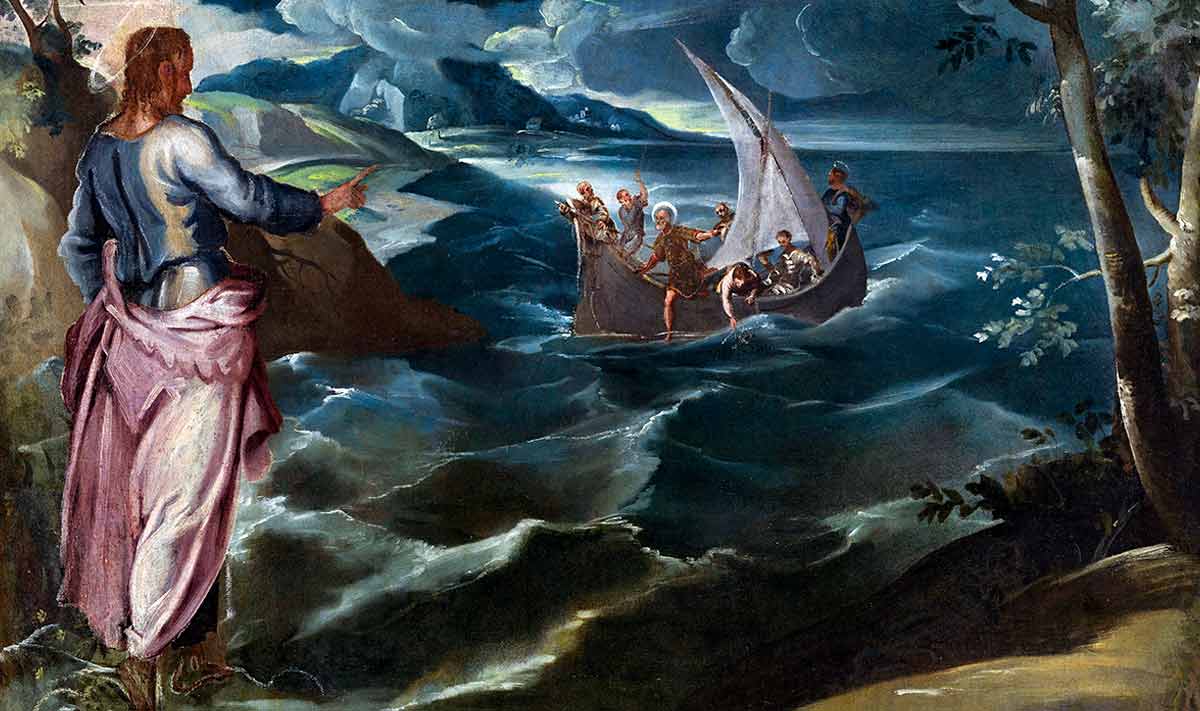
Jesus invited Peter to step out of the boat. Peter obeyed, yet it was not long before he sank. His rabbi was both the one to “call” and to “rescue” – key characteristics of how Jesus is described in Scripture. God is both the one who initiates and the one who saves.
The invitation to step out of the boat was a necessary “breaking” of Peter’s self-reliance, preparing him for his future role as a leader of the early Church. He had to learn the importance of keeping his gaze fixed on Jesus (Hebrews 12:12).