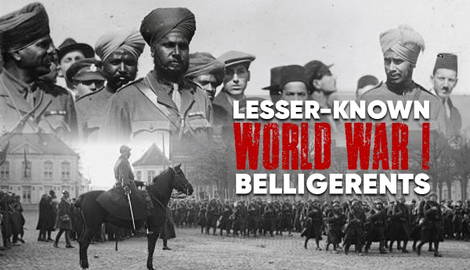

During World War I, the Allied powers of the United Kingdom, France, Russia, Japan, and the United States formed an international coalition known as the Entente to oppose the Central Powers of Germany, Austria-Hungary, Bulgaria, and the Ottoman Empire. Many fronts of the Great War, however, were impacted by secondary participants from distant regions who provided logistical, financial, and battlefield support on both sides. While history largely remembers the primary Allied and Central players, the contributions of these countries cannot be ignored.
1. Egypt
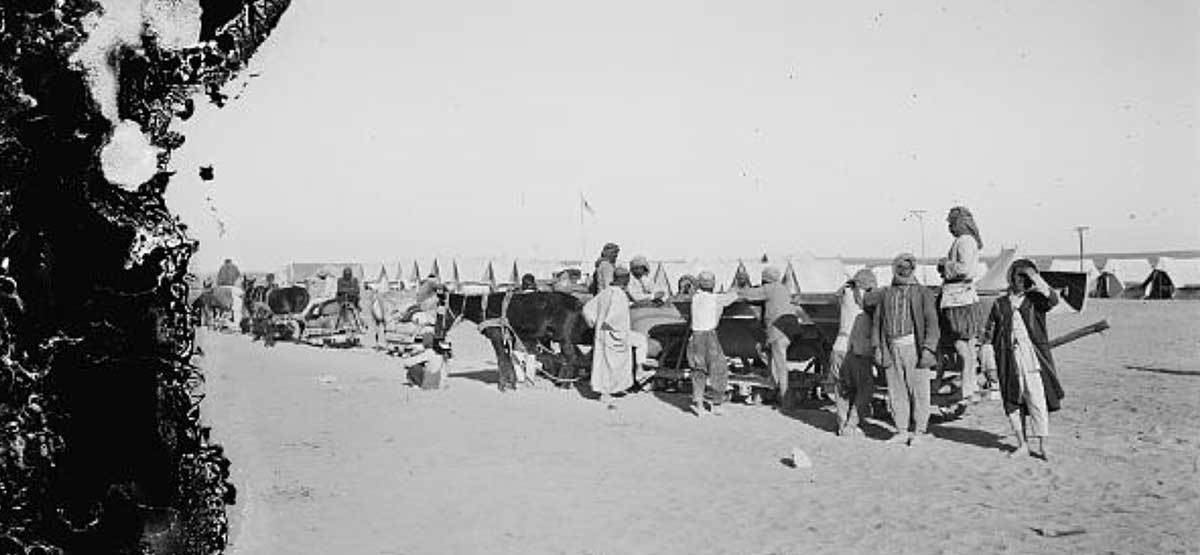
Following Britain’s declaration of war against the Ottoman Empire in 1914, the UK declared Egypt as a national protectorate. Egypt was not required to provide soldiers to aid Britain’s war against the Central Powers, but the British Empire did leverage the North African country for strategic purposes during the war. Led by the Egyptian Expeditionary Force, British troops in the region were tasked with safeguarding the Suez Canal, a vital avenue for international trade and the transportation of military supplies.
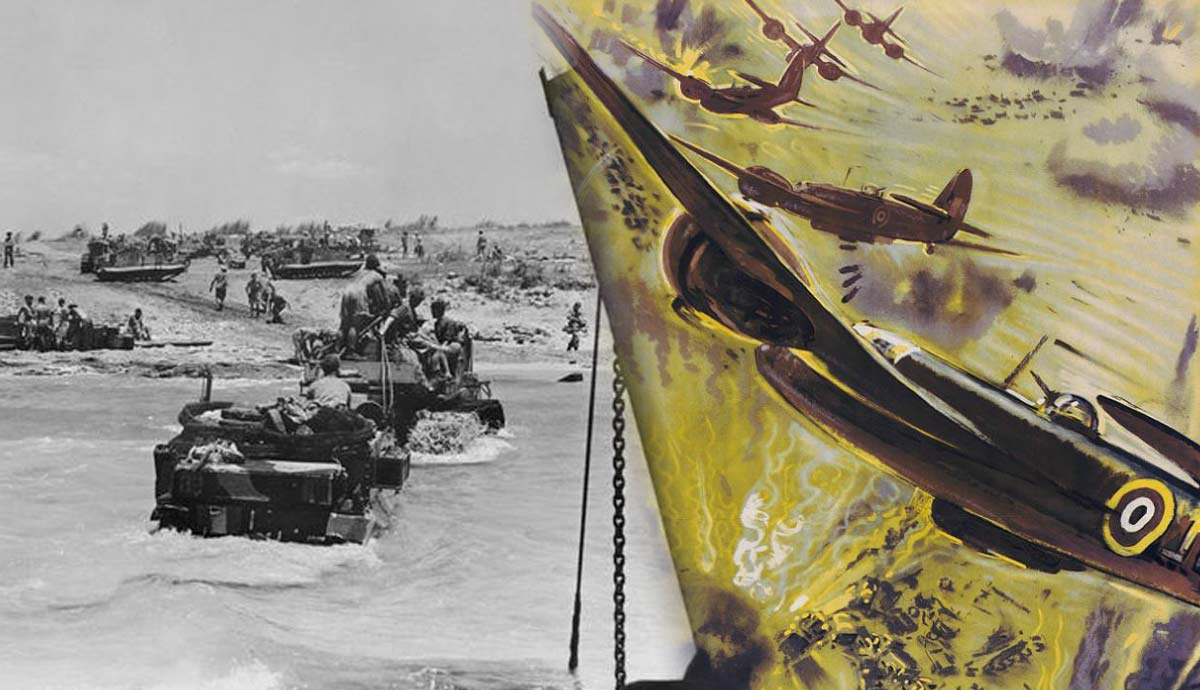
In 1915, Entente powers launched the Gallipoli Campaign via amphibious assault. After eight months of fierce fighting and a half a million casualties altogether, Egypt became a hub for withdrawal and staging. In 1916, the Egyptian Expeditionary Force successfully defended the Suez Canal from a joint Ottoman-German force in the Battle of Romani on the Sinai peninsula, the last of several attempts by the Central Powers to seize control of Egypt. Over the course of World War I, the Egyptian Expeditionary Force continued to witness significant casualties, but the conflict helped stem Egyptian fights for independence from British control.
Two days after the Armistice of November 11, 1918, Egyptian officials unsuccessfully demanded independence from the British government. In response to British refusal, Egyptian sympathizers revolted and organized an independent government. The two parties agreed to an autonomous Egyptian government with British involvement in protecting national interests, and in 1922, Egypt became an independent kingdom under King Fuad I. World War I thus served as the catalyst for Egyptian independence.
2. South Africa
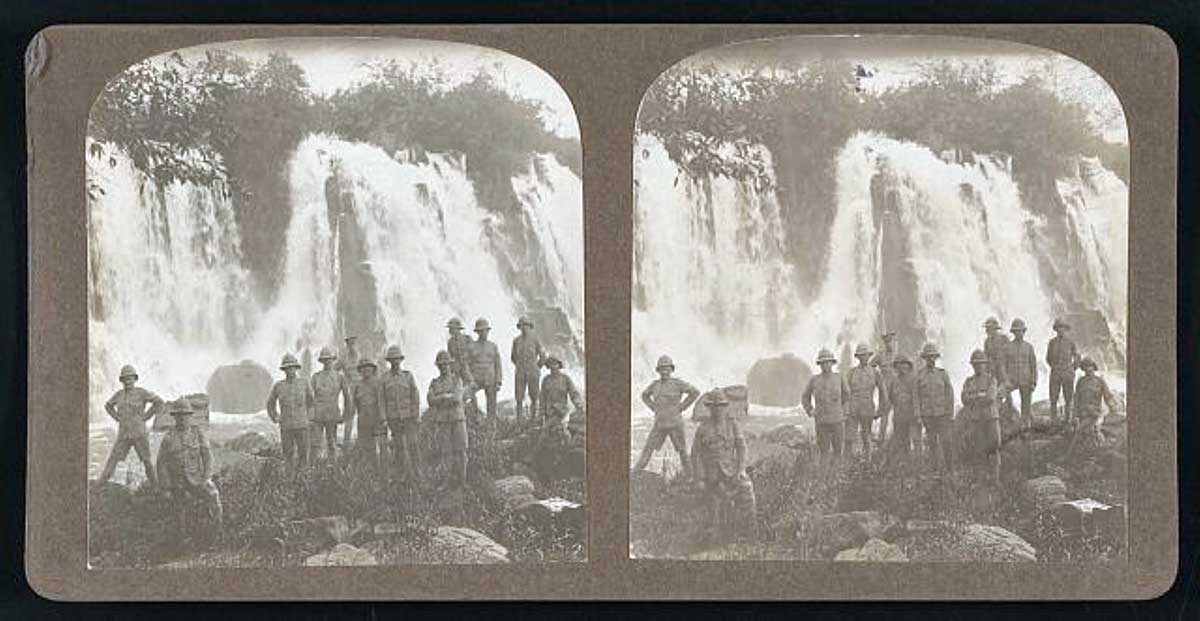
Much like Egypt, South Africa’s involvement in World War I was determined by its relationship with Britain. While South Africa did enjoy a significant degree of autonomy as a Dominion of the British Empire, the country did not have control over its foreign affairs. Created in 1910, South Africa’s Union Defense Force quickly became involved in the war. Although forbidden from invading neighboring Central Power territories, the country established the South African Overseas Expeditionary Force in July 1915 under British command.
In the week following the British declaration of war, London ordered the South African troops to occupy German communication stations in German South-West Africa. The offensive was unsuccessful, but early losses did not deter South Africa from participating in the war effort.
After sustaining sizable casualties in the first year of the war, Britain looked for additional manpower from South Africa. In October 1915, South Africa’s first recruitment depot opened in Cape Town, and volunteers were so eager to enlist that riot control officers were deployed to calm the overwhelming crowds. Encouraged by initial recruitment successes, Britain opened several more recruitment centers in South Africa in 1916, seeking troops to fulfill non-combat roles.
As World War I matured, South African troops transitioned to combat positions in several theaters. The South African Overseas Expeditionary Force countered German occupation in East Africa from 1916 to 1918 and supported Allied assaults in the Egypt and Palestine Campaigns. A small contingent of South African soldiers also saw action on the Western Front, supporting operations in the decisive Somme Offensive.
3. India
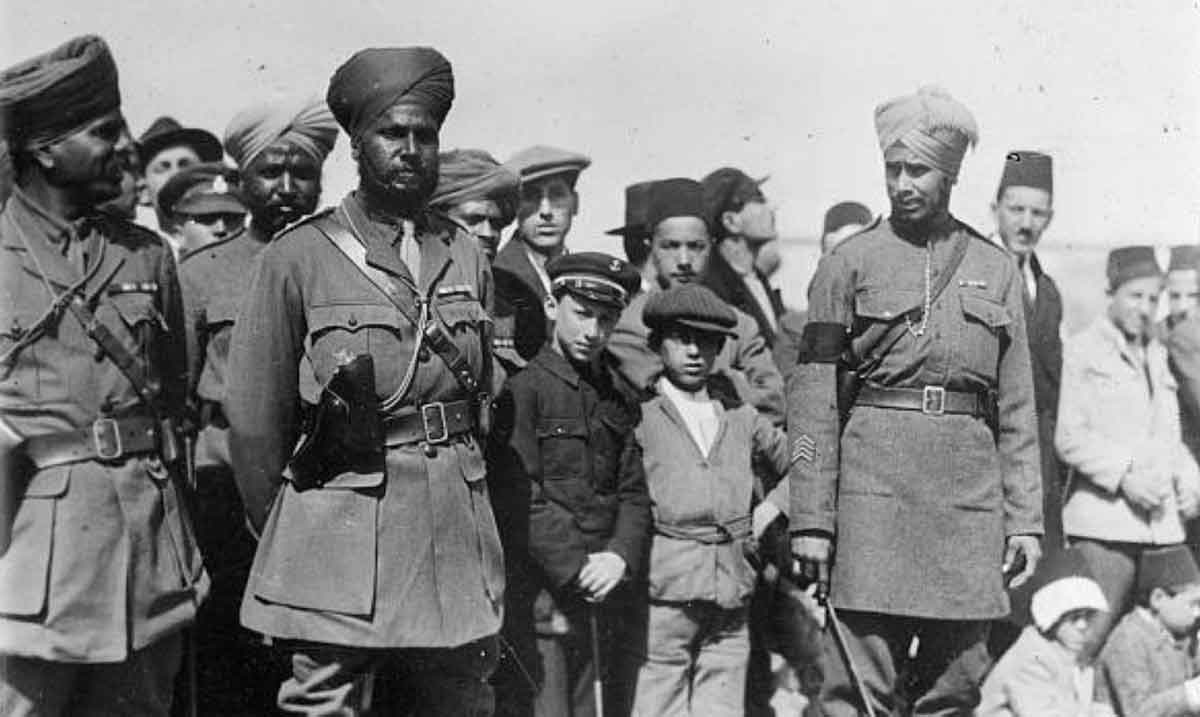
Prior to World War I, India had one of the two largest volunteer militaries in existence with over 240,000 personnel. With seven expeditionary forces, homeland security units, and independent brigades, the Indian Army grew to over a half of a million due to the country’s heavy involvement in the conflict by war’s end.
Indian Expeditionary Forces saw combat in nearly every theater of World War I, but their existence was not without struggle. Expeditionary Force A, for example, had no artillery, employed officers without knowledge of Indian languages, and struggled to acclimatize to the weather conditions in Europe. These challenges led to widespread death and desertion.
Despite setbacks, the Indian Army supported Allied objectives with loyalty. Expeditionary Forces B and C supported South Africa in countering German influence in East Africa, while Expeditionary Force D launched sieges during the Mesopotamian Campaign alongside the British. Meanwhile, Indian Expeditionary Force F, composed of two divisions, supported Egyptian protection of the Suez Canal and reinforced Allied efforts during the Gallipoli Campaign.
The heroism of Indian troops was widely recognized by the British authorities. The first Indian recipient of the British Victoria Cross received the accolade during World War I, along with over a dozen fellow Indian soldiers over the course of the war. The country’s triumph was matched with immense sacrifice. Of the over one million Indian servicemembers deployed during World War I, over 60,000 perished. Hundreds of thousands more suffered casualties or went missing in action.
4. Belgium
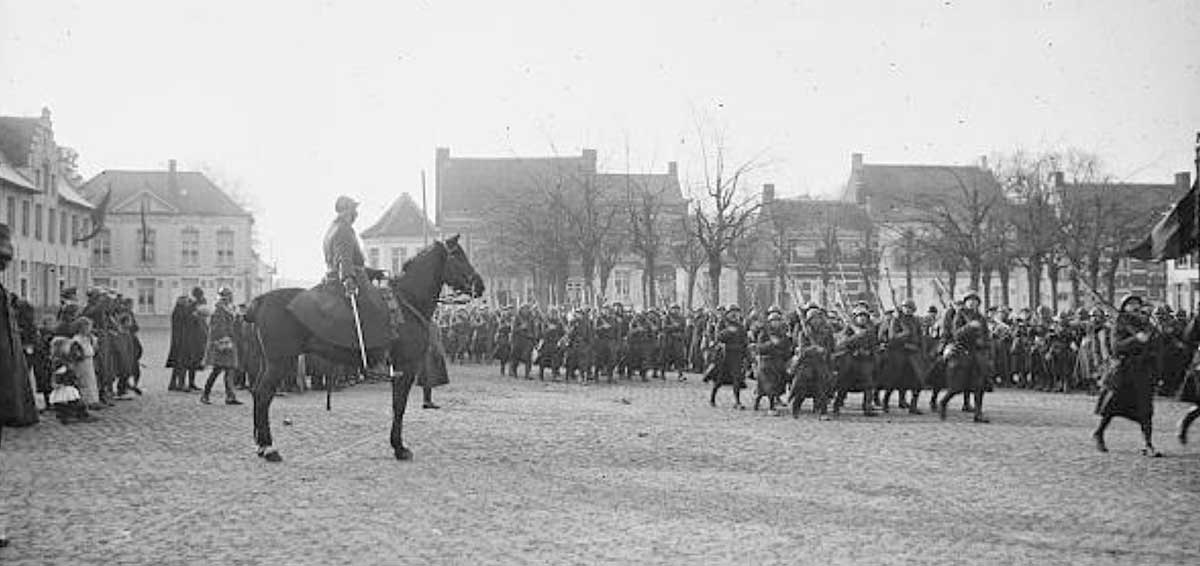
Although Belgium neutrality had been guaranteed by the 1839 Treaty of London, the German invasion of Belgium in August 1914 led to limited Belgian participation in the Great War. While significantly outnumbered by the Germans, Belgian defenders slowed Germany’s westward progress. The disruption allowed Allied leaders to better prepare for the first Battle of the Marne, one of the earliest Allied victories in World War I, which neutralized Germany’s hopes to rapidly defeat France.
Although most of Belgium was occupied by Germany, King Albert and his troops managed to keep a small city, Ypres, under Belgian control. To aid the Allied war effort, Belgian leaders offered the Force Publique of the Belgian Congo, current-day Democratic Republic of the Congo, to help counter German offensives in East Africa. The Force Publique fought alongside British and Portuguese forces in the 1916 Battle of Tabora in modern-day Tanzania, and the resulting victory reduced German presence in the African theater. One year later, the Force Publique launched the Mahenge Offensive and successfully advanced into the Mahenge Mountains in southern Tanzania, further weakening German influence in the region.
While not a direct participant, Belgium’s impact on the First World War is attributed to the bravery and support of the Belgian Congo. Following the conflict, African colonies that once belonged to Germany including Cameroon, Tanzania, Rwanda, and Burundi were divided among Allied powers through the Treaty of Versailles, thanks in part to the Force Publique’s success in resisting the German military presence in the region.
5. Greece
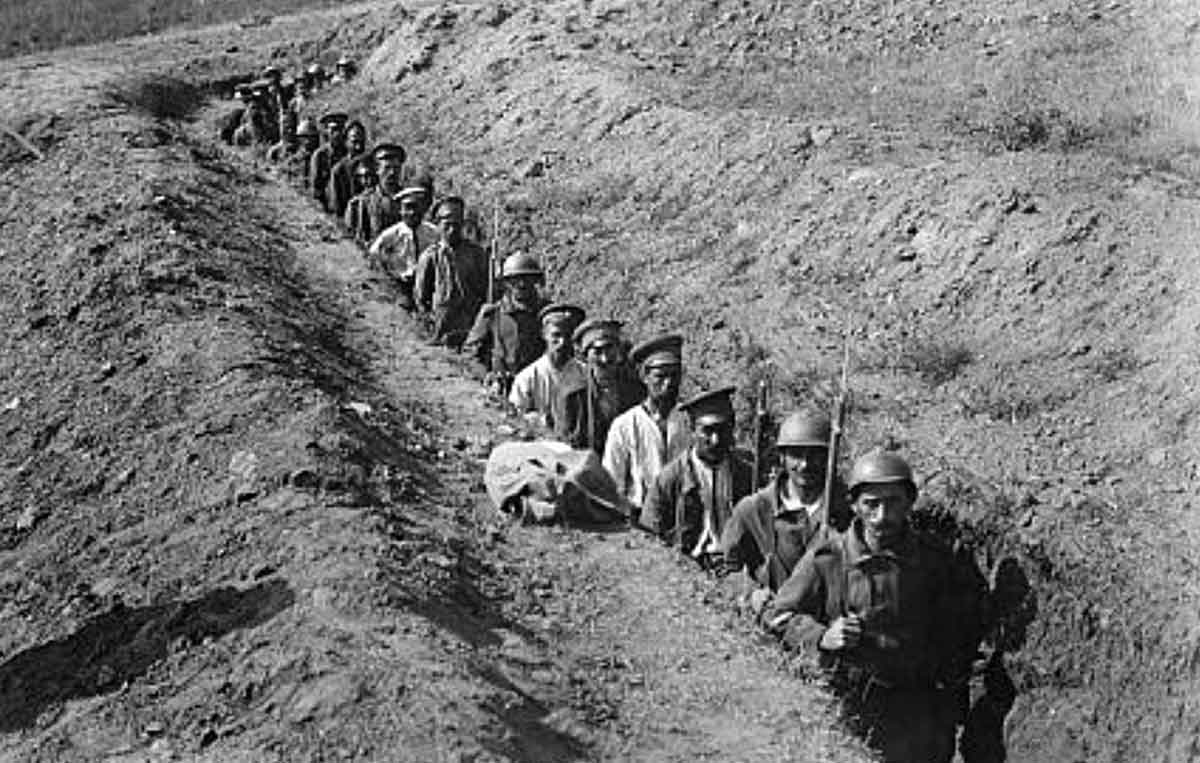
Like Belgium, much of Greece desired to remain neutral during World War I. While King Constantine I preferred this non-commital policy, Prime Minister Eleftherios Venizelos supported Allied causes. This internal disagreement led to the National Schism, which split Greece into two competing forms of government for much of the war.
Despite its outward neutrality, the Greek Prime Minister allowed Allied militaries to advance into his home country. By 1917, however, King Constantine I abdicated the throne, succumbing to pressures for formal Allied support following a quasi-civil war. Aligned against the Central Powers, Greek troops played a pivotal role on the Macedonian front, leading to the surrender of Bulgaria in September 1918 after the Battles of Skra-di-Legen and Doiran.
Following World War I, Greece’s National Schism lasted into the early 1920s. For many critics of Prime Minister Venizelos, formal involvement in World War I deepened divides in Greece following the conflict, leading to decades of political and economic turmoil. The political divisions in Greece in the aftermath of the Great War weakened the country’s ability to counter their adversaries in the Greco-Turkish War from 1919 to 1922. While the 1923 Treaty of Lausanne restored peace and facilitated internal progress, internal political tensions continued to bring decades of strife. During World War II, however, the country would have little choice but to formally side with the Allies once again following the Italian and German invasions of Greece in 1941.
6. China
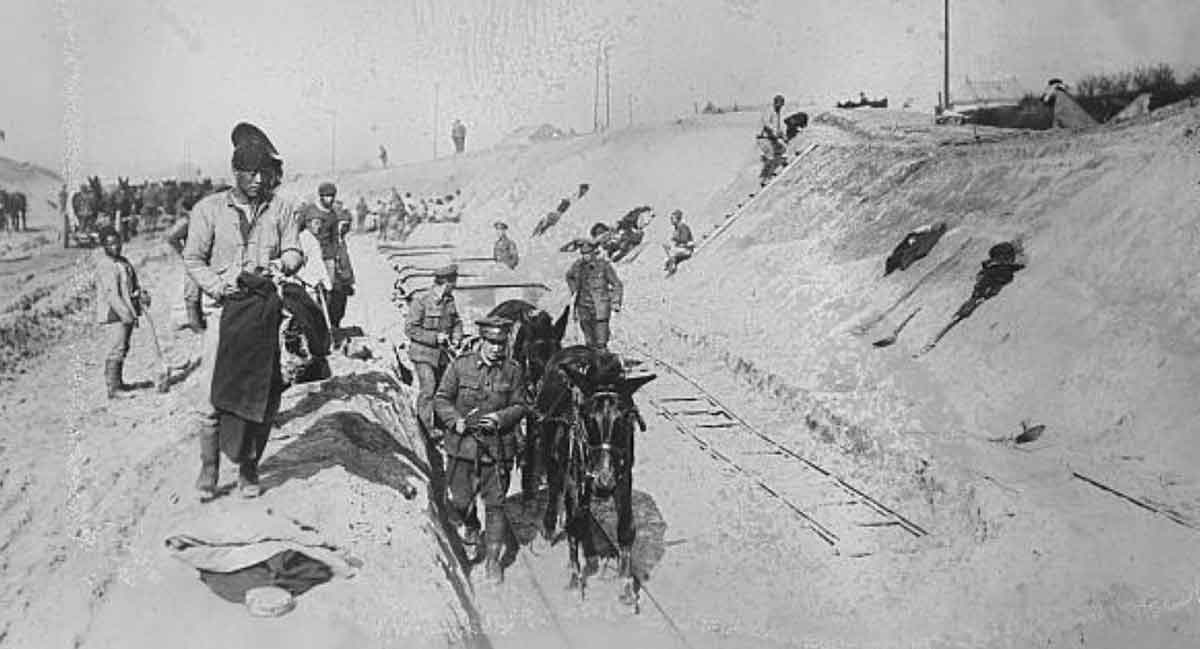
While not a primary belligerent of World War I until 1917, China altered the course of the conflict by providing non-military support. The Chinese government sent a Labor Corps of over 140,000 workers to aid British and French troops in completing necessary, non-combat tasks. Chinese laborers were essential in building the trenches that dominated World War I battlefields, and were also involved in repairing railways, building roads, and transporting supplies.
China’s motivation to help Allied partners during the war were primarily political and economic. After recently overthrowing the imperial government in the 1911 Revolution, the Republic of China hoped to gain the favor of Western countries, but this desire was largely ignored. Instead, the Treaty of Versailles awarded the former German colony of Qingdao on the Shandong peninsula to the Japanese, who had driven the Germans out of the territory in 1915.
While China’s assistance during the Great War was vital in completing behind-the-scenes roles, its disappointment in the years following led to significant changes in its geopolitical decision-making. During the interwar period, tensions between Japan and China increased dramatically, resulting in the Japanese invasion of Manchuria in 1931 and the Second Sino-Japanese War. In the meantime, the Chinese Communist Party waged a civil war against the Nationalist government from which it ultimately emerged victorious in 1949.
Far reaching conflicts such as World War I expand beyond the traditional participants that are remembered by mainstream history. Secondary players helped shape the outcome of the war, and in many cases, their participation altered the course of history for involved parties. Big or small, contributions from dozens of countries led to a climatic end to one of the most influential wars in modern history.