
Leaders of both Allied and Axis Powers leveraged deceit to obtain advantages over their adversaries during the Second World War. Namely, Allied deception operations preceded some of the most consequential battles of the conflict, including the invasion of Sicily, D-Day, and fighting in North Africa. While combat troops rightfully deserve recognition for their bravery amid unparalleled danger, several confrontations could not have been won without strategic developments behind the scenes. Here are the planning efforts and outcomes of three major deception schemes of the war: Operations Mincemeat, Fortitude, and Bertram.
1. Operation Bertram
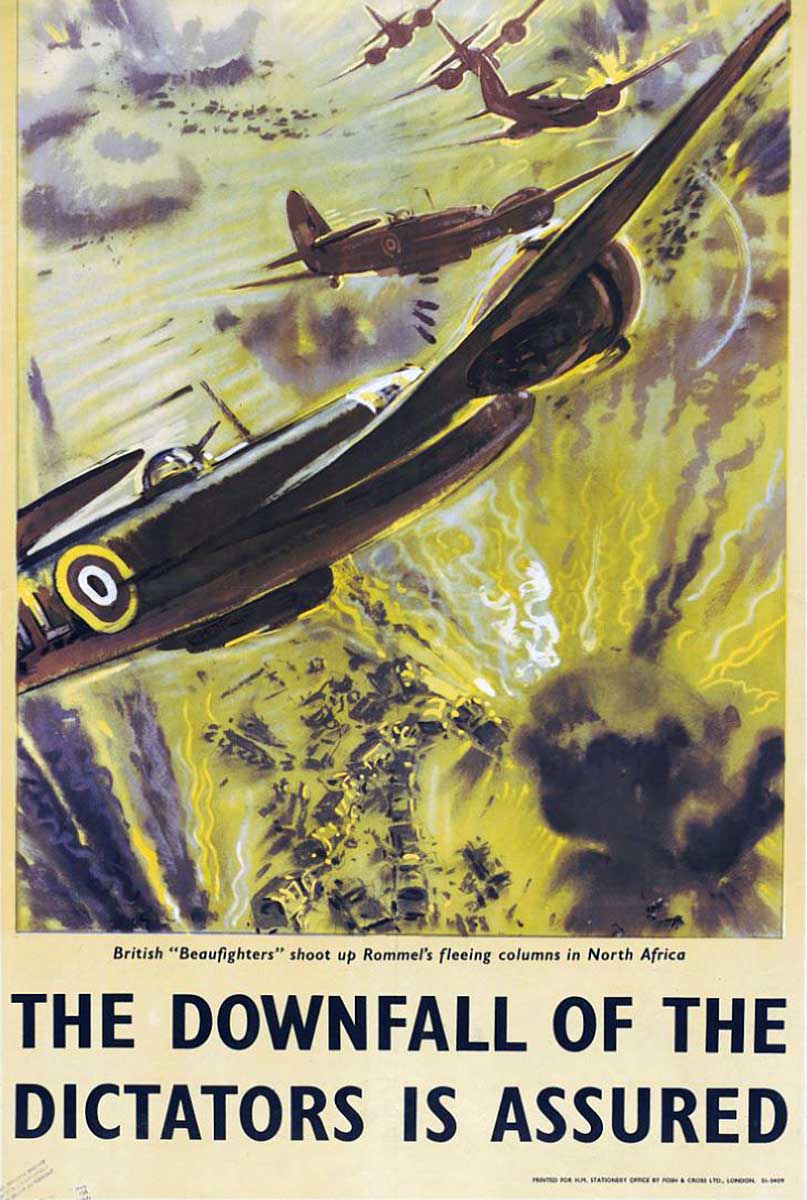
As the Allies encountered immense challenges fighting the Axis Powers in North Africa shortly following the United States’ entry into World War II, the British sought to gain advantages on the battlefield by relying on deception in the desert. In mid-1942, the First Battle of El Alamein led to a prolonged stalemate in Egypt. As both sides bunkered down west of Cairo, each anxiously anticipated counteroffensives from the enemy. This time, however, the British strategized that convincing deception could mislead German military leaders like Erwin Rommel over the target and timing of the attack.
The British military used several creative methods to deceive the enemy before the Second Battle of El Alamein. Faux tanks and artillery pieces were created using lightweight materials like woven fabric and palm branches. Meanwhile, the British disguised their operable tanks and artillery in the vicinity of the intended target with canopies to masquerade them as weaponless supply trucks. The British made sure that their fake military assets were highly visible to German pilot crews as they reported intelligence of the supposed Allied build-up to their superior officers, leading the German command to reorganize their defensive positions.
One of the most creative tools used to deceive the Germans was a fake water pipeline constructed towards the false target. Constructed at a rate of five miles a day, the dummy pipeline gave the Germans the ability to calculate the timing and direction of the perceived attack. Just like future Allied deception activities of the war, Operation Bertram used misleading radio traffic to corroborate the false intelligence reports.

As the actual attack approached, real tanks replaced the fake ones close to German lines, tricking enemy units in the area. When British troops launched the Second Battle of El Alamein, Rommel was shocked and confused. Based on false intelligence collection as a result of Operation Bertram, the accomplished general assumed that the offensive was due to come from the south several days later. Now faced with a fierce British offensive from the north, Rommel had little time to organize reinforcements and countermeasures. Consequently, the Second Battle of El Alamein was a decisive victory for the Allies.
While Operation Bertram helped the British triumph after a lingering stalemate, the strategy supported larger, long-term objectives for the Allies. At El Alamein, Rommel’s forces were outnumbered and poorly positioned, and the “Desert Fox” ordered a full retreat in early November 1942. The victory marked a turning point in North Africa, eventually forcing a complete withdrawal of German forces from the region. The victory boosted morale amongst Allied soldiers, many of whom were new arrivals from the United States, and increased confidence during the subsequent invasions of Sicily and the Italian mainland.
2. Operation Mincemeat
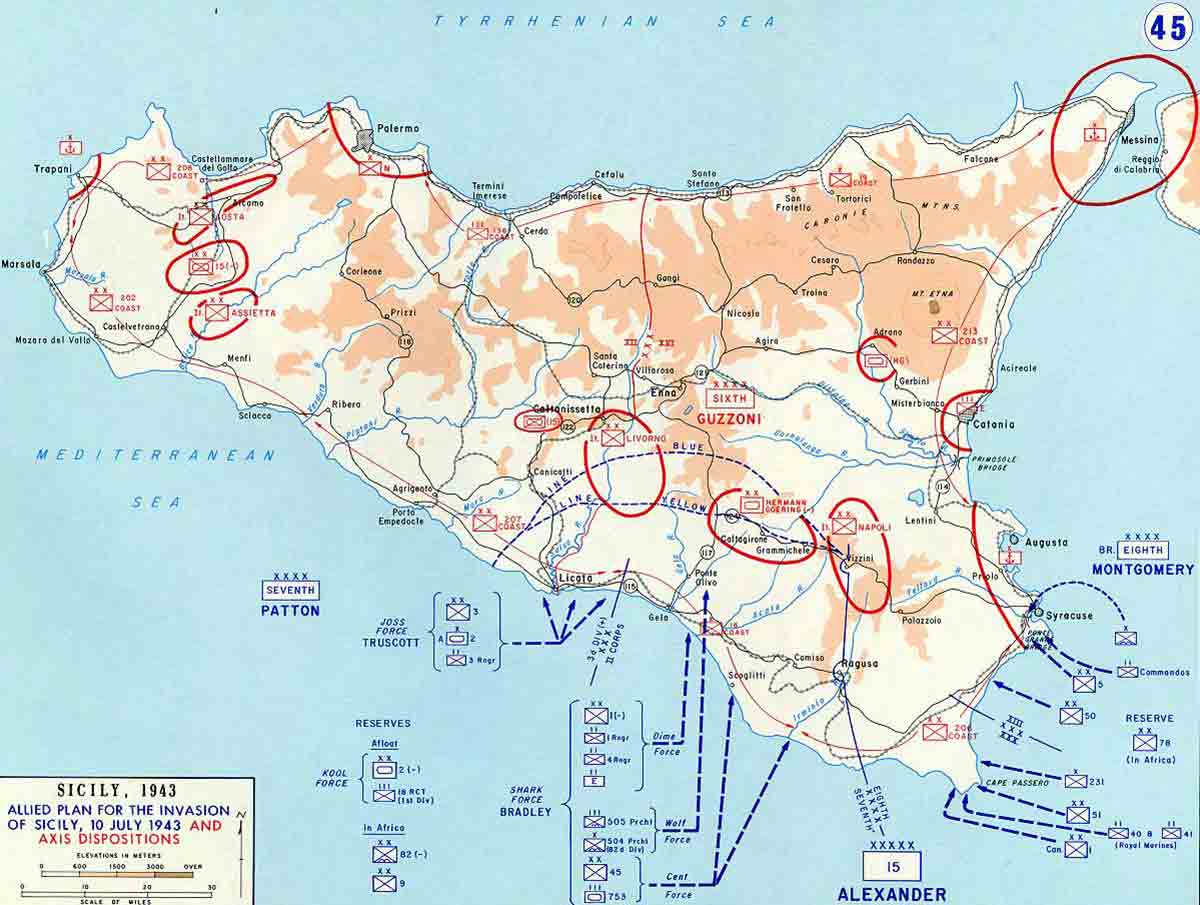
As Allied armies defeated Axis forces in North Africa, Allied leaders looked north to consider how to open a second front against Nazi-occupied Europe. Plans to invade Nazi-occupied France would not be executed until the following year, but from the south, Italy presented the most logical entry point. As the Allies considered how to circumvent fortified Italian positions, German reinforcements, challenging terrain, and restricted avenues of approach, Allied planners resorted to deception with Operation Mincemeat.
Designed by British naval intelligence officers like Captain Ewen Montagu and Squadron Leader Charles Cholmondeley, Operation Mincemeat was intended to masquerade the invasion of Sicily by giving the impression that the main Allied targets were Greece and Sardinia. To accomplish this, the British military needed a foolproof plan to ensure Germany was convinced of its reality.
British naval intelligence utilized the body of a deceased and homeless laborer to execute Operation Mincemeat. By dressing up the corpse in an officer’s uniform and planting facsimile secret documents, including identification papers, faulty plans detailing approved invasion locations, an English ticket stub, and an engagement ring receipt, the Allies attempted to make the Germans believe that the European invasion plans fell into their hands by mistake. The British would have to discreetly and strategically leave the bait in an area where it could be identified and transmitted to German authorities in a believable manner.
On April 30, 1943, the British submarine HMS Seraph released the body into the sea one mile south of the Spanish coastline. Eventually captured by Spanish authorities, the faulty invasion documents were passed from German sympathizers to Axis intelligence officers in Spain. Before long, German military leaders acted on the defective intelligence. Prior to the Allied invasion of Sicily, Germany hastily reorganized its troop presence in southern Europe, doubling their unit strength in Sardinia and reinforcing Greece with additional divisions. These alterations proved vital during the subsequent offensive on Sicily, known as Operation Husky.
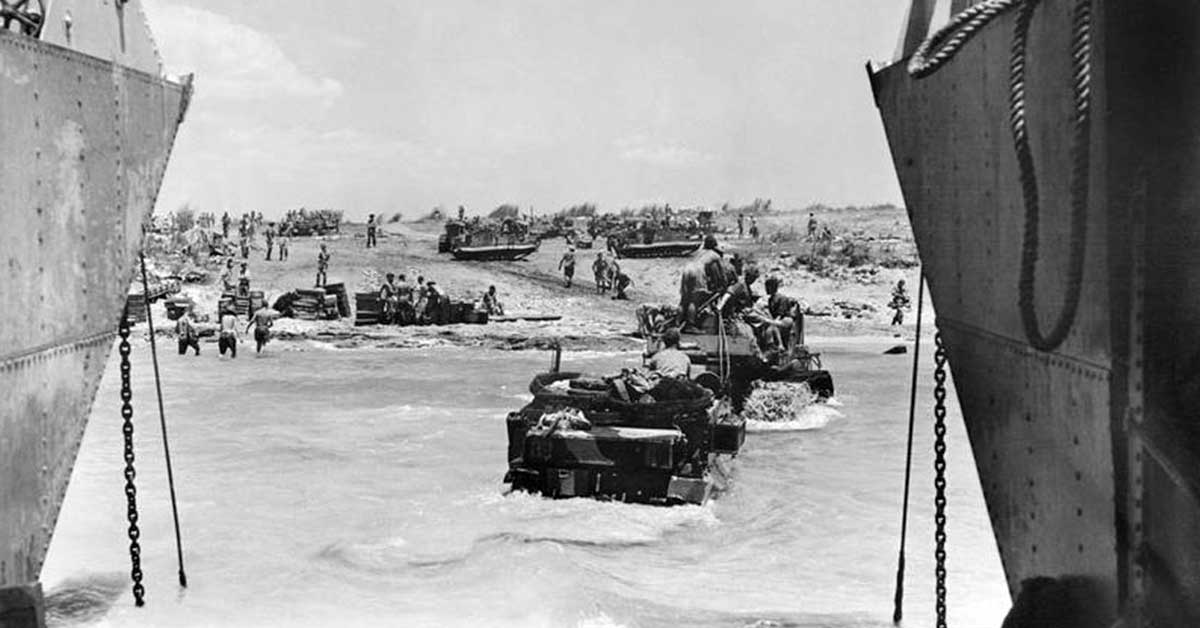
When the Allies launched their Sicilian invasion on July 9, 1943, the assault was a resounding success. The invasion surprised German and Italian defenders, and the two Axis powers had little opportunity to send reinforcements in time. In a matter of weeks, the Allies completely captured the island, marking the first effort in a long series of campaigns intended to liberate Axis-occupied Europe.
While subsequent offensives in Italy proved more challenging for the Allies after landing in Sicily, Operation Mincemeat was a clear success, amplifying the utility of deception in modern warfare after similar use in North Africa. For the Allies, Operation Mincemeat was far from the last attempt at fooling the enemy, and the success of British deception operations inspired their American allies to execute their own deception activity in the months preceding D-Day.
3. Operation Fortitude
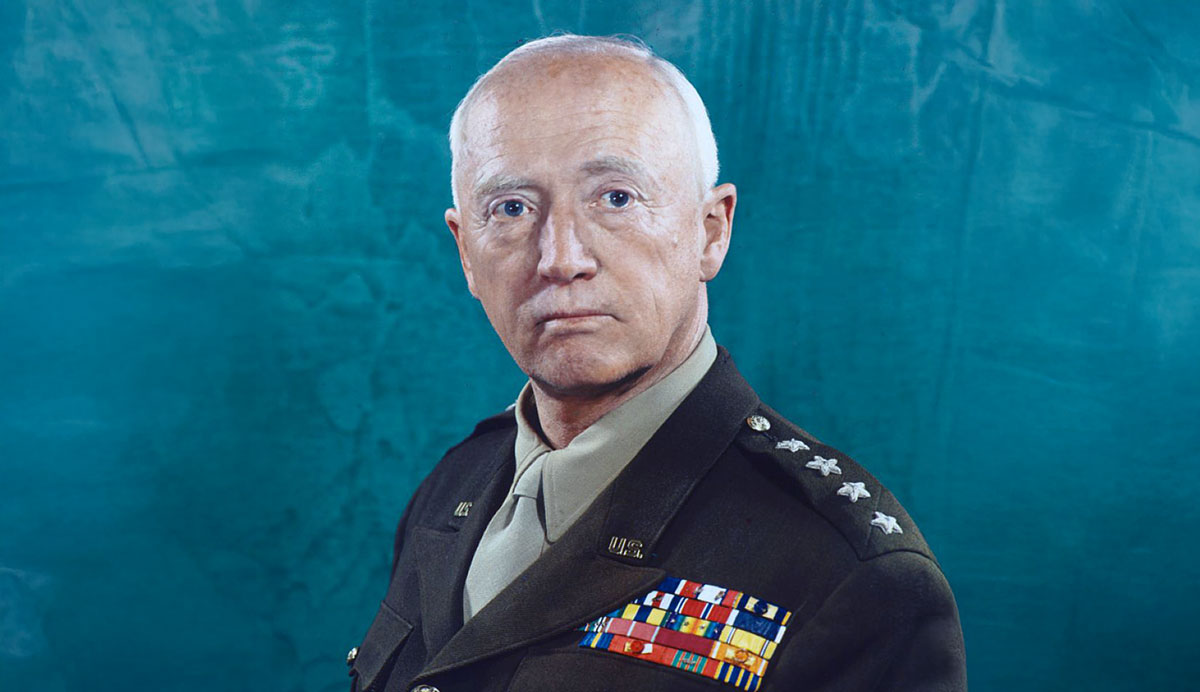
Much like British deception via Operation Mincemeat to disguise the Allied invasion of Sicily, Operation Fortitude was designed to masquerade the amphibious assault at Normandy. A subordinate plan of Operation Bodyguard, Operation Fortitude set out to exploit the primary disadvantage of World War II-era aerial reconnaissance: difficulties in verifying photographs taken from the air with the realities on the ground. To accomplish this bold mission, the Allies created fake “ghost” armies in 1943 in strategic locations to fool Germany into believing Allied invasions were imminent in Norway, known as Fortitude North, and in the Pas-de-Calais region of France, codenamed Fortitude South. These locations were considered logical targets as the Pas-de-Calais region was the closest landing spot from England.
By January 1944, the Allies expanded Operation Fortitude by launching a sub-operation known as Quicksilver. Quicksilver involved tricking German military planners by announcing the formidable General George S. Patton as the new commander of the United States First Army Group. The catch? The unit did not exist despite thousands of decoy vehicles, tanks, buildings, supply infrastructures, and airplanes made of inflatable materials. By assigning the legendary general as the head of this manifesting unit building up near potential invasion sites, German decision-makers were forced to contemplate how to best arrange their defenses. When the real D-Day landings occurred on June 6, 1944, the Allies made radio transmissions to mislead the Germans over the invasion’s timing.
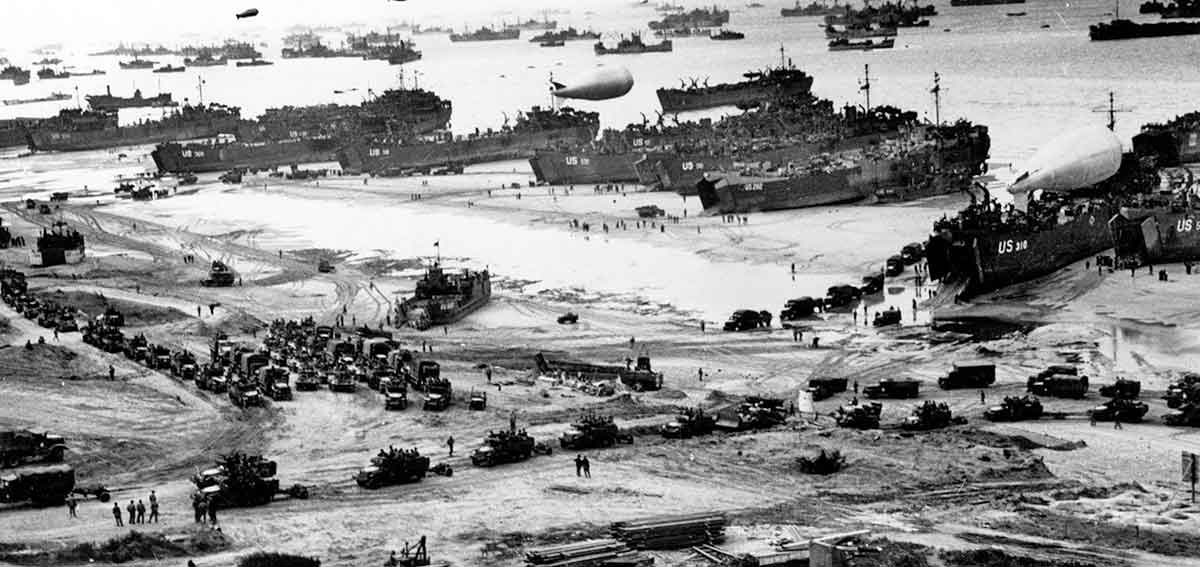
Fake radio communications suggesting amphibious landings at the Pas-de-Calais in mid-July corroborated aerial reconnaissance gathered by German pilots. To supplement these deceptive transmissions, the Allies used human operatives working as double agents. One of these spies, Juan Pujol García, impressed German intelligence officers so much that he received an Iron Cross for his work in uncovering the supposed operation, all while deceptively working for Allied Powers.
Despite the months-long effort to create a fictitious army, assign a feared commander, fool aerial surveillance, and leak misleading radio traffic, historians disagree whether Operation Fortitude was a success. While it is entirely possible that sustained efforts caused a definitive lack of reinforcements upon the Allied invasion of Normandy on D-Day, there is little evidence to indicate that the Germans acted on the faulty intelligence from Fortitude. However, top Allied commanders praised the operation. In a letter to the Combined Chiefs of Staff after World War II, Supreme Allied Commander and future President Dwight D. Eisenhower testified that a surprising lack of enemy infantry was key to the success of Operation Overlord.
Although the deception operations remained classified until the 1990s, D-Day was a triumphant victory for Allied Powers liberating occupied Europe. The offensive not only liberated Paris, but served as a springboard for Allied forces to push German armies back across the Rhine into their homeland by 1945.
Operations Bertram, Mincemeat, and Fortitude may not have led to Allied victory on their own, but the three deception operations almost certainly reduced Allied casualties during the North Africa, Sicily, and Normandy campaigns.