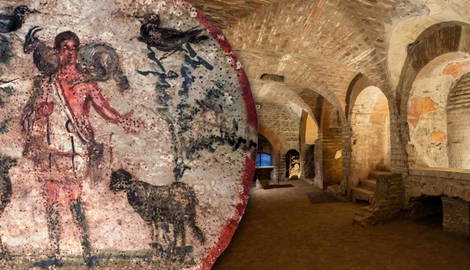
The early Church utilized art as a means of communication, as a secret way to express their faith in Christ and (hopefully) sidestep Roman persecution. Examining these coded images, such as fish and bread, helps explore how early Christian communities turned to art as a means of expression and survival.
The Subterranean World of Imperial Rome
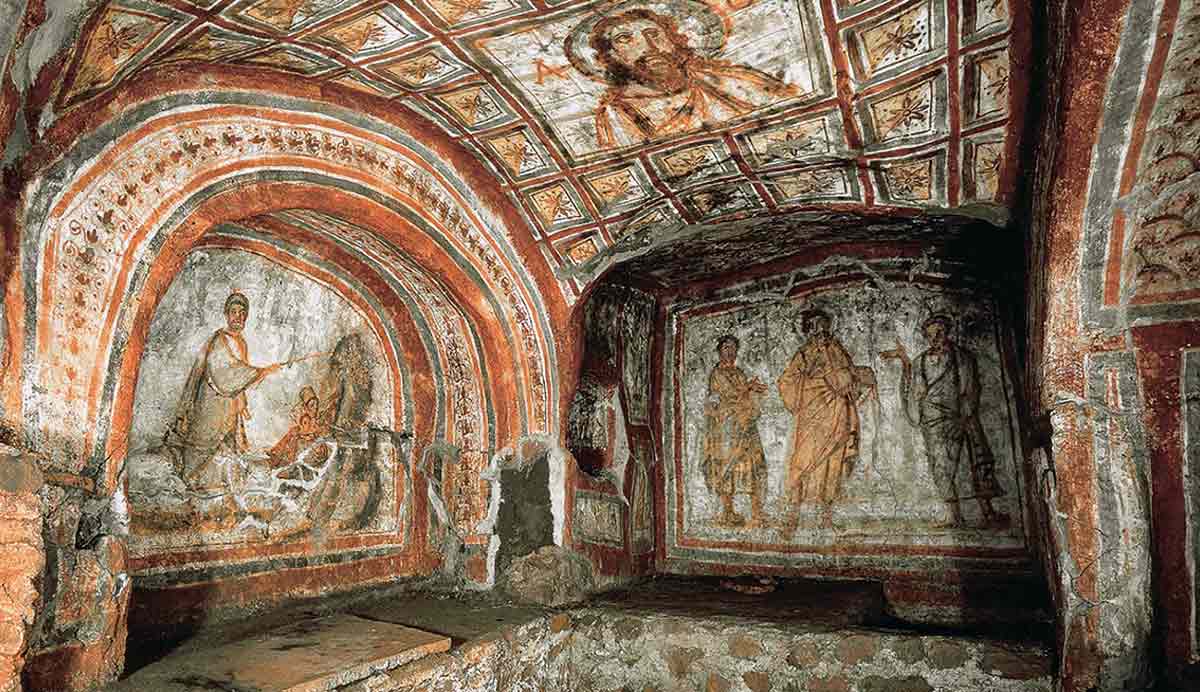
Outside the city walls of ancient Rome, in the year 1578, archaeologists stumbled upon extensive underground tunnels organized into intricate networks that appeared to have been used primarily as tombs. There was little doubt as to who the people were who used these underground burial networks, because they identified themselves using art.
In a society where the early Church faced severe persecution under Roman law as a forbidden superstition (religio illicita), the first Christians expressed themselves away from the public eye, underground.
Despite the probable toxic fumes of decomposing corpses, the tight spaces, and dim lighting, the Roman Catacombs became the canvas that held their passionate beliefs. Art became a means of communication in these low-profile sanctuaries, safely tucked away from the persecution these early Christians faced above ground.
The Visual Language of Survival Under Persecution
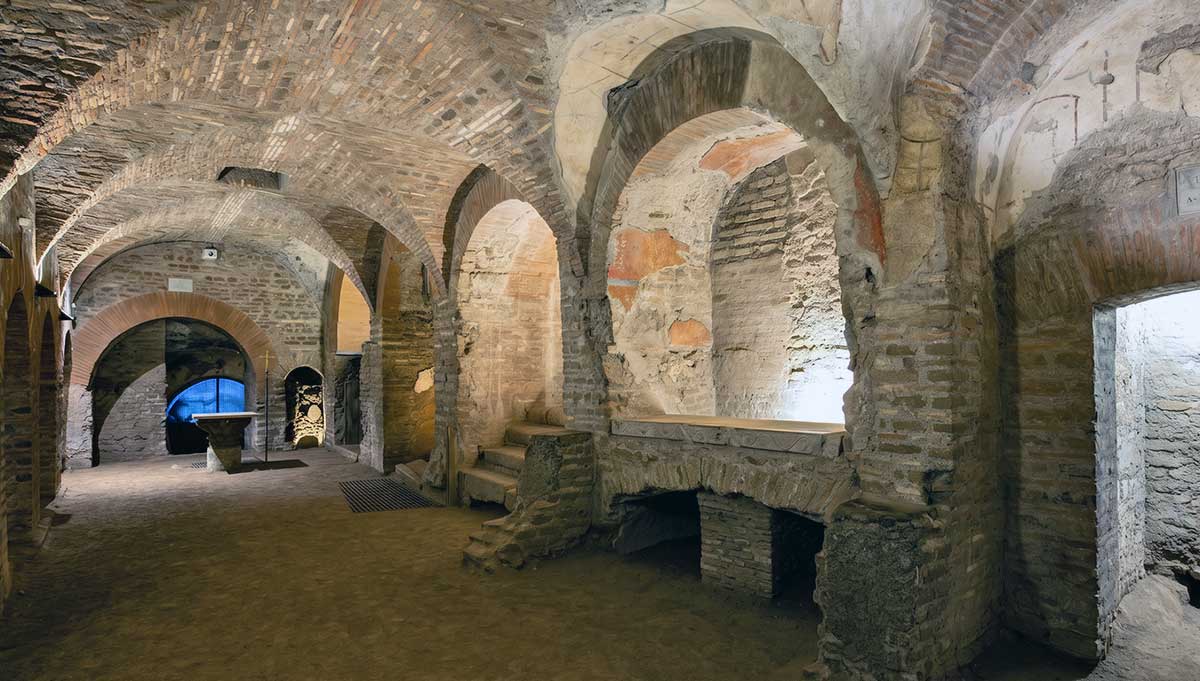
There is something striking about the catacombs being both a place of mourning and artistic expression. It reminds one of Ezekiel’s prophecy where the valley of dead bones come back to life by the word of God. For the God of the Bible has always been One who brings beauty from ashes.
Roman authorities were likely aware of the catacombs, yet the art inside still indicates some fear of being found out. The early Christians adopted and altered existing pagan art motifs, probably to avoid suspicion. Facing Roman persecution, art offered secret signs and a mode of communication.
While modern Christian imagery popularly prefers the cross, the gruesome reality of crucifixion in those times meant that image would not appeal to them as something awe-inspiring. Their chosen visual language, still evident in some catacombs today, favored imagery such as fish, bread, and lambs.
Decoding the Cryptographic Secrets of Ancient Christian Imagery
Art offers an ambiguous method for oppressed peoples to provide solidarity to one another subtly and safely. Consider the edelweiss flower pins worn by youth opposing Hitler’s reign, or the flying geese patterns embroidered by African American slaves.
The ancient Christian icons often depicted events from the life of Jesus through multi-layered metaphors. One such example is found in the history of the fish symbol (Greek = Ichtys). Legend has it that this was a mnemonic device where each letter of the word became a code in the message of the Gospel, stating Jesus Christ was the Son of God and the Savior. Jesus called disciples to be fishers of men, so a fish became the preferred sign.
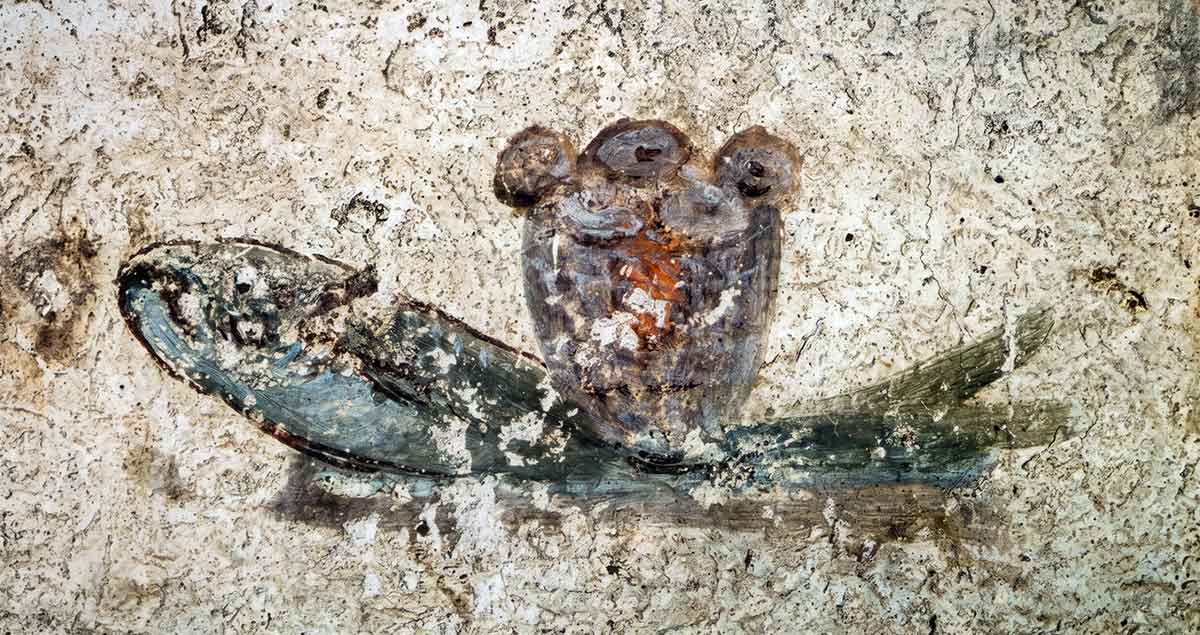
Another example of cryptographic or encoded catacomb art is the common images of bread, referencing God’s provision (the wilderness manna), Jesus’ multiplication miracle (of the loaves and fishes), and the use of the Lord’s Supper (Eucharist).
Art and Its Meaning Inside the Catacomb of Callixtus
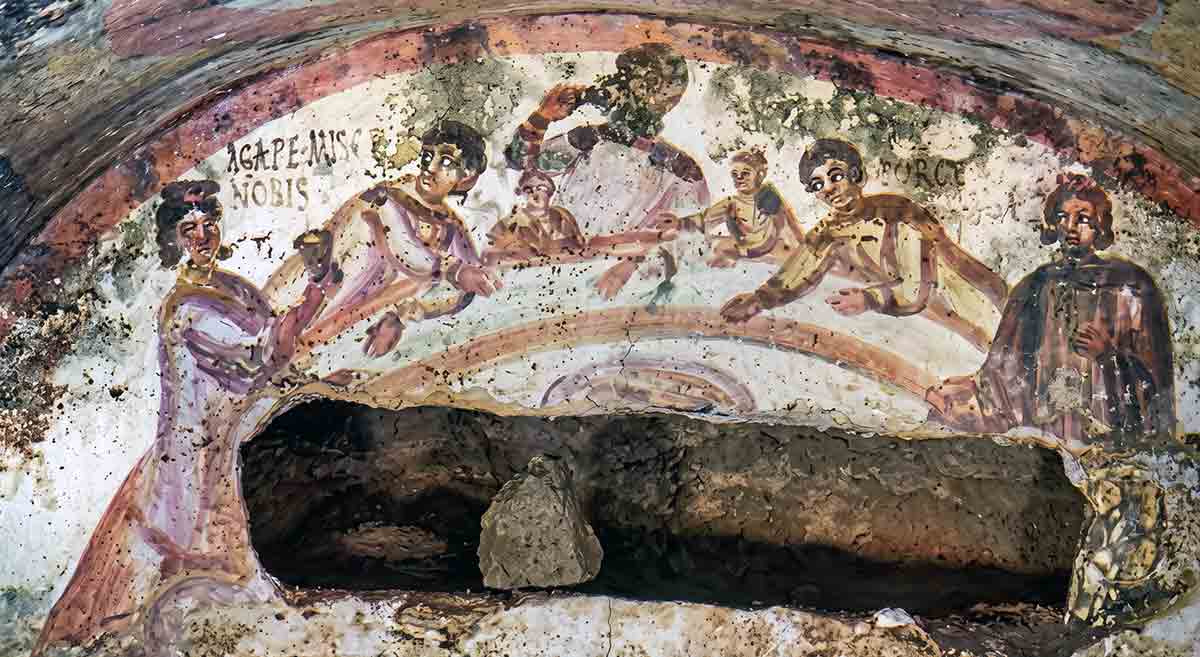
It’s fascinating that this network of burial caves was forgotten for so many years and truly astounding that the artworks were preserved so well despite their fragile state. The catacomb of Callixtus along the Appian Way, for example, is home to frescoes from around the 3rd century, offering a real window into what life was like for the early Christians.
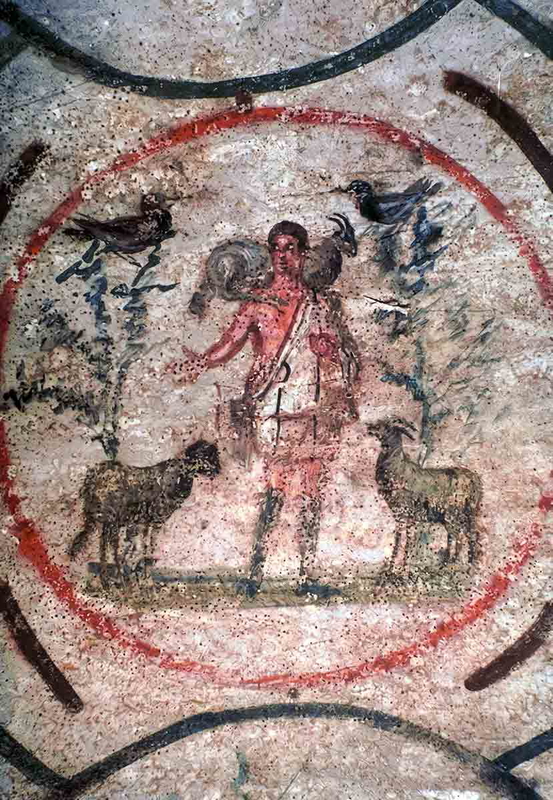
Here, large and well-kept paintings reveal Christian meanings to the observer who knows what to look for.
- An image of a young man carrying a lamb on his shoulders seems random enough, but it echoes Jesus’ teaching where he said: “I am the good shepherd” (John 10:11).
- Or an image of fish and bread clearly holds five loaves, the same amount Jesus used to feed the multitude. It is also interpreted as Jesus (remember Ichtys?) giving spiritual food.
The Evolution From Subterranean Graffiti to Renaissance Masterpieces
These were the humble beginnings of the art history of the early Church. The parables that Jesus used to teach became a kind of hidden language, offering persecuted Christians the solidarity and comfort they so needed. The events of his life, memorized and repeated, slowly became traditions marking this persecuted minority as an emerging religion. Following the Edict of Milan, art would still be used to express the faith, but with no more of the limitations posed by the conditions underground.
These early Christian symbols were not the only archaeological evidence found indicating who was laid to rest in these tombs. They also found scrolls naming believers, rooms for funerary customs, and small trinkets left with bodies to identify them (many of which were already looted).
Whether the catacombs were a secret from Roman officials or not, the images painted in them are evidence of a certain coded language used by the first believers to express their faith boldly.