Important moments in time or deep philosophical ideas are often captured in a few great words that are then repeated and repeated, making them part of our language. These famous quotes become part of our shared vocabulary, but they can become so common that many people do not know where they came from. Many of the most recognizable quotes today come from the ancient world, including the generals of Rome and the philosophers of Greece. Here are ten of the most important quotes from ancient history, who said them, and what they mean.
1. Socrates: “An Unexamined Life Is Not Worth Living”
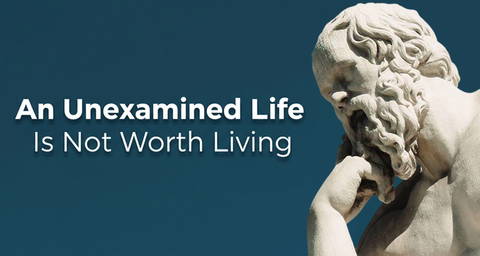
Socrates (470-399 BC), the Greek philosopher, declared “an unexamined life is not worth living” during his famous trial in Athens in 399 BC (Plato, Apology 38a). The statement formed the core of his defense against charges of impiety and corrupting the city’s youth.
Notably, Socrates spent his days in the Athenian agora and marketplaces questioning people he met and challenging their beliefs about justice and virtue. As such, his declaration during the trial was a rejection of a life lived without critical thought or self-reflection. In the end, he was sentenced to death. His words were recorded by his student Plato.
2. Julius Caesar: “I Came, I Saw, I Conquered”
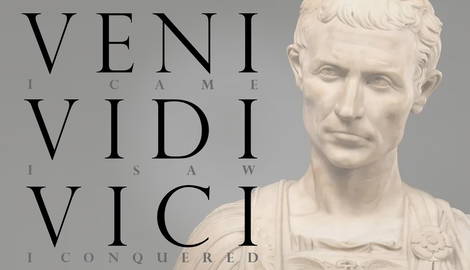
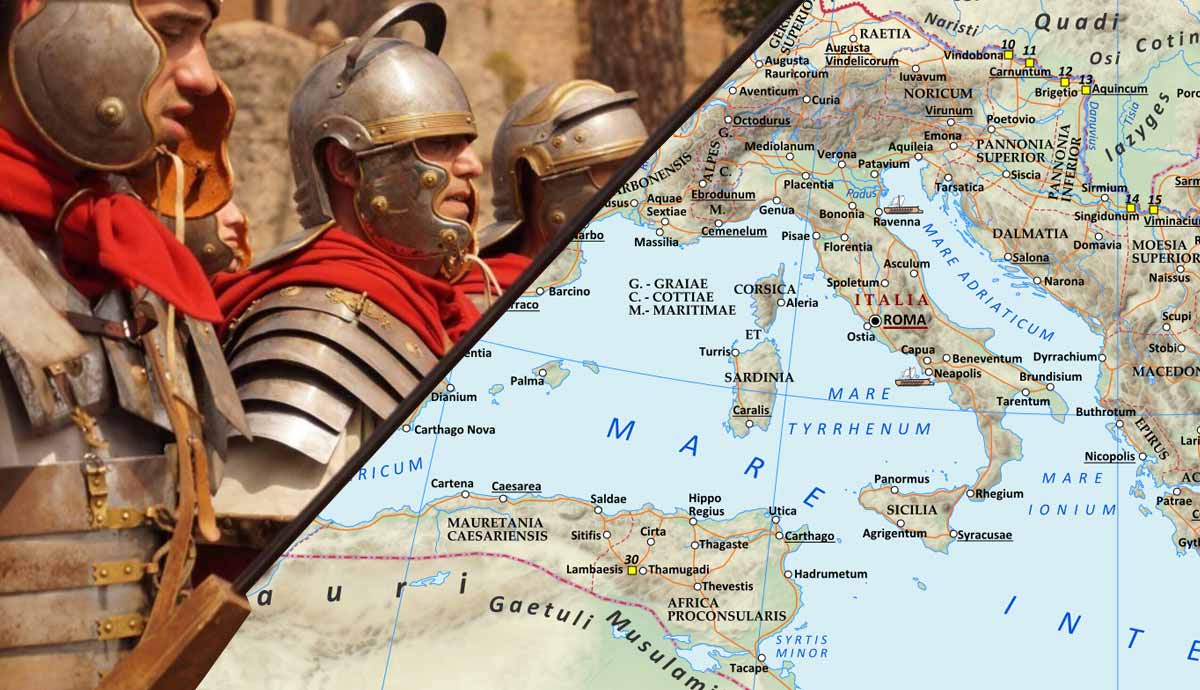
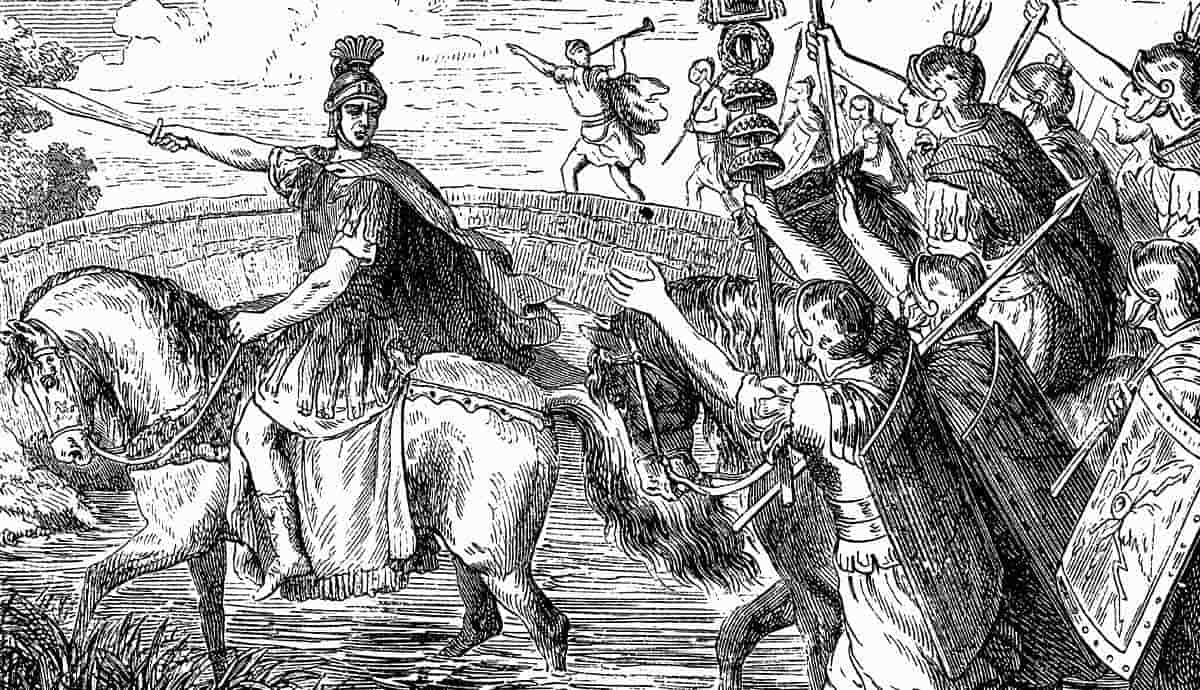
The Roman general Julius Caesar (100-44 BC) famously sent the message “veni vidi vici,” which translates to “I came, I saw, I conquered,” to the Roman Senate in 47 BC after his swift and decisive victory at the Battle of Zela against Pharnaces II of Pontus (Suetonius, Julius Caesar 37.2). The conflict lasted just five days and secured Asia Minor for Rome.
The three-phrase summary perfectly captured the speed and overwhelming efficiency of his Roman legions and reflects Caesar’s confidence, determination, and his genius as a commander. Since then, the phrase has been widely used to describe total success, especially when relaying the final result of a well-executed plan.
3. Archimedes: “Eureka!”
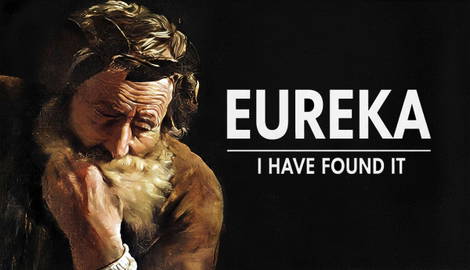
Archimedes of Syracuse (287-212 BC), the Greek mathematician and physicist, once allegedly shouted: “Eureka!” a Greek word meaning “I have found it” (Vitruvius, On Architecture 9.9-12). The exclamation marked a moment of sudden scientific discovery. Before the outburst, King Hiero II had asked Archimedes to determine if his royal crown was made of pure gold without damaging it. Soon, the scientist found himself struggling with the problem. This was until he stepped into a bath and noticed the water level rise.
Archimedes concluded that the volume of the displaced water must be equal to the volume of his submerged body. By understanding the principle of buoyancy, he was able to measure the crown’s density and expose the goldsmith’s fraud. Since then, the word Eureka has been used to represent a moment of sudden discovery. Such moments are widely referred to as Eureka moments in modern contexts.
4. Alexander the Great: “I Am Not Afraid of an Army of Lions Led by a Sheep”
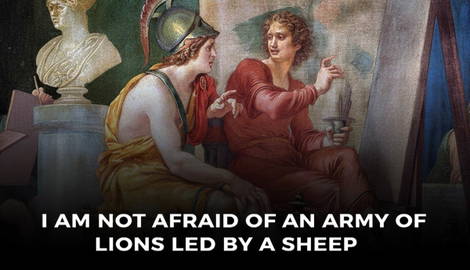
The Macedonian king Alexander the Great (356-323 BC) once said: “I am not afraid of an army of lions led by a sheep; I am afraid of an army of sheep led by a lion.” While the quote is apocryphal and not attributed to Alexander by any of the ancient sources, this philosophy shaped his entire career, during which he built the largest empire the ancient world had ever seen.
Alexander the Great’s achievements were founded on his personal courage and his sound military plans. He felt that one capable leader could make an ordinary army a successful one. He personally led his Companion Cavalry and charged directly at the enemy during battles. The shared danger built a powerful loyalty that turned his disciplined Macedonian army into a force that defeated much larger Persian forces.
5. Hannibal Barca: “I Will Either Find a Way or Make One”
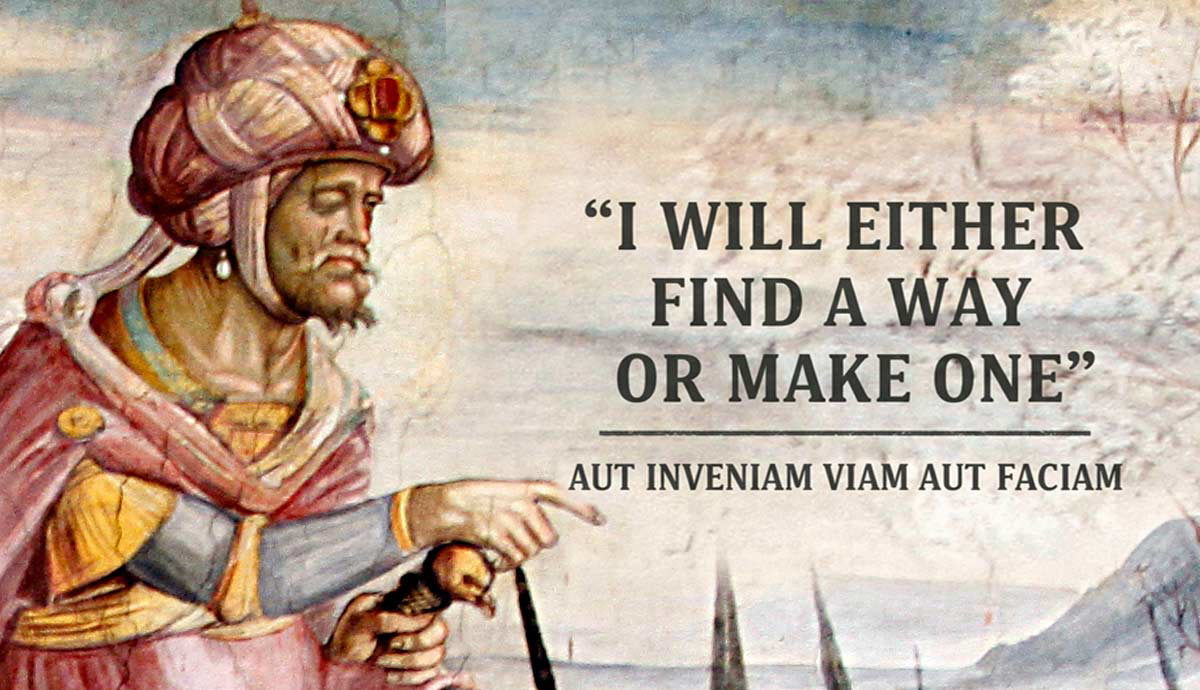
The Carthaginian general Hannibal Barca (247-183 BC) was an opponent of Rome who was determined to secure victory in the Second Punic War by taking the battle to the Romans. This meant marching from Spain to Italy, over the Alps, previously considered impassable. Hannibal reportedly uttered this line when faced with the challenge, but the quote comes from a play by Seneca the Younger in the 1st century AD (Hercules Furens 276); the line was probably never spoken by the general.
Nevertheless, the words seem appropriate as Hannibal marched his army, including 37 war elephants, over the Alps mountain range to invade Italy in 218 BC. He fought there for 16 years without being defeated, until the Romans followed his precedent and took the attack to Carthage. Hannibal was forced to return home to defend his city, and the war was lost.
6. Leonidas: “Come and Take Them!”
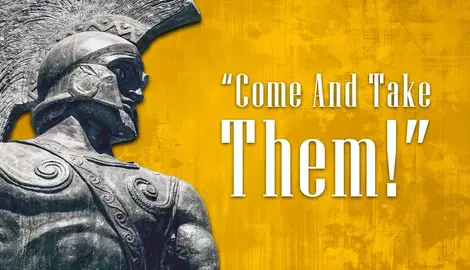
In 480 BC, the Persian King Xerxes I led a massive invasion force into Greece. To buy time for the Greek city-states to unite and build a defense, King Leonidas I of Sparta led a small vanguard of roughly 7,000 Greeks, including his famous 300 elite Spartan hoplites, to hold the narrow coastal pass of Thermopylae. Before attacking, Xerxes sent an envoy demanding the Greeks lay down their weapons in exchange for their lives. According to Plutarch, Leonidas responded, “come and take them” (Moralia 225c).
Spartans were renowned across the Greek world for their brief, blunt, and dry speech, making Leonidas’ response typical of the Spartans. His message was: there will be no easy victory today; if you want our weapons, you will have to come and take them yourselves. The Spartans lost the Battle of Thermopylae, but bought the Greeks enough time to mount a defense and eventually win the war. Today we use a similar saying very frequently, especially in movies: “If you want it, come and get it.”
7. Virgil: “Fortune Favors the Bold”
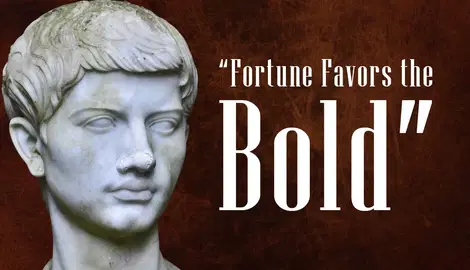
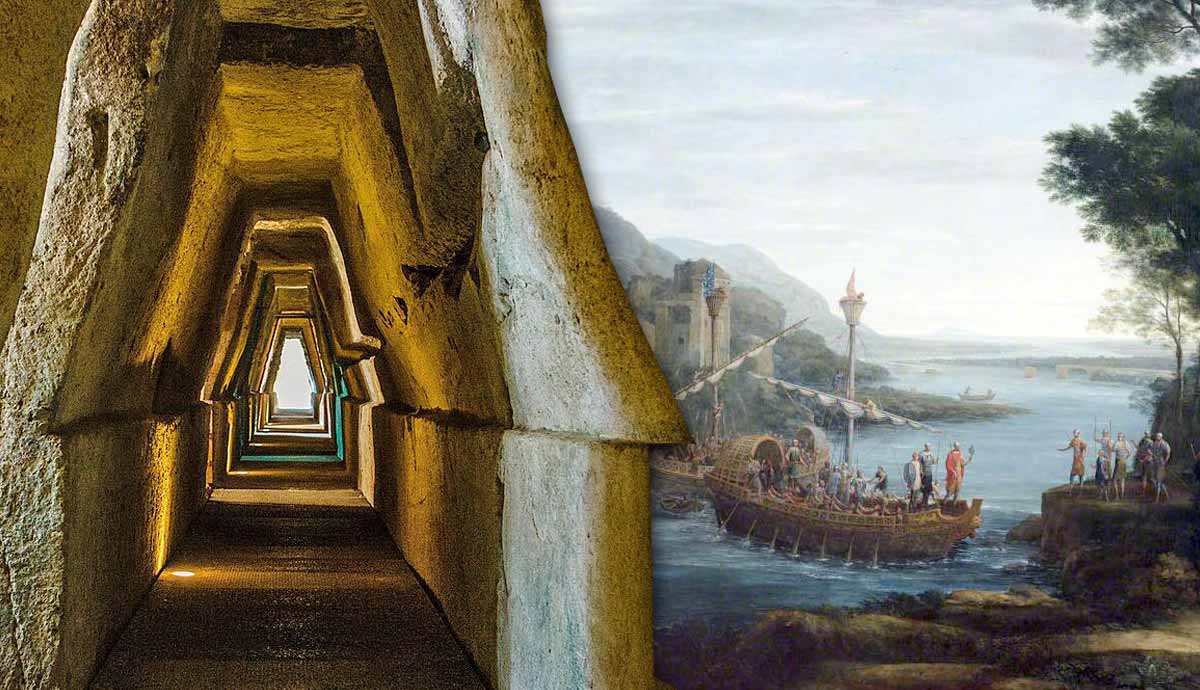
The epic poet Virgil (70-19 BC) wrote his Aeneid as an epic foundation myth for the Roman people in the tradition of the Homeric epics. It follows the Trojan prince Aeneas fleeing the burning city and bringing his people to Italy, where his descendant Romulus would found the city, and his descendant Augustus, now emperor of Rome, would lead it to fulfill its great destiny.
The famous line is not spoken by Aeneas, but by his opponent Turnus, king of the Rutulians, when he sees the Trojans disembarking onto the Italian shores. He shouts “fortune favors the bold” to his men, encouraging them to attack (Aeneid 10.284). The line was quoted by other famous Romans, such as Pliny the Elder, before making its way into the modern vocabulary.
8. Horace: “Carpe Diem” (Seize the Day)
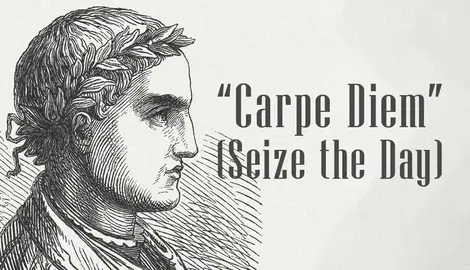
“Carpe diem” is such a well-known quote that we often reference it in the original Latin, even today. It was written by the Roman poet Horace in 23 BC in his Odes (1.11). The full quote is actually a bit longer: “Seize the day, trusting as little as possible in tomorrow.” It is the climax of a short poem addressed to a young woman in which Horace advises her to stop trying to predict her fate (using Babylonian astrology), and to live her life for today.
Horace was heavily influenced by Epicurean philosophy, which taught that the future is uncertain and out of human control, and that to worry about the future or death served no purpose. The aim of life was to enjoy the simple pleasures of the here and now.
9. Cicero: “While I Breathe, I Hope”
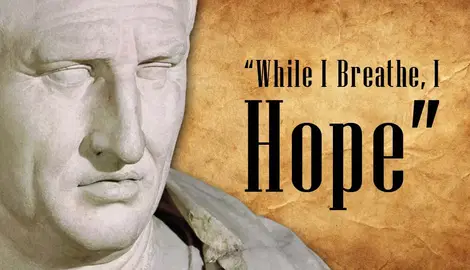
One of the last great senators of the Roman Republic, Cicero (106-43 BC) was a prolific speechwriter and orator. Yet, some of his most poignant and influential words are preserved in his letters to his friends. In 49 BC, when Caesar had marched into Italy, plunging the Roman world into civil war, Cicero was contemplating whether to flee Italy altogether or side with Pompey against Caesar. In a letter to his friend Atticus, he quotes a Roman proverb, “while I breathe, I hope” (Letters to Atticus 9.10.3).
While this Latin proverb has carried on as a symbol of hope, and the idea that where there is life, there is hope, that is not how Cicero used it in his letter. He implies that he felt this way until Pompey left Italy, abandoning it to Caesar.
10. Augustus: “Have I played the part well? Then applaud as I exit”
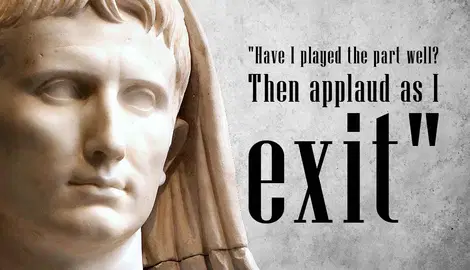
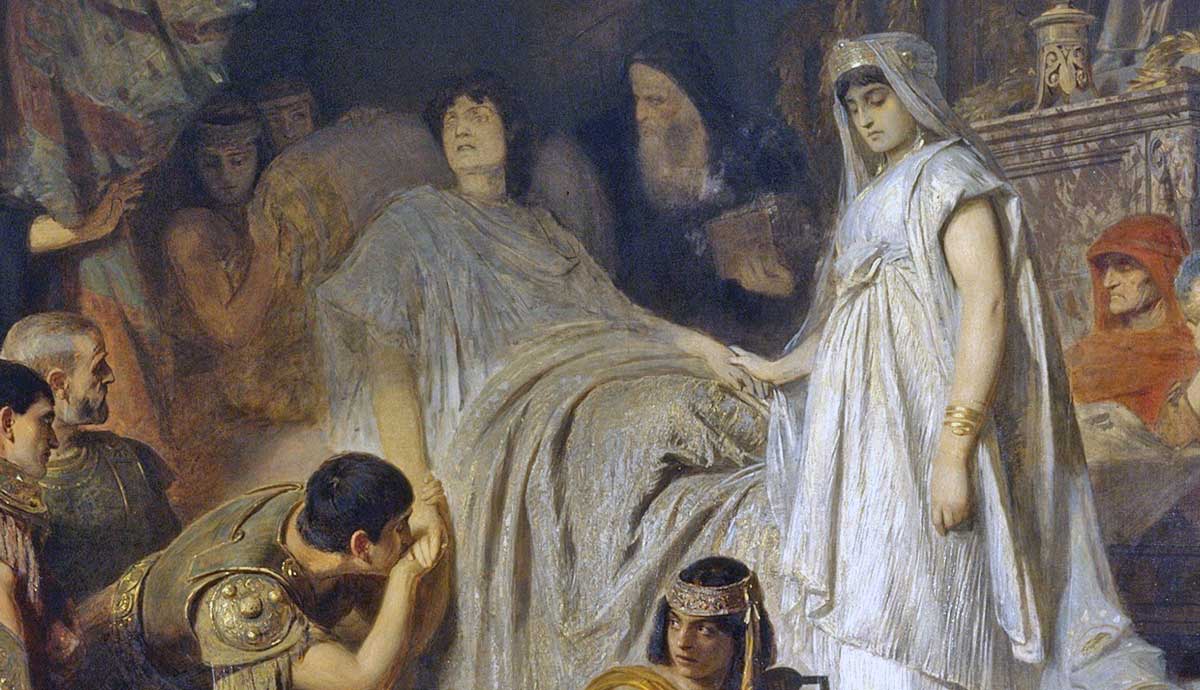
While Caesar ended the Roman Republic, his great-nephew, adopted son, and successor Octavian, later known as Augustus, created the Roman emperors. Using considerable political acumen and personal charisma, he transformed a vehemently Republican Rome into an authoritarian state. When he died at the age of 75 in AD 14, according to the biographer Suetonius, he acknowledged his success with these words, “Have I played the part well? Then applaud as I exit” (Augustus 99).
Augustus was not the only Roman emperor to, reportedly, mutter cynical last words that reflected the character of the Roman emperors. On his deathbed in AD 79, again according to Suetonius, Vespasian reportedly said, “Dear me, I think I’m becoming a god!” (Vespasian 23.4), reflecting on the Roman custom of deifying their most popular emperors after death.