The Great Library of Alexandria was an ambitious project launched by Pharaoh Ptolemy I in 295 BC to gather all the world’s knowledge in one place. Not only did he want to gather all the world’s great books, but also its great thinkers, creating the Mediterranean’s most enviable academic hub. The library thrived for centuries, making major leaps forward in areas such as geography and anatomy. But according to legend, the library was destroyed when Julius Caesar attacked Alexandria in 48 BC. While this was a popular story in ancient times, it is clearly not true, as there are many references to the great library from the following three centuries. However, it was eventually destroyed, a casualty of war, religious revolution, and neglect.
Constructing the Library of Alexandria
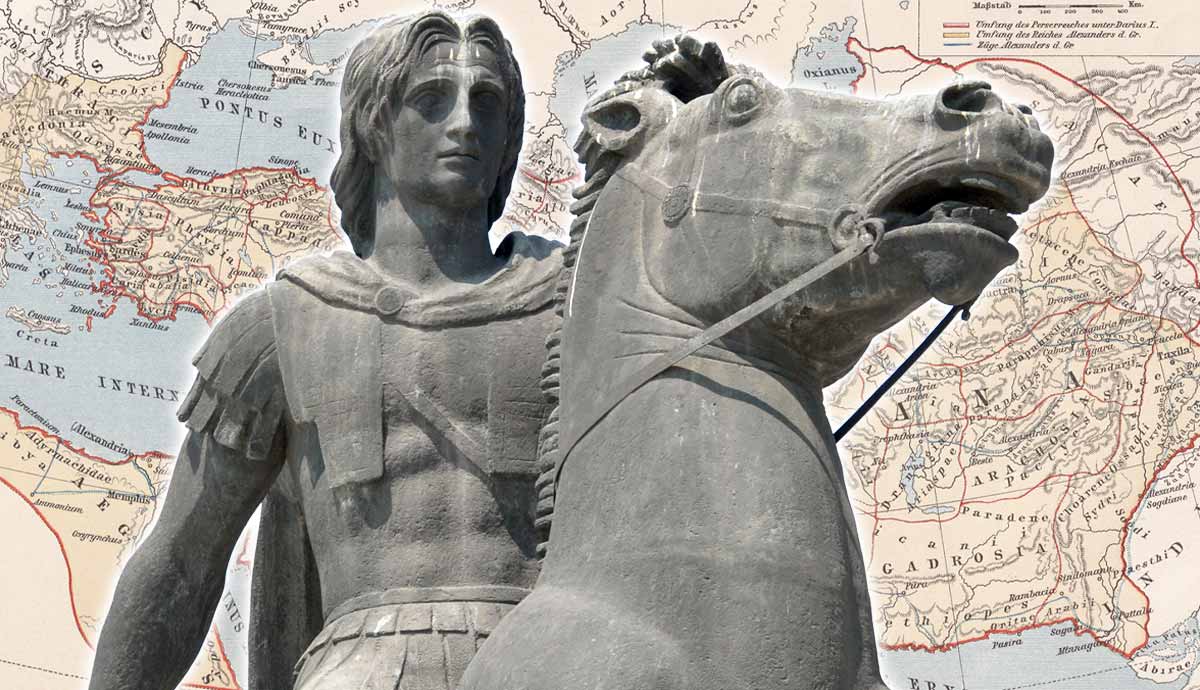
When Alexander the Great took Egypt from the Persians in 332 BC, he established the city of Alexandria to be his new Hellenistic capital in the Egyptian world. Following his death, Alexander’s general Ptolemy I Soter claimed Egypt in the conflict of the Diadochi and established the Ptolemaic dynasty. He continued to build Alexandria as his new capital.
Wanting to create a cultural and intellectual capital to legitimize his rule, around 295 BC Ptolemy commissioned Demetrius of Phalerum, an exiled Athenian statesman and scholar, to establish a great library in Alexandria. A Letter to Aristeas, probably composed at Alexandria by a Jewish writer in the 1st century BC, calls Demetrius of Phalerum the “president” of the King’s Library and says that it was conceived as a collection of “all the books in the world”.
Demetrius of Phalerum, the president of the King’s library, received vast sums of money for the purpose of collecting together, as far as he possibly could, all the books in the world. By means of purchase and transcription, he carried out, to the best of his ability, the purpose of the king.
He was asked, “How many thousands of books are there in the library?”
And he replied: “More than two hundred thousand, O king, and I shall make an endeavor in the immediate future to gather together the remainder also, so that the total of five hundred thousand may be reached.”
Ptolemy was influenced by the philosophy of Aristotle. He had served as one of the young Alexander’s tutors, and Ptolemy was raised at court beside him and would also have been influenced by the tutor. Aristotle emphasized collecting, categorizing, and analyzing empirical data, so Ptolemy sought to compile all the knowledge in the world. Beyond Greek literature, the library’s mission was to translate foreign texts into Greek to build a truly global archive. Construction of the library, physically and intellectually, continued under Ptolemy’s son and successor, Ptolemy II Philadelphus.
Building the Library Collection
In a commentary on Hippocrates, Galen explained where the books came from.
Ptolemy, the king of Egypt, was so eager to collect books that he ordered the books of everyone who sailed there to be brought to him. The books were then copied into new manuscripts. He gave the new copy to the owners, whose books had been brought to him after they sailed there, but he put the original copy in the library.
Galen, Fragment 17a.605f.
Through this forced acquisition, the Ptolemies quickly built a vast collection, which needed organization. Callimachus worked at the Library under Ptolemy II Philadelphus and Ptolemy III Euergetes. Around 245 BC, he produced the Pinakes, a massive 120-book index titled “Tables of Persons Eminent in Every Branch of Learning, and List of Their Writings.” This was an early library catalog with the library’s contents organized by category, authors listed alphabetically within each category, and a brief biography for each author.
A Gathering Place for Intellectuals
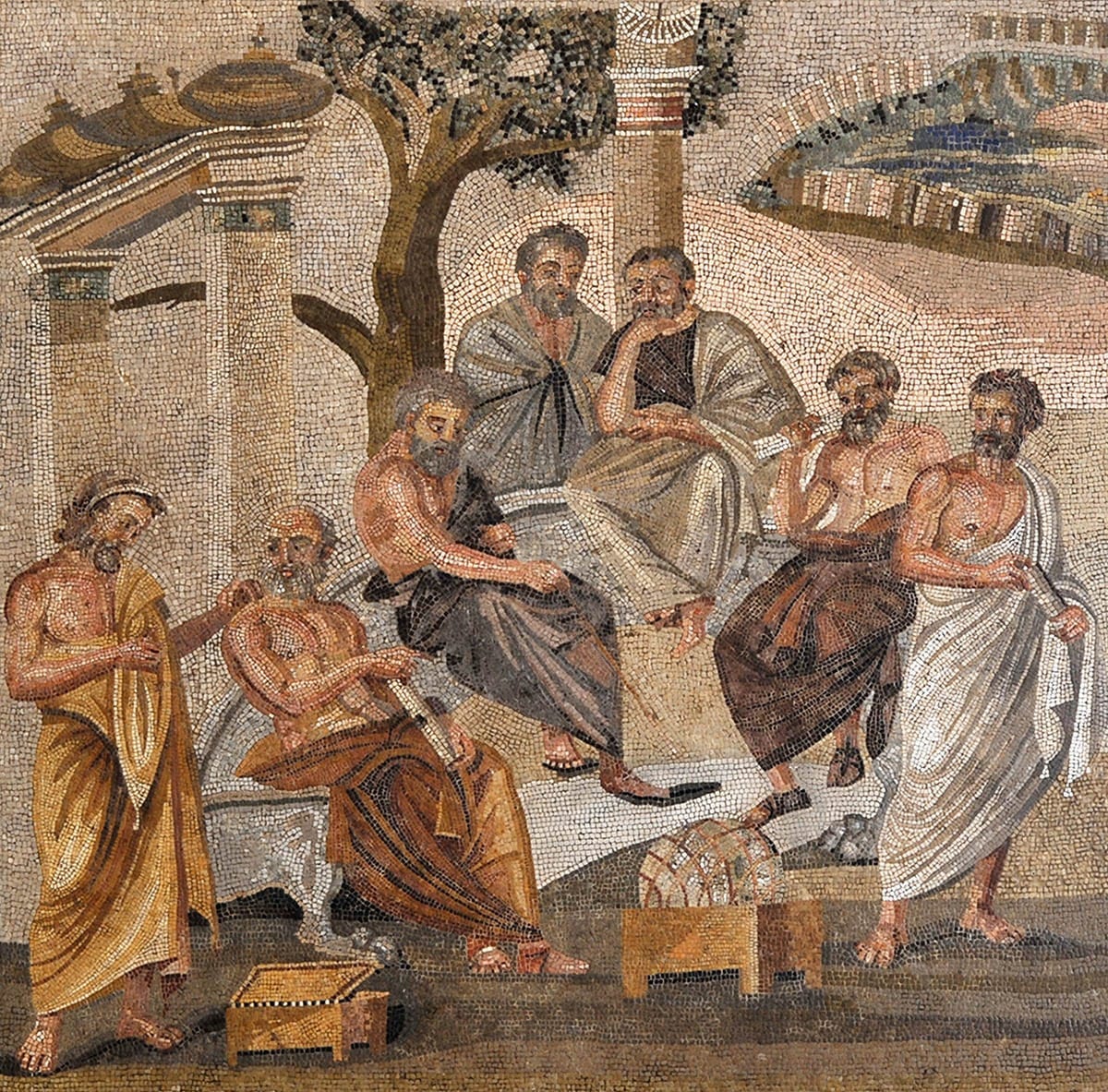
No archaeological remains of the library survive as the city’s old royal quarter is lost under the modern city. Only a single description of the library has come down through history, written by the geographer Strabo around 300 years after its original construction. But rather than describe the building itself, or even its books, he talks about the lives of the scholars there and the fact that it was part of Alexandria’s royal quarter of palaces.
The Museum is a part of the palace. It has a public walk and a place furnished with seats, and a large hall, in which the men of learning, who belong to the Museum, take their common meal. This community also possesses property in common; and a priest, formerly appointed by the kings, but at present by Caesar, presides over the Museum.
Strabo also calls the great complex a museum rather than a library, because it was embedded within the city’s Mouseion, a “shrine of the Muses” that functioned as an intellectual center, much like a modern university. Ptolemy was gathering scientists, mathematicians, poets, and philosophers to create an intellectual melting pot. Unlike modern museums, which hold collections of objects, the ancient Greek Mouseion was a religious shrine dedicated to the goddesses of intellect, creativity, and divine inspiration.
Several breakthroughs can be associated with the scholars of the Mouseion. Euclid wrote his Elements, systematizing geometry; Eratosthenes of Cyrene calculated the Earth’s circumference; and Herophilus of Chalcedon distinguished the brain from the cerebellum and identified the nervous system as the controller of movement and sensation.
Alexandria’s Second Library
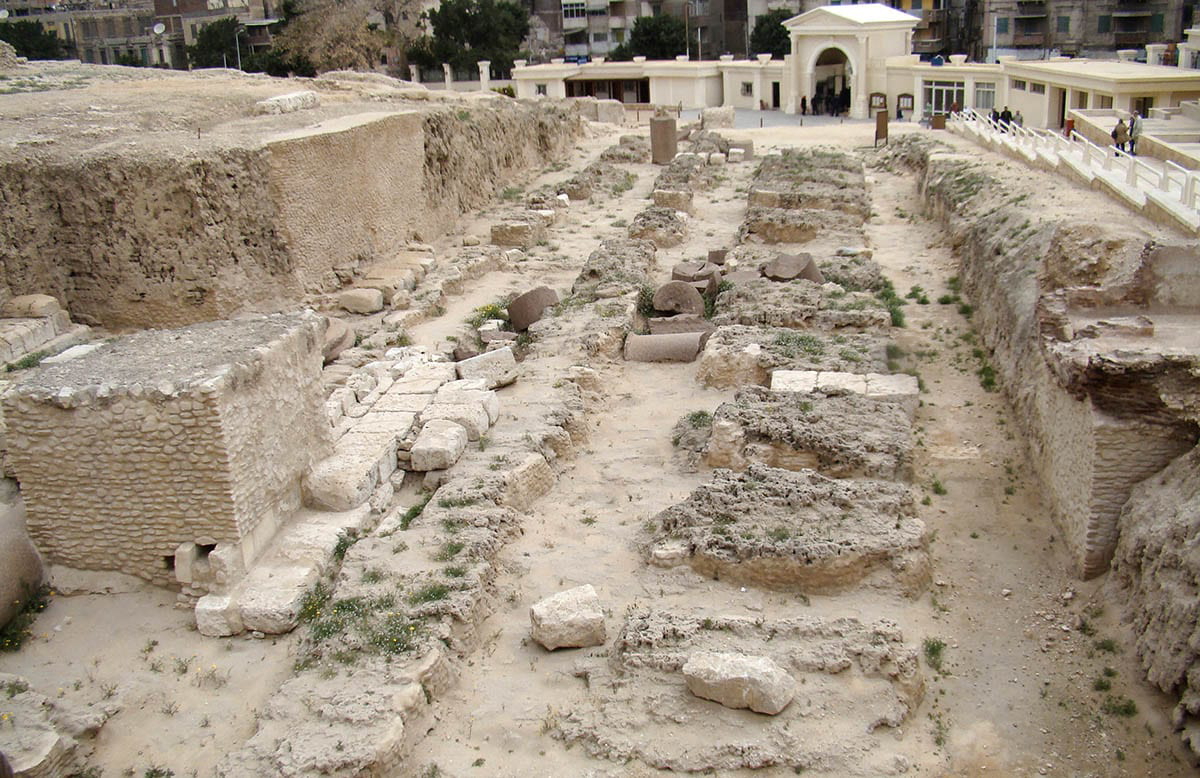
While the royal library sponsored by the Ptolemies was clearly the most famous in Alexandria, it was not the only one. There were several, and two of them were considered “great.” The second was known as the “daughter” library and was part of the temple of Serapis.
In AD 392, Epiphanius wrote that the Septuagint was translated into Greek and then “placed in the first library, which was built in the Bruchion (royal quarter). And there arose in addition to this library a second up in the Serapeum, called its daughter” (On Weights and Measures, III.48c, XI.53c). Johannes Tzetzes, writing in the 12th century AD, also speaks of two libraries, one “inside the palace” and a smaller one “outside” (Prolegomena on Comedy, XX).
In the late 4th century AD, Ammianus Marcellinus said that the daughter library was so impressive that aside from the Capitol in Rome, “the whole world beholds nothing more magnificent” (22.16). Around the same time, the Greek sophist Aphthonius of Antioch mentioned repositories of books available for study that spurred the entire city to a mastery of learning (Progymnasmata XII)
The Legendary Burning of the Library by Julius Caesar

According to legend, the Library of Alexandria was intentionally burned and destroyed by Julius Caesar during his attack on the port of Alexandria in 48 BC. Caesar tells us in his Civil Wars that he burned all the ships in the docks and that the fire spread, destroying many of the surrounding buildings (3.111).
However, Caesar does not specifically mention the library, and Strabo’s account dates to about 25 years after these events; he does not refer to the damage. It is only about 100 years later that this accusation starts to circulate. Seneca, writing under the emperor Nero, says that 40,000 books were burned at Alexandria. Writing almost 50 years later, Plutarch says that the fire Caesar started in the dockyards spread and destroyed the great Library.
In the 2nd century AD, Aulus Gellius claimed that nearly 700,000 volumes were sacked in Rome’s first war with Alexandria under Caesar (Attic Nights 7.17.3). Then, writing in the 4th century, Ammianus Marcellinus wrote of the destruction of 70,000 when the dictator Caesar sacked the city (Rerum Gestarum 22.16). This story was again repeated in the 5th century AD by the Christian historian Paulus Orosius.
“The flames spread to part of the city, and there burned four hundred thousand books stored in a building which happened to be nearby. So perished that marvelous monument of the literary activity of our ancestors, who had gathered together so many great works of brilliant geniuses.”
Paulus Orosius, Historiae Adversum Paganos 6.15
But while this story was widespread, there are regular mentions of the library, alive and well, in the centuries following Caesar. Scholars now believe that the library had warehouses in the Alexandrian docks, probably full of scrolls for export. It is likely these warehouses were destroyed in Caesar’s time.
Roman Imperial Patronage and Continued Survival
Following the death of Cleopatra in 30 BC, Egypt became part of the Roman Empire. Many sources refer to imperial patronage of the Library of Alexandria, suggesting that it continued to actively flourish. Suetonius, writing in the early 2nd century AD, says that the emperor Claudius expanded the museum in Alexandria and even created a new one named for himself (Claudius 42).
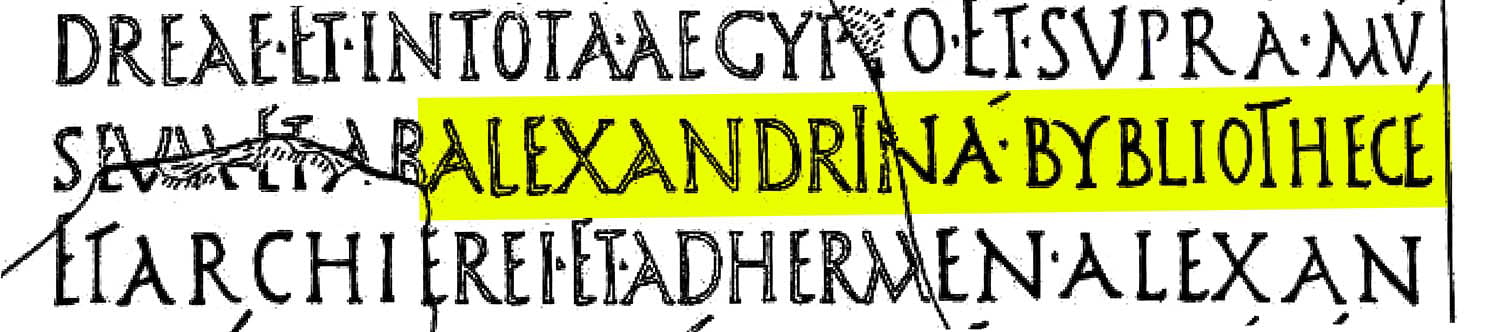
Even more compelling, a stone inscription mentions by name a director of the “Alexandrina Bybliothece” in the AD 50s. The emperor Domitian relied on the Library to copy texts lost to fire, sending “scribes to Alexandria to transcribe and correct them” (Suetonius, Domitian 20). The Historia Augusta says that Hadrian visited the Museum in AD 130, where he had many questions for the teachers there (Hadrian 20).
Around AD 200, Athenaeus mentions the great book collection in the museum and its widespread fame. While he does not mention the destruction, the wording suggests that they somehow belong in the past. The very last time we find a mention of the museum or library is from around AD 380, which is a mention of a scholar named Theon, “from the Mouseion, an Egyptian, a philosopher.”
What Really Happened to the Library of Alexandria
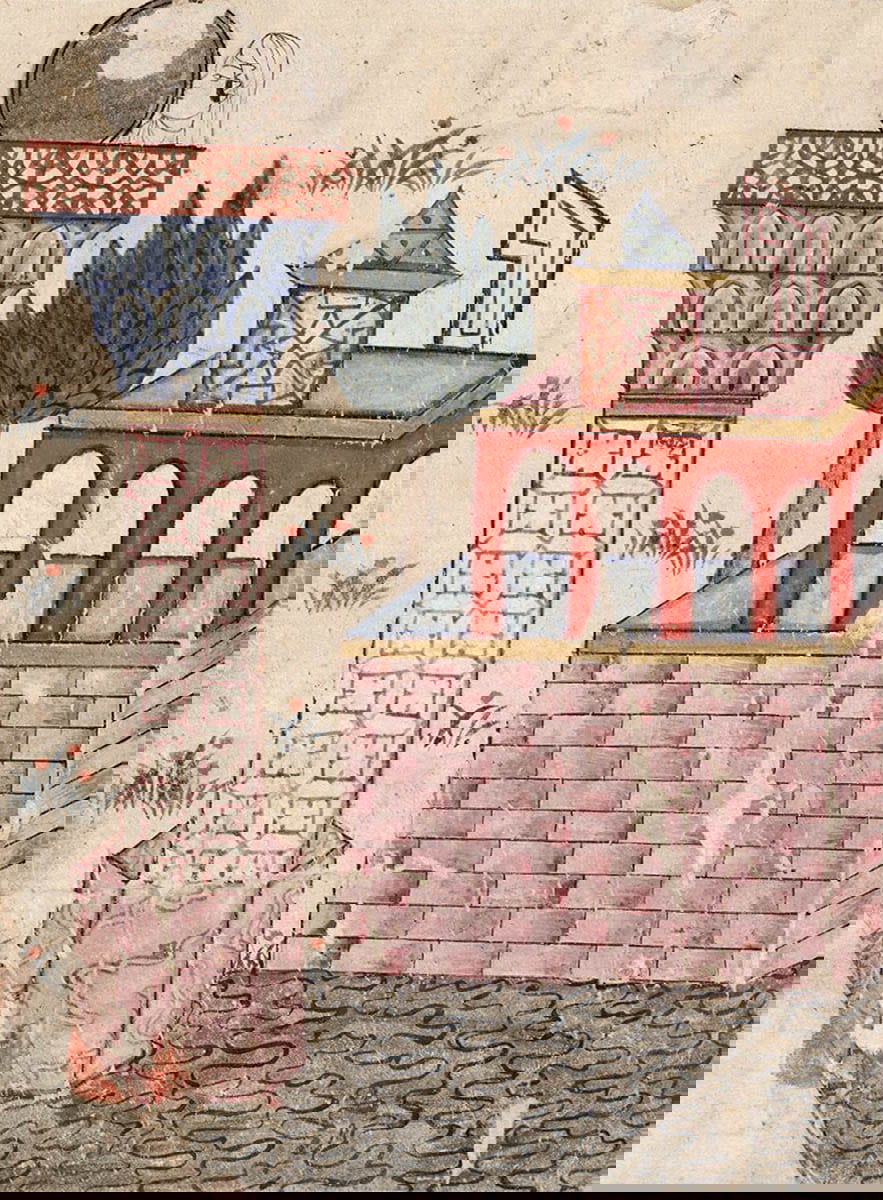
While the Library of Alexandria may have been damaged as part of Julius Caesar’s attack on Alexandria in 48 BC, it was certainly not destroyed and continued to function for centuries. Its demise probably happened gradually starting in the 3rd century AD, with a few key contributing events.
Aurelian attacked Alexandria in AD 270-5 to put down a rebellion led by Queen Zenobia of Palmyra. This attack reportedly devastated the royal quarter, and many scholars believe that the library was largely destroyed at this time.
According to John the Bishop of Nikiu, not long after, Diocletian (AD 284-305) set fire to the city, burning it completely, and wanted to massacre its inhabitants until the blood reached his horse’s knees. But the destruction could not have been complete, as the 7th-century chronicler also says that in the 5th century “orthodox inhabitants of Alexandria were filled with zeal and they collected a large quantity of wood and burned the place of the heathen philosophers” (84.45).
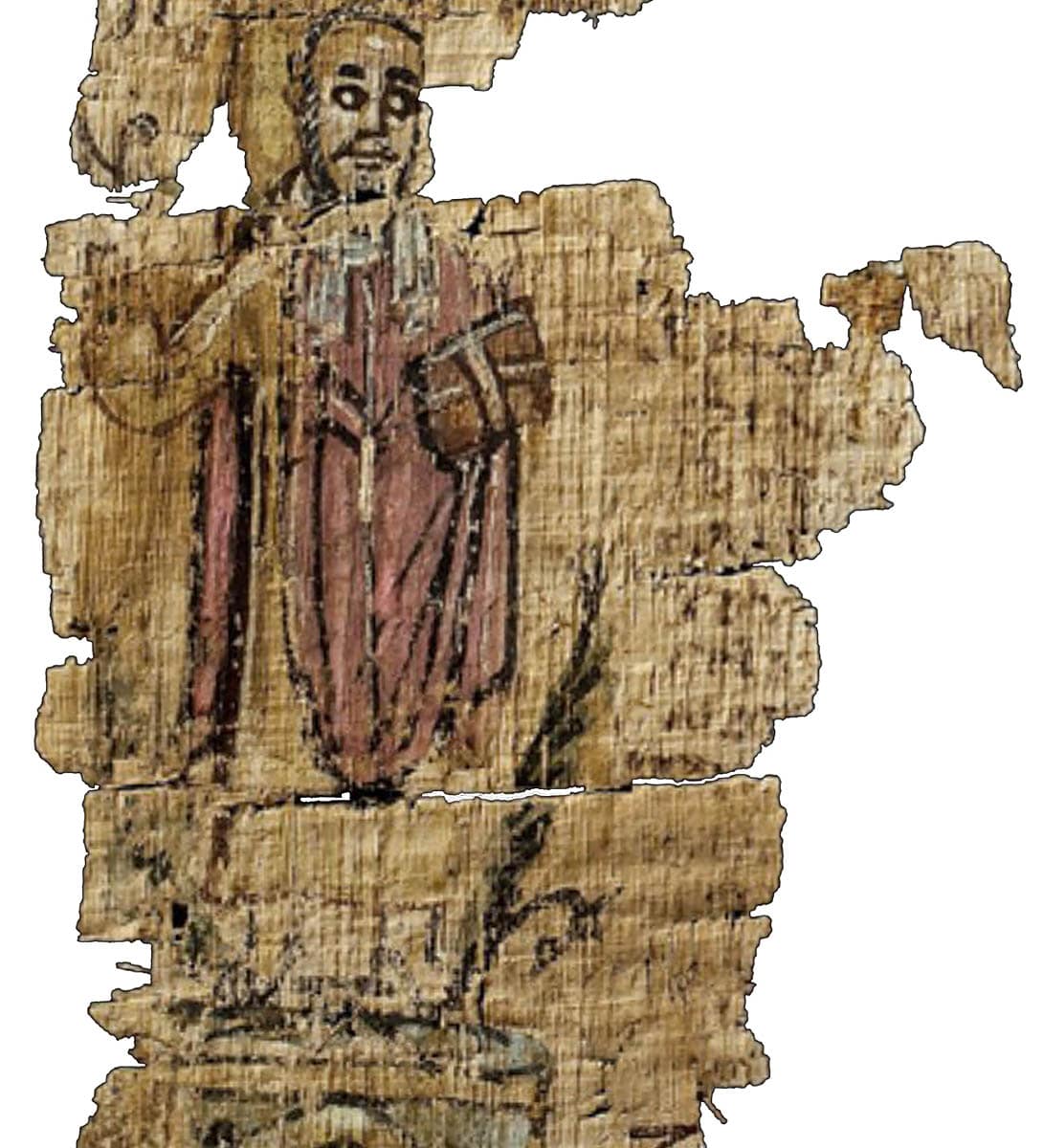
The daughter library in the Serapeum was destroyed in the late 4th century following the Theodosian Decrees of AD 389 and 391, which made paganism illegal and saw the destruction of many pagan temples. In Alexandria, Theophilus, who served as Patriarch (Bishop) from AD 385 to 412, actively enforced these decrees, targeting pagan sacred sites across the city. This sparked violent riots between pagans and Christians, and some pagans barricaded themselves inside the Serapeum, leading the Roman governor to respond with military force. Theodosius issued a decree granting amnesty to the pagans inside to prevent further bloodshed, but ordered that the Serapeum itself be demolished to eliminate the source of the conflict.
But at least some of the library seems to have still existed when Muslim troops took over Egypt in AD 642. A famous medieval legend claims that Caliph Umar ibn al-Khattab ordered the destruction of the library, saying:
“If their content is in accordance with the book of Allah, we may do without them, for in that case the book of Allah more than suffices. If, on the other hand, they contain matter not in accordance with the book of Allah, there can be no need to preserve them. Proceed, then, and destroy them.”
Caliph Umar ibn al-Khattab
According to the story, the books were subsequently sent to Alexandria’s four thousand bathhouses as fuel, and it took six months to burn all the material. While this story is almost universally dismissed as propaganda from 500 years after the fact, nevertheless, there are no further mentions of the Library of Alexandria in the history books after the 7th century. However, Muslim scholars created their own houses of learning in the city, so Alexandria continued to act as an intellectual powerhouse.