
Humanity has always left its mark on the world in the form of monuments, some that stretched the structural limits of their era or were unique in their own ways. Unfortunately, throughout history, many architectural wonders have been lost. They were toppled by earthquakes, destroyed by conquest, or crumbled from years of abandonment and exposure to the elements.
Here are 9 lost architectural masterpieces of the ancient world.
The Colossus of Rhodes
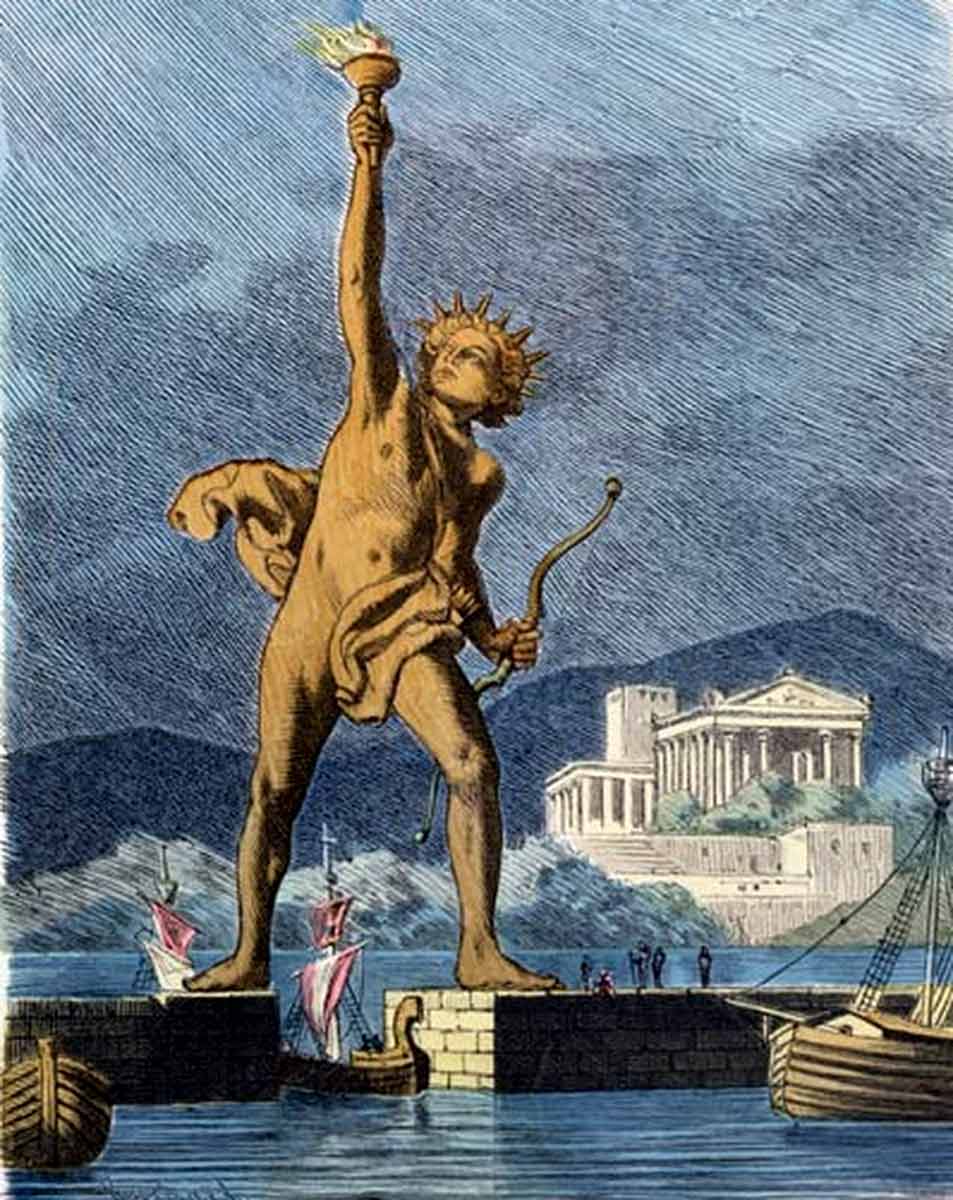
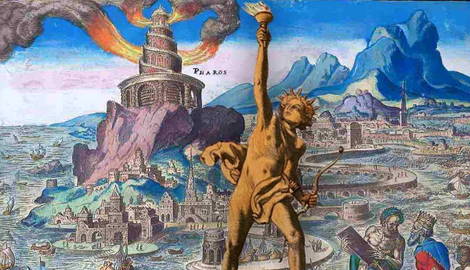
Commissioned after Rhodes repelled the siege of Demetrius Poliorcetes, a powerful Macedonian general, and completed by 280 BC, the Colossus of Rhodes was built as both an offering to the sun god Helios and a celebration of Rhodian liberty. Created by the sculptor Chares of Lindos, the bronze Colossus loomed beside the city’s Mandraki harbor entrance for roughly 54 years. Standing at about 33 meters (108 feet), the statue was constructed with internal iron tie bars and stabilized with large blocks of stone. The outer surface was plated in bronze sheets.
For some time, it was the tallest statue in the ancient world. But when a powerful earthquake rocked the Mediterranean in 226 BC, the Colossus snapped and fell. The King of Egypt at the time offered to finance its reconstruction, but the Rhodians declined, believing that the statue’s fall meant they had angered Helios. When Arab forces invaded the island in 653 AD, they plundered the remaining bronze scrap, reportedly requiring 900 camels to transport all of the metal rubble away.
Babylon’s Hanging Gardens
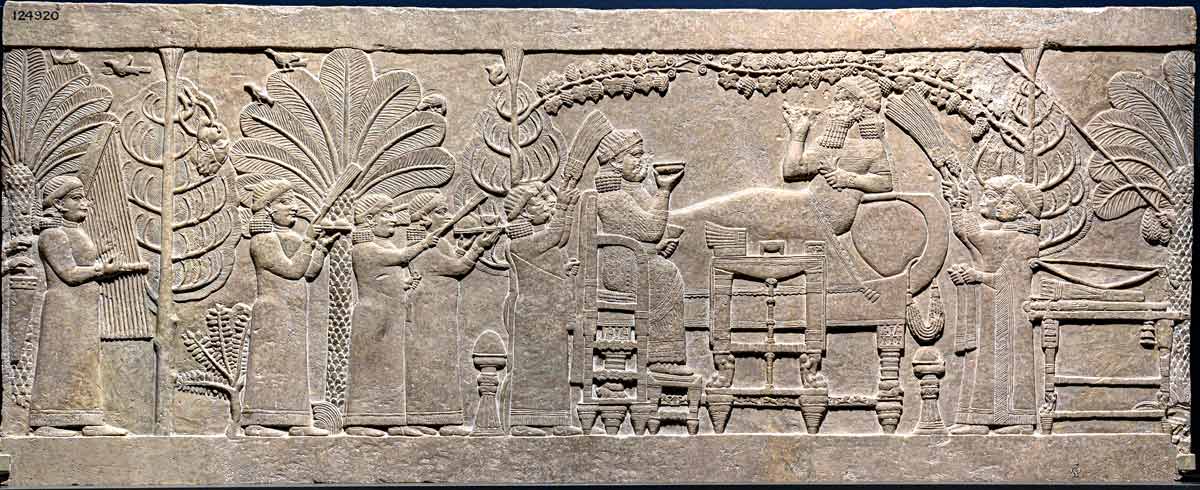
Very few scholars question the historical validity of six out of the Seven Wonders of the World. However, the existence of Babylon’s Hanging Gardens has been debated ever since ancient historians first raised red flags. While historians generally agree that the gardens existed as a genuine masterpiece of engineering, their exact location is still largely unknown. Babylonian King Nebuchadnezzar II is traditionally said to have built the gardens around 600 BC for his wife, Queen Amytis. Because she was homesick for the green hills of her Median homeland, Nebuchadnezzar supposedly constructed a brilliant series of tiered masonry gardens inside the city. By moving water from the Euphrates through a series of screw pumps and raised canals, the gardens featured trees and plants so tall that they cast shadows across the royal palace complex.
Yet, despite references from later Greek sources like the geographers Strabo and Philo of Byzantium, extensive excavations near Babylon have yielded no physical evidence of the gardens’ existence. Consequently, theories have emerged about their existence, such as by acclaimed British Assyriologist Dr. Stephanie Dalley, who in 1992 put forward a theory that moved the location of the gardens 300 miles north to Nineveh, the capital of the rival Assyrian Empire, near modern-day Mosul, Iraq.
The Lighthouse of Alexandria
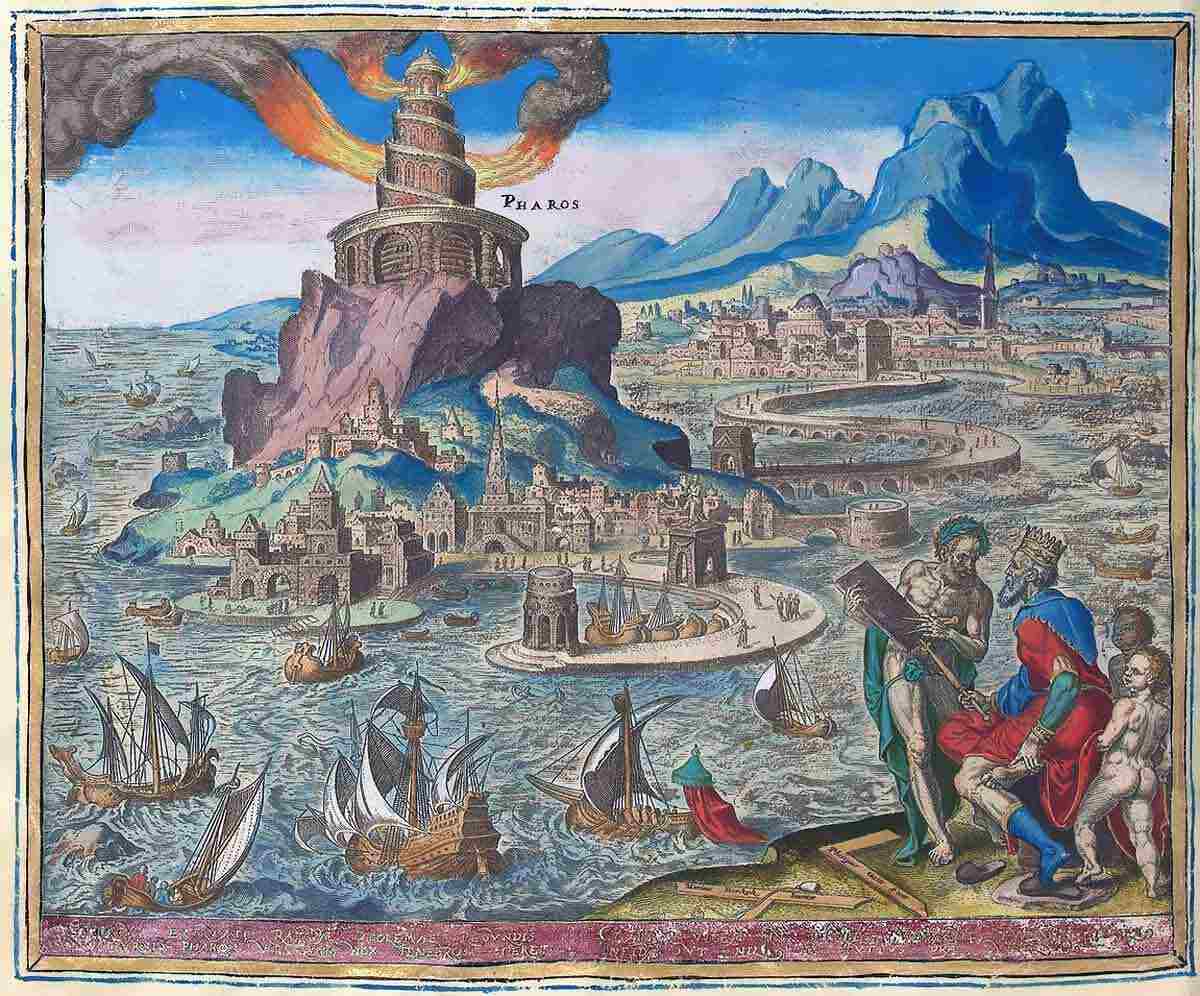
Constructed by the architect Sostratus of Cnidus between 280 and 247 BC, the Lighthouse of Alexandria was one of the tallest structures in the ancient world. It was engineered in three distinct tiers. Its base comprised a square platform assembled from huge stone blocks, whereas the second tier was octagonal. Atop that structure sat a cylindrical section where a massive fire burned brightly every night.
During the day, a colossal mirror angled sunlight across the harbor to guide ships safely to shore. A series of earthquakes is believed to have gradually dismantled the tower, leaving it as a partially standing ruin by the time Ibn Battuta, the famous medieval world traveler, saw it in 1326 AD. Sultan Qaitbay built his own fortress over the site more than a century and a half later, utilizing the original stones for its foundation.
The Temple of Artemis
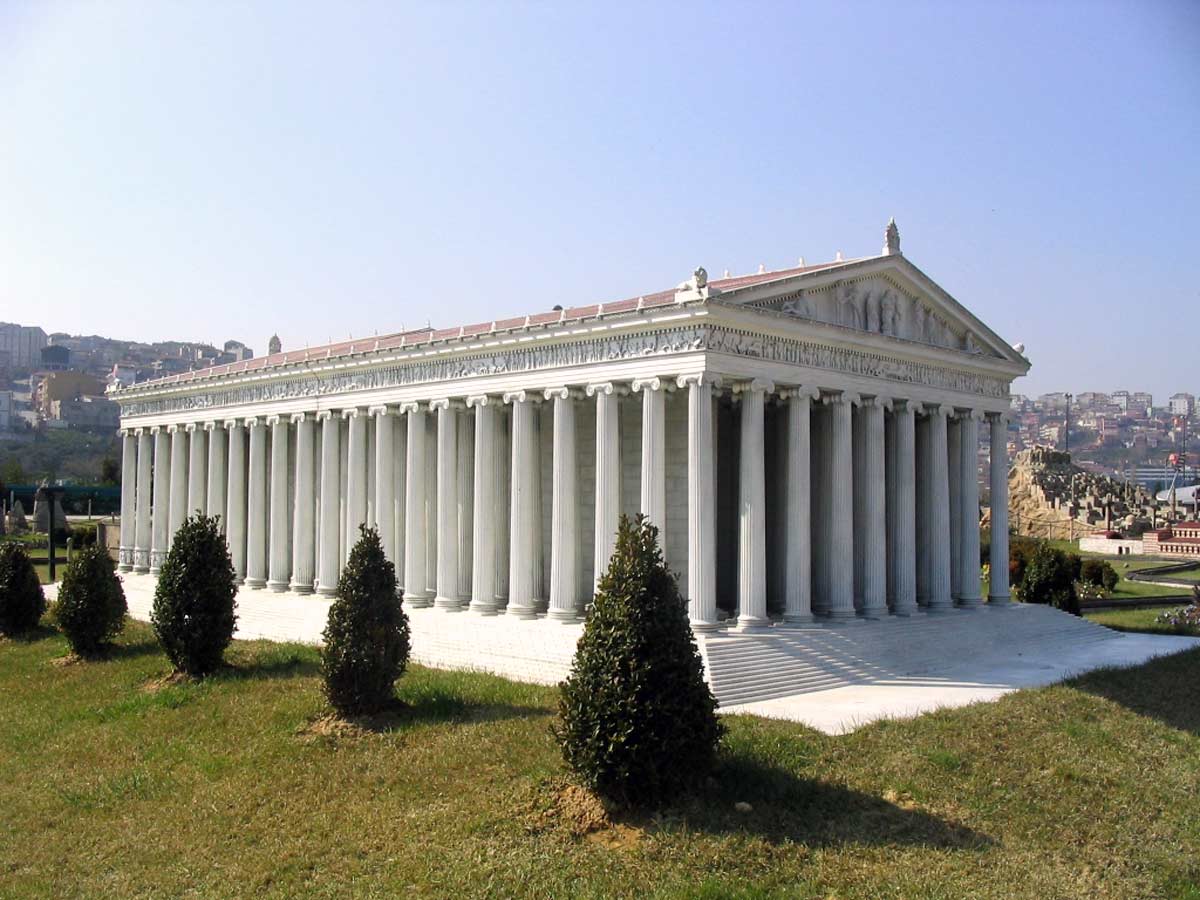
The ancient architects behind the Temple of Artemis sculpted gods. Funded by the extremely wealthy King Croesus of Lydia, these creators forged the largest temple of its time. Many legends surround its creation and destruction. Built to honor Artemis, the goddess of the hunt and wilderness, wild animals, maidenhood, and childbirth, the Temple of Artemis was immense. It featured 127 columns standing nearly 18 meters (59 feet) high. The temple took about 120 years to complete.
Eventually, Herostratus, a man seeking fame by burning something famous, set fire to the Temple of Artemis. Another story tells that Artemis, Goddess of the Hunt, was too busy delivering Alexander the Great from his mother’s womb to put out her burning temple. Eventually, Herostratus was caught and executed, but not before he inspired a term in the dictionary. Today, someone who pursues “Herostratic fame” is someone who commits a crime simply to be remembered. The temple was heavily damaged during a Gothic invasion in 267/268 AD, with its remaining structure later scavenged and dismantled during the Christian era.
The Library of Alexandria
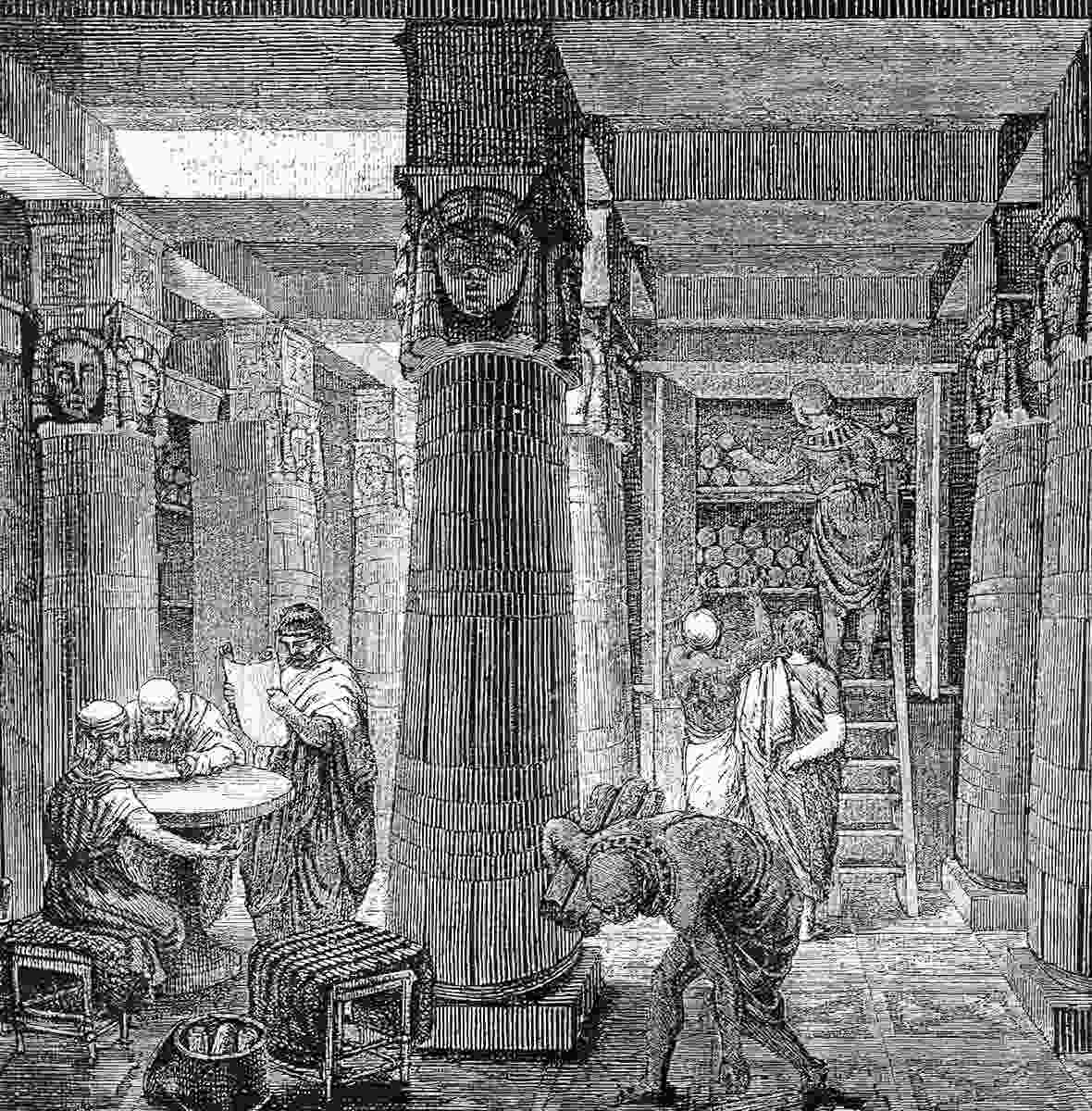
Founded in the 3rd century BC, the Library of Alexandria was funded and expanded by the Ptolemies, the Greek dynasty that ruled Egypt after Alexander the Great. While it is not known exactly how many scrolls were lost during the fires of antiquity, every passing century wreaked havoc on the library’s collection of texts. Julius Caesar’s forces accidentally burned warehouses near the waterfront during a battle in 48 BC, damaging part of the collection. Nevertheless, the library continued in some form until the Roman Emperor Aurelian destroyed the Brucheion quarter, the city’s royal district, in 272 AD.
The Apadana Audience Hall
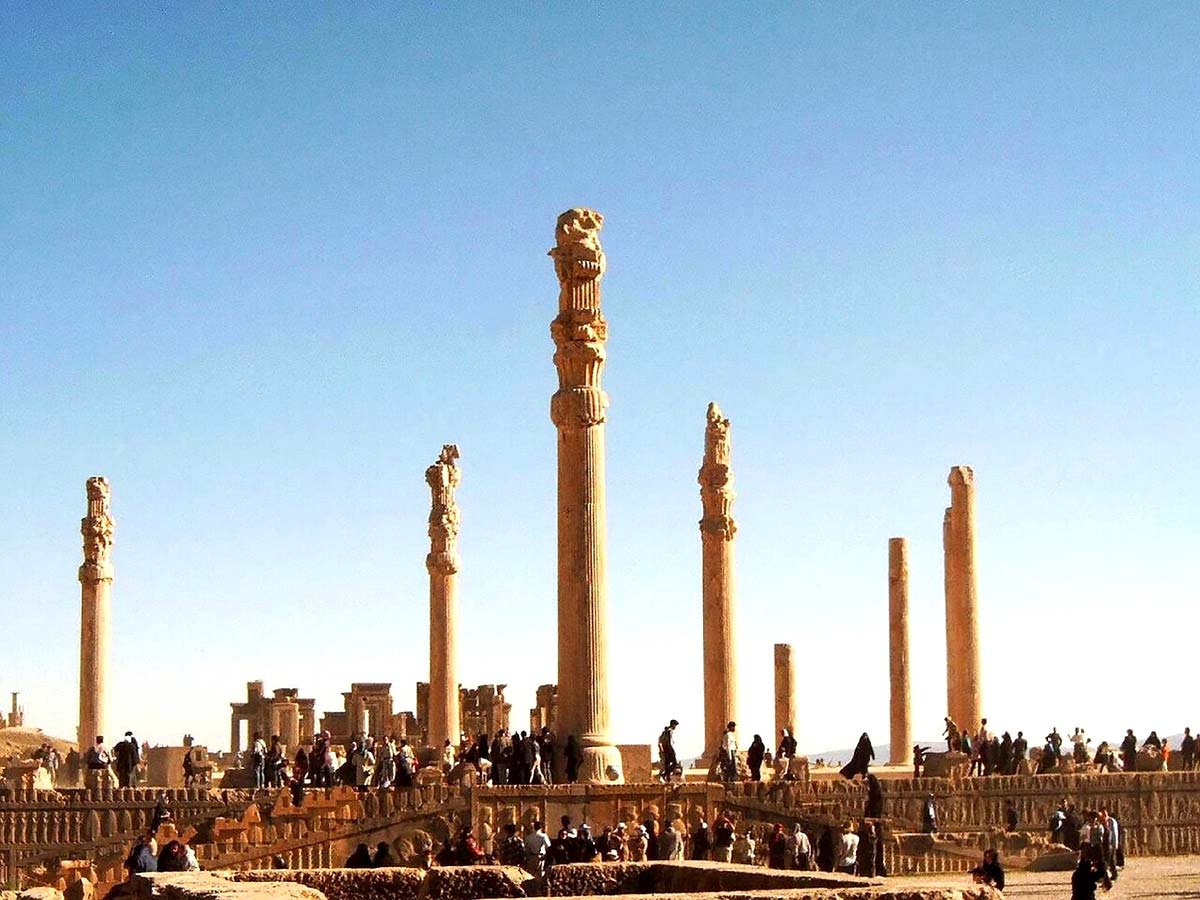
The Apadana audience hall was located on the western side of Persepolis. Persepolis, at the time, served as the ceremonial capital of the ancient Persian (Achaemenid) Empire. Perched on an enormous terraced platform at the base of Kuh-e Rahmat mountain, the Apadana was initiated by Darius the Great (King of Kings) around 515 BC and completed by his son Xerxes I in the 480s BC. The Apadana hosted receptions and grand festivals, which helped project the might of the Achaemenid Empire.
Inside stood 72 immense columns that supported its vast roof. In 330 BC, however, Alexander the Great’s army set fire to the Apadana, along with the rest of the royal palace complex. After the burning of Persepolis, the Apadana was never restored to its former glory and was eventually left abandoned. We can never know for certain what knowledge was lost in the fire, but continued archaeological efforts help shed light on how the ancients engineered such an astonishing architectural wonder.
The Mausoleum at Halicarnassus
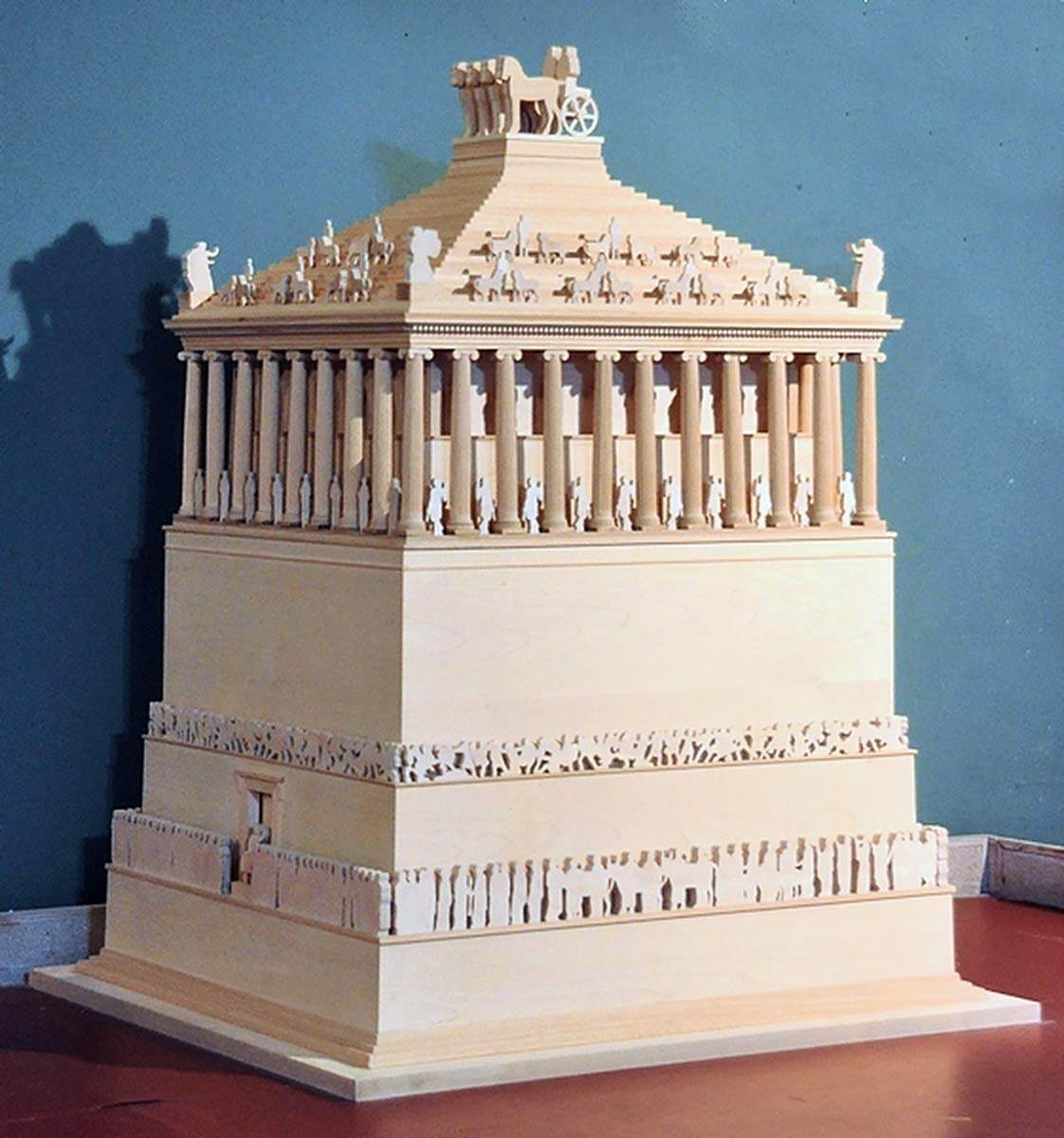
Built between 353 and 350 BC, the Mausoleum at Halicarnassus was constructed as a tomb for Mausolus, a satrap (governor) of the Persian Empire, and his sister-wife, Artemisia II of Caria. The marriage was intended to keep the royal bloodline pure. The towering tomb reached a height of about 45 meters (148 feet) and dominated the harbor of modern-day Bodrum, Turkey. It was so impressive that the ruler’s name became the eponym for the word “mausoleum.” The monument stood for approximately 1,800 years until a series of earthquakes shattered its columns and collapsed the structure.
The Knights of St. John began building Bodrum Castle in 1402 and used the Mausoleum’s ruins as a quarry while preparing for an Ottoman invasion. The military order burned some of the ancient marble to create lime for mortar, but also incorporated many of the original stone blocks and decorative reliefs directly into the castle’s massive fortifications, effectively turning a medieval fortress into a secondary gallery for ancient art.
The Statue of Zeus at Olympia
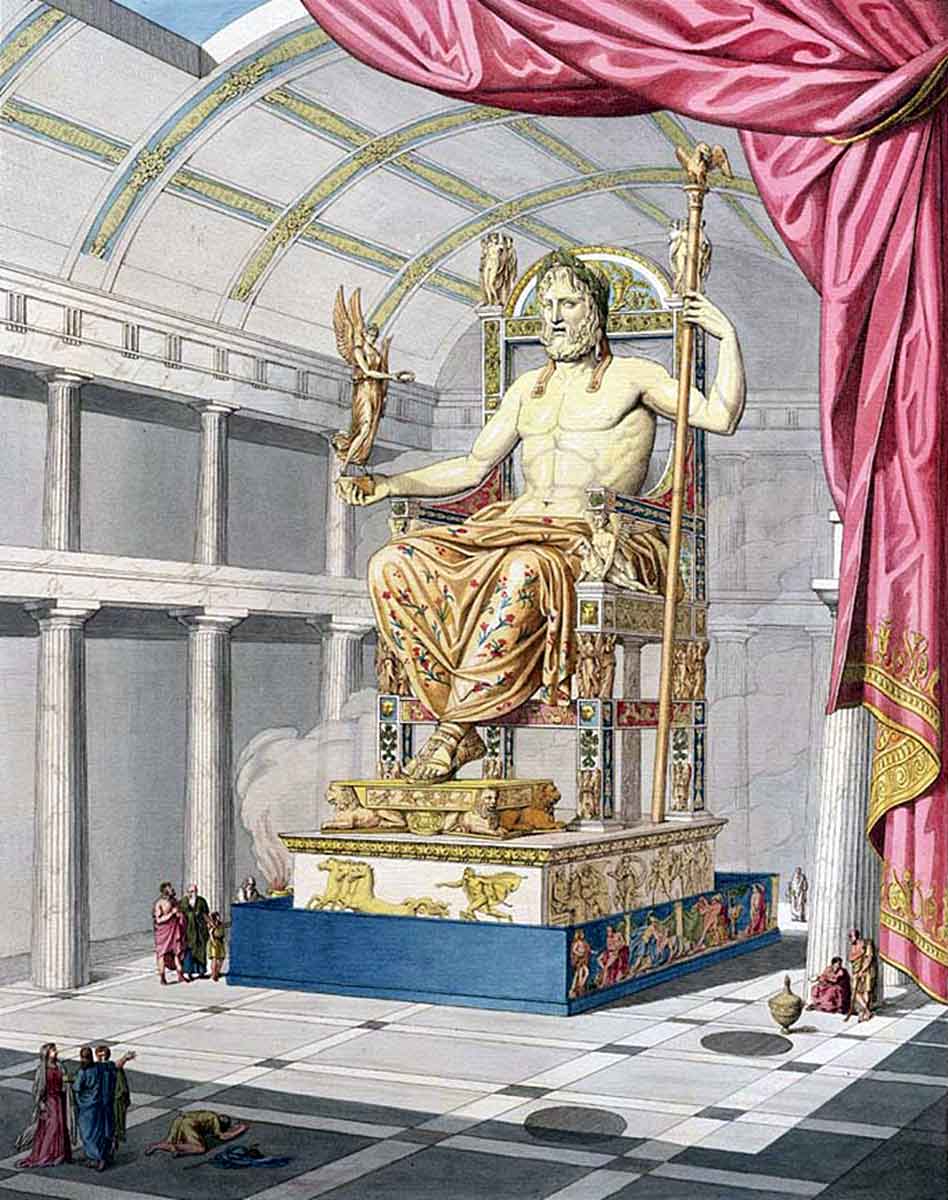
Few statues can rival the mythology behind the Statue of Zeus at Olympia. Created in 430 BC by Phidias, who also sculpted the statues of the Parthenon in Athens, this seated representation of Zeus helped change the religious landscape throughout the ancient world. Designed for the Temple of Zeus, the giant figure stood about 12 to 13 meters (39 to 43 feet) tall. The gold-and-ivory masterpiece featured ivory plates over a wooden frame for the skin and gilded gold sheets for the robes and ornamentation.
Roman historian Suetonius noted that Emperor Caligula attempted to steal the statue in 40 AD, though the plan was abandoned after the scaffolding collapsed. The statue was later moved to Constantinople, the capital of the Eastern Roman Empire, where it was destroyed in a fire at the Palace of Lausus, likely in the late 5th century AD. Today, the only remnants of the masterpiece’s creation are archaeological fragments unearthed beneath an early Christian church that sits over Phidias’ old workshop.
Emperor Nero’s Domus Aurea (Golden House)
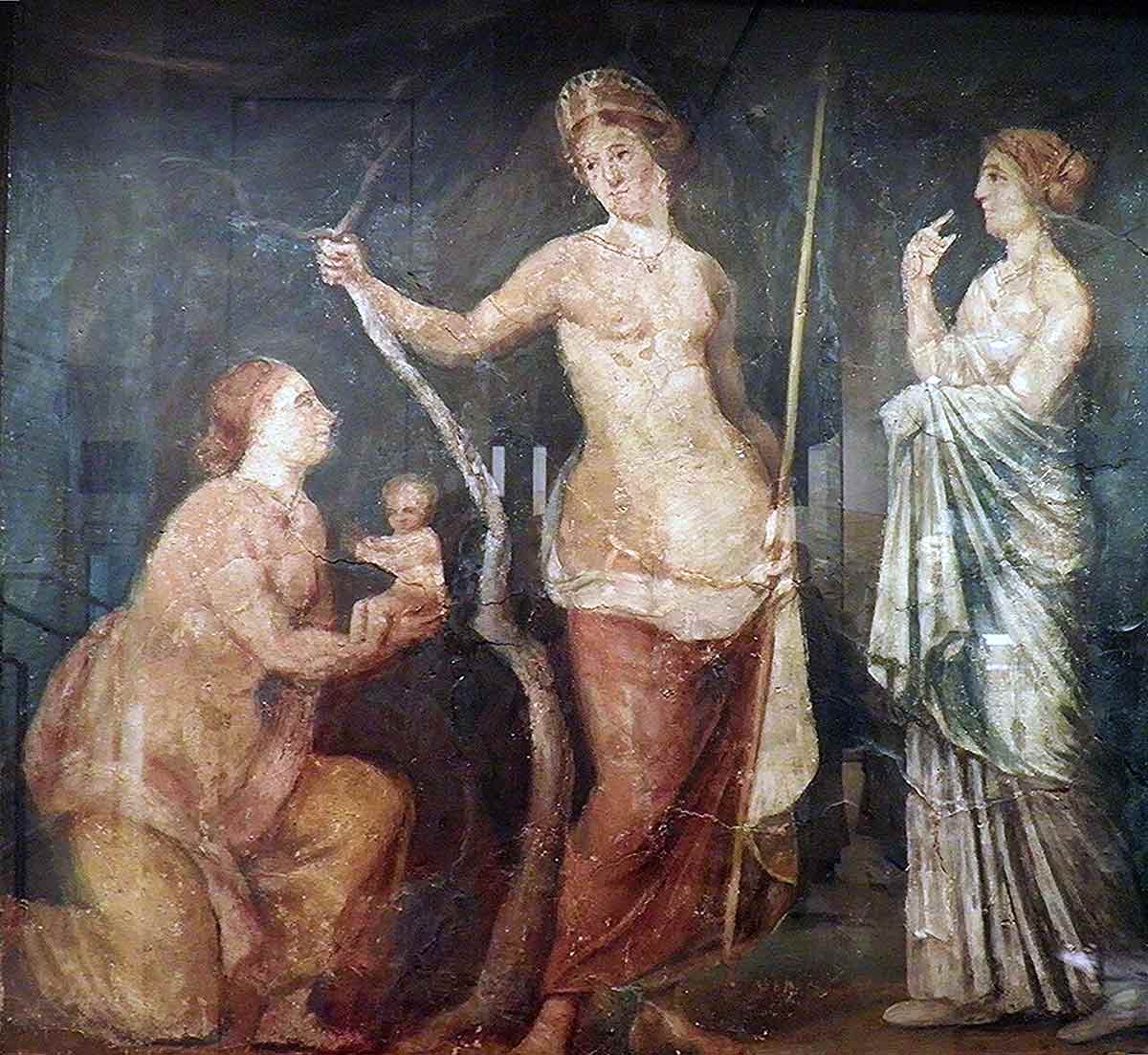
Immediately after the Great Fire of Rome in AD 64, which he is thought to have ordered just to have more territory to develop, Emperor Nero confiscated 300 acres of central Rome to build his own personal playground. The landscaped environment, later known as the Domus Aurea (Golden House), was covered in man-made lakes, acres of artificial tree groves, and pavilions with ceilings made of gold leaf.
The central architectural piece was an immense bronze statue of the emperor. Called the Colossus, it towered over the visitors in the open-air courtyard of the palace and measured between 30 and 37 meters (98 and 121 feet) in height. It was based on Nero’s own likeness and portrayed him with sun-like characteristics.
After Nero’s suicide in AD 68, the succeeding Flavian dynasty tried to dismantle Nero’s house and return the land to the Roman people. Emperor Vespasian filled in the enormous artificial lake that occupied much of the gardens, creating a solid foundation for the Flavian Amphitheater, which would become a public arena for Romans. The Flavian Amphitheater wasn’t originally built in honor of a god, but it later came to be known as the Colosseum due to its proximity to the statue of the sun god.