In the spring of 480 BCE, the Persian king Xerxes I advanced into Greece. In those turbulent years, the Temple of Apollo at Delphi stood as the center of Hellenistic religion. As was customary in all previous wars, an Athenian delegation climbed to the temple at Delphi in search of answers. However, Herodotus reports that they were met at Delphi with a response that froze the blood in their veins: abandon your cities, for destruction is inevitable. This was not an isolated prophecy. On several other occasions during the Greco-Persian Wars, the Oracle of Delphi delivered prophecies that suggested retreat, defeat, or surrender. Because of such prophecies, an uncomfortable question soon spread in ancient Greece: Did the Oracle of Delphi support the Persians?
The Persian Invasions of Greece 480 BC
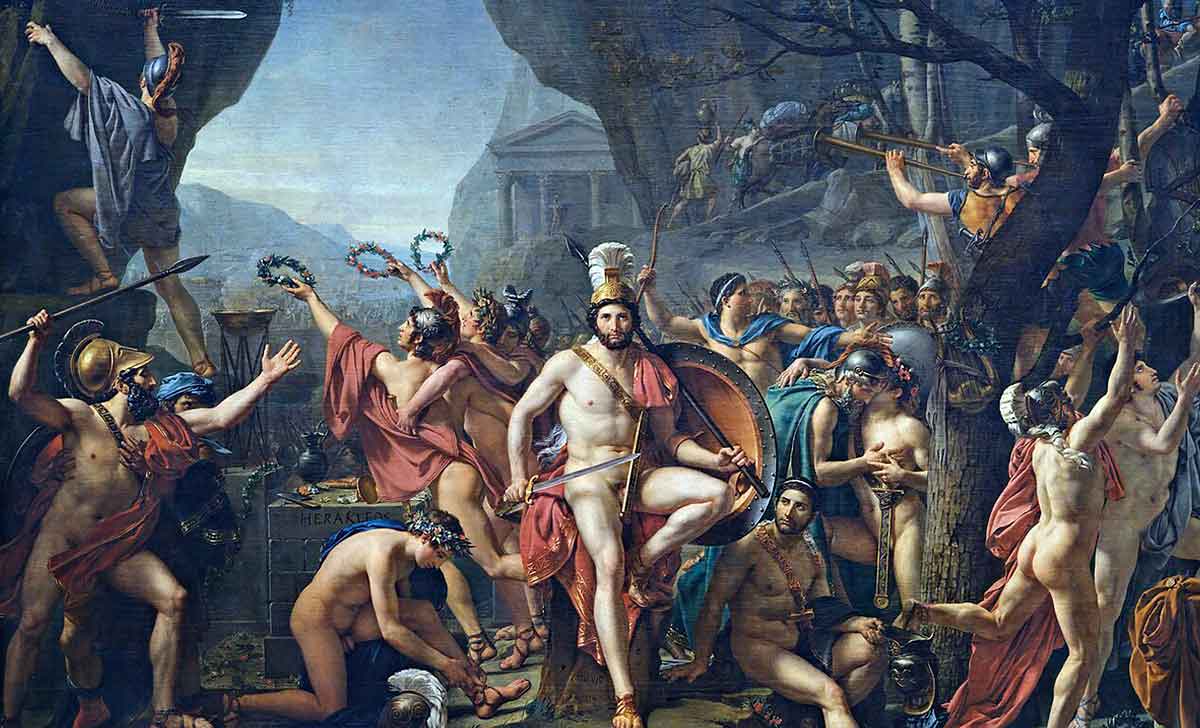
The war between the Greek city-states and the vast empire of Xerxes I was neither accidental nor sudden. It was the culmination of decades of tensions that emerged with the expansion of the Achaemenid Empire into Asia Minor, where many Greek city-states fell under Persian rule. When cities such as Miletus, Ephesus, Samos, Chios, and Smyrna rebelled against the Persians at the end of the 6th century BC with the help of mainland Greece, it created the perfect stage for the Persian invasions.
The first Persian invasion, led by Darius I, was surprisingly halted by the Greek victory at the Battle of Marathon in 490 BC. A decade later, his successor Xerxes gathered an even larger army and advanced both by land and by sea toward Greece with the intention of conquering it. In this invasion, not all Greek city-states were united. Dome immediately accepted defeat, while others tried to remain neutral.
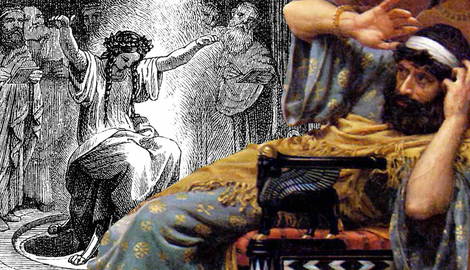
In crisis situations such as the Persian invasion, the Greeks had the resources to gather strong armies, but they also turned to the gods for help. Before making major decisions such as abandoning cities or going into battle, delegations went to the Oracle of Delphi to seek prophecies. There, the priestess Pythia would give answers in the form of cryptic pronouncements.
The Apocalyptic Prophecies: Why Sit You Doomed?
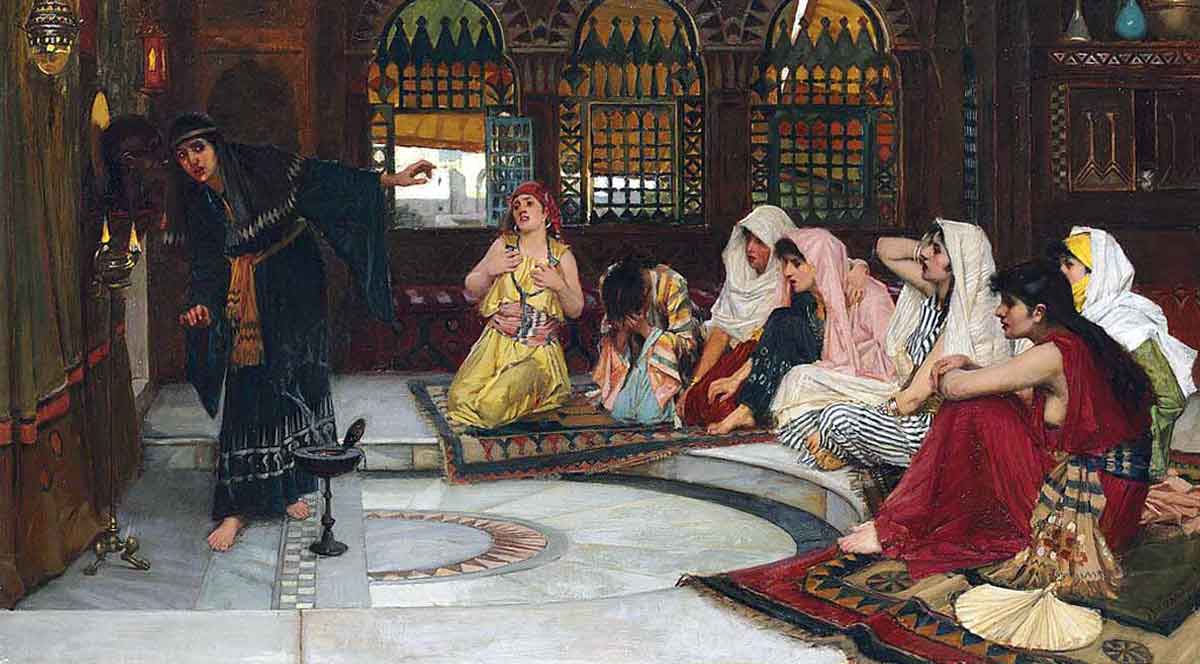
When the Athenian delegation arrived at Delphi in 480 BC, they heard what they feared most. In a series of almost apocalyptic predictions, the Oracle of Delphi offered them very little hope of victory. The first response given by the Pythia to the Athenians was: “Why sit you doomed one? Fly to the ends of the earth. All is ruin for fire and headlong god of war shall bring you low.” Similar predictions also met the Spartans when they consulted the Pythia before the Battle of Thermopylae in 480 BC.
“Fated it is for you, ye dwellers in wide-wayed Sparta,
Either your city must fall, that now is mighty and famous,
Wasted by Persian men, or the border of fair Lacedaemon
Mourn for a king that is dead, from Heracles’ line descended.
Yea, for the foe thou hast nor bulls nor lions can conquer;
Mighty he cometh as Zeus, and shall not be stayed in his coming;
One of the two will he take, and rend his quarry asunder.”
Herodotus, Histories, Book VII, Chapter 221
Although the Greeks initially thought the oracle might be on the Persian side, later Greek tradition interpreted these predictions more as divine warnings, rather than as something that was certain to happen.
“Medizing” and the Politics of Survival
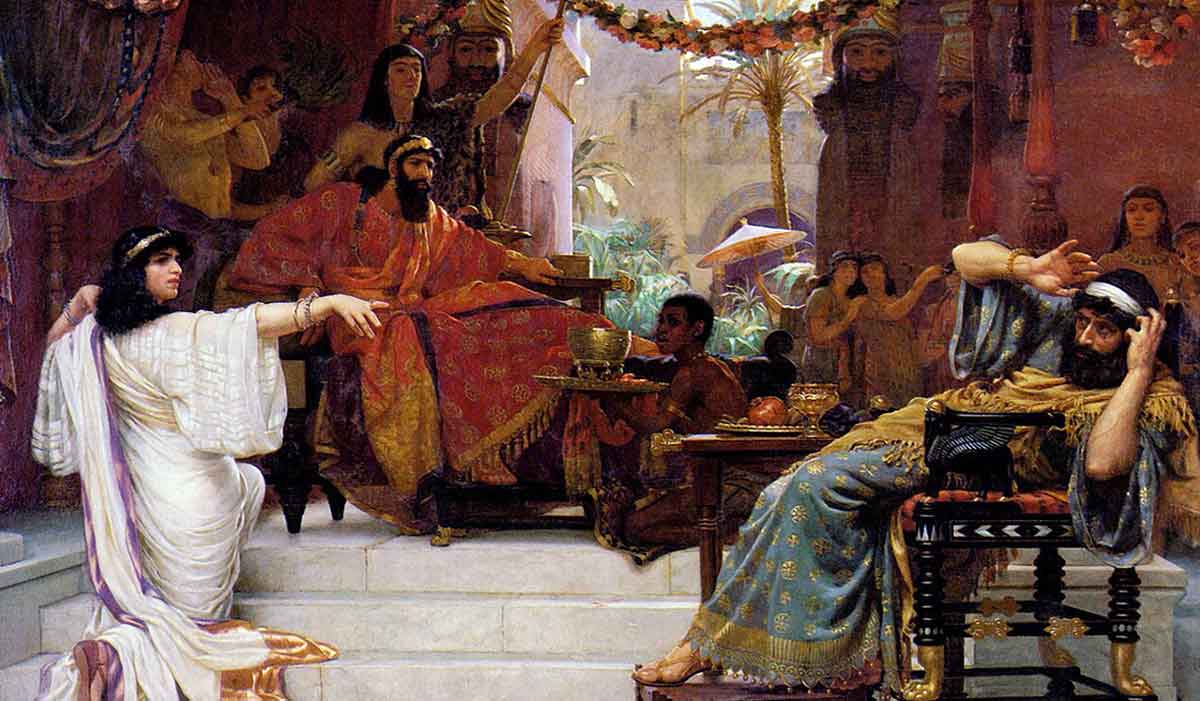
In ancient Greece there was a term for Greeks who were siding, collaborating, or sympathizing with the Persians. That term was “Medism,” which came from the Greek name for the Persians (Medes). Such cooperation could take the form of an open alliance with the Persians or subtle assistance to the Persian army. The most famous examples are the Thessalians and the Thebans, who provided the greatest support to the Persians.
The term “medizing” also became a political weapon among the Greek city-states, especially Athens and Sparta, to accuse rival Greek city-states of treason. However, when someone suggests medizing at Delphi, the issue becomes much deeper.
The sanctuary at Delphi was governed by a group of priests and aristocrats from local families in Phocis. The key figure was the priestess known as the Pythia, but the prophecies she gave were interpreted and further shaped by male priests known as prophetai, as well as other temple administrators. This means there was a theoretical possibility that the “truthfulness” of Delphic prophecies could be manipulated. However, such a thing would have been risky, as it would have irreparably destroyed Delphi’s authority.
Also, Delphi held one of Greece’s richest treasuries, accumulated over decades by city-states such as Athens, Corinth, and Sparta. The Persians were known for sparing sanctuaries that did not resist, so there is also the dimension that Delphi may have sought neutrality to protect its wealth.
The “Wooden Wall” and the Pivot to Victory
In 480 BC, the Athenian delegation returned from Mount Parnassus in panic, as it seemed that the Oracle of Delphi was suggesting total evacuation rather than resistance. However, the Athenians decided to return to Delphi for another prophecy, which this time was somewhat more optimistic. Pythia told the Athenian delegation that only the “wooden walls” would remain unconquered and provide safety for the Athenians. Although slightly more optimistic than the first prophecy, its meaning was unclear.
“Yet shall a wood-built wall by Zeus all‑seeing be granted
Unto the Trito-born, a stronghold for thee and thy children.”
Herodotus, The Histories, 7.141
This prophecy also hinted that the Athenians would suffer a heavy defeat at a place called Salamis, where “women’s sons” would die.
The Athenian general Themistocles interpreted the wooden wall prophecy as referring to the fleet of wooden ships that they had spent the last few years hastily constructing. In the years before the Persian invasion, Themistocles had managed to convince the assembly to spend the revenue from the Laurion silver mines on a strong navy, which was a major political victory because the Athenians preferred the hoplite style of warfare.
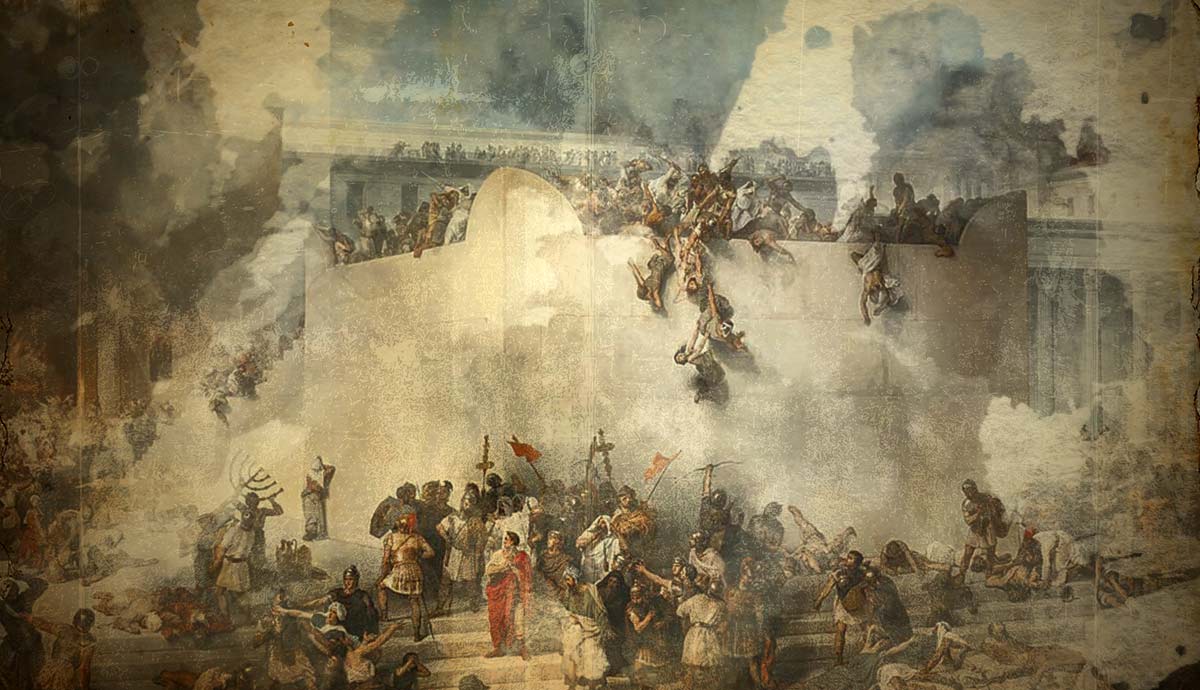
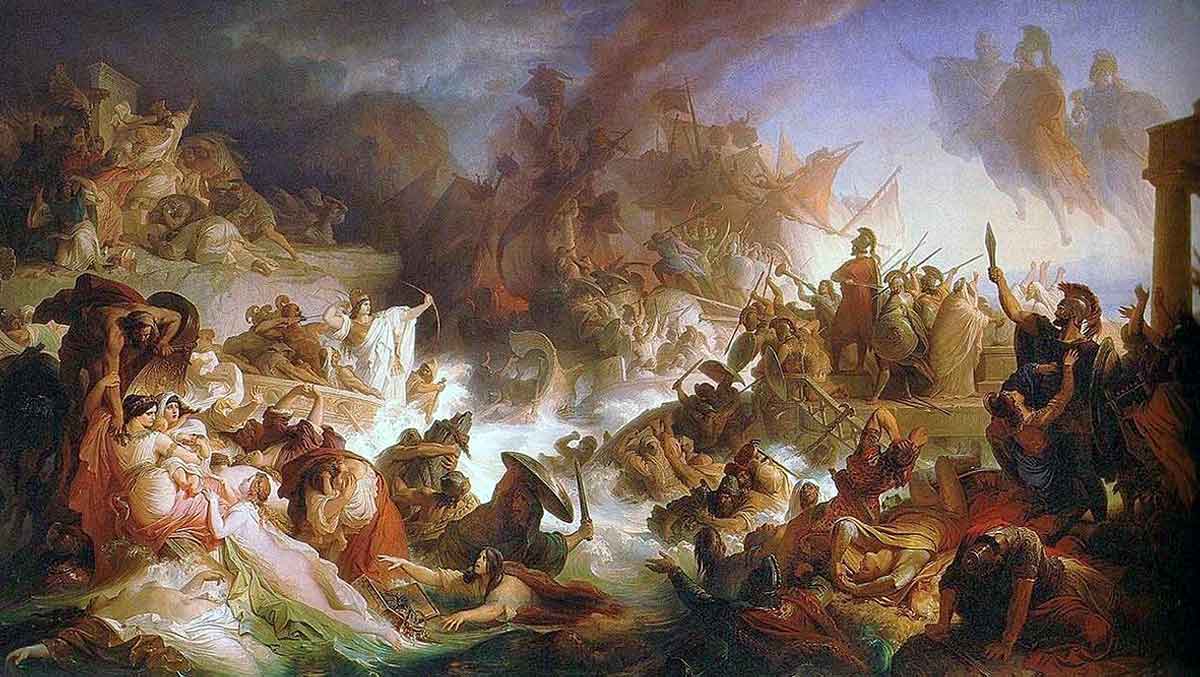
Themistocles managed to persuade the Athenians to evacuate the city, move to the island of Salamis, and commit to a naval battle. In September, the emperor Xerxes I captured and burned Athens, but walked straight into a Greek trap. The smaller Greek fleet, with no more than 400 ships, deceived Xerxes into attacking within the narrow straits of Salamis, where the large Persian fleet became trapped, collided with itself, and suffered heavy losses. This Persian defeat at Battle of Salamis changed the course of the war, because without naval dominance, Xerxes could not advance further into mainland Greece.
The Miracle at Delphi: Divine Intervention or Secret Deal?
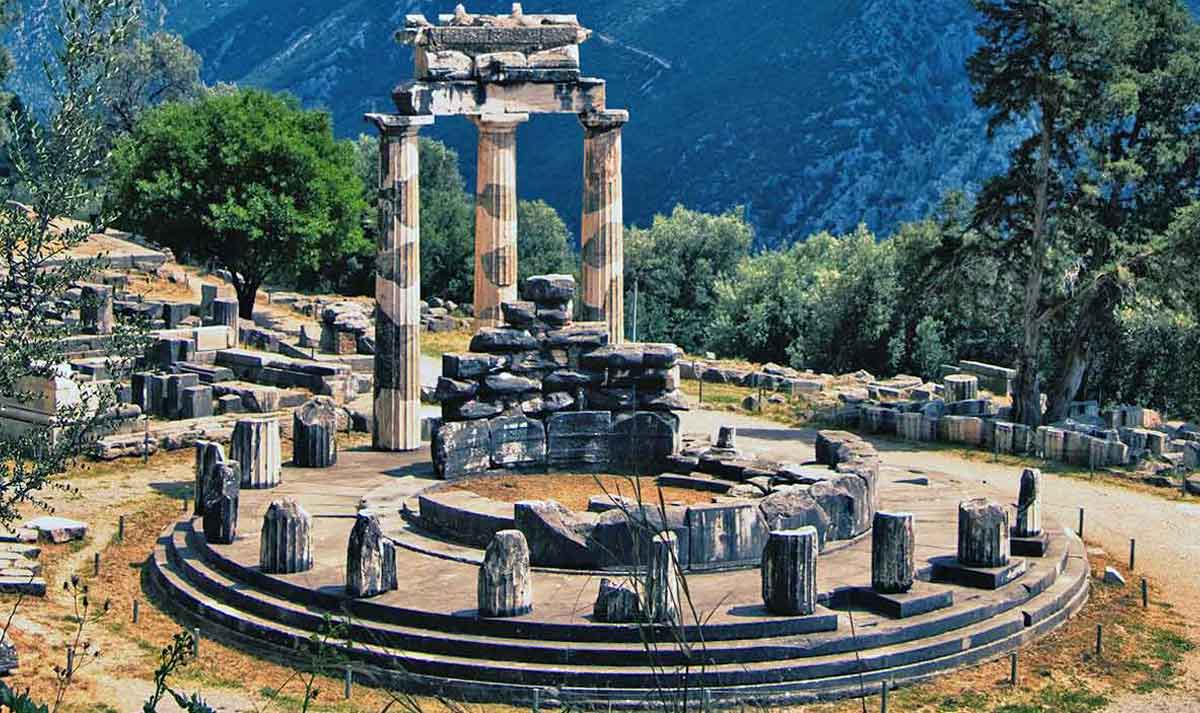
According to Herodotus, after the capture and burning of Athens, Xerxes I sent a detachment to Delphi to take its immense wealth. Expecting an attack, the Delphians fled to the slopes of Mount Parnassus, leaving only a few priests behind. What followed, according to tradition, was a divine intervention. Lightning and thunder struck the approaching Persian troops, and huge rocks fell upon them from the mountain. Panicked, the Persians immediately fled.
Modern historians are skeptical of this tradition, as the entire story bears the characteristics of aetiological storytelling, that is, an explanation constructed after the fact to account for an outcome that required justification. In this case, an explanation was needed for why Delphi was spared.
One possible explanation also lies in Persian imperial practice. The kings of the Achaemenid Empire had a policy of respecting local religious institutions, especially if they did not offer active resistance. However, Delphi was more than a local institution, it was one of the greatest centers of pan-Hellenic belief. Its conquest would have weakened Greek unity. This has deepened the possibility of a secret agreement between the Delphic authorities and the advancing Persians.
Aftermath: How Delphi Rewrote History
After the Greco-Persian Wars ended and the Achaemenid Empire was defeated, Delphi, regardless of the rumors, did not lose prestige but increased in importance. Supporting this is the Serpent Column, which was erected in the Temple of Apollo after the decisive Battle of Plataea. Hosting such a monument gave Delphi the chance to once again position itself at the top of pan-Hellenic authority and engrave itself into the story of Greek triumph.
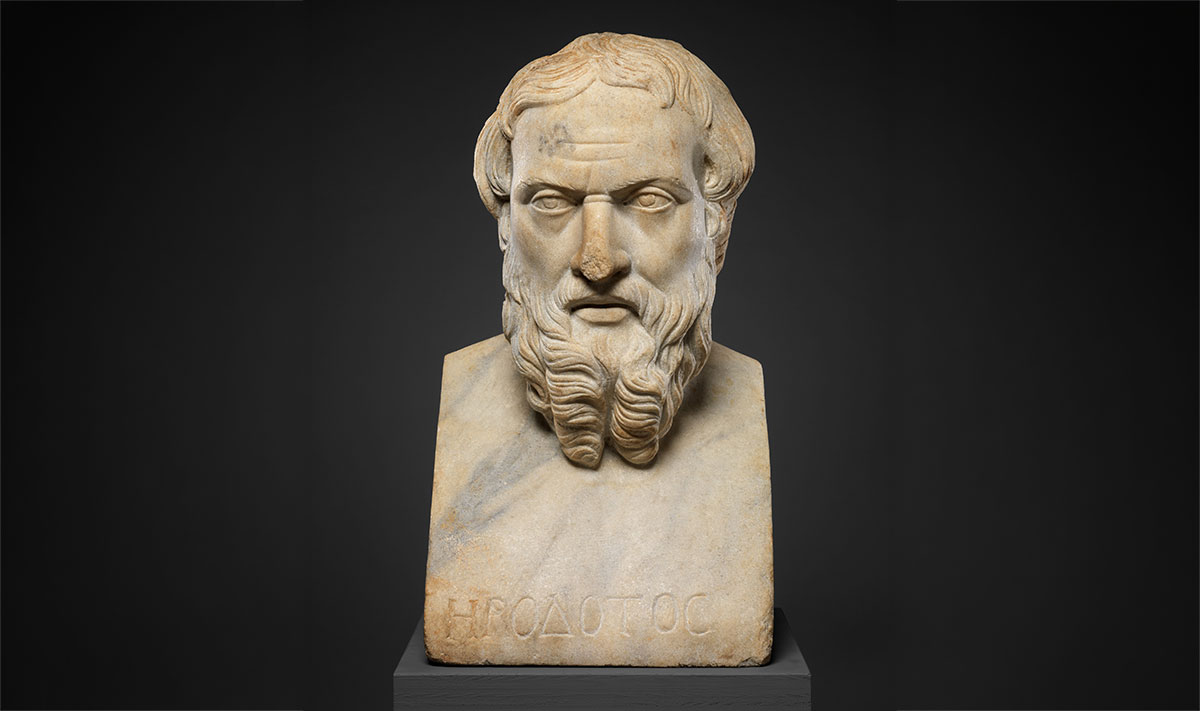
Most of what we know about these events we owe to Herodotus, whose writing was a mixture of historical research and oral narratives. Writing in the decades after the war, Herodotus presented Delphi as a legitimate and trustworthy religious institution. Although he did not avoid ambiguous or problematic prophecies, he still framed them within a broader narrative that emphasizes divine order and the eventual Greek success.
In this way, Herodotus, consciously or not, softened the implications of the Delphic apocalyptic prophecies. Instead of portraying the oracle as compromised or politically aligned with Persia, he integrates it into a moral and religious framework in which Apollo’s will remains intact. Thus, this post-war period can be viewed as one of reinterpretation that took place through monuments, narratives, and selective memory.
Realism in the Face of Ruin
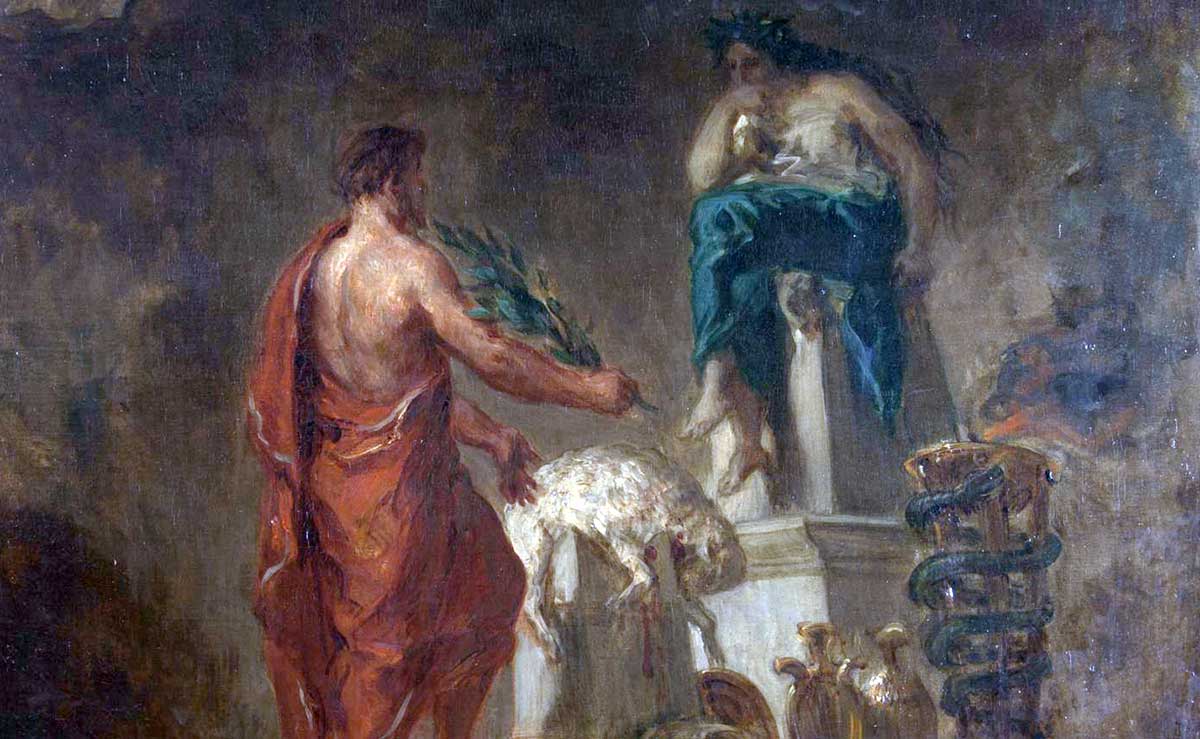
Did the Oracle of Delphi support the Persians? Were the priests at Delphi traitors to the Greek cause? The simplest answer is that we do not have enough solid evidence to support such a claim. Even the apocalyptic prophecies preserved by Herodotus do not point with certainty to loyalty toward the Achaemenid Empire. Instead, they reflect a pattern of careful ambiguity shaped by immediate circumstances. Persia appeared as a power that could defeat Greece, and Delphi possessed great wealth that it wished to preserve.
The Pythia was already known for giving answers that could remain valid across multiple outcomes. For example, the “wooden wall” prophecy could refer both to literal wooden defenses and to ships, as Themistocles interpreted it.
In this context, the Delphic prophecies of 480 BC cannot be viewed as pro-Persian but rather as pro-Delphic. In a wounded Greek world where no one could guarantee their safety, Delphi had to rely on its own wisdom. The language used by the Pythia allowed different sides to find the answers they needed, while ensuring that the reputation of the sanctuary would survive both success and failure.