
Vermeer is one of the great puzzles of Western art, mostly because so little of his life was ever written down. He left maybe three dozen paintings, no drawings, no diary, barely a personal letter, then vanished for two centuries until a French critic stumbled onto him in 1866. What followed is nearly as good as the paintings: a forger, a cache of Nazi loot, and one of the strangest courtroom defenses art history has on record. The museums with Vermeer paintings worth chasing are spread across two continents.
Vermeer’s Life in Brief
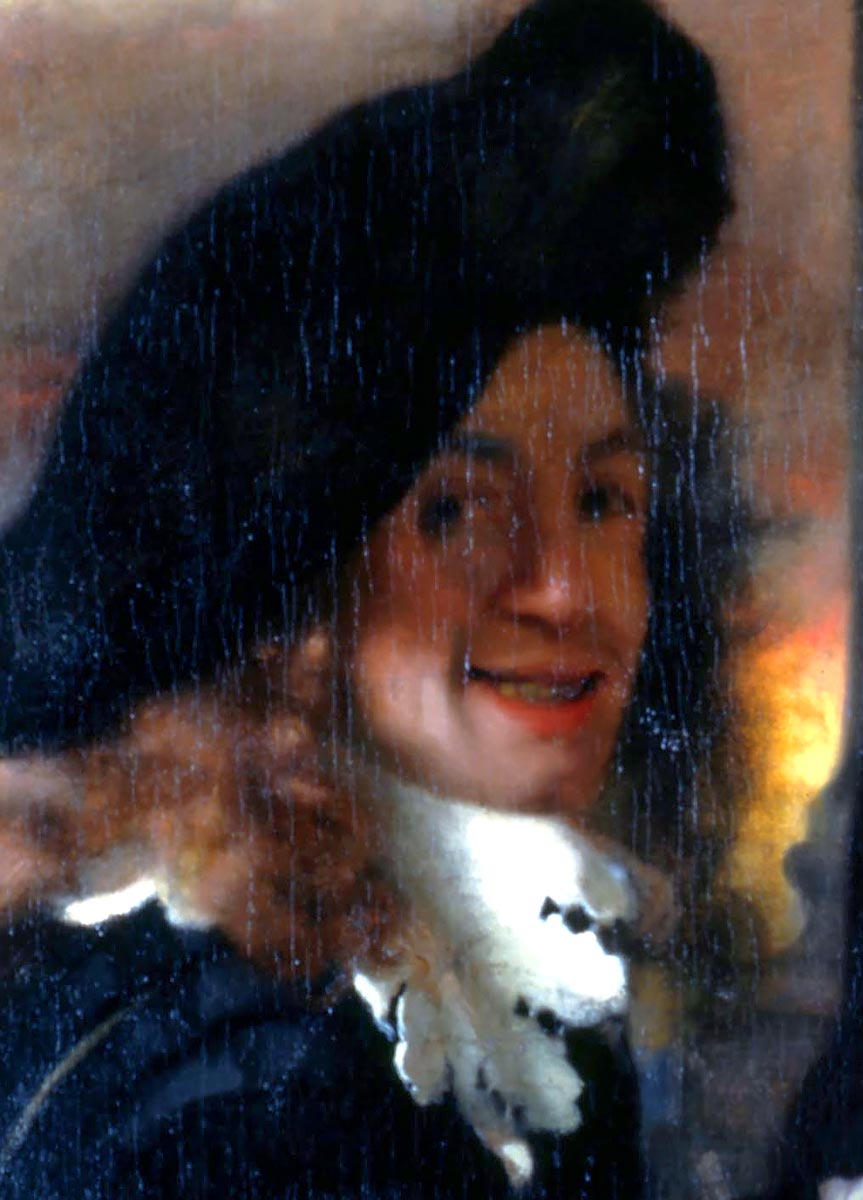
Born in Delft, the Netherlands, in 1632, Vermeer was the son of an innkeeper who dealt in art on the side. He signed on as a master with the local painters’ guild in 1653 and worked slowly, selling almost everything he created to just a single Delft collector, Pieter van Ruijven. The handy arrangement paid the bills, but it also meant that his name wasn’t known outside the city. Around the time he married, Vermeer converted to Catholicism, almost certainly to appease his wealthy mother-in-law. That mother-in-law, Maria Thins, seems to have controlled the finances in a household that eventually filled up with eleven surviving children.
Vermeer died in 1675 at just 43 years of age, ruined by the Franco-Dutch War, which had taken the Dutch art market down with it. His widow spent years afterward trying to claw out from under the debts. As van Ruijven’s collection was broken up and sold off, Vermeer’s paintings drifted apart with it, and the man himself faded out of the record almost entirely. Then, nearly 200 years on, a French critic named Théophile Thoré-Bürger, living in political exile, ran into a Vermeer in The Hague and low-key lost his head over it, spending years tracking down the rest.
The most famous painting in the whole of the Netherlands is arguably a Vermeer. It also turns out to be not quite what everyone assumes.
1. Mauritshuis, The Hague, Netherlands
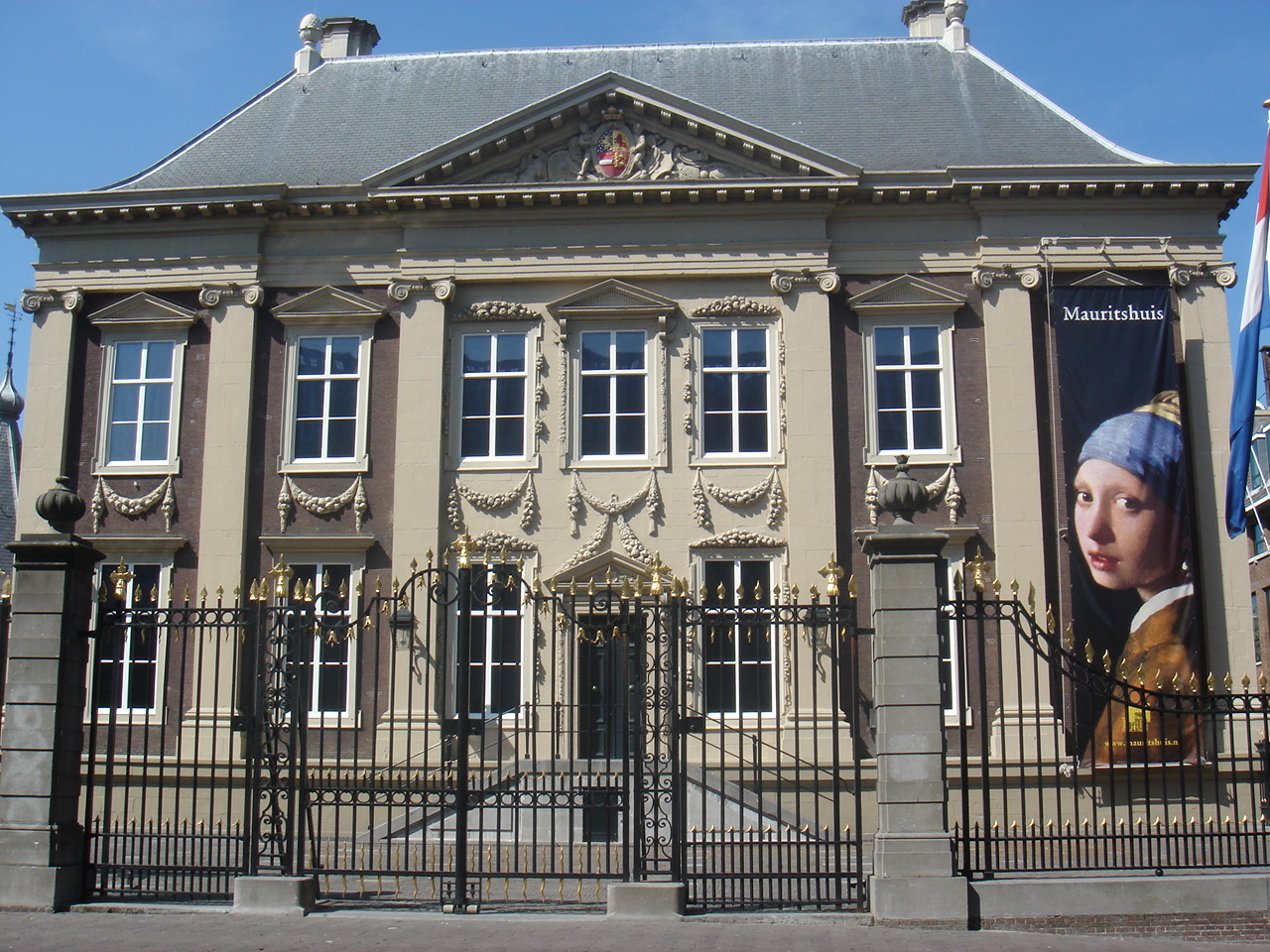
The Mauritshuis has three Vermeers, and one of them stops people dead on their tracks. Girl with a Pearl Earring (c. 1665) is not really a portrait but a tronie, a Dutch type that captured a specific kind of face rather than a specific person, so the girl actually has no name and never did. Maybe. The earring is almost certainly not a real pearl either, because a natural pearl that big and that glossy would have been absurdly rare and expensive. Best guess is glass, or simply a brilliant piece of painted illusion. The painting turned up at a Hague estate sale in 1881 and went for two guilders and thirty cents, bought by a man who clearly saw what the people running the sale had missed.
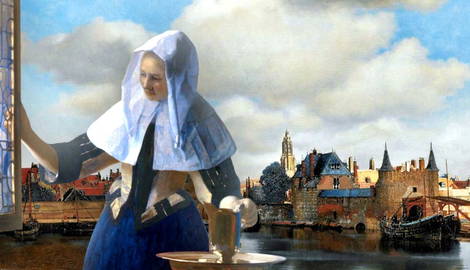
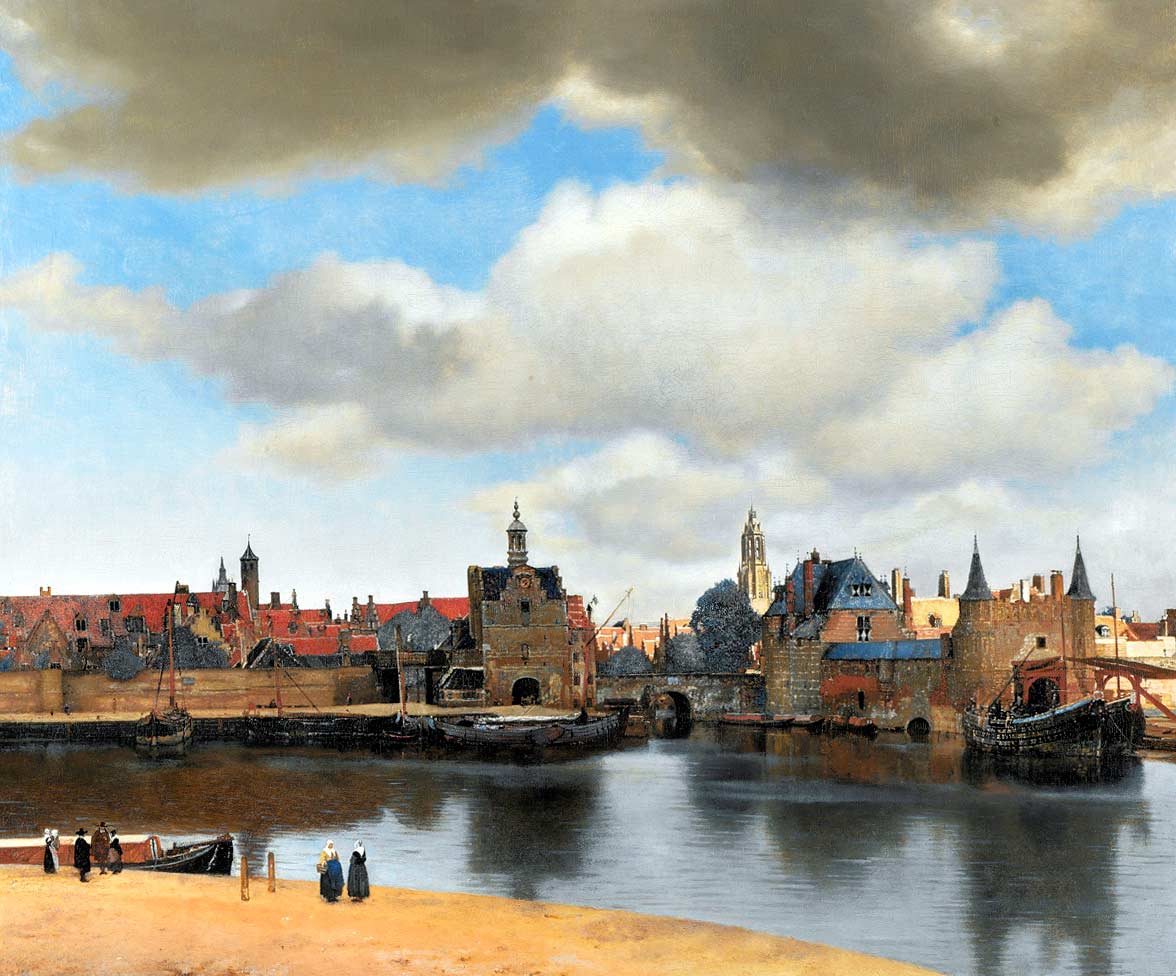
The second showstopper is View of Delft (c. 1660-1661), one of only two outdoor scenes Vermeer ever painted. Marcel Proust thought it the most beautiful painting in the world, loved it enough to send a character off to die in front of it in his novel, and nearly collapsed himself when he went to see it in 1921.
There is a third Vermeer here too, Diana and Her Nymphs (c. 1653-54), an early mythological piece from a time before he settled into the quiet interiors for which he became famous. As for View of Delft, the argument that he used a camera obscura to lay the scene out is mostly settled. How exactly he used it, though, is a fight nobody has won.
Insider Tip: The museum sits in a 17th-century palace, a short walk from the Dutch parliament. Book online, and definitely take timed entry if you are going on a weekend.
The Hague has the single most famous Vermeer, but Amsterdam has the largest collection in the country, all those muted indoor scenes that make up the bulk of what survives.
2. Rijksmuseum, Amsterdam, Netherlands
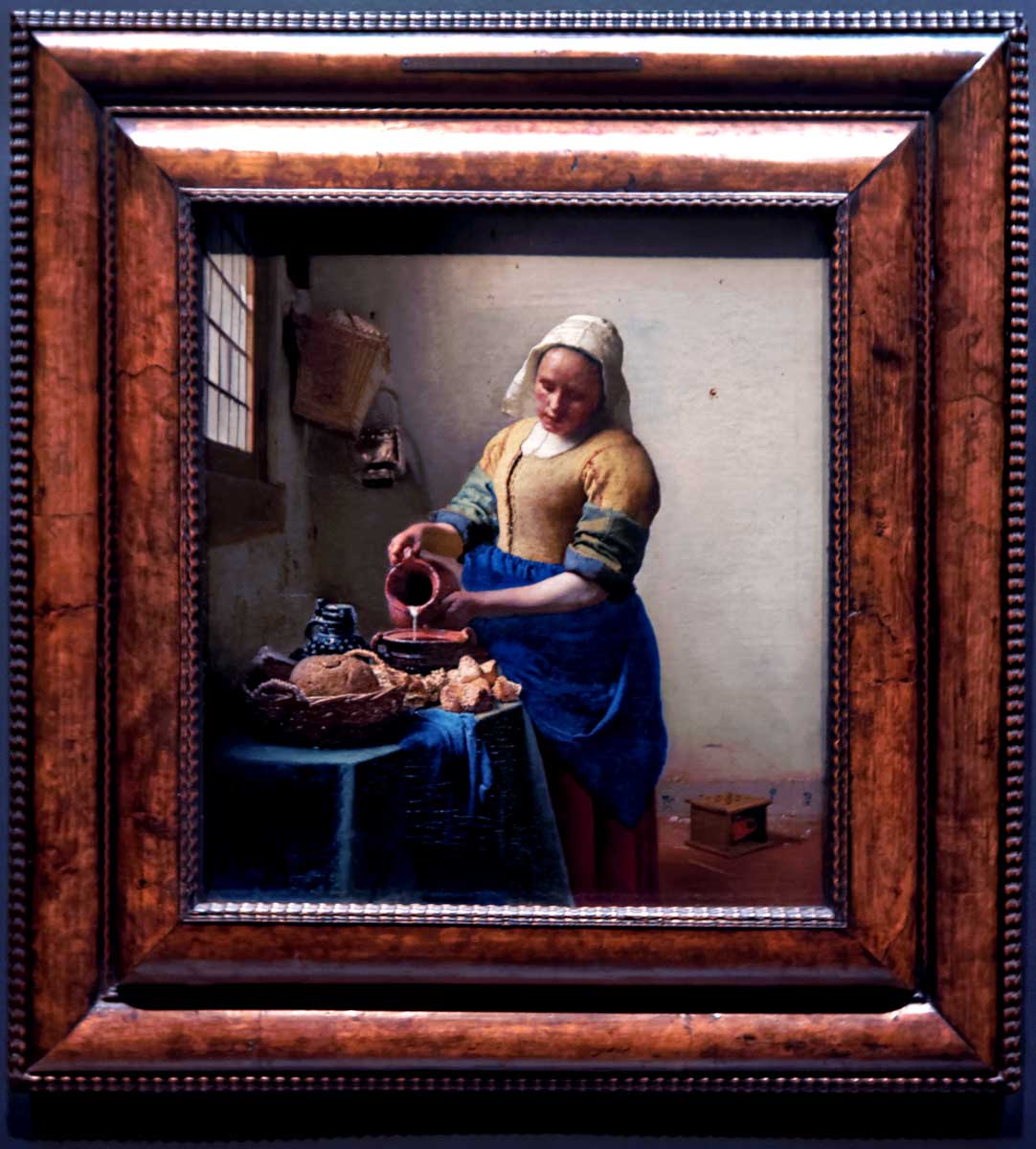
The Rijksmuseum has four Vermeers, and the one people cannot walk away from is undoubtedly The Milkmaid (c. 1657-1658), a small painting of a kitchen maid pouring milk into a bowl. Nothing about the subject is particularly remarkable, were it not for the fact that the play on light and color makes the whole scene incredibly lifelike. Even the thin, unbroken thread of milk leaving the jug might keep you standing still far longer than you meant to.
X-rays have turned up an earlier version hiding under the paint. There was a foot warmer on the floor, and a rack of jugs on the back wall, and Vermeer painted both of them out. Stripping the room back to the woman, the jug, and the light is such a 17th-century Photoshop move. Brilliant.
Insider Tip: Give yourself a solid three hours if you want to see the rest of the Dutch Golden Age and not only the Vermeers.
Vermeer, rediscovered: Thoré-Bürger‘s rediscovery did more than rescue Vermeer’s name. It built a market hungry for any newly found Vermeer, and that hunger was a gift to a bitter Dutch painter named Han van Meegeren, who held a real grudge against the Amsterdam art world and worked out exactly how to feed it. His scheme would eventually drag in Hermann Göring, a Nazi looting operation, and one of the great courtroom performances of the century.
3. Museum Boijmans Van Beuningen, Rotterdam, Netherlands
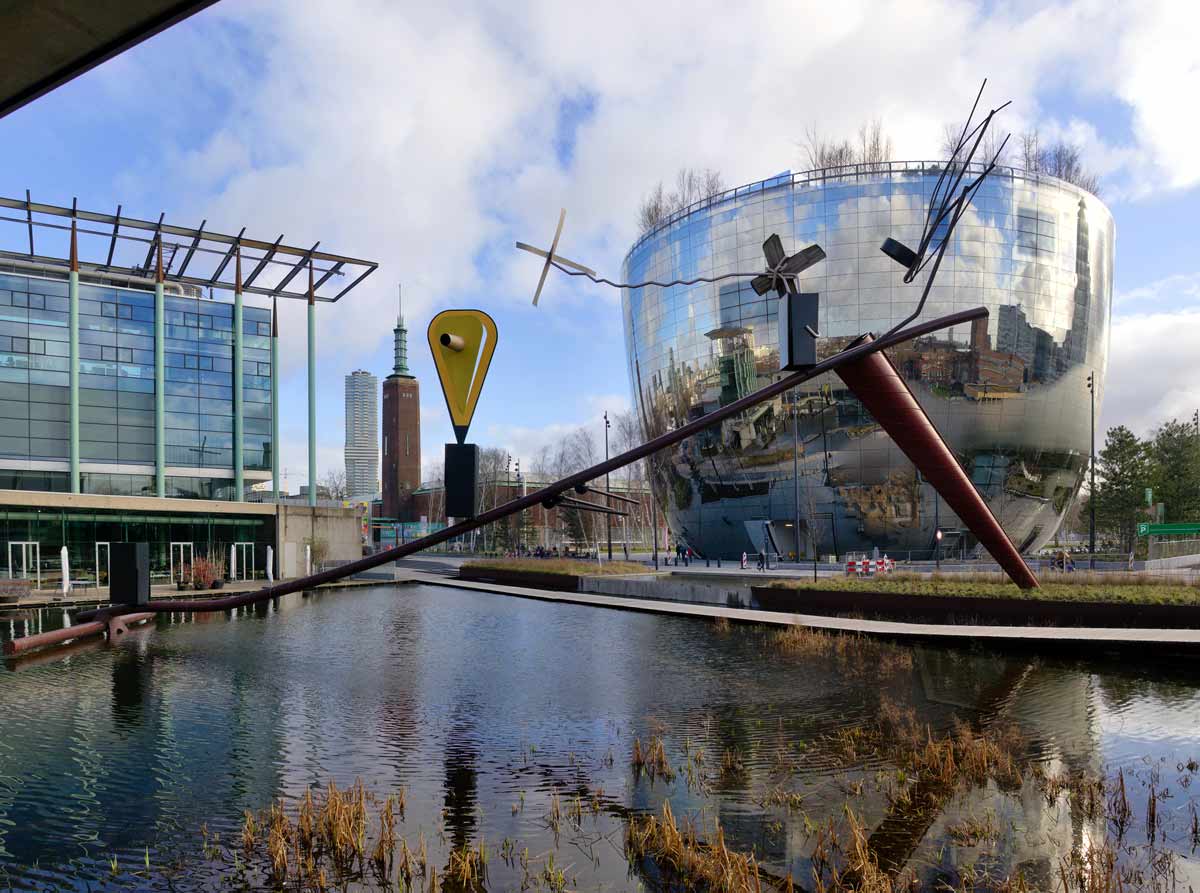
In 1937, the Boijmans paid an absolute fortune for a painting that the world’s leading Vermeer expert, Abraham Bredius, had pronounced a masterpiece: The Supper at Emmaus. The thing is, it turned out to be a fake. Van Meegeren, a second-rate painter the critics had written off, had set out to forge a Vermeer, and money did not appear to be the reason, at first. The idea was to let the experts who had so swiftly rejected him swoon at the masterpiece, then reveal the hoax and watch them squirm. Van Meegeren was driven by revenge, perhaps the steadiest currency of all. The plan worked a little too well. Bredius declared it genuine, the museum bought it, and Van Meegeren, looking at the pile of cash, decided to skip the big reveal and keep going.
By 1943, Van Meegeren had sold six fake Vermeers, one of them to Hermann Göring, and traded for 137 Dutch Old Masters that Göring had looted from Jewish collections. After the war, the Dutch arrested Van Meegeren for selling a national treasure to the enemy, and his only way out was to confess that the whole thing was his own forgery. Nobody believed him, so to prove it, he was made to paint a fresh Vermeer in front of witnesses, which he promptly did. The collaboration charge fell away, fraud stuck instead, and he died of a heart attack before serving a single day in prison.
The moral of the story? Resentment might be the death of you!
A little heads-up: The museum’s main building is shut for a major renovation and is not expected to reopen until around 2029. In the meantime, the Boijmans Depot, the mirrored, bowl-shaped public store that opened in 2021, is well worth a visit entirely on its own.
Fun fact: More Vermeers hang in New York than anywhere outside the Netherlands, and the biggest group of them under one roof, five in all, belongs to the Met. Strange company to keep, given that almost nobody in America had even heard of him 150 years ago.
4. The Metropolitan Museum of Art, New York, USA
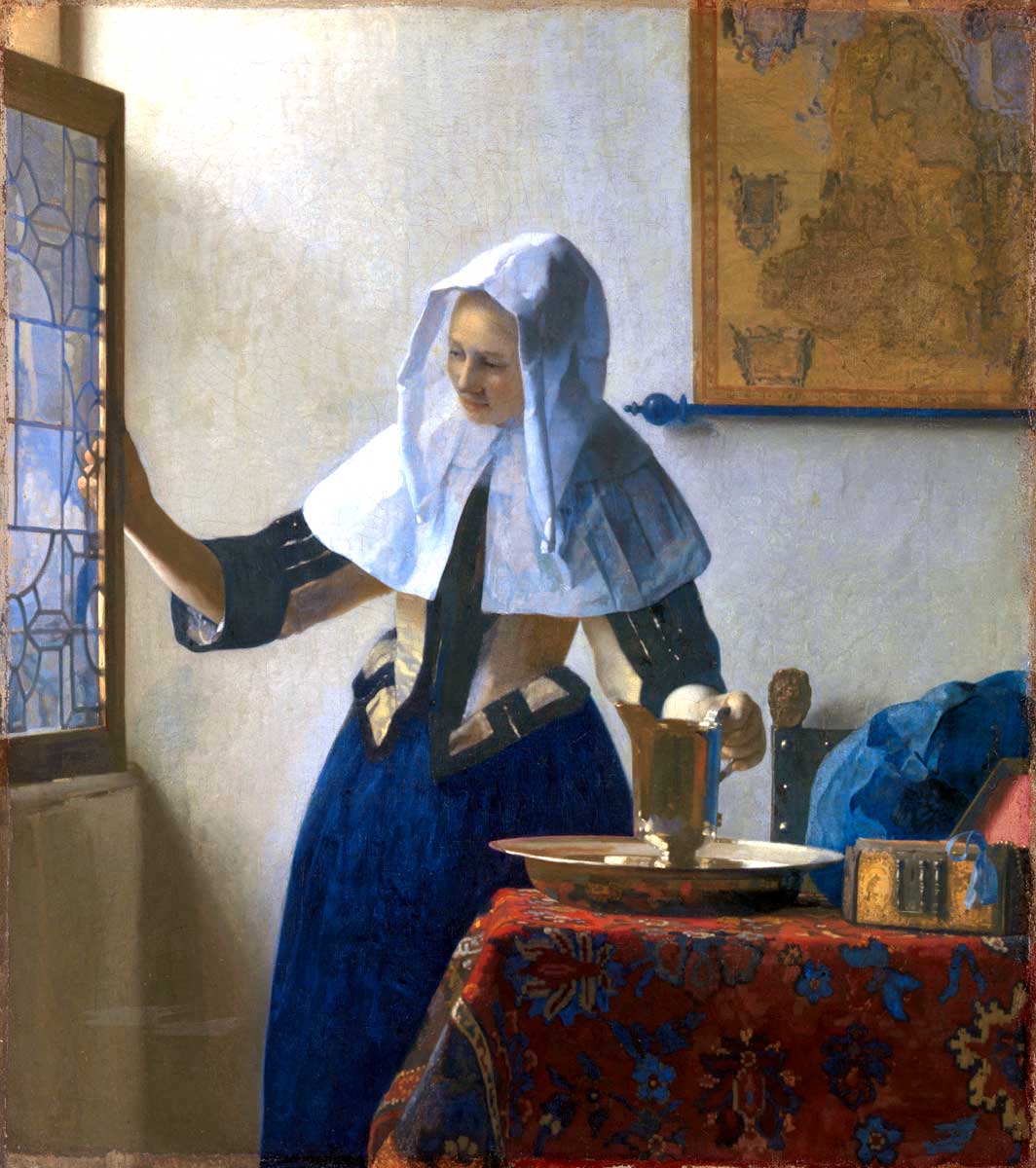
The Met holds five Vermeers, more than any other museum anywhere, which is a funny thing to be able to say about a city that came to him late and half by accident. The one to find first is Young Woman with a Water Pitcher (c. 1662), a woman at an open window with one hand on the casement and a gilt pitcher and basin set out in front of her. It looks like nothing much is happening, which is the whole trick of it.
What makes it worth the detour is how it got here. A New York financier named Henry Marquand picked it up at a Paris gallery in 1887 for $800, a trifle even then, at a point when American collectors were chasing Italian Renaissance names and had little time for a Dutchman most had never heard of. He gave it to the Met in 1889, and it became the first Vermeer to enter an American collection. A dozen more crossed the Atlantic over the next thirty years, but this was the one that opened the door for them all.
Insider Tip: The Vermeers hang together in the European Paintings galleries on the second floor. The Met is enormous, so grab a map, or you’ll lose an afternoon to the Egyptian wing before you find them. Out-of-state visitors now pay a set admission rather than the old pay-what-you-wish, which only applies to New York State residents.
Eleven blocks south is the Frick, a much smaller and very different proposition. It was Henry Clay Frick‘s own house until 1935, which makes it an oddly fitting home for paintings that are nearly all about the insides of houses.
5. The Frick Collection, New York, USA
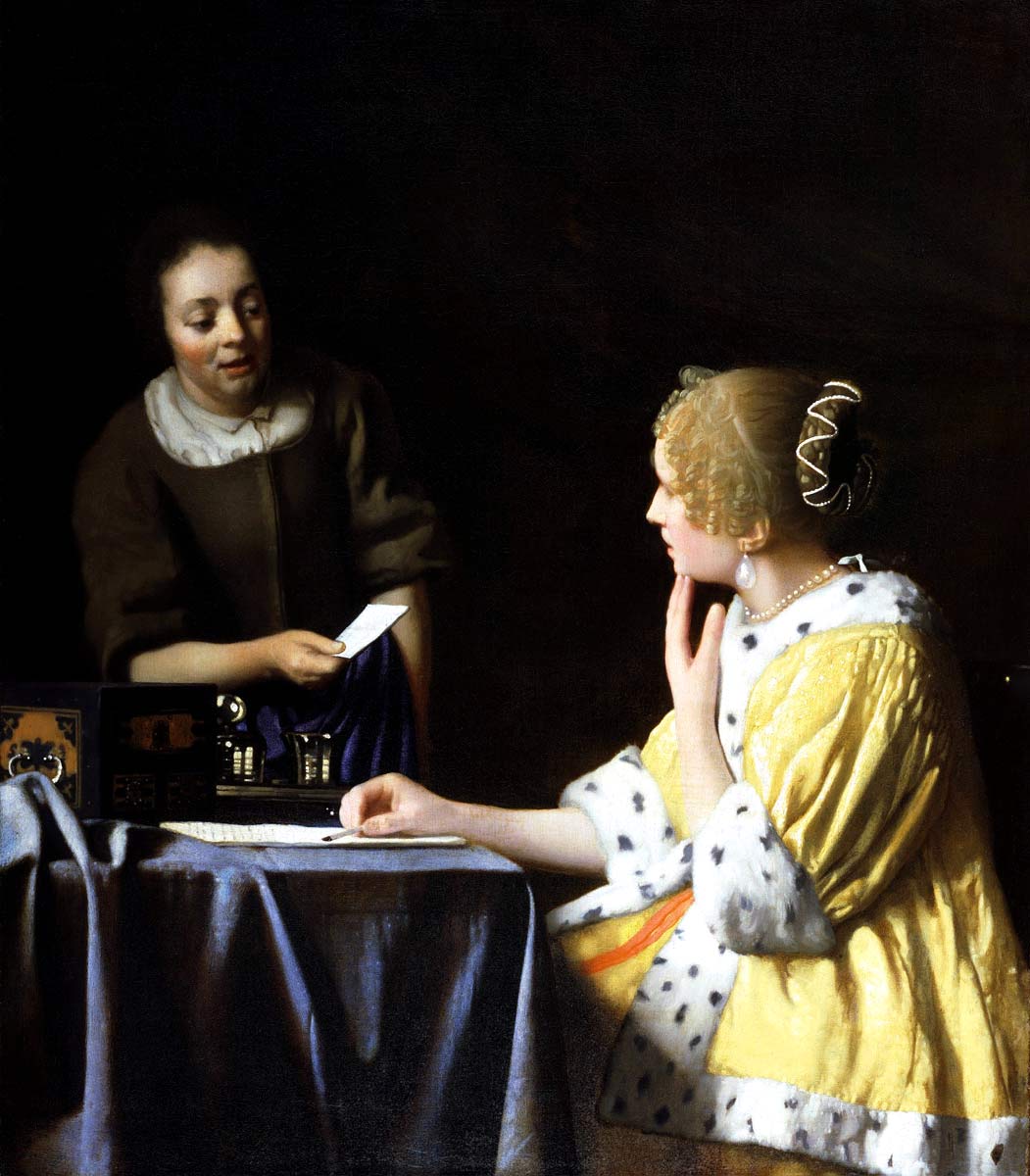
The Frick has three Vermeers, a substantial slice of the surviving legacy, hanging in the West Gallery alongside Rembrandts and El Greco. The one that pulls you in is Mistress and Maid (c. 1666-1667). A woman has just been handed a letter and looks up from it, caught somewhere between worry and surprise, while her maid stands waiting. There is a letter, a pause, and a look she cannot quite resolve, and the whole thing sets up a story whose ending is left hanging in the air. It was also the last painting Henry Clay Frick ever bought, in 1919, the year he died.
Frick, the steel baron who built the collection, is not exactly remembered as a soft touch. His name is tied to the brutal end of the 1892 Homestead strike, when Pinkerton agents shot striking workers at his plant. That a collection assembled by that man now holds some of the gentlest and loveliest paintings ever made is one of the sharpest ironies in art history.
Insider Tip: The Frick is at 1 East 70th Street, just off Fifth Avenue, and reopened in 2025 after a long renovation. Timed tickets are required, so book online.
Washington has three real Vermeers, plus a fourth that the National Gallery decided in 2022 was painted not by him but by someone in his orbit. What IS IT about this guy?
6. National Gallery of Art, Washington, D.C., USA
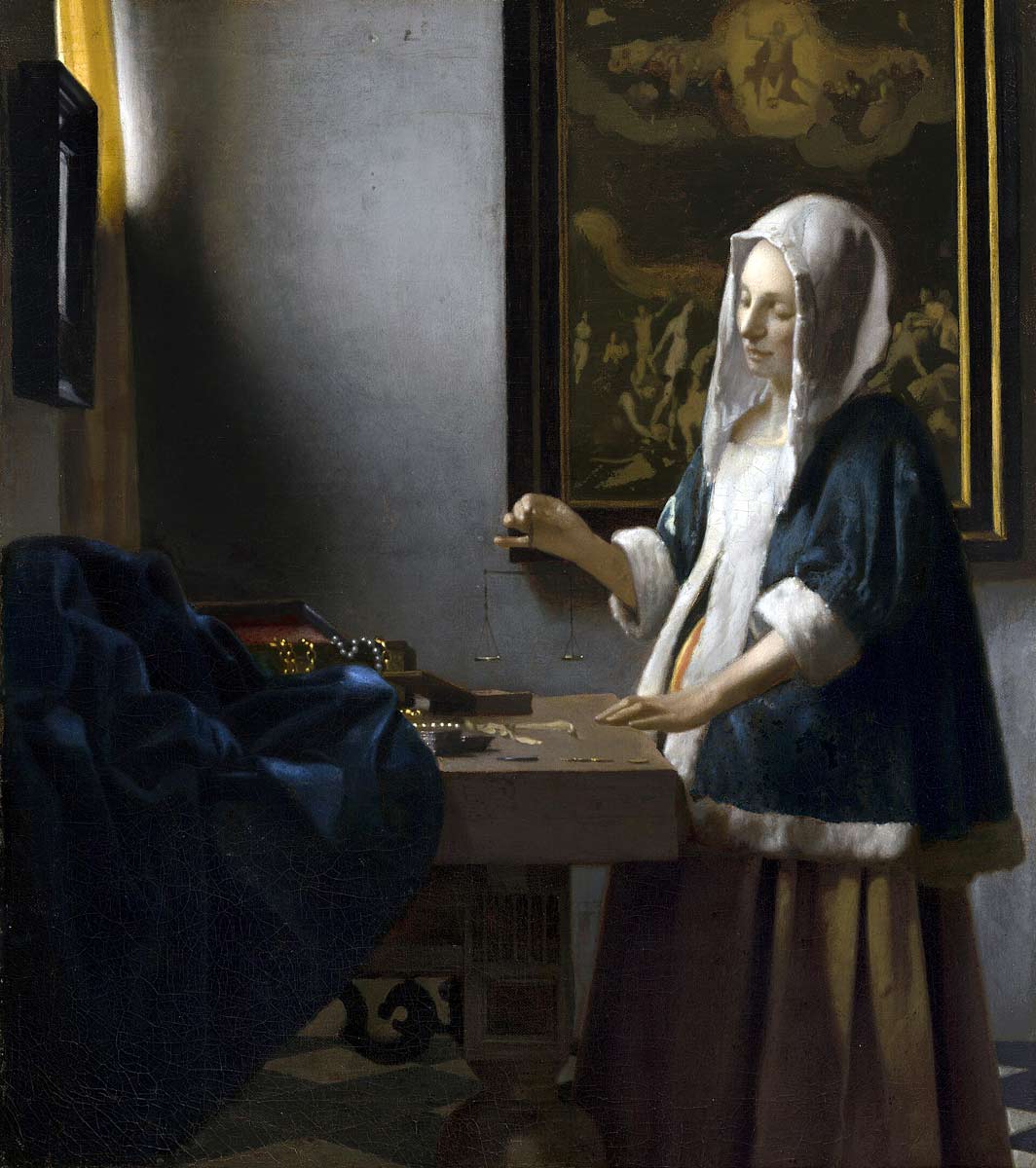
The National Gallery has Woman Holding a Balance (c. 1664), a woman at a table holding a small set of scales. Yet, the scales are empty, the one detail that has kept scholars arguing for over a century. People long assumed she was weighing gold or pearls, but the pans hold nothing. On the wall behind her hangs a painting of the Last Judgment, of souls being weighed at the end of time. Whether Vermeer meant that echo, a woman weighing nothing beneath a picture of everything being weighed, or whether it is simply how the room happened to be furnished, is anybody’s guess.
The painting spent most of the 19th century in private hands in Paris, surfacing every now and then at auction under whatever name was convenient, before someone correctly identified it as a Vermeer. It came to the US. The famous Widener Collection was given to the gallery in 1942. Something worth knowing on your way through: a fourth painting hung for decades as a Vermeer, but that was quietly downgraded in 2022 and attributed to someone in his studio, which is a pretty neat reminder of how slippery the attributions continue to be.
Ironically enough, not one original Vermeer is left in the city where every single one of them was painted. Delft itself, though, has changed less than you would think, and the spot he painted View of Delft from is still right there. Delft is about an hour from Amsterdam by train and folds neatly into a trip to the Mauritshuis in The Hague, only 15 minutes further down the same line. Run it as Amsterdam to Delft to The Hague, and you will cover more Vermeers per mile than anywhere else on the planet.
7. Vermeer Centrum Delft, Delft, Netherlands
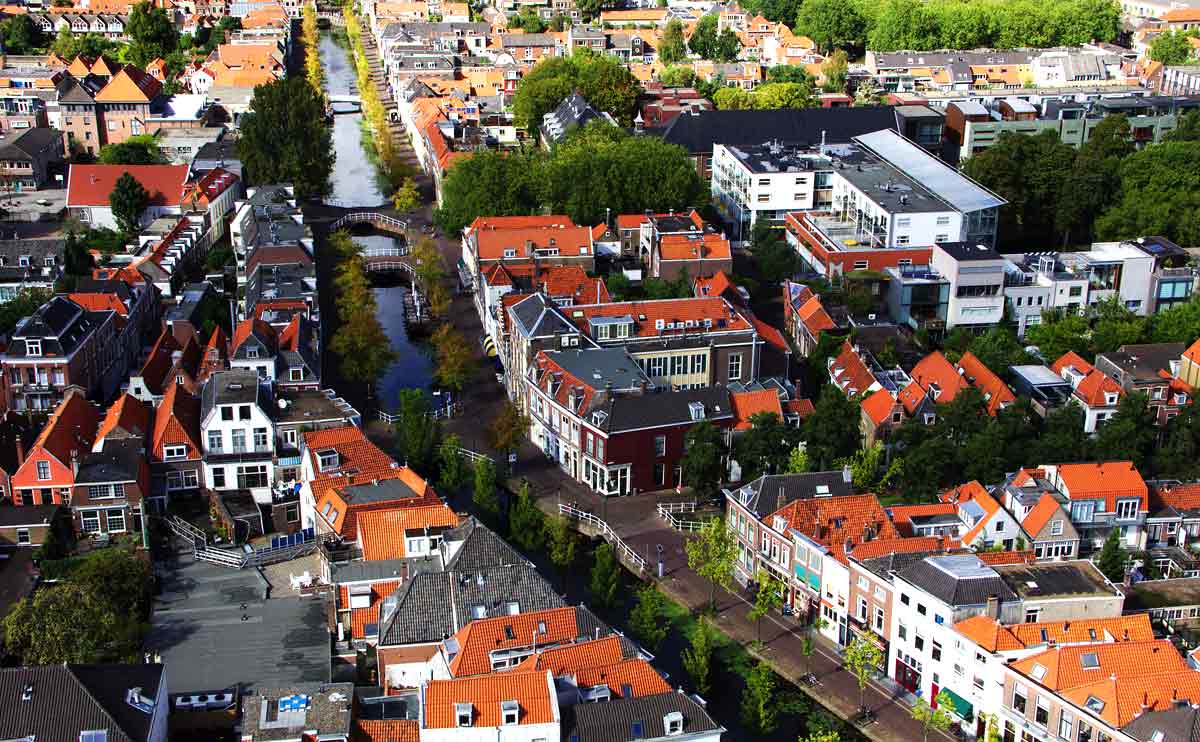
It might seem ironic that this aptly named center holds no single original painting, yet it might turn out to be the very best museum for Vermeer fans. The Centrum gives you the one thing the big museums cannot: a real sense of how the paintings were actually made. There are full-size reproductions, plain-language explanations of the camera obscura research, and a close look at Vermeer’s technique. It also points you toward the Hooikade, the quay from where he painted View of Delft, where the Nieuwe Kerk tower still stands, and the waterline sits about where it always did.
Insider Tip: Pair the Centrum with a short walk to the Oude Kerk, where Vermeer is buried. He ended up in his mother-in-law’s family crypt because there was no money for a grave of his own, and the stone that marks the spot today wasn’t laid until 1975.