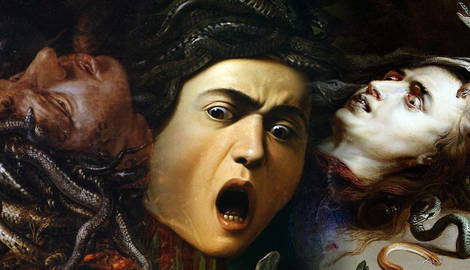
Medusa, the woman with snakes for hair whose look can turn a man to stone, is one of the most famous figures from Greek mythology. But the Medusa that most people know today does not belong to Greek mythology at all. The Greeks described Medusa as a primordial goddess whose hideous visage provided apotropaic protection. It was the Roman poet Ovid, centuries later, who first described the tragic story of Medusa as the victim of Poseidon and then Athena, before being killed by Perseus.
The Primordial Origins of the Archaic Gorgon
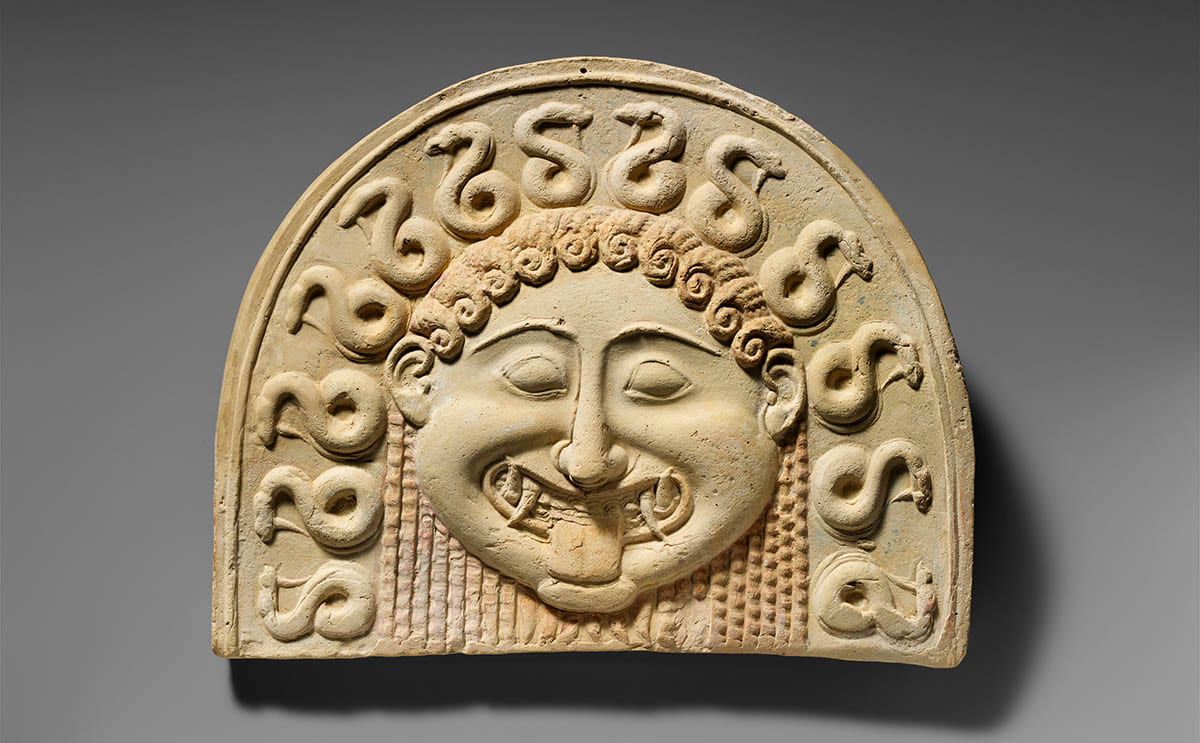
According to Hesiod’s Theogony, one of the oldest records of Greek mythology, Medusa was one of three Gorgons, sisters born to Phorcys and Ceto, primordial gods representing the deepest and most dangerous parts of the ocean. While her sisters Stheno and Euryale were immortal, Medusa was mortal. All three sisters could turn a person to stone with a look.
According to Hesiod, the sisters lived at the far western edge of the world, beyond the ocean stream, near the night and the Hesperides. Herodotus and Pausanias say they lived in Libya, so they also imagine their home as remote.
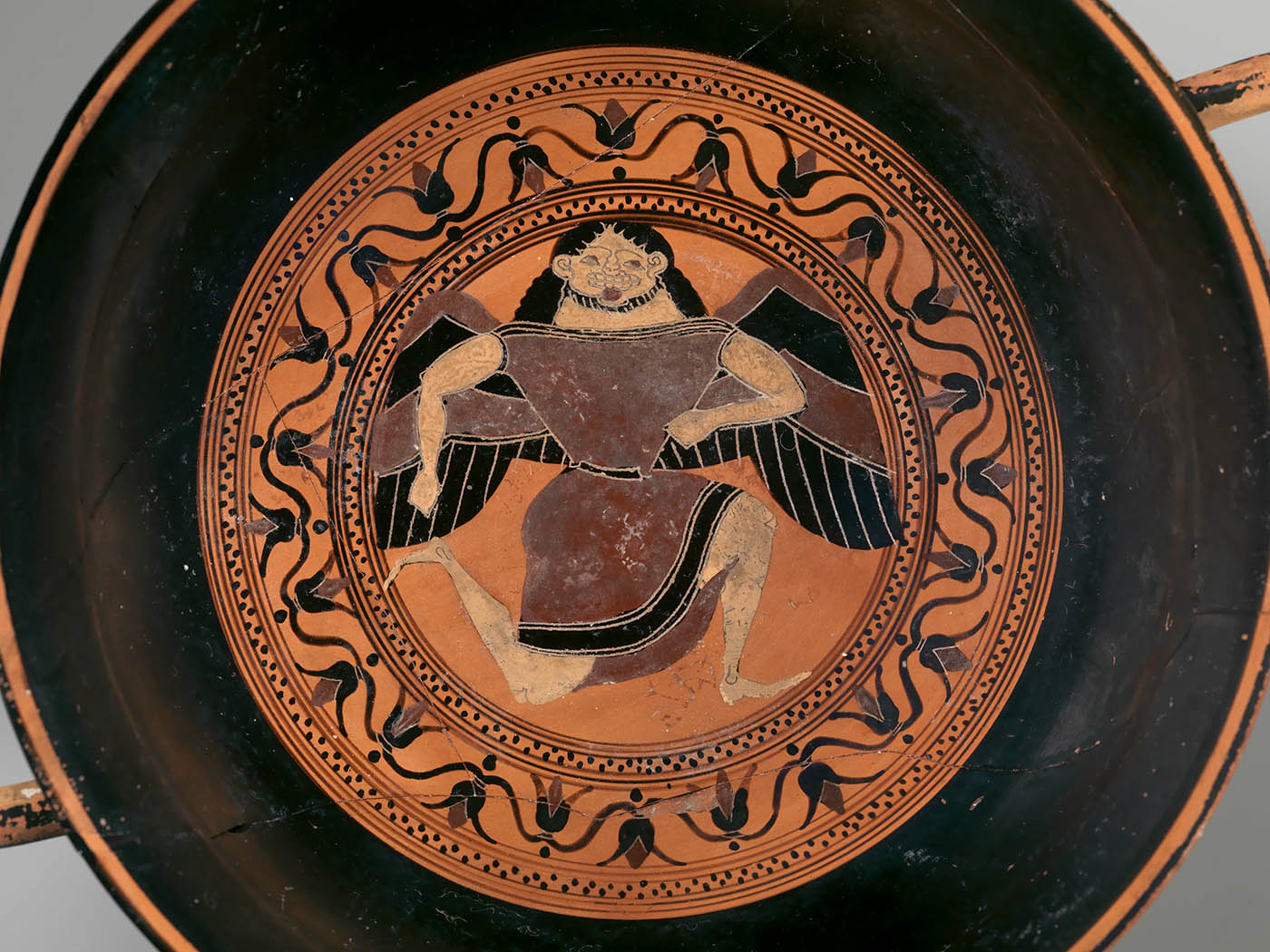
The sisters were not beautiful women, but rather hideous beasts, often depicted with boar tusks, lolling tongues, and even beards, making it difficult to determine whether they were male or female. They had their distinctive snake hair, but also golden wings at their temples. Their chaotic appearance reflected their character as manifestations of untamed natural forces.
Medusa as an Apotropaic Symbol of Protection
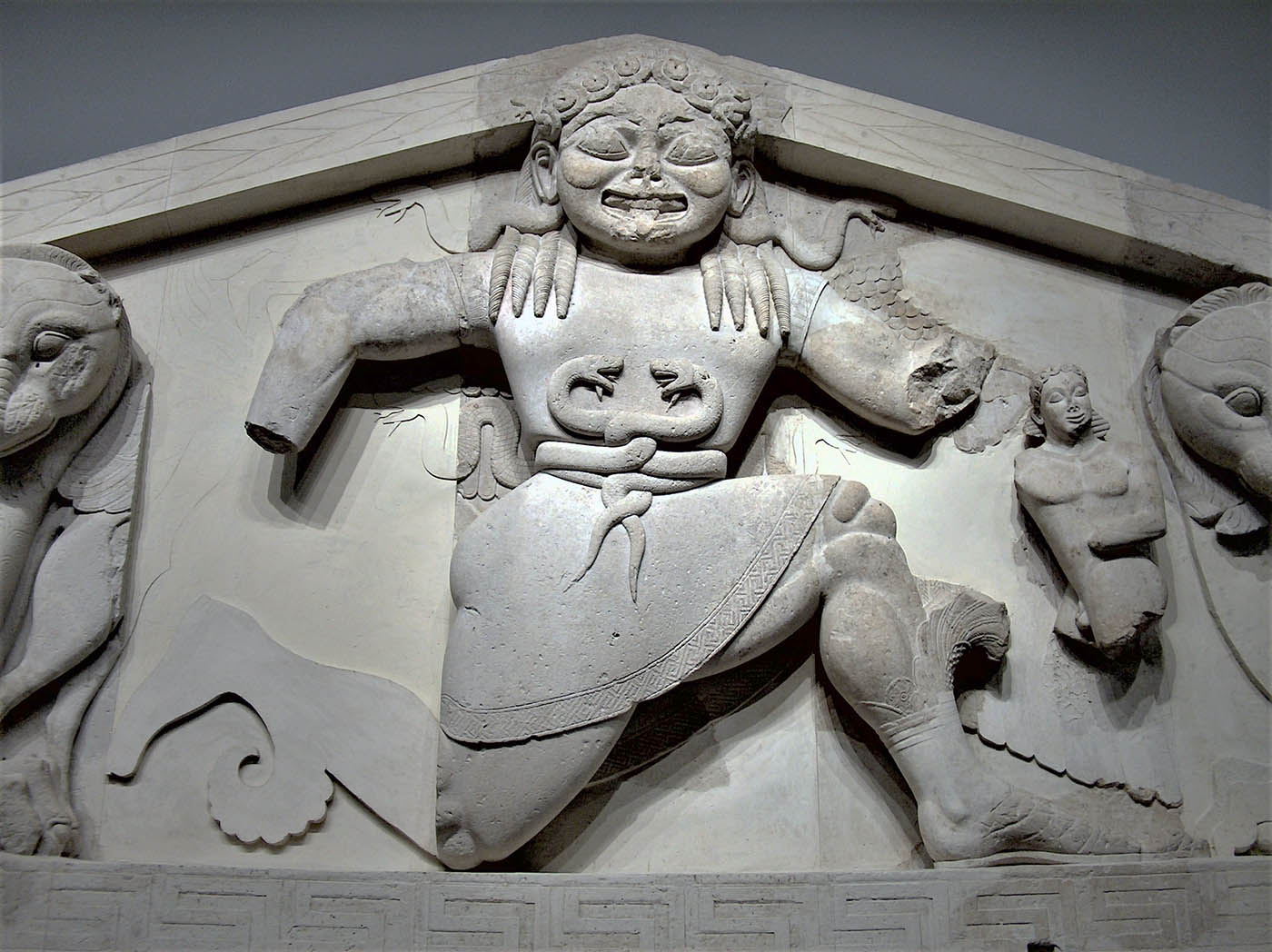
In Greek material culture, Gorgons were symbols of apotropaic protection. Basically, this meant that their hideous visage was meant to scare off even more terrifying beings. This is why the Gorgoneion, the severed Gorgon head motif, was placed on shields, armor, coins, and temple pediments to protect them from evil. It was a very common theme in ancient Greek art.
This is why the goddess Athena wore the severed head of Medusa on her Aegis, which could have been a shield or a breastplate; it is unclear. It was for protection, not to turn her enemies to stone. However, the idea that Medusa’s look could turn a man to stone dates back to at least the 5th century BC. While Hesiod did not mention it, the idea appears in Pherecydes of Athens, Pindar, and Aeschylus.
Perseus and the Death of Medusa in Greek Mythology
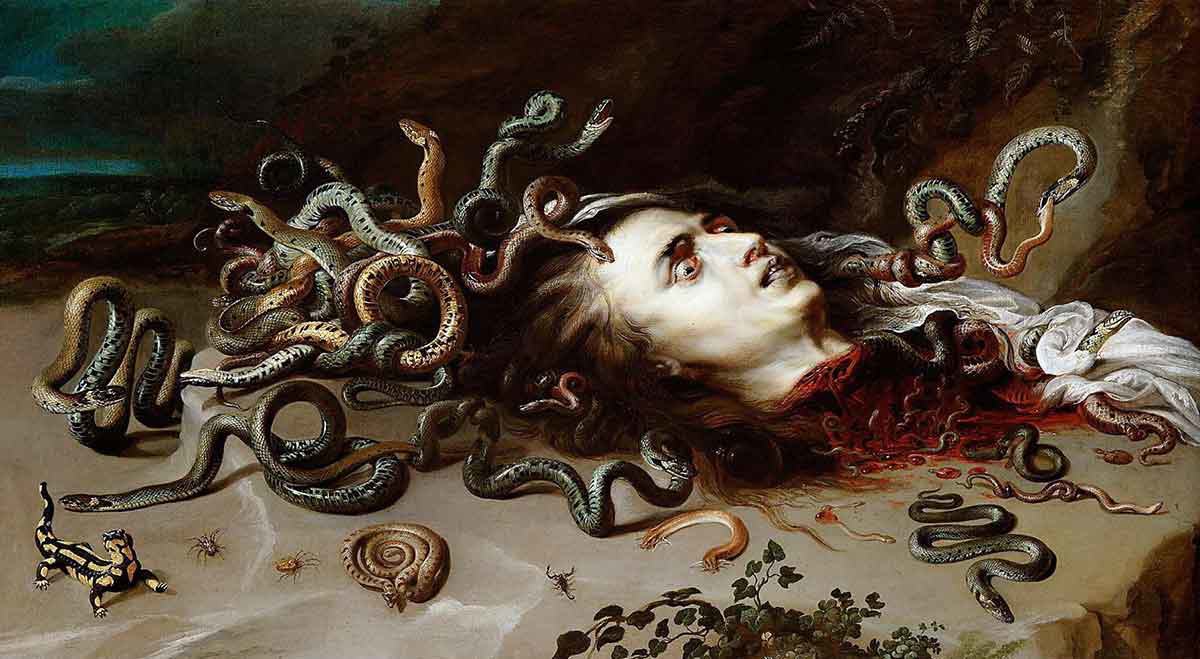
Greek mythology also records the story of Medusa’s death. Hesiod says that Poseidon lay with Medusa “in a soft meadow among spring flowers,” which suggests a consensual relationship.
According to Pindar and Apollodorus, a mortal princess of Argos named Danae was locked up by her father because he had received a prophecy that his grandchild would kill him. But Zeus visited Danae and impregnated her (as was his custom), and she gave birth to Perseus. In retaliation, Danae’s father locked her and Perseus in a wooden chest and threw them into the sea. The pair were saved by Dictys, who then raised Perseus as his own.
While Dictys lived a humble life, his brother Polydectes was king of Seriphos. He fell in love with Danae, but Perseus was suspicious of him and tried to protect his mother from his advances. To get him out of the way, Polydectes set Perseus what he thought was an impossible task: retrieve the head of the Gorgon Medusa.
In Hesiod’s version, Perseus killed Medusa on his own without mention of any divine assistance. But by the 5th century BC, he had the help of Athena, who guided him to Medusa and also gave him use of her bronze shield so that he could look at Medusa’s reflection and not risk being turned to stone. He also had the use of Hermes’ winged sandals, and the god helped him find the Graeae, who revealed Medusa’s location, and then the Nymphs, who gave him the helm of Hades that enabled invisibility.
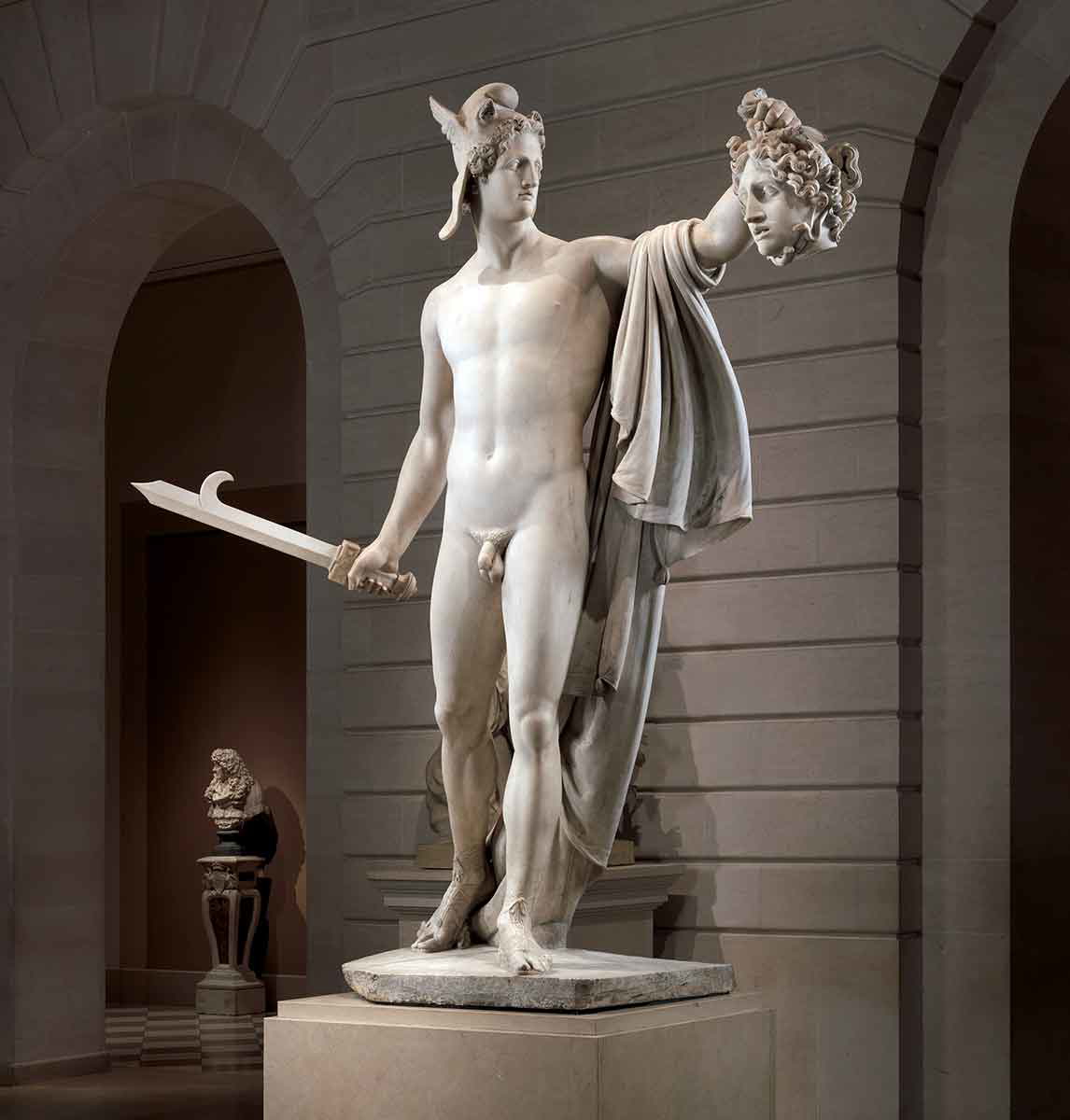
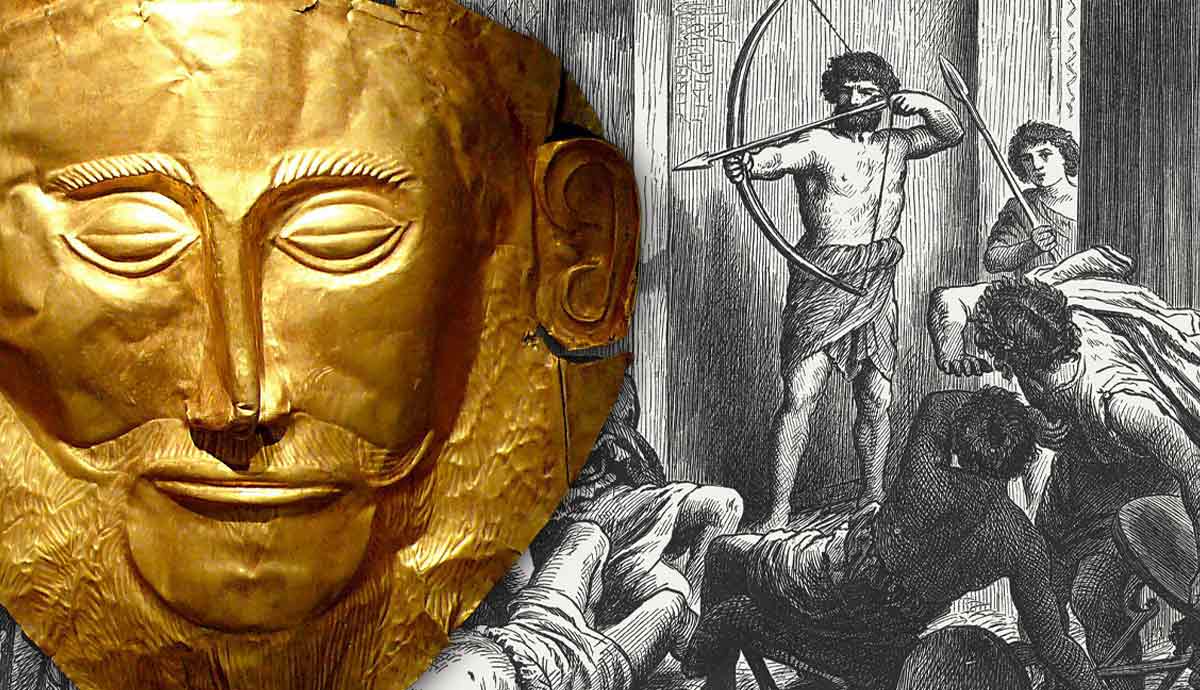
After all this preparation, long story short, he cut off the Gorgon’s head. The winged shoes and invisibility of the helm helped Perseus escape with his prize, as Medusa’s sister chased him. Perseus then used the head to save Andromeda and then turn Polydectes to stone, making Dictys king in his place. He then gave it to Athena to use on her Aegis.
Medusa was pregnant by Poseidon at the time, and when she was decapitated, the winged horse Pegasus and the powerful warrior Chrysaor both sprang from her hemorrhaging neck. Pegasus flies off to Mount Olympus to carry Zeus’ thunderbolts, while Chrysaor later fathers Geryon.
How Ovid Rewrote Medusa as a Tragic Victim
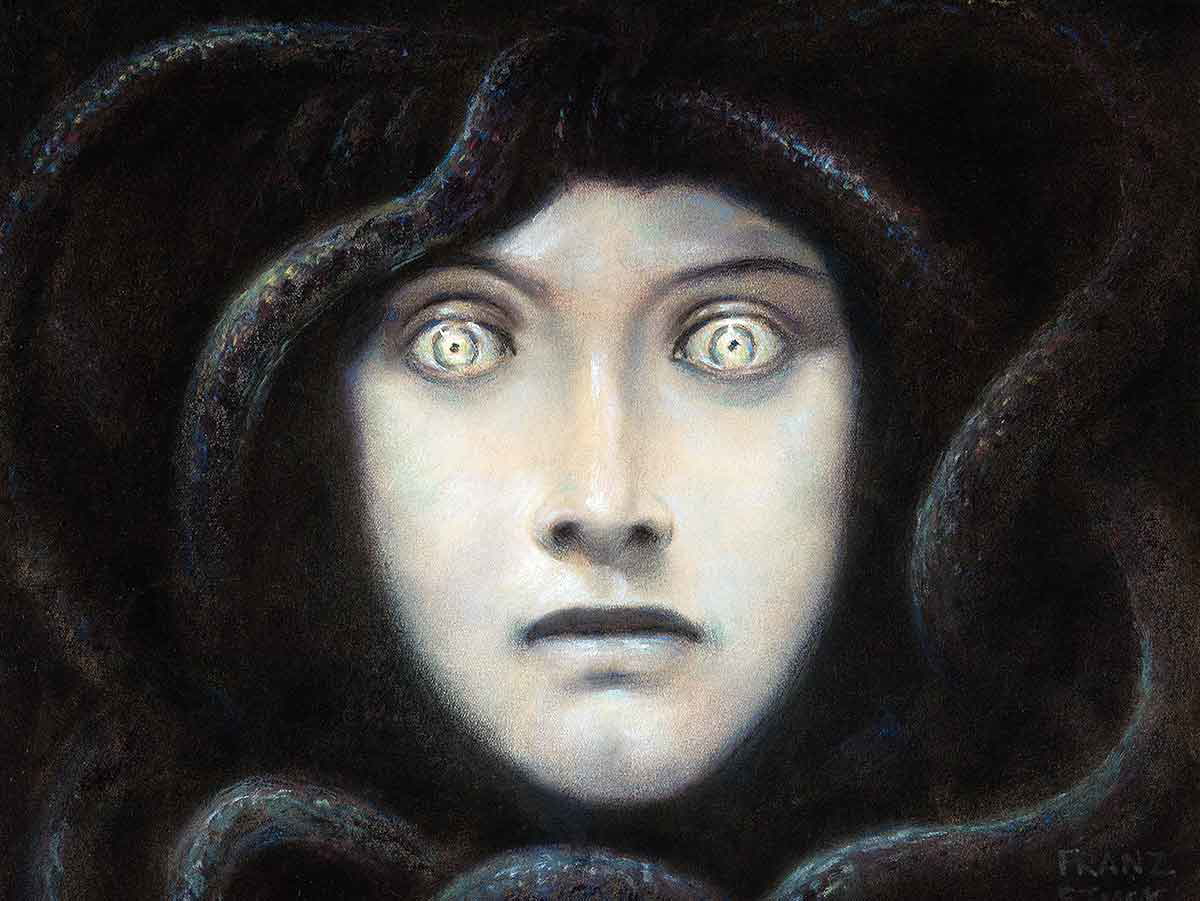
While the version of the story from Greek mythology will sound familiar, there are a few key elements missing. These elements were added by the Roman poet Ovid in the early 1st century AD when he told the story of Medusa in his Metamorphoses. As the name suggests, he told mythological stories that involved an element of transformation; so why did he include Medusa?
Ovid changed Medusa’s origin story. Rather than being born a primordial being, he cast her as a beautiful young woman. She caught the attention of the god Poseidon, who forced himself on her. While this may not have been seen as a particularly bad thing for a god to do at the time (they all did it), he did it inside a temple of Athena, which was sacrilege. This angered Athena, and she took her wrath out on Medusa, transforming her into the hideous monster with snakes for hair whose look could turn a man to stone.
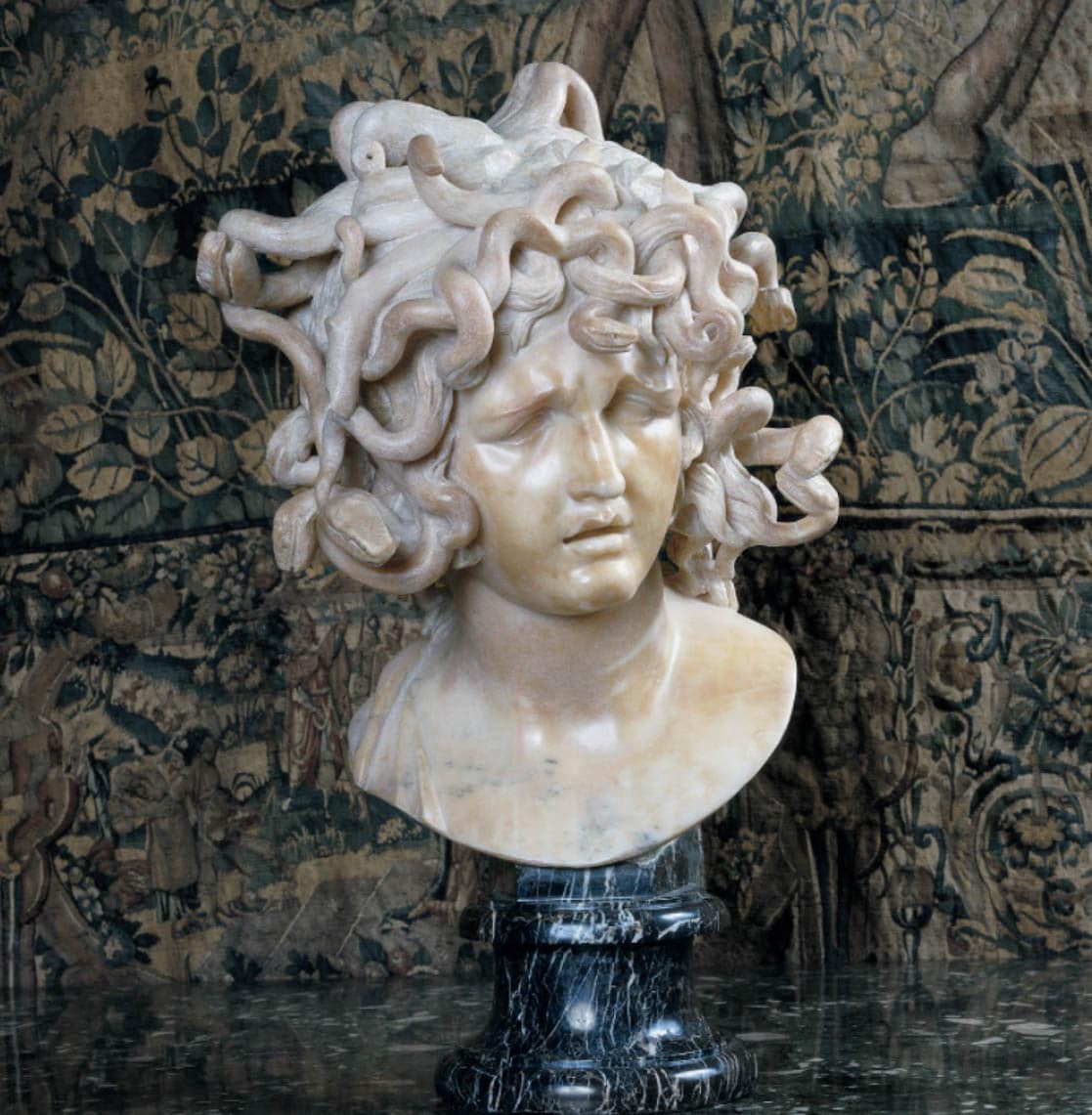
Ovid also added a detail that after Perseus rescued Andromeda from the sea monster, he set Medusa’s head face-down on a bed of fresh sea twigs and seaweed. The petrifying power emanating from her head hardened the soft seaweed into stone, creating the world’s first coral reefs. Sea nymphs then scattered the seeds of this new “petrified plant” across the oceans. This played into his broader themes in the Metamorphoses.
While Ovid passes no explicit moral judgment in his account, it is there for his readers to infer. He shows how men, and in this case women, are subject to the whims of the powerful gods, with a tragic outcome for Medusa. Writing in the Augustan era, it was probably also meant to reflect on how the whims of powerful men affect all. Ovid himself was exiled by the emperor Augustus for “a poem and a mistake.”
The Evolutionary Legacy of Medusa From Antiquity to Today
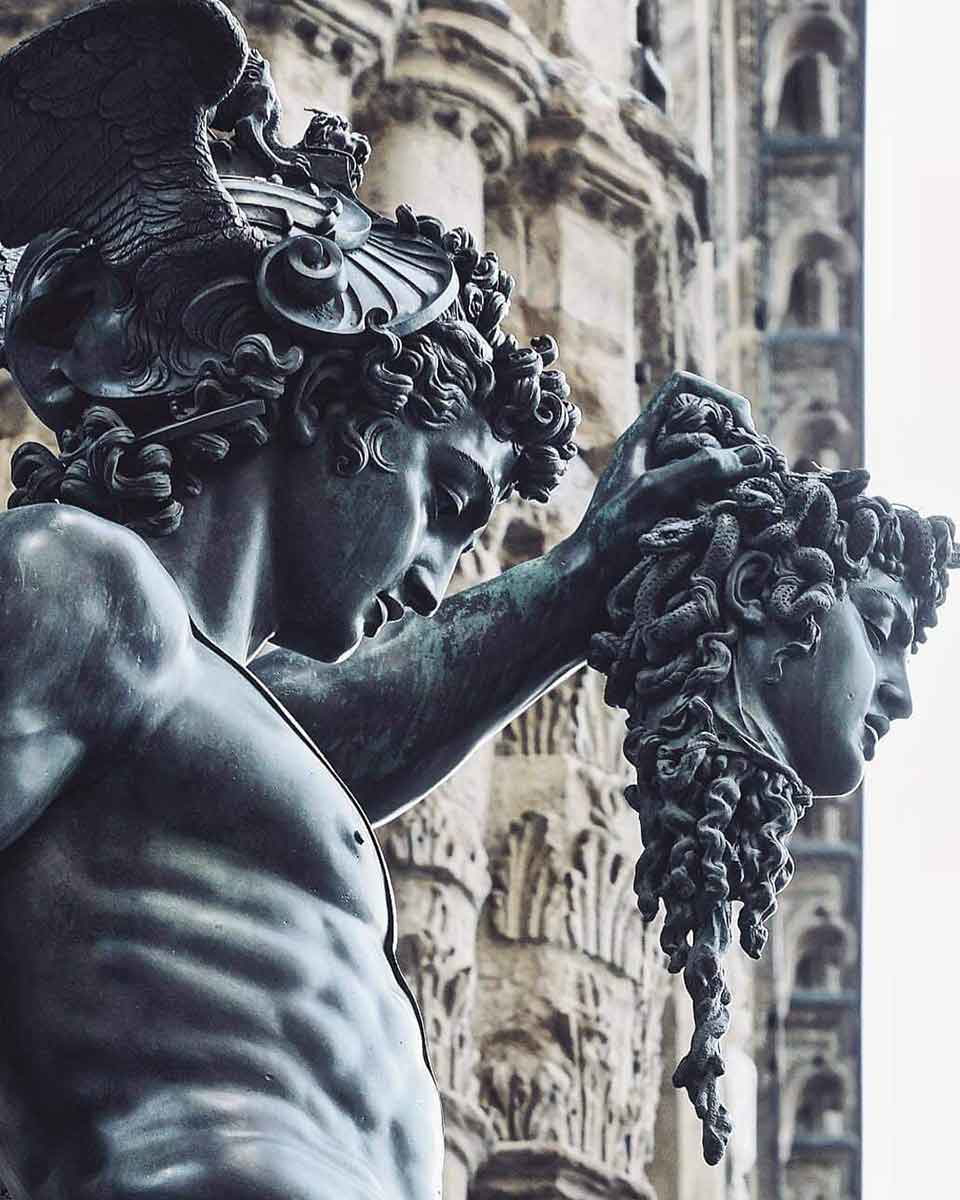
Because of the nature of the survival of the sources, while Greek versions of Medusa’s stories were uncommon, Ovid’s version continued to be read in monasteries, and then grew in popularity during the Renaissance. Shakespeare referenced Ovid in almost every play he wrote. Consequently, it was the version of Medusa as the tragic victim that made its way into the popular imagination.
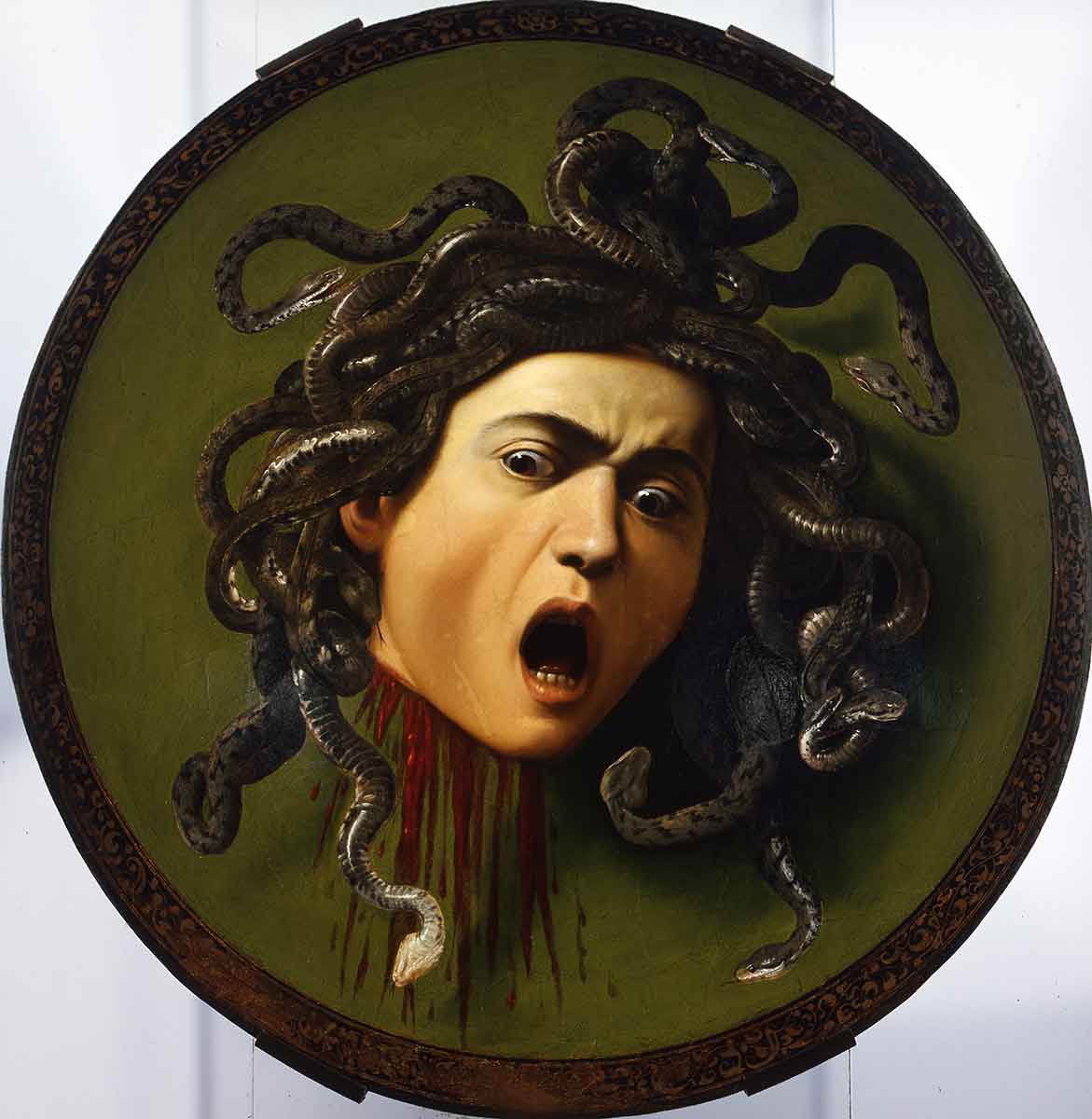
The idea of her as a beautiful woman tragically transformed into a monster inspired many artists, including Caravaggio (1597), Cellini (1545–1554), Bernini (c. 1630s), and many others. She has also inspired modern artists, some of whom have reclaimed her as the slayer and a part of the # MeToo movement, such as in Luciano Garbati’s statue (2008).