
Of the three cantiche of the Divine Comedy, the Purgatorio (Purgatory) is perhaps the least read. Occupying a middle place between the chaos of the Inferno, where (in)famous sinners receive their eternal punishments, and the ethereal Paradiso (Heaven), Mount Purgatory is the realm of the afterlife where souls are offered the chance to purge their sins. Dante, guided by Virgil, reaches the second leg of his supernatural journey on Easter Sunday, feeling relieved to breathe in the fresh air after his descent through the circles of Hell. In the following 33 canti, the poet will meet the souls awaiting entry into Heaven.
Purgatory Is the Realm of Moral Change
In The Birth of Purgatory (1981), French historian Jacques Le Goff notes that, in Dante’s time, the concept of Purgatory had a more recent origin than the other two realms of the Christian afterlife, Heaven (Paradiso) and Hell (Inferno). Indeed, Le Goff dates the coining of the term purgatorium (Latin for Purgatory: from purgare, or “to purge”) to around 1170. More importantly, while Christian believers had long prayed for the souls of the dead (a practice that implied their souls were in a temporary condition), the concept of Purgatory and its doctrine were only loosely defined when Dante wrote his Divina Commedia (Divine Comedy).
The lack of consensus around the second realm of the dead gave the Florentine poet plenty of creative freedom. Indeed, as Columbia University Professor Teodolinda Barolini points out, “the very idea of Purgatory as a mountain is Dante’s own invention”, along with the rules of what the poet calls “la religione de la montagna” (the religion of the mountain): the regulations that those dwelling there must follow.
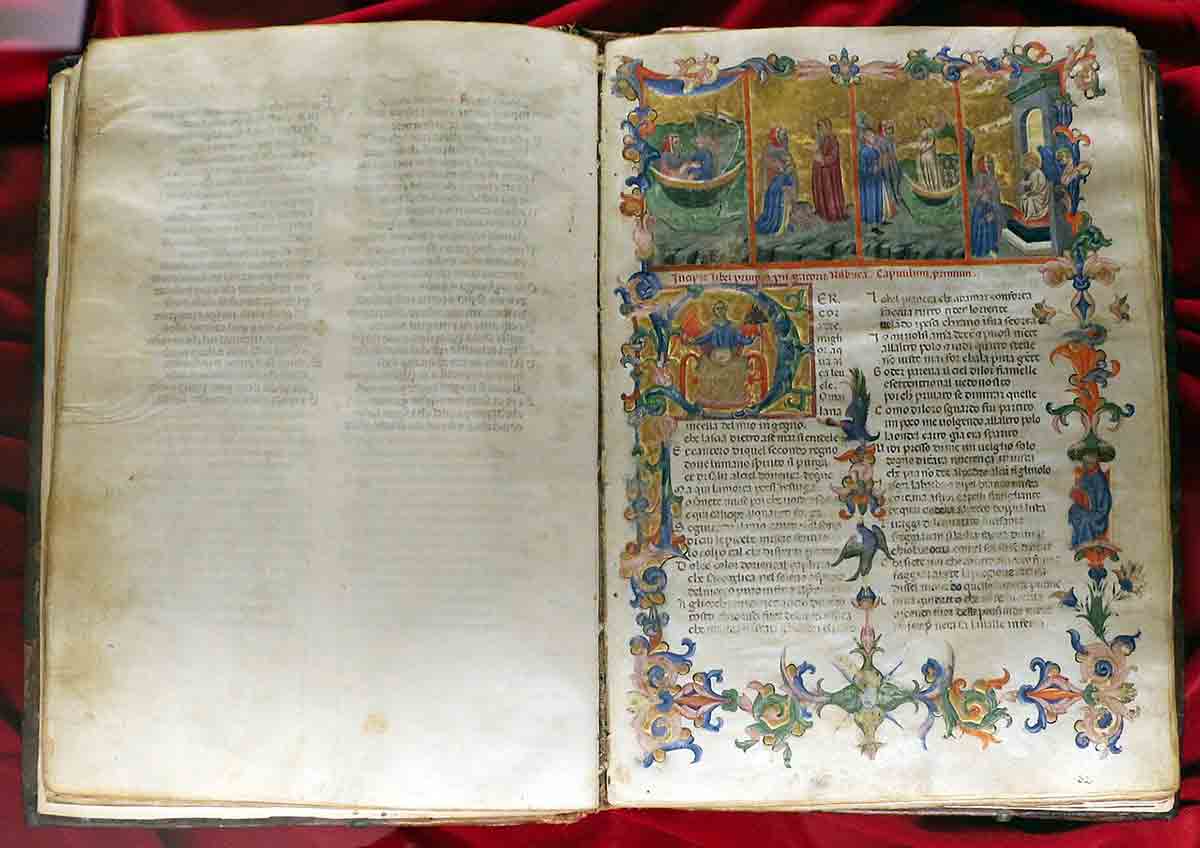
“The gentle hue of oriental sapphire” that greets Dante lifts his spirit and immediately tells the readers that the poet has left the violence and desperation of the Inferno behind. Indeed, in the first verses of the Purgatorio, described as “the lovely planet that is patroness of love,” Dante announces that he will sing of the “second kingdom, in which the human soul is cleansed of sin, becoming worthy of ascent to Heaven.”
While the “eternal dole” of the “lost people” of Hell was a way to repay a debt, caused by sin, the souls sent to Purgatory have to undergo a period of suffering to achieve moral change and freedom (from sin). In the Divine Comedy, Purgatory is the only realm where the dead are granted the “opportunity to continue becoming.” Through reflection, prayers, and hymns, the souls inhabiting the mountain of Purgatorio learn to leave their earthly things behind as they climb to the peak, the Garden of Eden, where they regain their lost innocence.
Purgatory Was Created by Lucifer’s Fall From Heaven
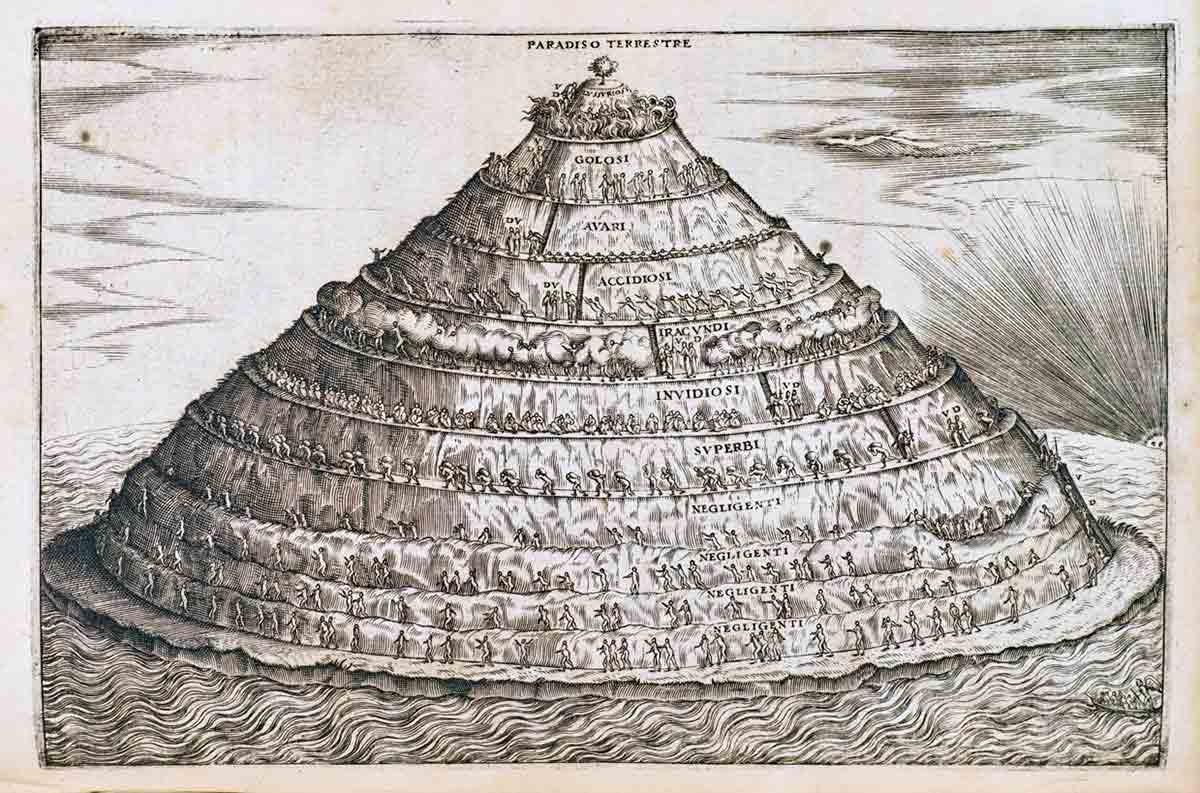
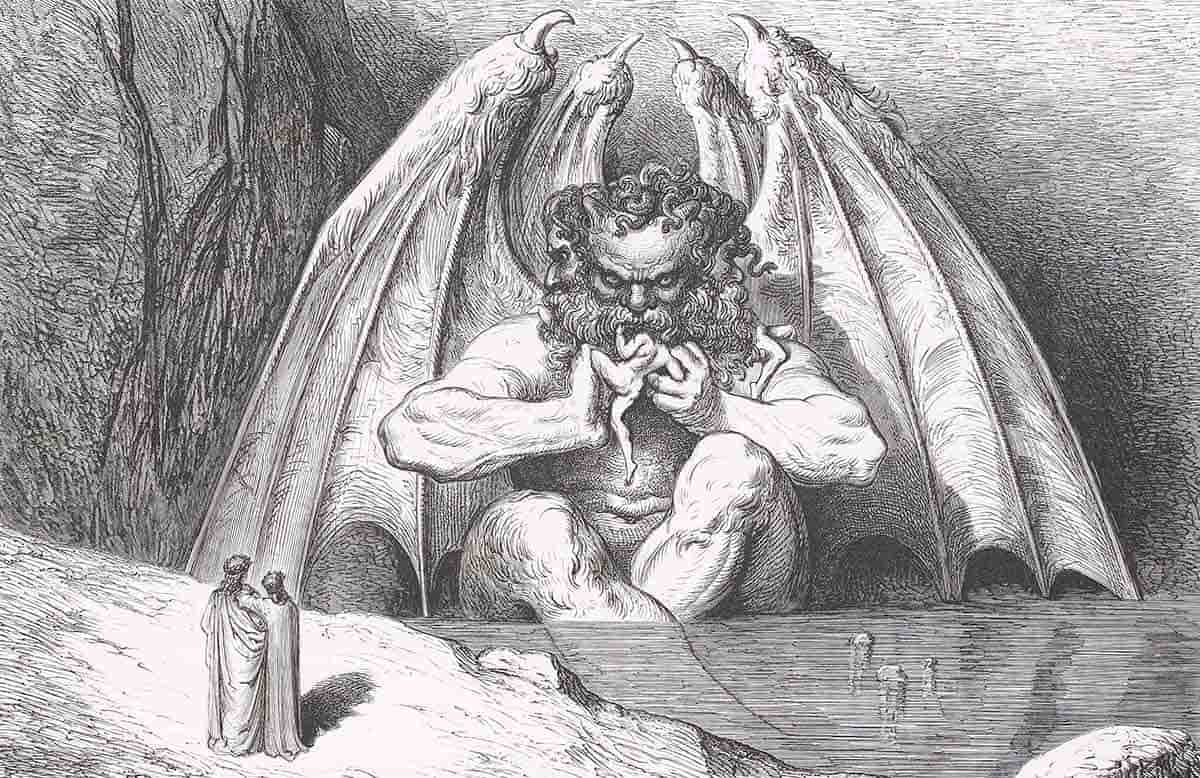
Dante narrates his transition from Hell to Purgatory in the last canto of the Inferno, where, after facing Satan, he passes through the center of the earth, leaving the northern hemisphere, where it is dark, and emerging into the light of the southern hemisphere. There, surrounded by water, is the mountain of Purgatory, formed as a consequence of Lucifer’s fall from Heaven.
According to Dante, when the fallen angel was cast from Heaven, the earth retreated from him. This empty conic space became the place of eternal damnation, with Lucifer at its deepest end. At the same time, the portion of soil displaced by the fall formed a mountain on the other side of the globe, becoming Mount Purgatory. Placed at the polar opposite of Jerusalem, Purgatory is the only land mass in the otherwise uninhabited southern hemisphere.
Dante and the Roman poet Virgil, his guide for much of his supernatural journey, reach the mountain after climbing up a narrow path carved into the rock by a stream. “And so we emerged, to see — once more — the stars,” comments a relieved Dante in one of the best-known verses of the Commedia.
After Adam and Eve were cast out of the Garden of Eden, Dante is the first living human to set foot on Mount Purgatory. Before him, only Ulysses, whom the poet met in the 26th canto of the Inferno, managed to catch a glimpse of Purgatory, “so high as I had never any one beheld,” as he sailed with his crew in the southern waters. Serving also as a personification of Adam, Ulysses’ folle volo (mad leap) is destined to end in tragedy as it aims to trespass the limits of human knowledge.
Dante’s own voyage, however, is part of the divine plan. “Our passage has been willed above,” reminds Virgil to Charon (the boatman ferrying the souls to Hell, who initially refuses to let Dante pass), “where One can do what He has willed; and ask no more.”
The Topography of Purgatorio: From the Ante-Purgatory to the Garden of Eden
As the chosen man to visit the three realms of the afterlife, Dante is granted full access to Purgatory. According to the poet, the mountain is divided into three regions. The base, known as Ante-Purgatory, is reserved for the souls of those who must wait before entering the higher sections of the realm. In this section, Dante meets the excommunicated, the late repentant, those who met a violent end, and the rulers who neglected their duties.
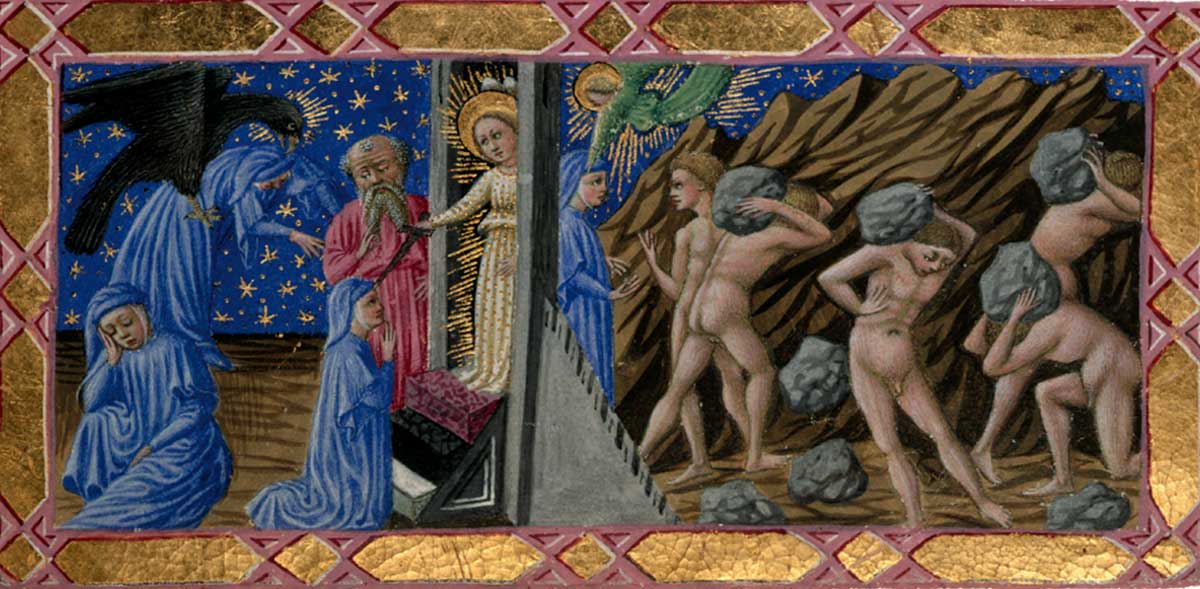
Then, past a gate where an angel draws seven Ps on Dante’s forehead, is Purgatory proper, which consists of seven terraces carved into the rock. Each terrace is devoted to the purging of one of the seven capital vices: Pride, Envy, Wrath, Sloth, Avarice, Gluttony, and Lust. As in the Inferno, the souls inhabiting the Purgatorio are punished according to the rule of contrappasso, the divine law dictating that each punishment mirrors or contrasts the sin. The prideful, for example, are bent under massive stones, while the lustful must walk through a wall of fire.
As Dante, guided by Virgil, recalls his climb to the peak of Mount Purgatory, he describes his visit to each terrace using the same template. First, the poet presents an example of the virtue directly contrasting the vice being punished; then he describes his meeting with the souls; and finally, he gives the readers examples of the capital vices.
At the end of each tour of one of the seven terraces, an angel wipes a P from Dante’s brow, symbolizing the cleansing of one of the vices. He then, like all souls of the seventh terrace, passes through a blazing wall of fire. At the summit of Purgatory, the poet places the Garden of Eden, where humankind committed the original sin.
Key Encounters on Mount Purgatory
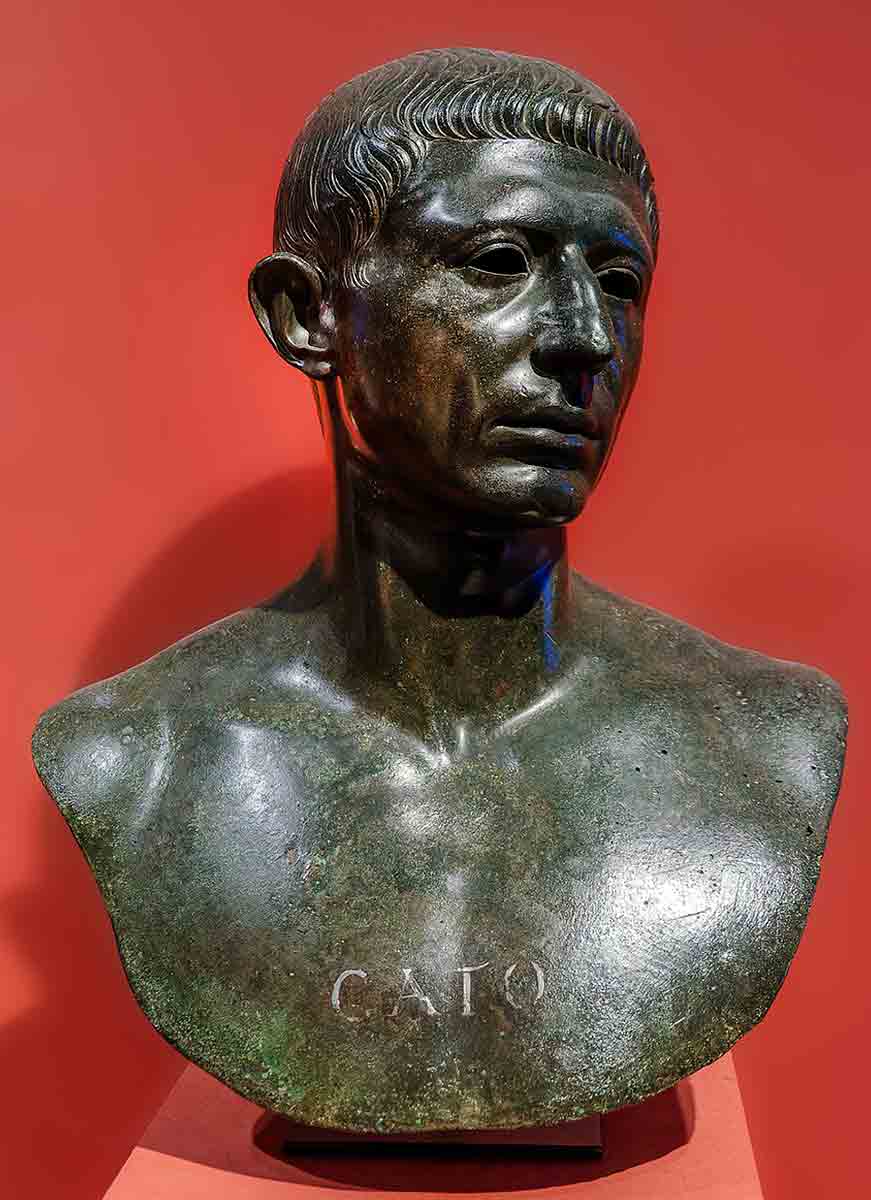
While the souls of Hell are fixed in the sinful habits that led them to eternal suffering, the inhabitants of Purgatory are in motion, constantly reflecting on their failings and working toward moral change. This allows Dante to sketch psychologically rich characters.
The first figure Dante and Virgil encounter is Cato of Utica (also known as Cato the Younger), a Roman senator who took his own life rather than submit to Julius Caesar. His very presence in the Purgatory, where he serves as a guardian, is in itself scandalous, showing “Dante’s willingness to embrace complexity and nuance.” Virgil previously told Dante that virtuous pagans cannot be saved, so why is Cato, a pagan who committed suicide, granted access to Purgatory? His refusal to live while losing his freedom is a fitting symbol of the quest of the souls of the realm: before entering Heaven, they must free themselves from their vices.
The decision to include the souls of those who were excommunicated by the Church is also somewhat controversial, as it is in contrast to the official doctrine. To be excommunicated meant to be excluded from the Christian community, yet in the third canto, Dante meets the saved soul of Manfredi, the son of Emperor Frederick II. Described as “fair—haired and handsome” and of “noble aspect,” Manfredi embodies the medieval chivalric virtues, and his encounter with Dante is steeped in a sense of empathy for human vulnerability. More importantly, it shows that those who truly repented, even if excommunicated, can be saved.
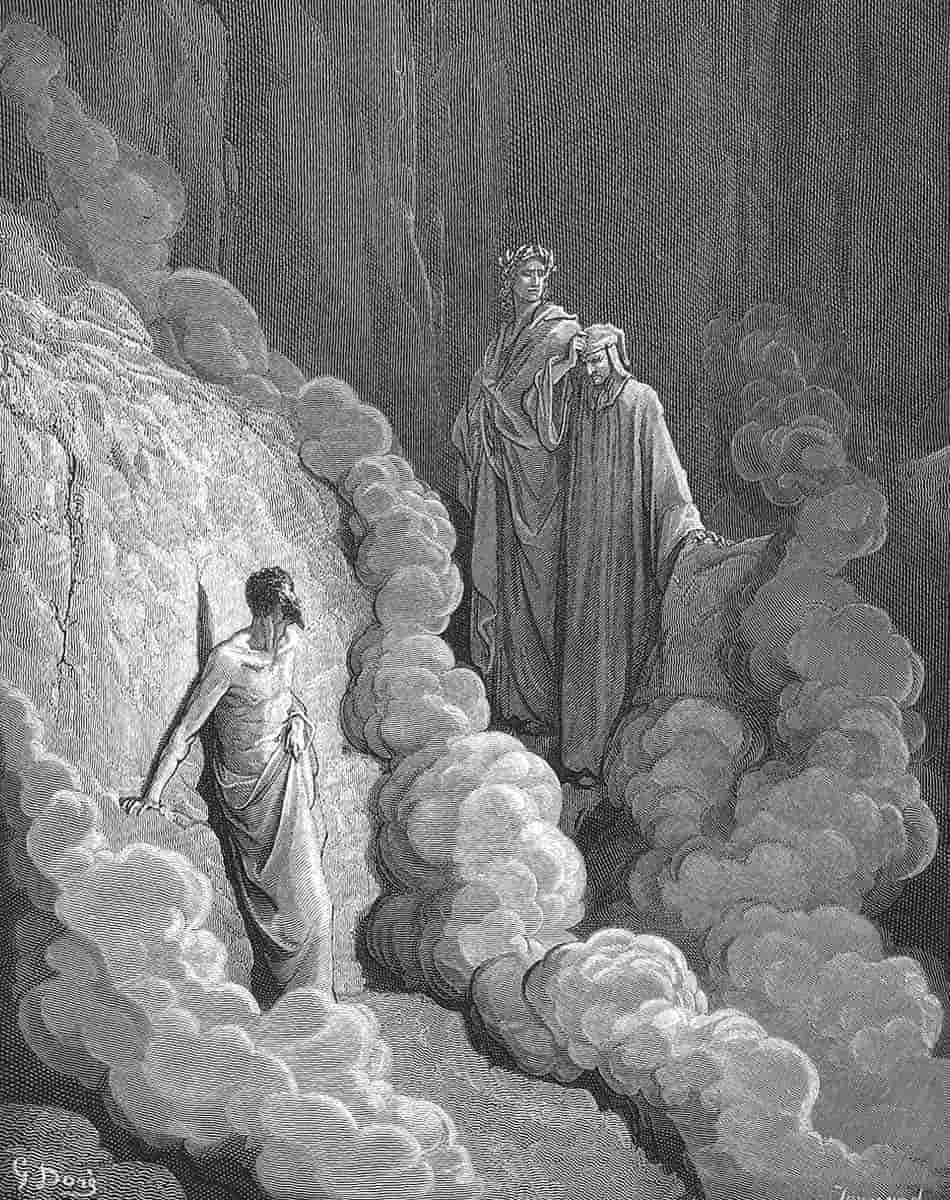
Theology and doctrine are also at the center of the poet’s encounter with Marco Lombardo on the terrace of wrath. To explain whether the cause of wickedness is in the “stars” or “down here,” the 13th-century courtier rejects astronomical determinism, delivering a lecture on free will that is at the center of the Divine Comedy’s ideological discourse. If the cause of human action resided in the stars, there would be no real free will. Thus, casting some souls to Hell and saving others would be meaningless. For both Dante and Marco, however, free will exists in a world ruled by an omnipotent God. The poet summarizes this coexistence in a paradox: “liberi soggiacete” (you, who are free, are subject).
We have already seen that to achieve moral freedom, the souls of Purgatory must free themselves from earthly things. The vanity of earthly achievements is the focus of Dante’s conversation with Oderisi da Gubbio. The renowned manuscript illustrator acknowledges that a rival has surpassed him, just as the painter Cimabue was eclipsed by Giotto, and Dante will surpass Guido Cavalcanti. “Your glory wears the color of the grass that comes and goes,” says Oderisi. And yet, one could argue, Dante’s fame remains indelible today.
Reaching the Summit and the Arrival of Beatrice
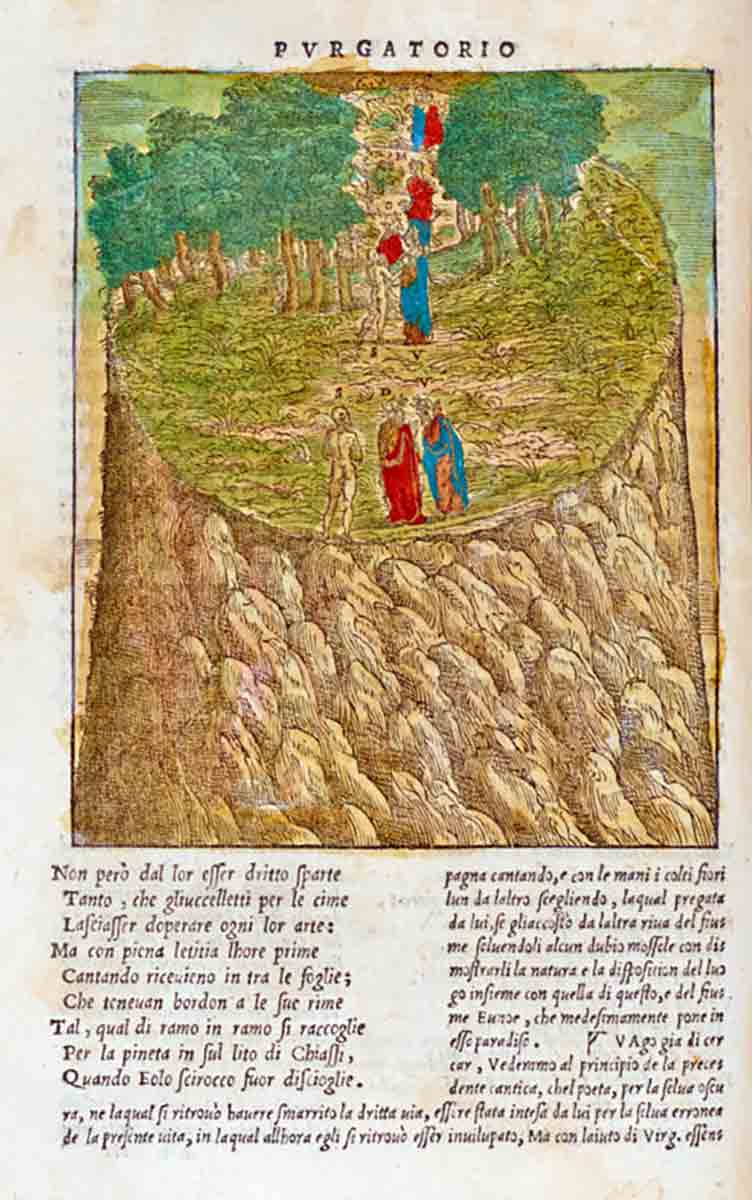
It takes four days and three nights for Dante and Virgil to climb Mount Purgatory. They reach the summit, where the Garden of Eden is located, on Easter Wednesday at dawn. Dante bases the description of the Earthly Paradise and its features on the Classical poets’ verses on the Golden Age, an idyllic pastoral world that the poet combines with the Biblical hortus conclusus, or enclosed garden.
The last six cantos of the Purgatorio, in which the poet recalls his visit to the Terrestrial Paradise, are among the most difficult in the Commedia, as Dante packs them with a densely allegorical narrative.
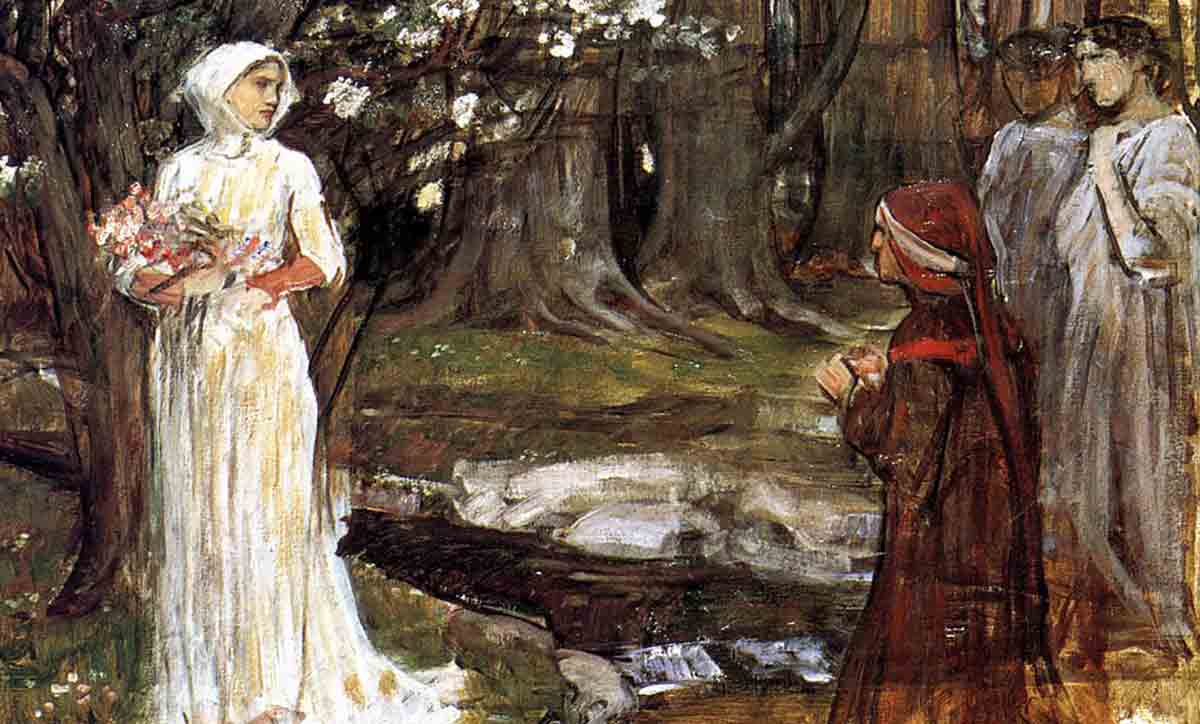
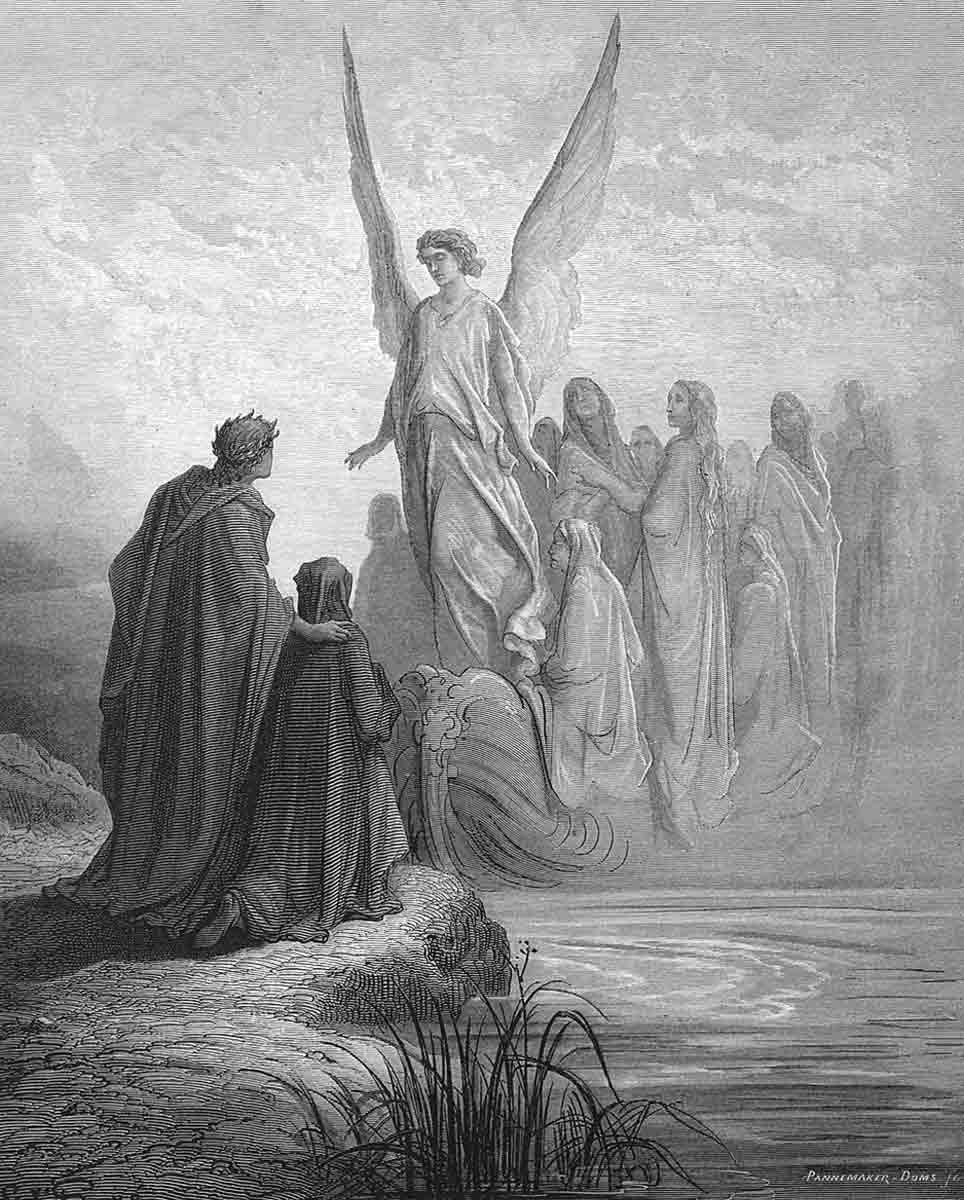
Welcomed by a pleasant breeze, the travelers first come across a stream of pure water. Beyond the stream, the poet glimpses a young woman, Matelda, who explains that Dante and Virgil are now in the Garden of Eden. After climbing the mountain, Dante is finally close to completing his purification process, having returned to humankind’s condition before the original sin.
Matelda guides Dante through the garden and tells him that the water of the stream flows directly, in two directions, from the divine will. One side, Lethe, erases the memory of sin, and the other, Eunoè, restores the memory of good deeds. Then, Dante witnesses a symbolic procession closed by a chariot drawn by a griffin. When the procession comes to a halt, the poet sees that the chariot is carrying Beatrice, his dead beloved and muse.
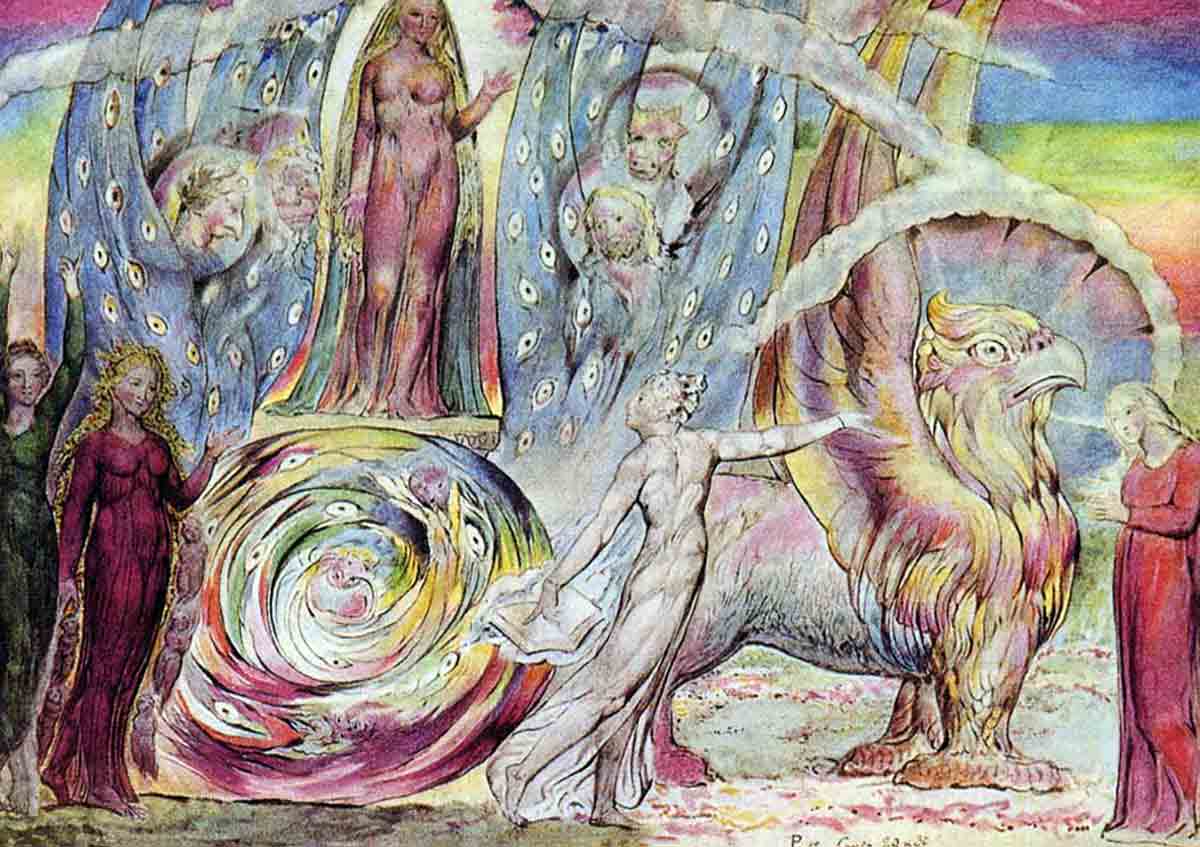
Astonished, Dante turns to Virgil, only to discover that he is gone: a pagan, the Roman poet cannot guide Dante into the third realm, Heaven. Dante weeps, grieving the loss of “Virgil, the gentlest father, Virgil, he to whom I gave my self for my salvation.” Calling the poet by his name (this is the only passage in the entire Comedy where the name “Dante” is recorded), Beatrice gently chides him and then confronts him, admonishing him for straying from the right path after her death.
Ashamed, Dante confesses his sins and repents. Beatrice then shows him an allegorical scene depicting the history and corruption of the Church, telling him to record what he sees “to profit that world which lives badly.” Dante is now ready to complete his cleansing by bathing first in the Lethe and then in the Eunoè. Thus, in the closing verse of the Purgatorio, Dante is “pure and prepared to climb unto the stars.”