Every year, sites like the Colosseum, Pompeii, the pyramids of Giza, or Machu Picchu receive millions of visitors, intrigued by the aura of mystery and past glory surrounding ancient ruins. Indeed, the monuments and artifacts left behind by ancient civilizations not only allow scholars to study the past, but also offer us a glimpse into the people who created and used them. Unfortunately, only a small number of physical remnants of the ancient past have survived. Here are ten ancient cultural and architectural landmarks that we have lost forever.
1. Temple of Artemis at Ephesus
- Date lost: c. 260s AD
- Overview: A grand temple dedicated to the goddess Artemis, a wonder of the ancient world.
In one of his poems, where he compiled one of the earliest known lists of the Seven Wonders of the Ancient World, Greek poet Antipater of Sidon commented: “when I saw the house of Artemis that mounted to the clouds, those other marvels lost their brilliancy, and I said, ‘Lo, apart from Olympus, the Sun never looked on aught so grand.’” Greek geographer Pausanias was equally impressed by the place of worship, describing it as “surpassing all buildings among men.”
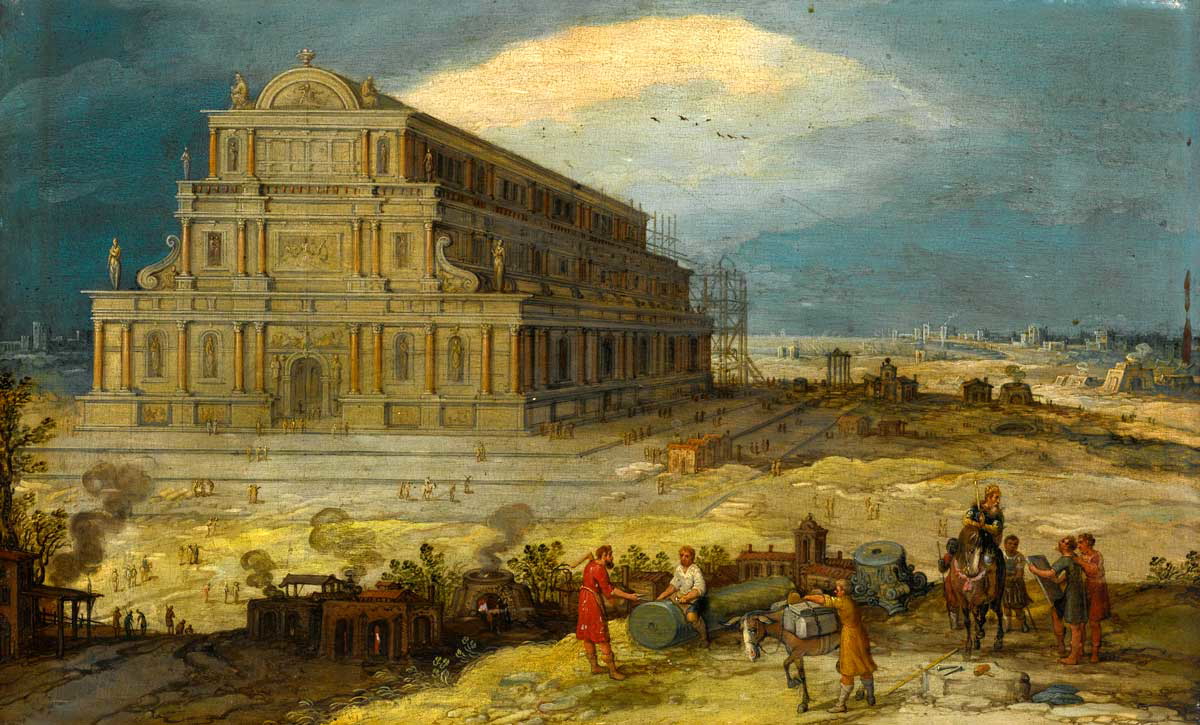
One of the largest ancient Greek temples, over 350 by 180 feet (about 110 by 55 meters), the temple of Artemis (Roman Diana), the goddess of hunting, was built at Ephesus (in present-day Turkey) by Croesus, the famously wealthy king of Lydia in about 550 BC. Ephesus, one of the most influential cities in Ionian Asia Minor, was said to have been founded by an Amazonian queen and had long been associated with religious worship.
In 356, the temple of Artemis was burned by Herostatus, a man who hoped his arson would secure his fame. According to Plutarch, on the night of the fire, the goddess was absent from the temple as she was assisting in the birth of Alexander the Great. Once rebuilt, the temple soon became a wonder of the ancient world.
However, in the 260s AD, the temple of Artemis was ravaged by the Goths and later destroyed with the spread of Christianity. Today, a single column and the foundations are all that remain of the wondrous building.
2. House of Wisdom
- Date lost: 1258 AD
- Overview: A royal library built in Baghdad by the Abbasids during the Islamic Golden Age.
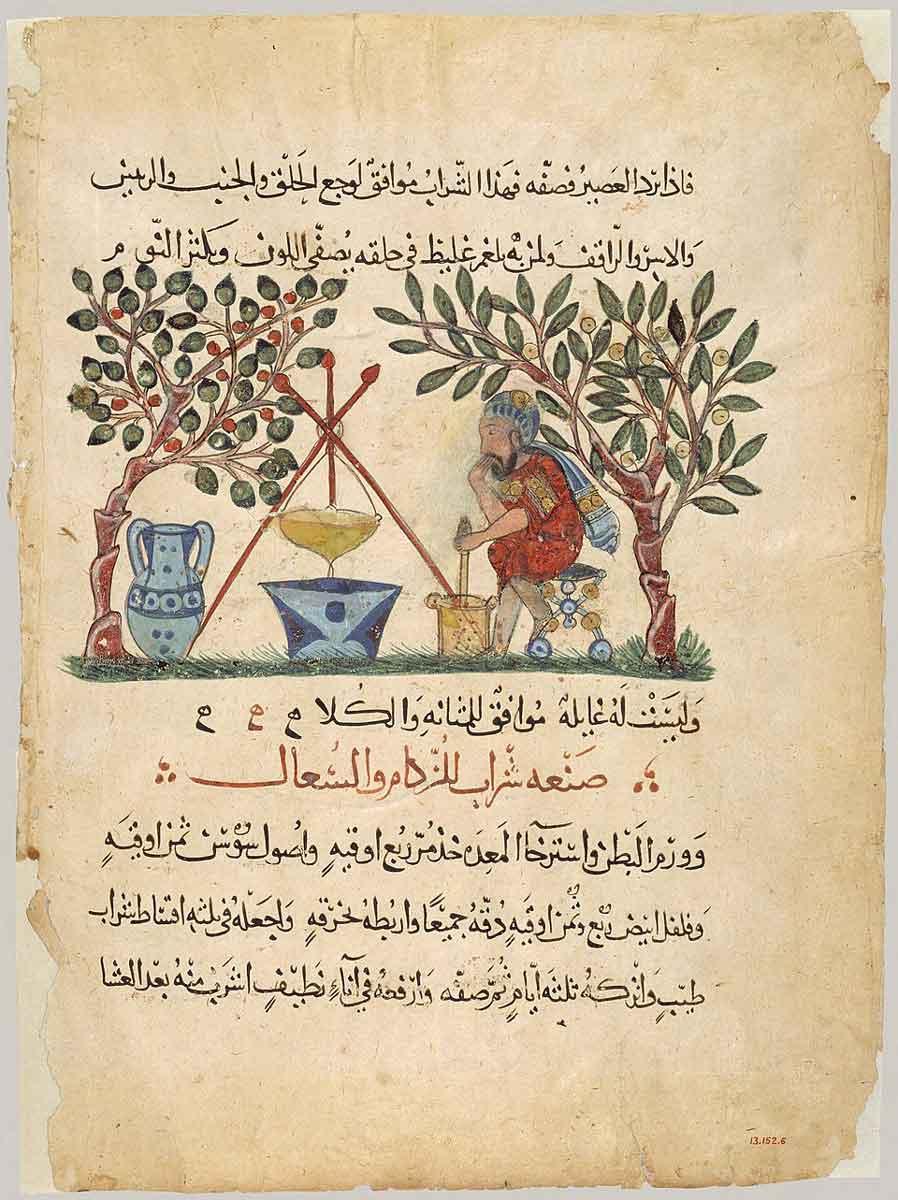
The House of Wisdom (Bayt al-Hikmah) was a royal library and cultural center founded by the Abbasid caliphs in Baghdad. After overthrowing the Umayyad dynasty in 750 AD, al-Mansur transferred the capital of the Islamic world from Damascus to Baghdad, a location closer to his Persian support base.
Built at the crossroads of the Silk Road, the trading route connecting Europe to China, the new capital, distinctive for its circular form, soon became a leading center not only for trade, but also for science and culture. Indeed, the Abbasid caliphs’ extensive patronage of the arts and sciences laid the groundwork for the development of the Islamic Golden Age.
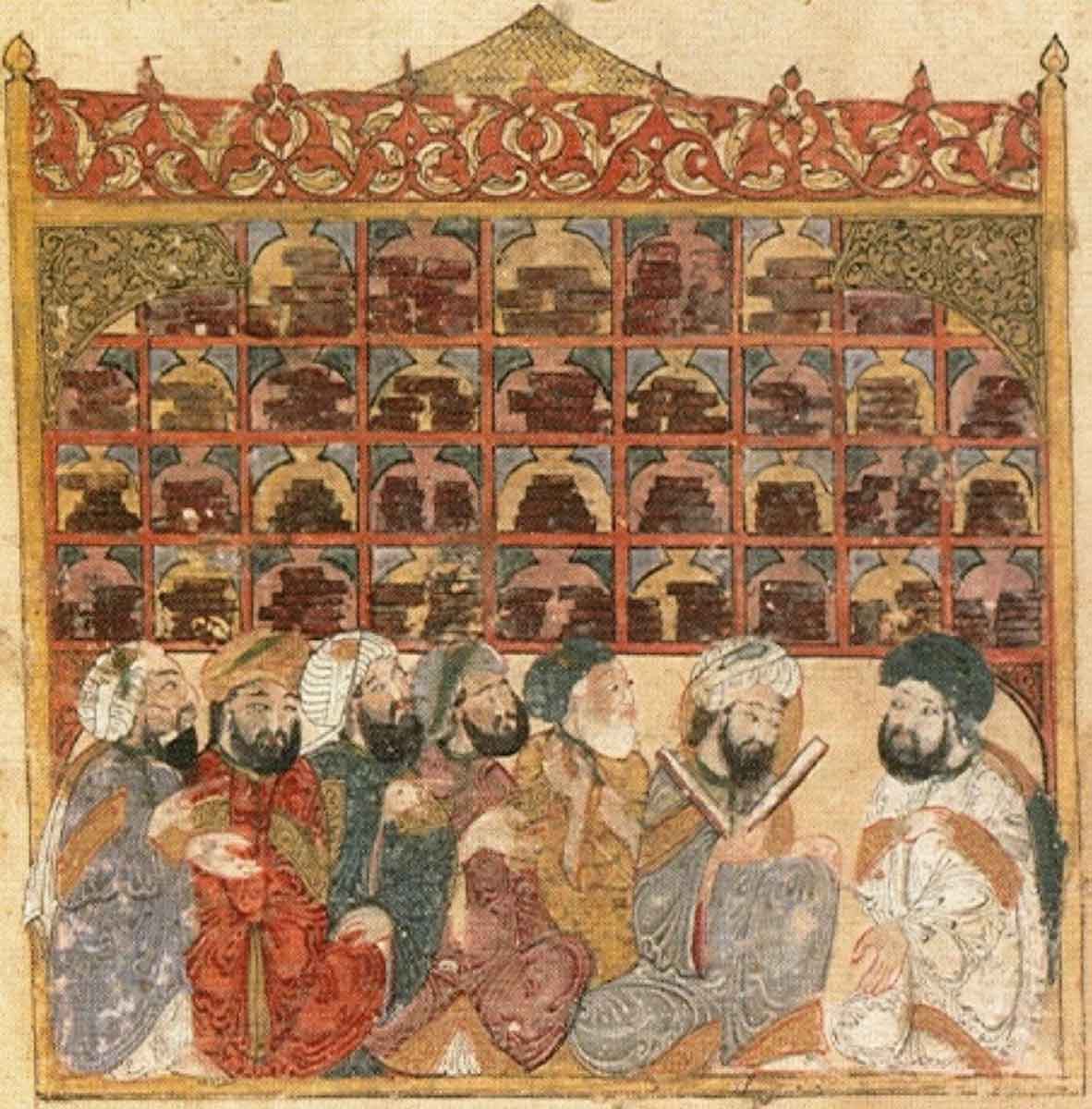
In this intellectually stimulating period, the House of Wisdom became a leading center of scholarship, where copyists, bookbinders, and librarians amassed an eclectic collection on a wide variety of topics, such as Zoroastrian religion, alchemy, astronomy, medicine, geography, and chemistry. Among those working at the House of Wisdom was mathematician and astronomer Muḥammad ibn Musa al-Khwarizmi, usually credited as the “father of algebra.”
Scholars affiliated with the House of Wisdom also translated major works of Persian and Greek literature into Arabic, thus preserving knowledge that would have been otherwise lost. In the 14th century, these translations would play a key role in the “rediscovery” of antiquity that stood at the heart of the European Renaissance.
Unfortunately, the priceless collection held at the House of Wisdom was destroyed in 1258, when the Mongol forces sacked Baghdad.
3. Hanging Gardens of Babylon
- Date lost: 1st century AD
- Overview: Terraced gardens allegedly built by Nebuchadnezzar II; one of the Seven Wonders of the Ancient World.
According to legend, the Hanging Gardens of Babylon were built by King Nebuchadnezzar II as a gift for his wife Amtis of Media, who missed the green landscapes of her homeland. Besides their impressive size, the self-watering system of irrigation also impressed ancient visitors, prompting them to include the lush terraces in the list of the wonders of the world.
In ancient Mesopotamia, extensive gardens were seen as symbols of the empire’s power, impressing visitors with their exotic vegetation flourishing thanks to advanced irrigation systems. The image of a garden as a serene and enclosed place, separated from the world, has long fascinated humankind and is closely associated with the concept of paradise. The link is emphasized by the most widely accepted etymology of the word “paradise,” traced back to the Old Iranian term pairi-daeza, meaning “walled enclosure.”
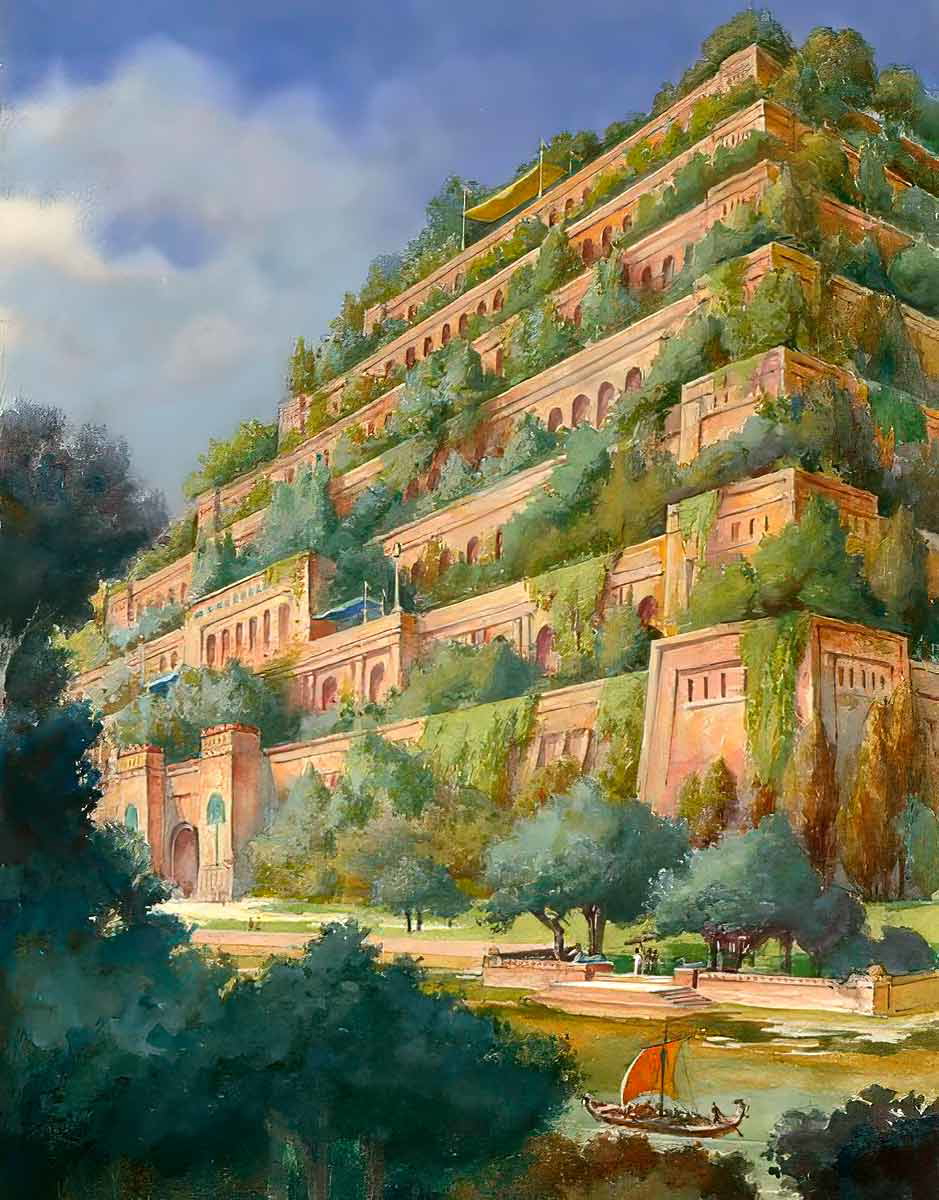
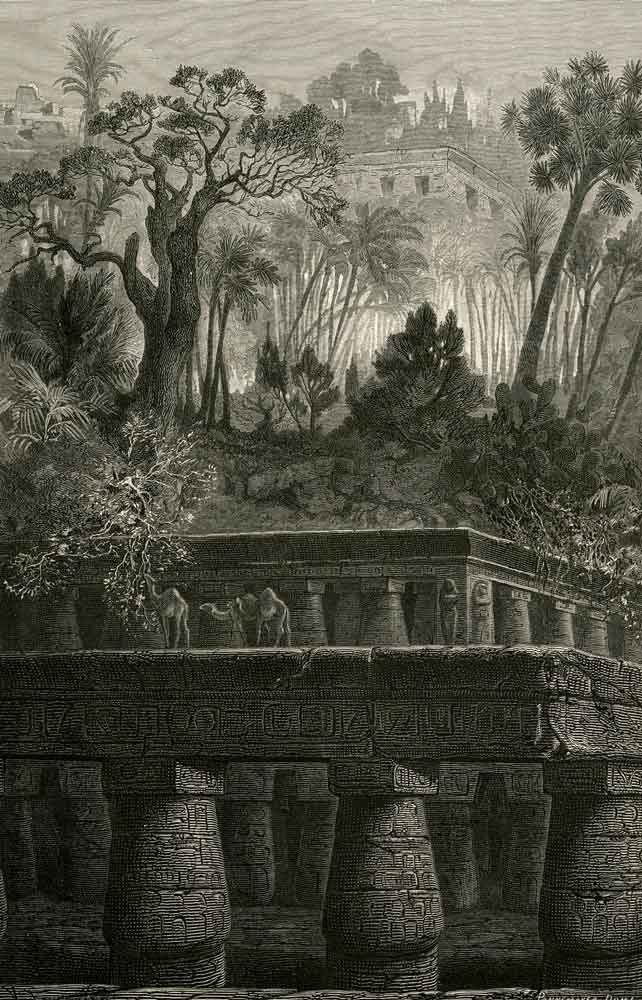
According to Strabo, the gardens were “vaulted terraces, raised one above another, and resting upon cube-shaped pillars. These are hollow and filled with earth to allow trees of the largest size to be planted.” The lush vegetation was watered through a series of engines pumping water from the nearby Euphrates River.
As no certain archaeological traces of the Hanging Gardens have been found, scholars disagree on what they may have looked like, with some even doubting if they ever existed. According to some theories, the Gardens were created on the rooftops of the royal palace in Babylon. Others believe they were built within the palace’s walls.
More recently, Oxford Assyriologist Stephanie Dalley has suggested the Hanging Gardens were actually built by King Sennacherib at Nineveh, a city the Assyrians, who conquered Babylon in the 7th century, called the New Babylon. Regardless of their location, the gardens are now lost forever, destroyed by an earthquake in the 1st century AD.
4. Lighthouse of Alexandria
- Date lost: c. 14th century AD
- Overview: A 350-feet-tall lighthouse on Pharos Island near Alexandria; one of the Seven Wonders of the Ancient World.
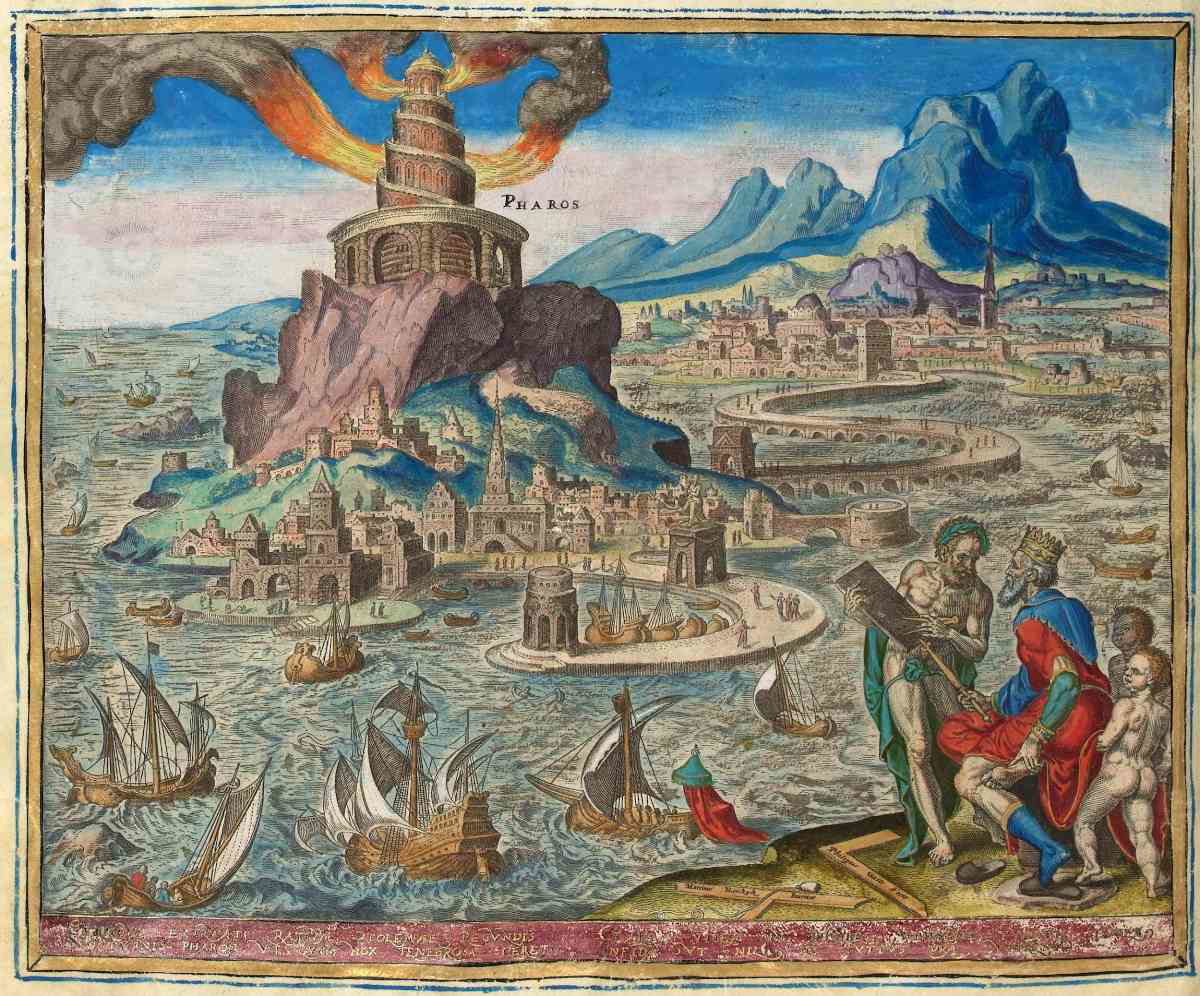
The Lighthouse (or Pharos) of Alexandria, one of the wonders of the ancient world, was built by Sostratus of Cnidus. The construction process began during the reign of Ptolemy I Soter and ended in about 280 BC, when his son, Ptolemy II, sat on the throne.
Erected on the island of Pharos in the harbor of Alexandria in Egypt, the impressive construction—it is said the lighthouse was more than 350 feet/110 meters high—aided ships navigating near the coastline, guiding and warning them of hazards. The tower was likely built in three stages and toppled with a statue, possibly of Alexander the Great or Ptolemy I.
The lighthouse was still active in the 12th century. By the 14th century, however, it had already been destroyed.
5. Great Library of Alexandria
- Date lost: disputed
- Overview: A royal library and leading center of scholarship built by the Ptolemaic dynasty in Alexandria.
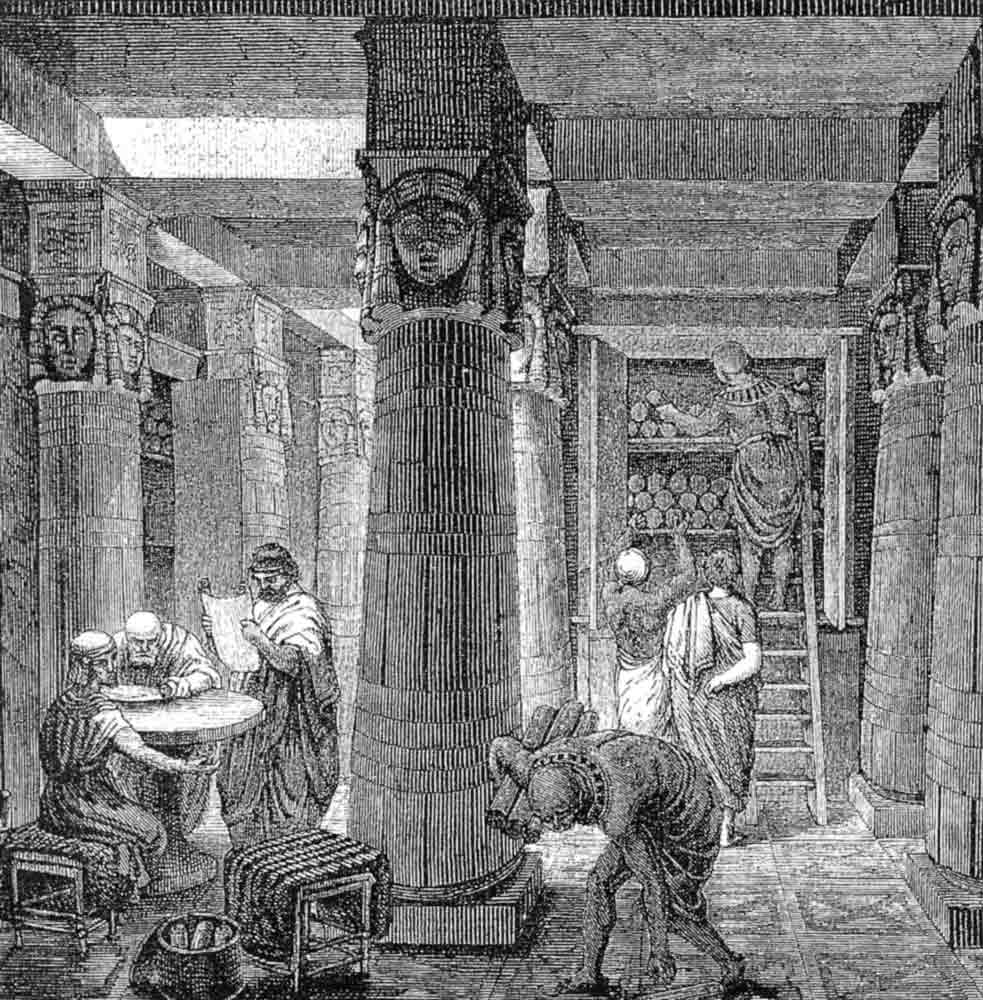
Like the House of Wisdom in Baghdad, the Great Library of Alexandria was also a leading ancient cultural center, the most famous of Classical antiquity.
The construction of the library began in about 295 BC, when Ptolemy I Soter tasked Demetrius of Phaleron, an Athenian member of Aristotle’s Peripatetic school, with overseeing the ambitious project. In the following years, the library amassed an impressive collection of books and manuscripts, and, with the nearby Museum, it became an illustrious center of research and literary and scientific scholarship.
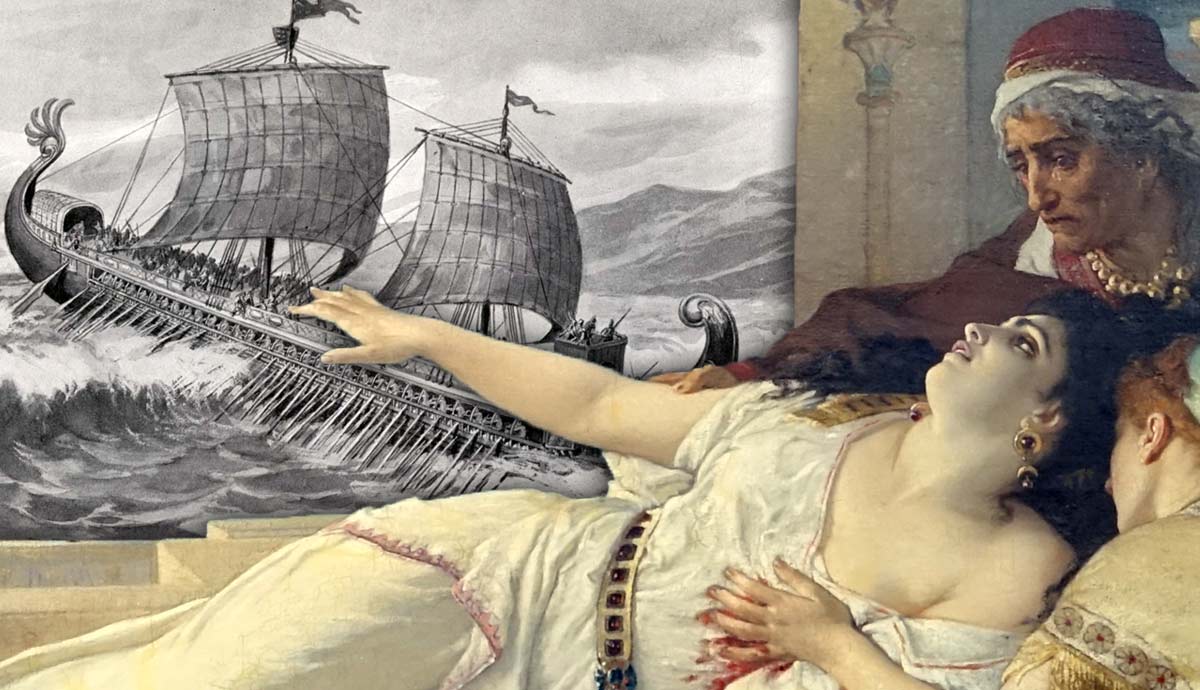
To this day, the events that led to the Library of Alexandria’s destruction remain a matter of debate. According to Plutarch, the library was destroyed in 48 BC, when Julius Caesar set fire to the Ptolemaic fleet during the civil war between Cleopatra and his brother. “Many places were set on fire, with the result that the docks and the storehouses of grain among other buildings were burned, and also the library, whose volumes, it is said, were of the greatest number and excellence,” commented Plutarch.
According to some scholars, the Serapeum, a branch of the library located in the temple of Serapis, survived the fire. It likely remained active until 391 AD, when the bishop of Alexandria, Theophilus, demolished it following Theodosius’ decree banning pagan worship.
6. Mausoleum at Halicarnassus
- Date lost: 15th century AD
- Overview: A grand tomb built for King Mausolus of Caria and his wife, Artemis; one of the Wonders of the Ancient World.
The tomb of Mausolus, king of Caria, was built in Halicarnassus, the main city of the kingdom and the birthplace of Herodotus (the “Father of History”) between about 353 and 351 BC. Upon inheriting the throne after his father died in 377 BC, Mausolus launched a project of urban aggrandizement as part of his efforts to expand Halicarnassus’ influence in the Mediterranean.
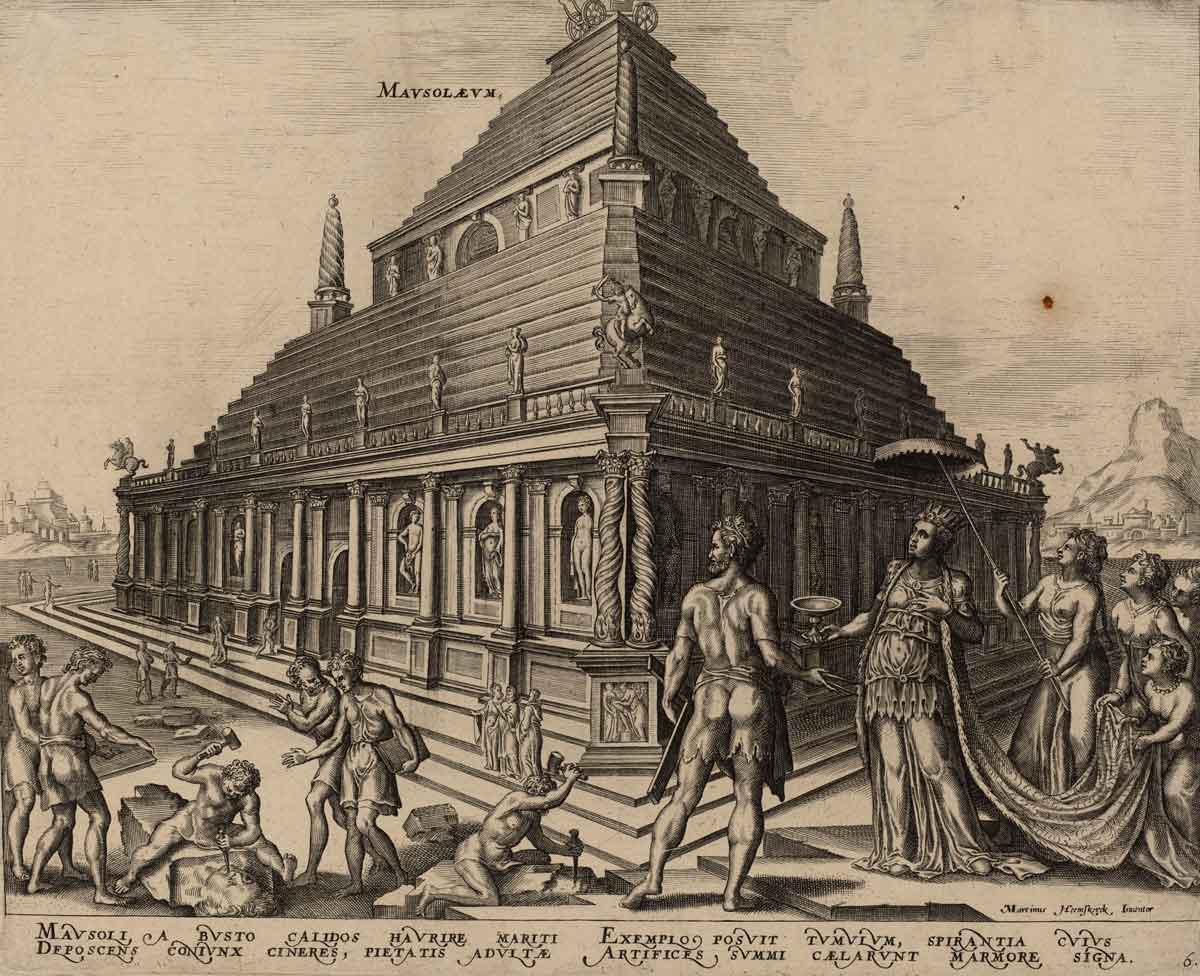
After his death, his wife (and sister) Artemisia II, a powerful leader in her own right, tasked the leading Greek architects and artists with the construction of a monumental tomb to perpetuate Mausolus’ legacy, a project likely initiated by Mausolus himself. Architects Satyros and Pythius of Priene designed the tomb, while sculptors Leochares, Bryaxis, Scopas, and Timotheus created reliefs to adorn the massive structure’s sides.
Artemisia died shortly after the beginning of the Mausoleum’s construction, but her successors completed the work. The final result was a colossal tomb that became one of the wonders of the ancient world. According to Pliny the Elder, it was surrounded by 36 columns and surmounted by a marble chariot pulled by four horses.
The tomb stood on a hill overlooking Halicarnassus until the 15th century, when a series of earthquakes destroyed it. Today, countless stately tombs around the world, known as mausoleums from the Mausoleum in Halicarnassus, testify to the monument’s legacy and influence.
7. Colossus of Rhodes
- Date lost: toppled in 255/56 BC; destroyed in 654 AD
- Overview: A massive statue of the sun god Helius; one the the Wonders of the Ancient World.
Toward the end of the 3rd century BC, all those entering the harbor of Rhodes, the major city of the island of Rhodes in the Aegean Sea, would have hardly missed the colossus statue of the sun god Helius, erected beside Mandrákion harbor in 282 BC.
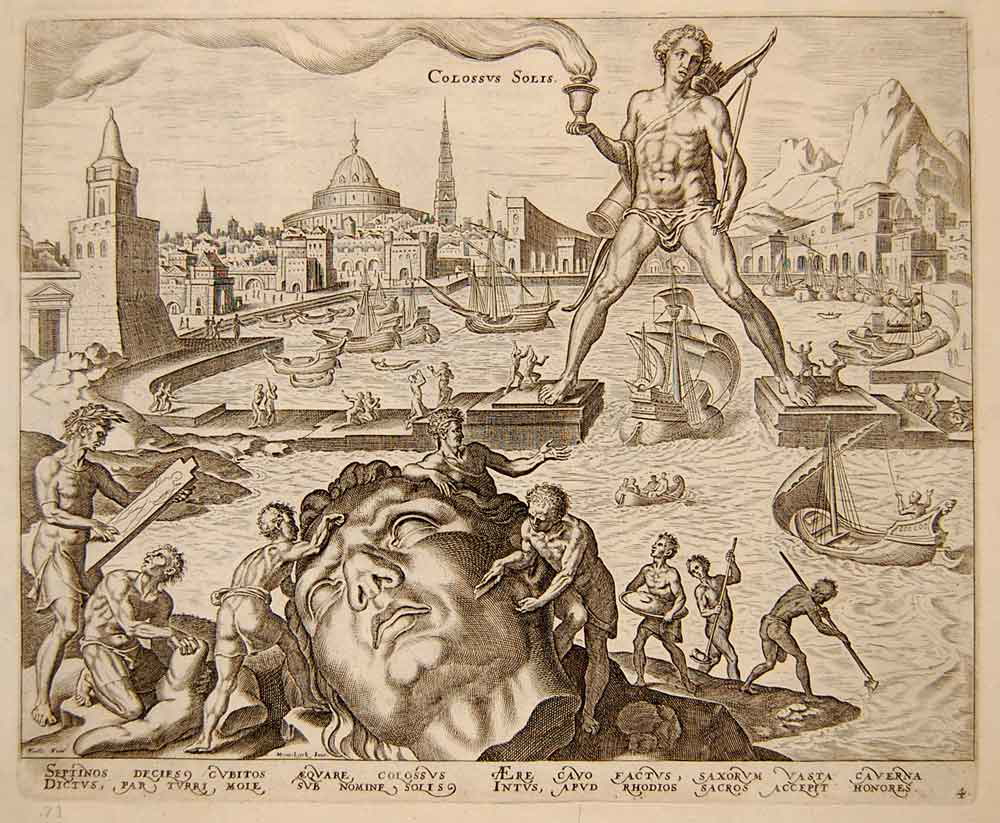
Created by Chares of Lindos, the statue, known as the Colossus of Rhodes, was said to have taken 12 years to build. Made of bronze and reinforced with iron, the Colossus commemorated the end of Demetrius Poliorcetes’ siege of the city. Launched during the political instability of the Hellenistic world after the death of Alexander the Great, the siege aimed to persuade the Rhodians to withdraw their support for Ptolemy, the ruler of Egypt.
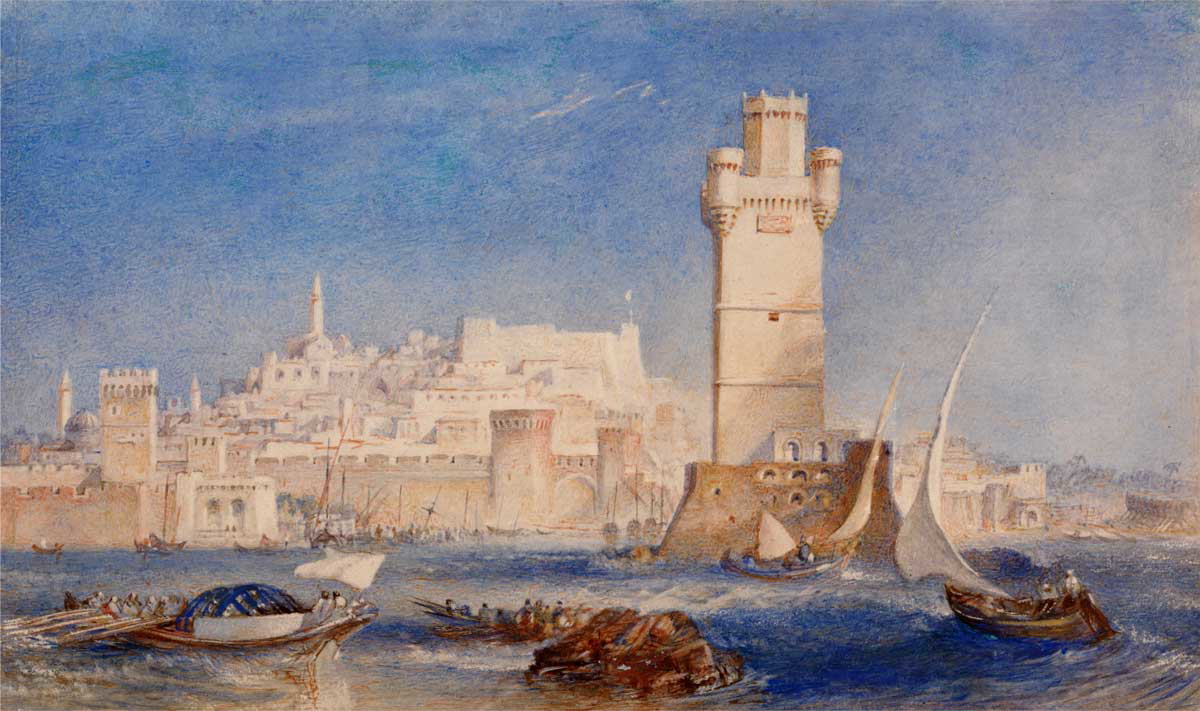
After the unsuccessful siege, the Rhodians used the equipment abandoned by Demetrius’ forces to erect a monument commemorating their resistance. The result was a colossal statue, 105 feet (32 meters) high, that became one of the Seven Wonders of the Ancient World. Impressed by the Colossus’ size and splendor, Roman Emperor Nero built an enormous statue of himself next to the artificial lake at the center of his domus aurea (Golden House) in Rome.
The Colossus of Rhodes welcomed ships entering the city’s harbor until about 255/256 BC, when an earthquake toppled it. The fallen statue remained lying in the spot where it fell for about 900 years. “Even as it lies, it excites our wonder and admiration,” commented Pliny the Elder in his The Natural History. Then, in 654 AD, the Arab forces raiding Rhodes melted it down and sold the bronze for scraps.
8. Ancient Ruins of Palmyra
- Date lost: 2015
- Overview: An archaeological site in Syria included in the UNESCO World Heritage list in 1980.
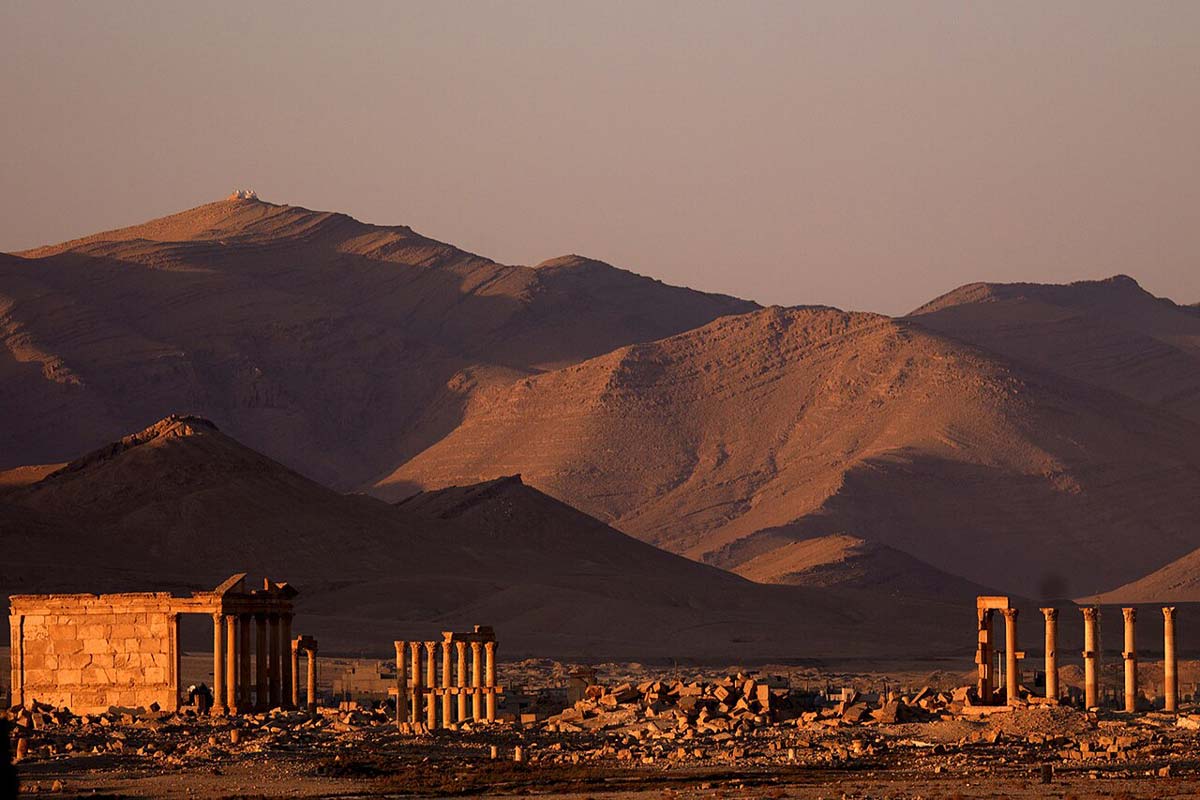
Built on an oasis located halfway between the Mediterranean Sea and the Euphrates River, the ancient city of Palmyra (south-central Syria) rose to prominence in the 3rd century BC, when it became one of the main trading routes connecting the Roman world with the East.
Originally known as Tadmur, Tadmor, or Tudmun, the city was renamed Palmyra, meaning “city of palm trees,” by the Romans in the 1st century BC. While under Roman control, Palmyra remained a prosperous city, and, in about 129, Hadrian made it a civitas libera (free city). It was later exempted from paying taxes to the Roman Empire by Caracalla.
In the 3rd century, Zenobia, the second wife of the governor of Syria, Septimius Odaenathus (probably assassinated on her order), became queen of Palmyra, launching a successful campaign against the Romans in Anatolia. In 273, however, Emperor Aurelian, who regained control of Anatolia the year before, raided Palmyra. In 643, the city was then conquered by the Muslim general Khalid ibn al-Walid.
In 1980, the ruins of ancient Palmyra became a UNESCO World Heritage site, with thousands of visitors admiring the ancient remains every year. In May 2012, however, when ISIS took control of Palmyra during the Syrian civil war, its forces destroyed several of the site’s monuments, including the Temple of Bel, the Arch of Triumph, built by Septimius Severus, and the Temple of Baal Shamin.
9. Statue of Zeus at Olympia
- Date lost: 5th century AD
- Overview: A colossal statue of Zeus created by Phidias for the temple of Zeus at Olympia; one of the Wonders of the Ancient World.
Another wonder of the ancient world, the statue of Zeus at Olympia was created by the Greek sculptor Phidias, the artist who also sculpted the statue of Athena in the Parthenon at Athens.
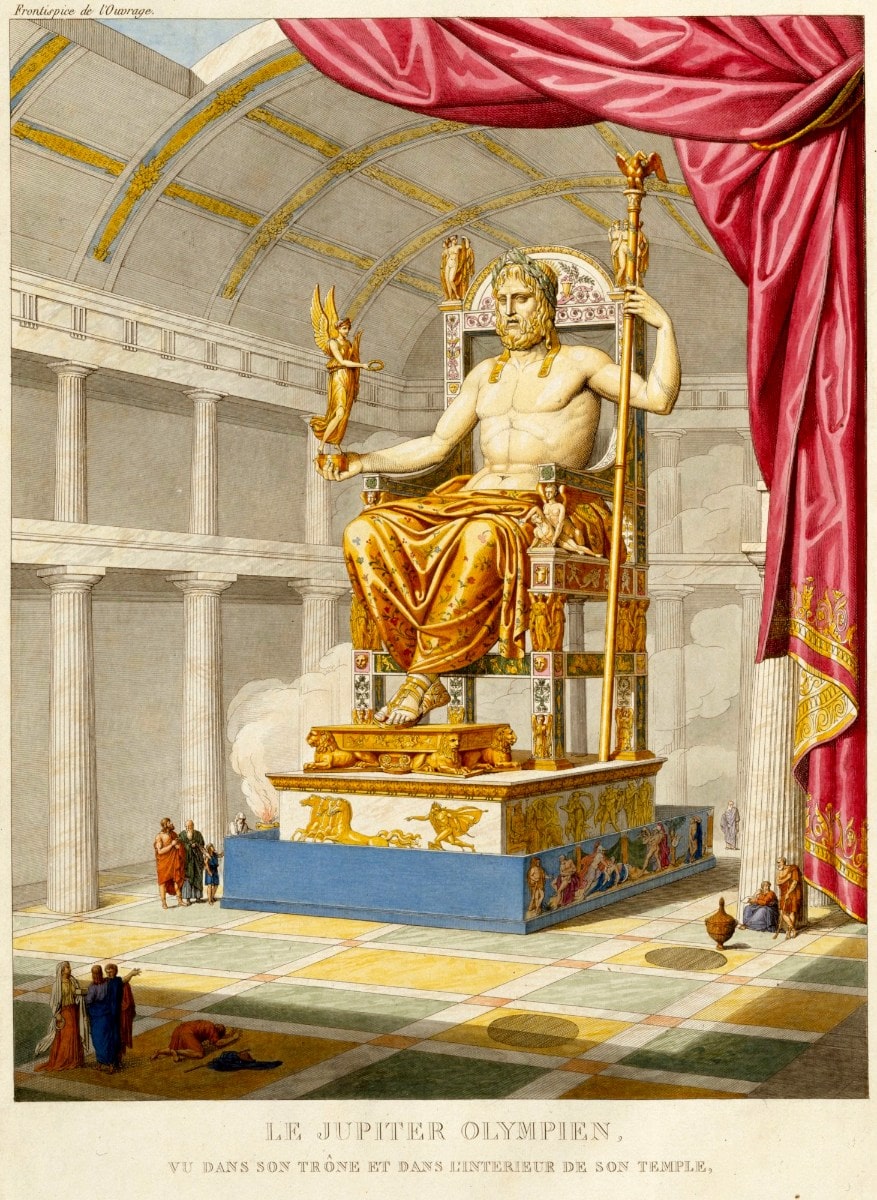
Made of gold and ivory, the statue, located inside the temple of Zeus at Olympia, depicted Zeus, the ruler of the Greek gods, sitting on a throne made of cedarwood and adorned with precious stones, gold, ivory, and ebony. In his outstretched right hand, the colossal statue (almost 4o feet/12 meters high) held a statue of Nike, the goddess of victory. In his left hand, Zeus had a scepter.
Said to have captured the divine nature of Zeus, the statue likely survived the destruction of the temple of Zeus at Olympia. Probably moved to Constantinople, it was destroyed in a fire that ravaged the city in the 5th century.
While the statue of Zeus is now lost forever, reconstructions based on ancient Greek and Roman coins and paintings give us an idea of what it may have looked like to ancient visitors passing through Olympia.
10. Menorah From the Second Temple
- Date lost: after 71 AD
- Overview: A golden multibranched candelabra located in the Jewish temple of Jerusalem; looted by the Romans in 70 AD.
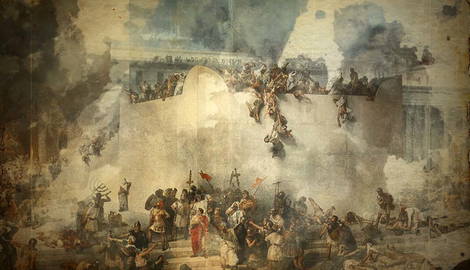
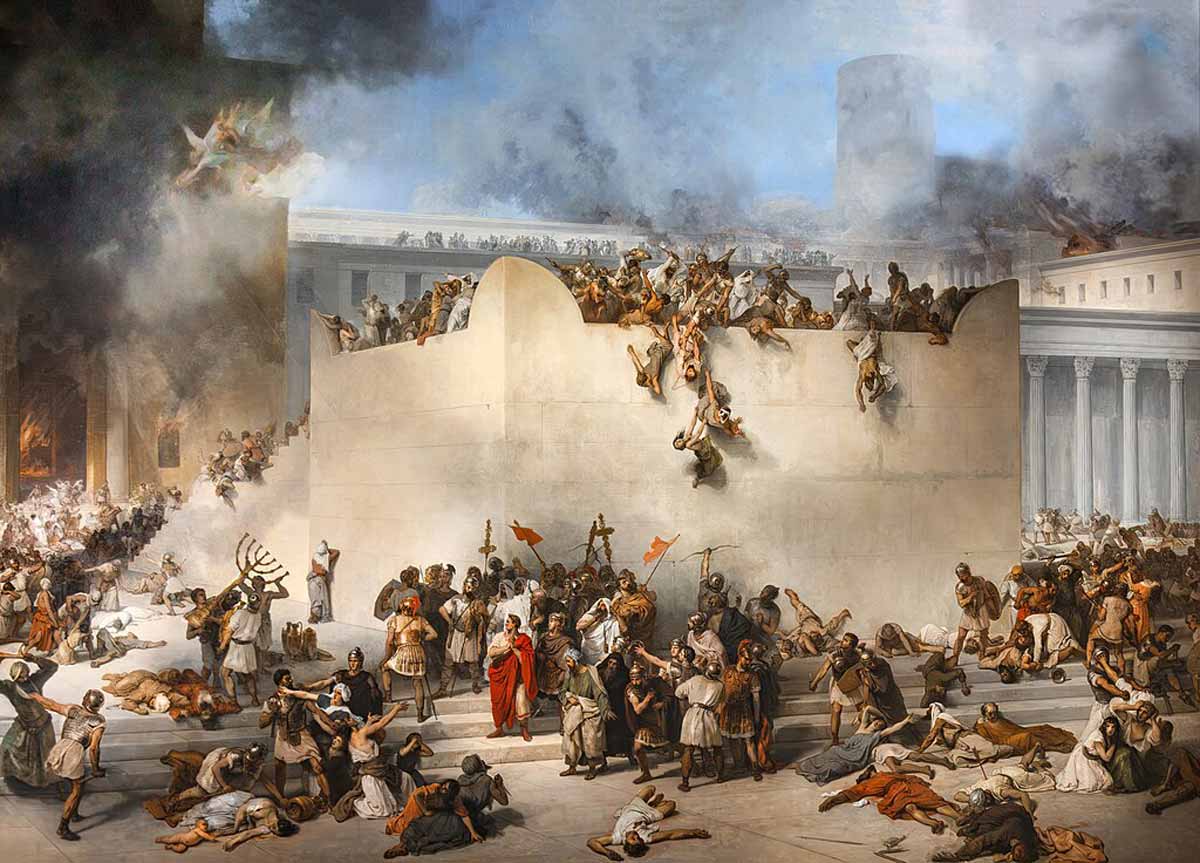
One of the bas-reliefs carved into the Arch of Titus on the via Sacra shows a seven-branched candelabra carried on litters: the menorah. The religious object was part of the spoils of war paraded through Rome during Titus’ triumph following the 70 AD sack of Jerusalem.
Until the outbreak of the First Jewish-Roman War, sparked by the sack of the Second Temple (built by Herod the Great) and the execution of thousands of Jews, the menorah was displayed inside the temple in Jerusalem. First mentioned in the book of Exodus, the design of the multibranched candelabra had been revealed to Moses directly by God on Mount Sinai.
When the Jews rebuilt the temple in Jerusalem, after finally returning from their exile in Babylon, they also forged a golden menorah and placed it inside the building. In 169 BC, however, it was taken by King Antiochus IV Epiphanes when he sacked the temple. When Judas Maccabee successfully defended his country from the Syrian kingdom’s invasion, he commissioned the creation of a new menorah, the one seized by the Roman forces in 70 AD.
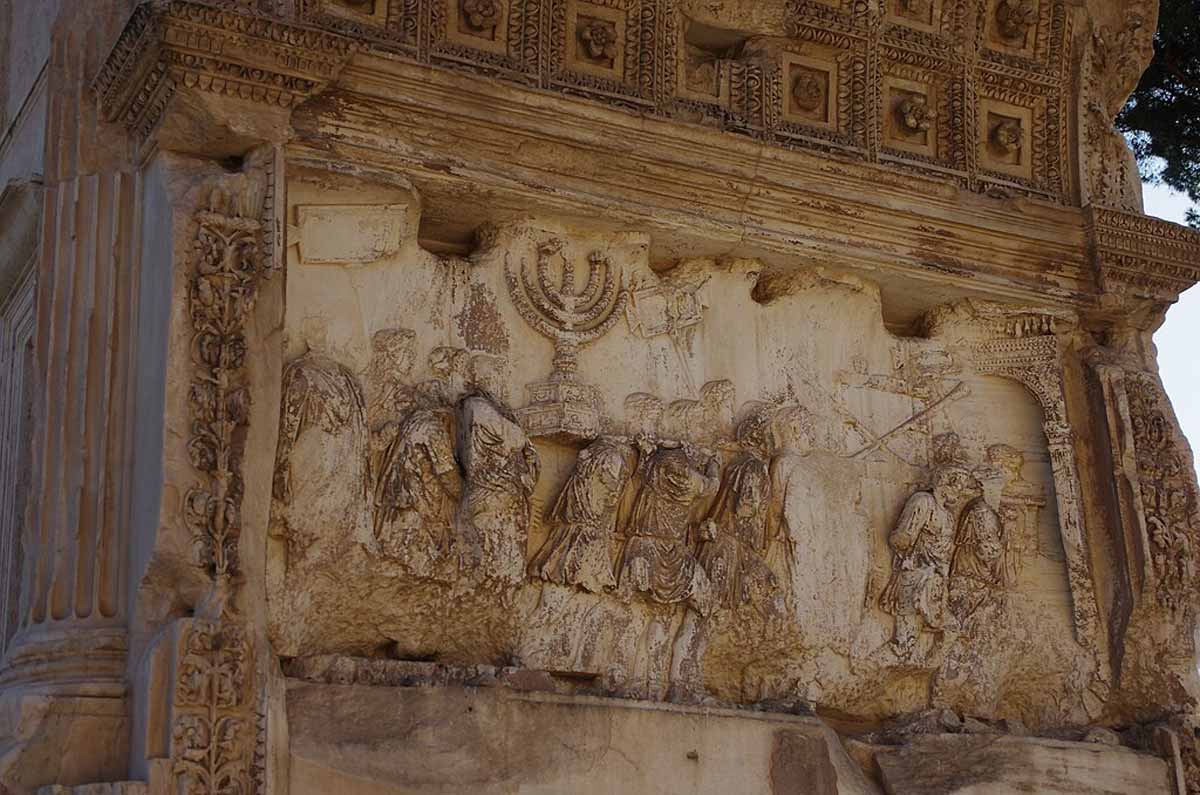
After it arrived in Rome the following year, the menorah seemingly disappeared, never to be seen again. Flavius Josephus reported that most of the treasures looted by Titus were later placed inside the Temple of Peace by Emperor Vespasian. However, whether the menorah was also brought there remains unclear. Byzantine historian Procopius of Caesarea later wrote that the treasures were returned to Jerusalem after the sacks of Rome in 410 and 455. However, he did not explicitly mention the menorah.
Its disappearance has led to the spread of numerous legends about the menorah’s fate. One urban myth even claims that it was hidden inside the Vatican. In 2012, a scan using UV-VIS Absorption Spectrometry made by a team of scholars associated with the Arch of Titus Project revealed the menorah on the bas-relief was once painted with a yellow ochre pigment, suggesting it was indeed the golden menorah from the Second Temple.