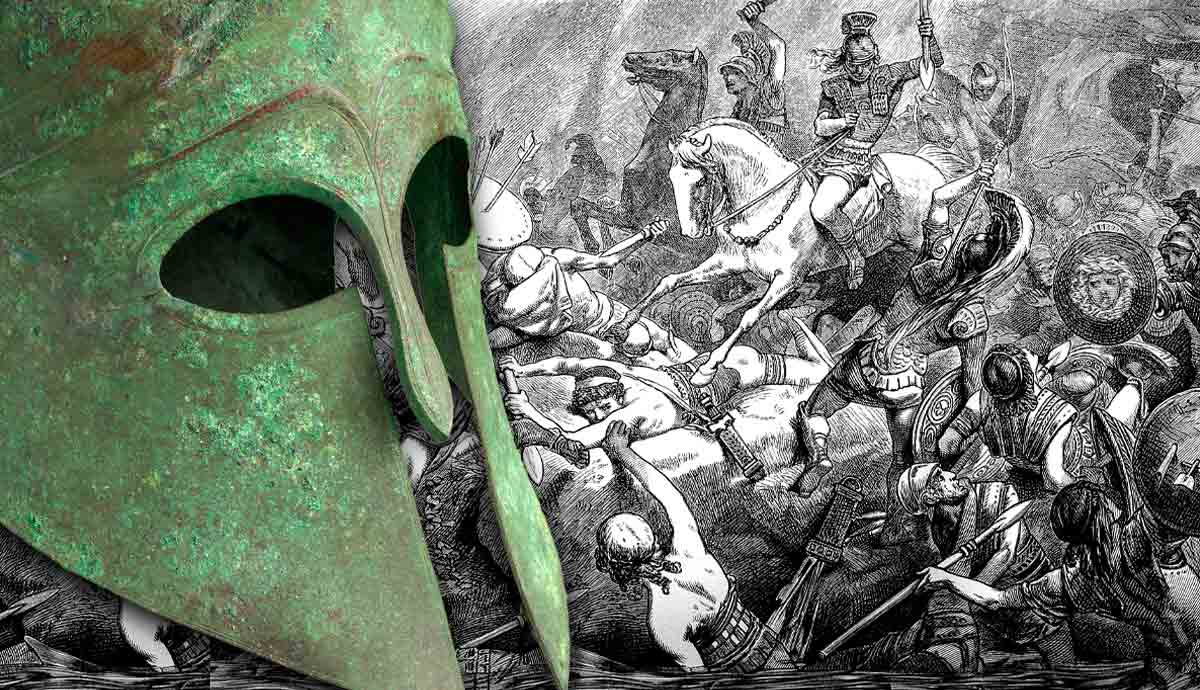

One of the most shocking scenes in Greek mythology is when Agamemnon, the leader of the Greek forces sailing to Troy, sacrifices his own daughter Iphigenia on an altar. But the sources characterize this as a horrific but necessary act. Artemis ordered the sacrifice, and he faced no divine retribution. While the sources did not blame Agamemnon, his wife Clytemnestra did. She waited for ten years for her husband to return from Troy and killed him in vengeance. This is a much less shocking scene, but Apollo orders Agamemnon’s son Orestes to kill his mother Clytemnestra to avenge his father. Why was Clytemnestra’s crime unforgiveable?
Divine Mandate and the Sacred Duty at Aulis
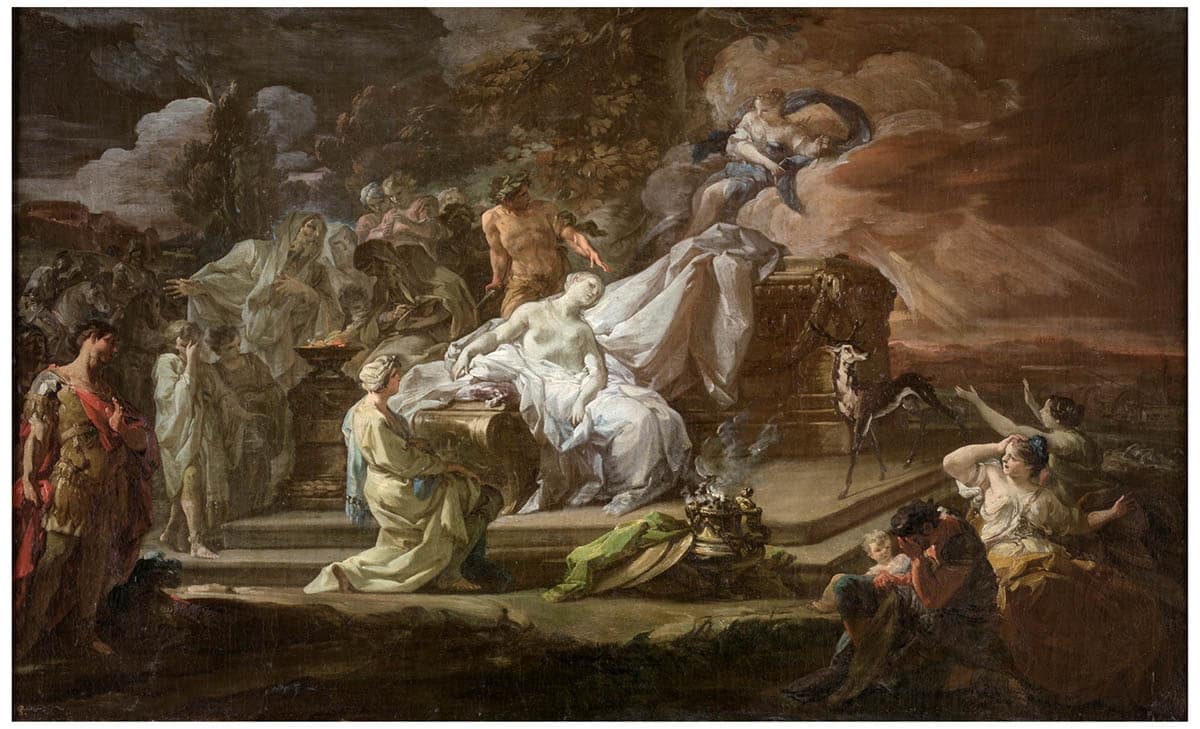
Preparing to lead the Greeks against Troy in vengeance for the Trojan prince Paris disrespecting the xenia of King Menelaus in Sparta and kidnapping his wife Helen, Agamemnon, king of Argos, gathered the fleet at Aulis. There, he hunted and killed a stag sacred to the goddess Artemis. He then had the audacity to boast that his hunting skill surpassed that of the goddess. The angry goddess sucked the wind out of the air around Aulis, stranding the fleet.
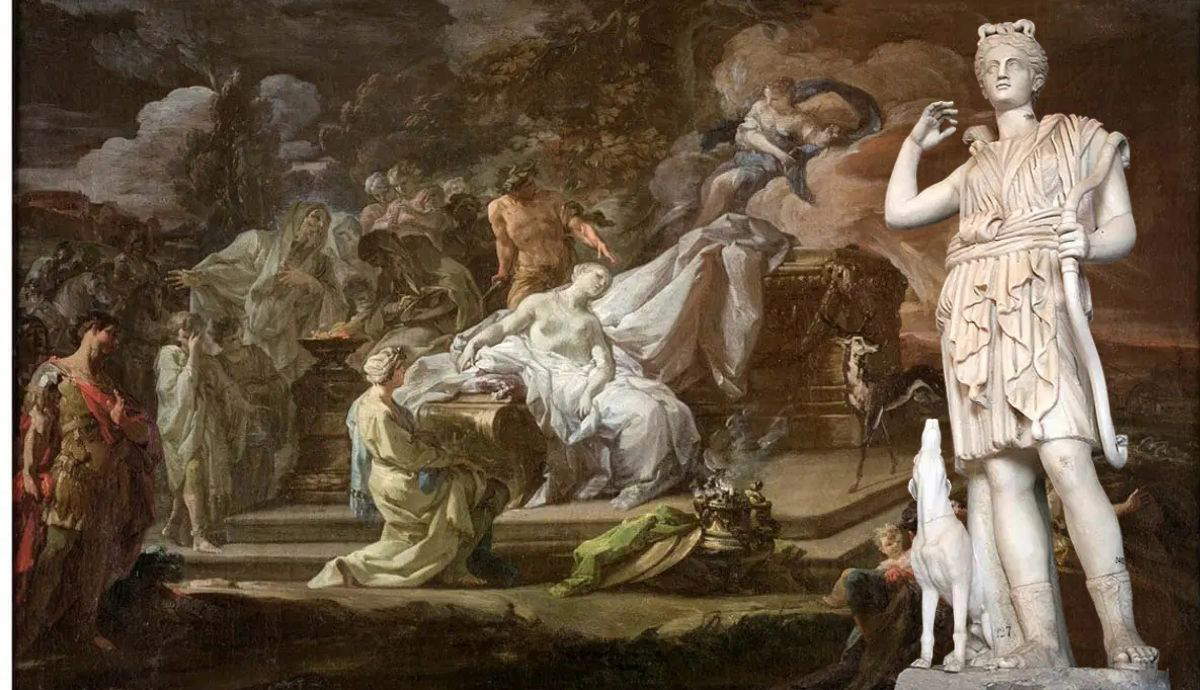
When the winds died, Agamemnon consulted the seer Calchas, who informed Agamemnon of his crime. He told him that the only way to appease the goddess was to sacrifice his daughter, Iphigenia, paying for the stag’s blood with hers. While the ancient Greek playwrights who dramatized these events in the 5th century BC describe Agamemnon as loath to sacrifice his beloved daughter, they also suggest that he has no choice but to comply with the divine mandate.
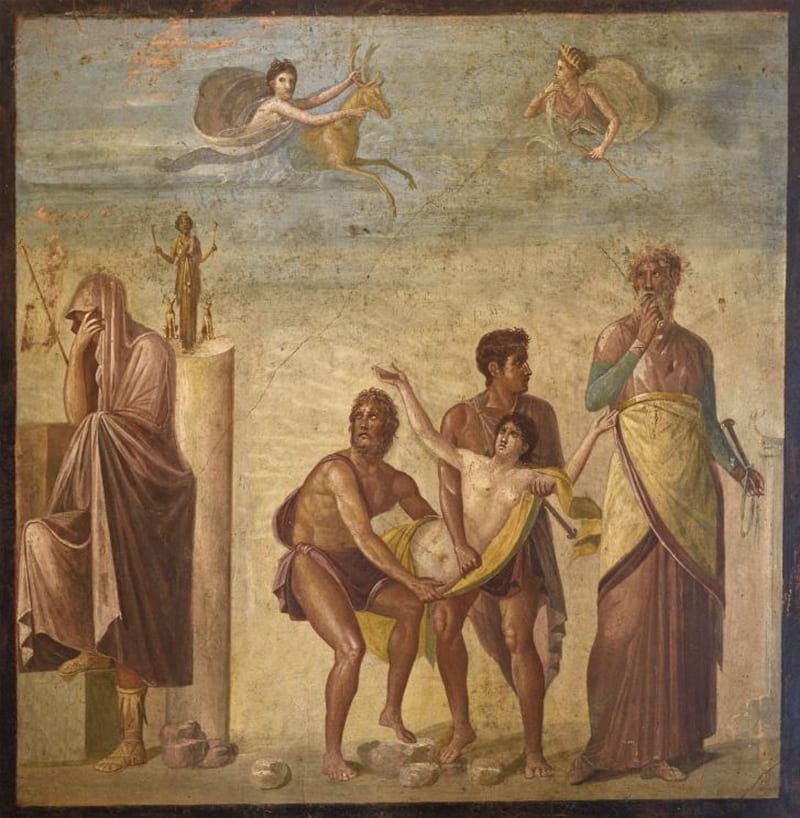
Agamemnon sends a letter home, telling his wife Clytemnestra that Iphigenia is to be married to the great hero Achilles, tricking her into traveling to Aulis with Iphigenia. But when they land, the ruse is revealed, and Iphigenia is sacrificed to the goddess. The scene is described in several different ways. It is sometimes a gagged Iphigenia, so that she cannot curse anyone, who is forcibly sacrificed in front of the entire Greek army. In other versions, she accepts her fate on behalf of her people and bravely walks to the altar to be sacrificed. In yet other versions, Artemis saves Iphigenia at the final moment, secretly replacing her with a stag and whisking Iphigenia away.
However the sacrifice was made, it appeased the goddess, who released the fleet, which sailed to Troy for the ten-year war. While the ancient Greeks considered human sacrifice a horrific and barbaric practice, Agamemnon was not condemned by his generals, the army, or his gods for his actions. He showed his piety by following the directive of the gods.
Regicide, Adultery, and the Breach of Cosmic Order
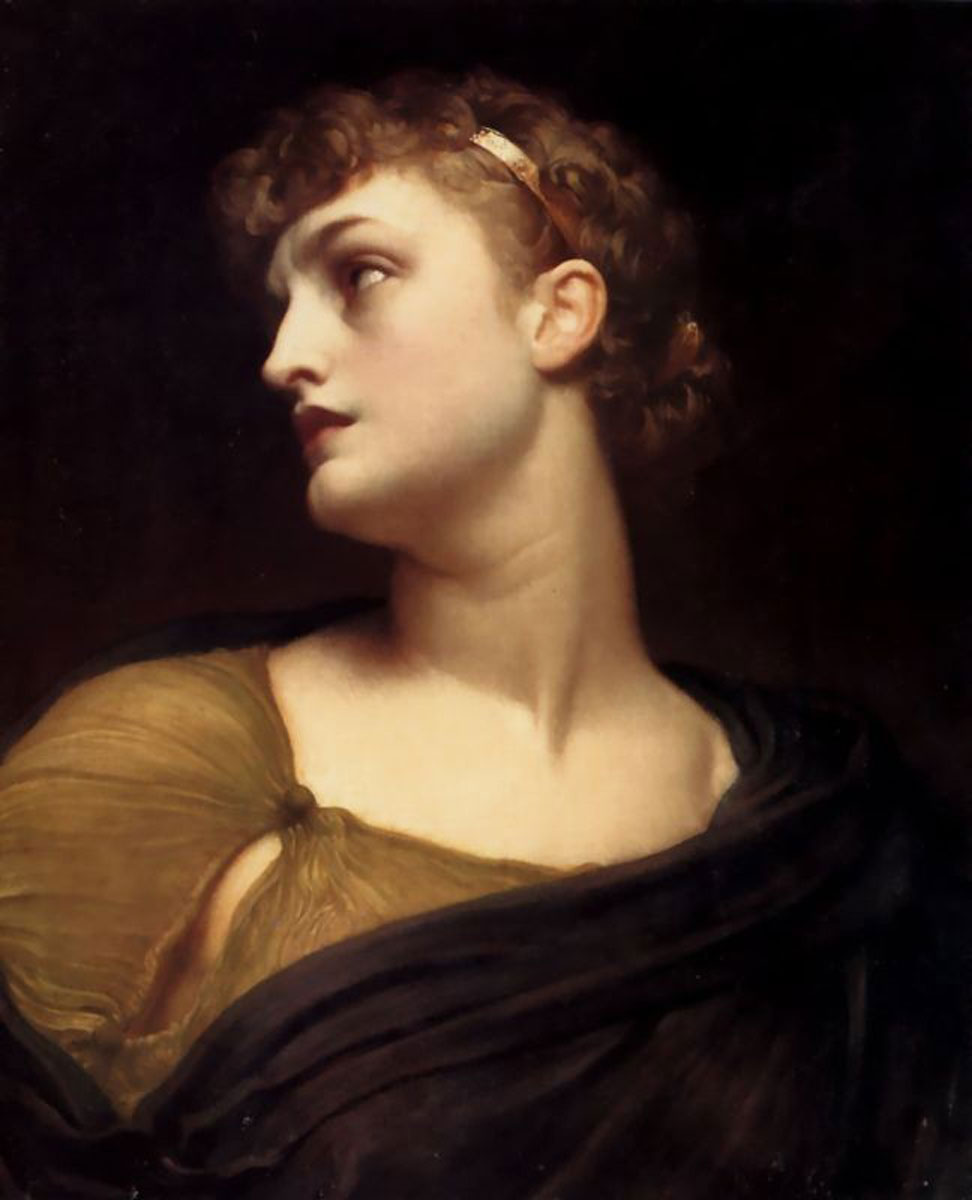
While no one else may have blamed Agamemnon, his wife Clytemnestra did. She returned to Argos, where she nurtured her hatred of her husband for ten years. Her feelings were inflamed by Aegisthus, Agamemnon’s cousin.
A generation earlier, Aegisthus’ father, Thyestes, and Agamemnon’s father, Atreus, fought over the throne of Argos. After Thyestes seduced Atreus’ wife, Atreus murdered Thyestes’ children, cooked them, and served them to his cousin. This heinous act cursed the family and was the source of all the bloodshed that followed. A now-exiled Thyestes went to the Oracle at Delphi, and following its advice, had a son, Aegisthus, with his own daughter Pelopia, who was destined to avenge his father. With Agamemnon away, Aegisthus saw his opportunity. He seduced Clytemnestra, sent Agamemnon’s son Orestes away to Phocis, and took control of Argos.
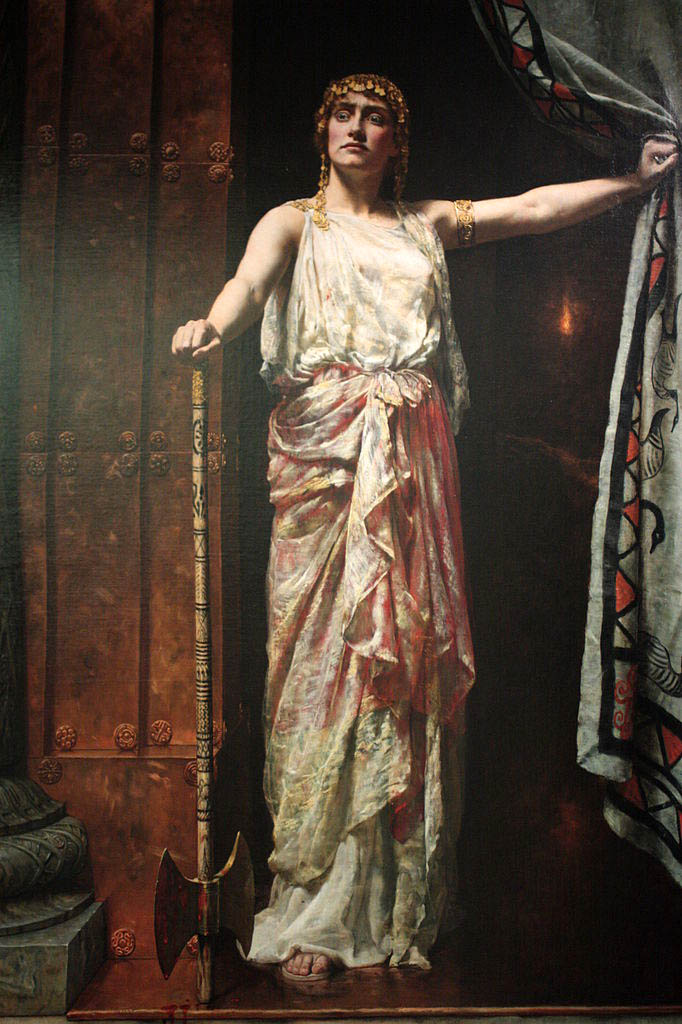
Reportedly, Clytemnestra had set up a chain of fire beacons between Troy and Argos, so she would know as soon as Troy had fallen and could prepare for her husband’s arrival. Preparing him for his fate, when Agamemnon arrived home, she coaxed him into entering the palace by walking on sacred, crimson robes, an act of hubris that would anger the gods. Then, as he went to bathe, she threw a heavy net over him, preventing him from grabbing any weapons, and then struck him down with an axe. While Aeschylus and Sophocles credit Clytemnestra with being the sole killer, in the Odyssey, it is Aegisthus who delivers the killer blow.
Clytemnestra’s actions are clearly an act of revenge, one that we might perhaps understand, but that was viewed as a grievous crime in Greek society. Clytemnestra tricked Agamemnon by appearing to welcome him and offering him hospitality. Xenia was more than just hospitality; it was a divinely sanctioned cultural code for how hosts and guests should treat one another in a world where travel was dangerous. Betraying xenia was a crime, and the same crime that ignited the Trojan War.
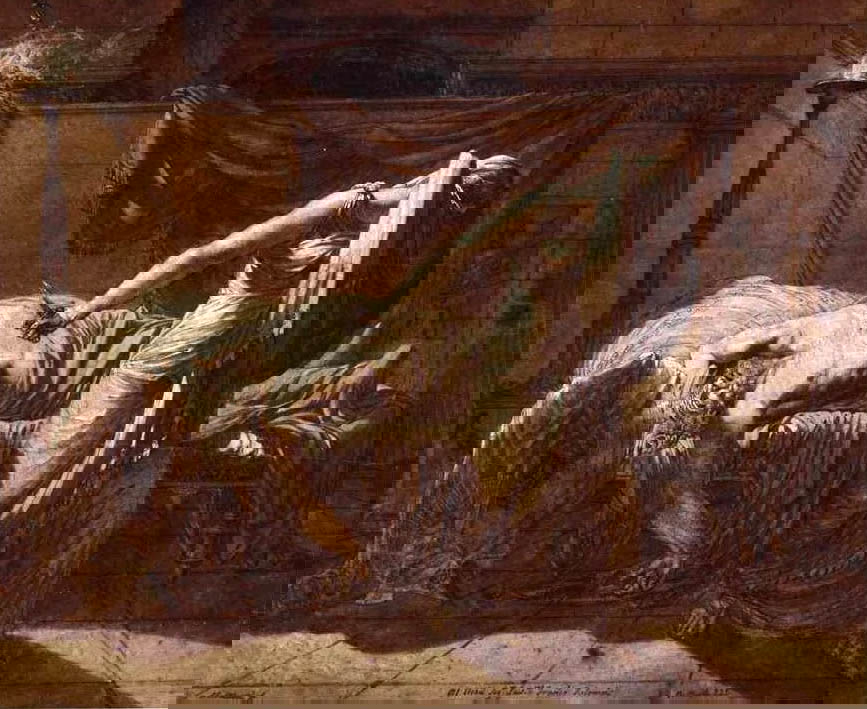
She also committed a blood crime by killing her husband. While they were not blood relatives, when they married she became part of his household and the same rules applied. But more than that, Agamemnon was her king, so killing him and usurping his position was an act of treason. It was also a crime against the cosmic order of patriarchy laid down by the gods. Her crimes were among the worst, but she suffered no immediate consequences, as she continued to rule Argos with Aegisthus.
Why Apollo Demanded Retribution for Agamemnon
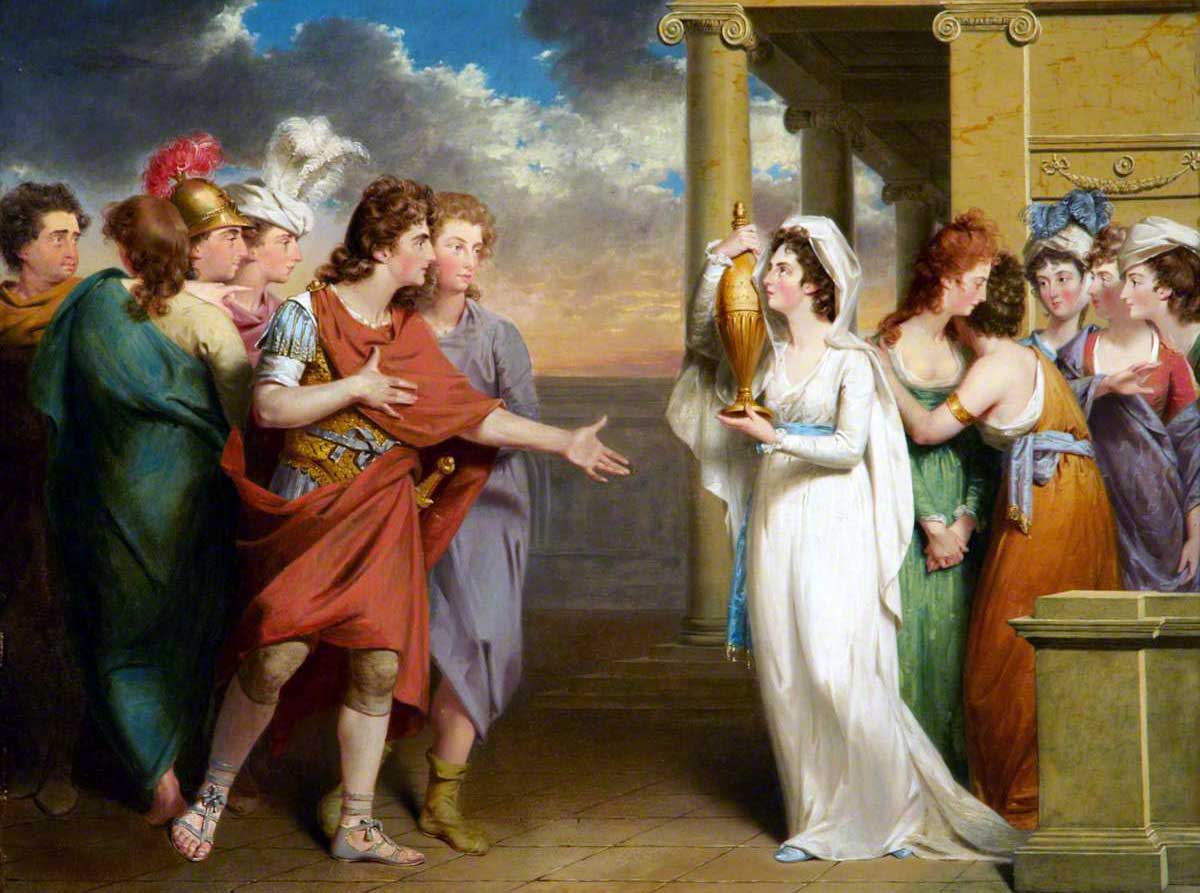
While the gods accepted Agamemnon’s actions, they could not accept Clytemnestra’s. When Agamemnon and Clytemnestra’s son Orestes came of age, he faced a conundrum. Honor required that he avenge the death of his father, but killing his mother would also be a heinous crime. Unsure what to do, he traveled to the Oracle at Delphi for advice, accompanied by his friend Pylades, prince of Phocis.
In the Odyssey, Homer only recounts that Orestes returned to Argos, but the 5th-century BC playwrights Aeschylus, Euripides, and Sophocles have him visit the oracle where Apollo gives him a specific command: kill Clytemnestra and Aegisthus to avenge Agamemnon. Moreover, Apollo warns Orestes that if he fails to carry out his blood duty to his father, he will be struck by both physical and mental illness, be exiled from society, and tormented by underground spirits. Euripides suggests that Orestes questioned the order because matricide was also a blood crime, but Apollo held firm.
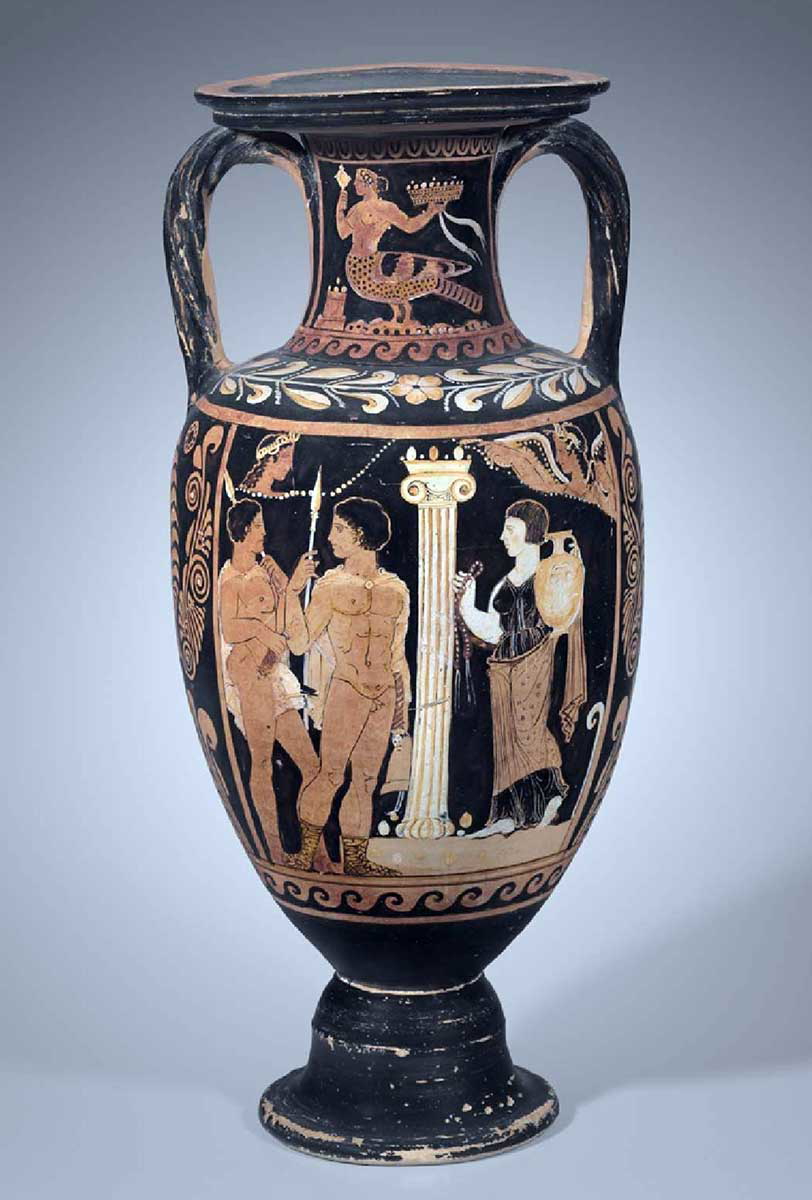
Later in the story, when Orestes is on trial for his crimes, Apollo explains his reasoning. Apollo suggests that mothers, and specifically Clytemnestra, are mere “incubators” and wet nurses for the father’s seed. Therefore, while people certainly shouldn’t go around killing their mothers, she was of secondary importance to the father. As proof, Apollo points out that Zeus gave birth to Athena without a mother, and therefore that men do not need women to create life.
Orestes and Pylades sailed for Argos in secret, where Orestes was reunited with his sister Electra. The two men posed as foreign travelers carrying news of the death of Orestes and hoping to deliver his ashes to his family. Granted a private audience with Aegisthus, Orestes kills him, causing a servant to rush through the palace shouting “the dead are killing the living.” Understanding the meaning of these words, Clytemnestra presented her bared breast to Orestes, begging for mercy for the breast that had nourished him as a baby. While this reportedly gave Orestes pause, he followed the word of Apollo and killed Clytemnestra. Divine vengeance was served.
The Shift from Blood Vengeance to Athenian Justice
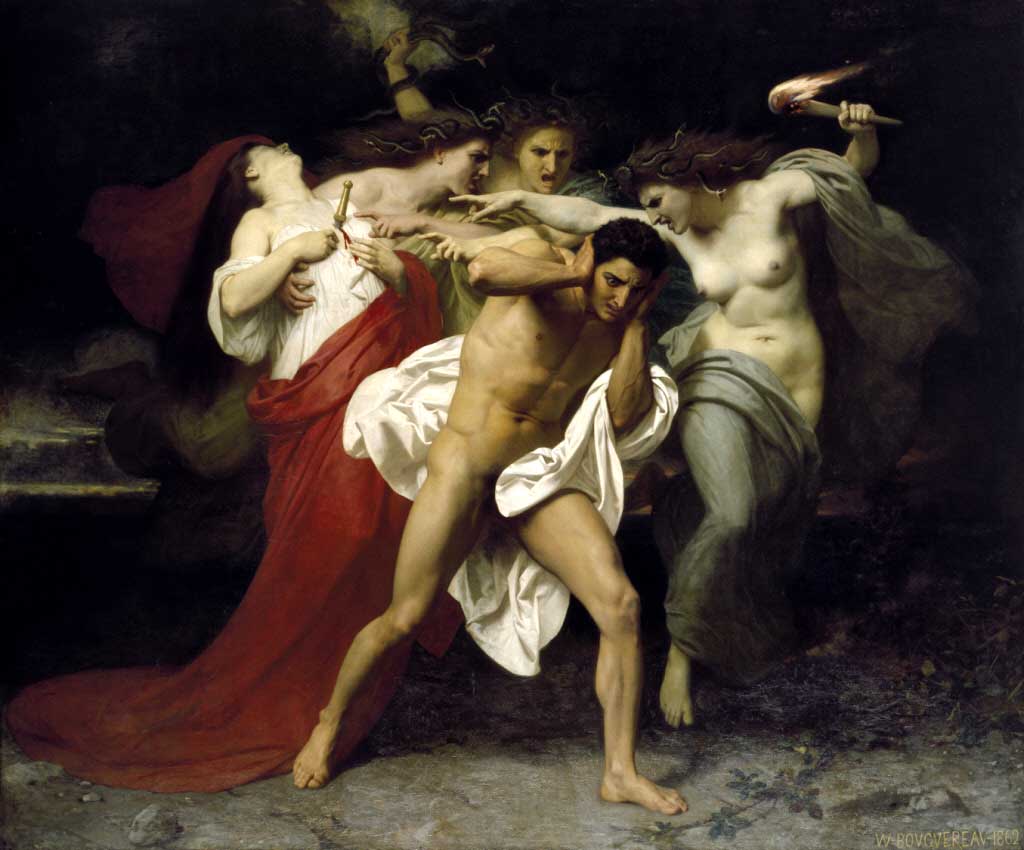
But this is where the story takes a twist. Like Agamemnon, Orestes was following a divine mandate when he killed his mother, but he was punished. The Erinyes, also known as the Furies, immediately set upon Orestes. The Erinyes were only visible to Orestes as terrifying creatures with snakes entwined in their hair, eyes weeping blood, and bat-like wings. They shrieked relentlessly, driving Orestes to madness.
Why was Orestes punished? Some versions of the story have the shade of Clytemnestra specifically summon the Erinyes to avenge her, suggesting that someone needed to call upon them to exact vengeance. Regardless, in his suffering, Orestes fled back to the sanctuary at Delphi, where Apollo protected him long enough to make his way to Athens and ask the goddess for help, pursued by the Erinyes.
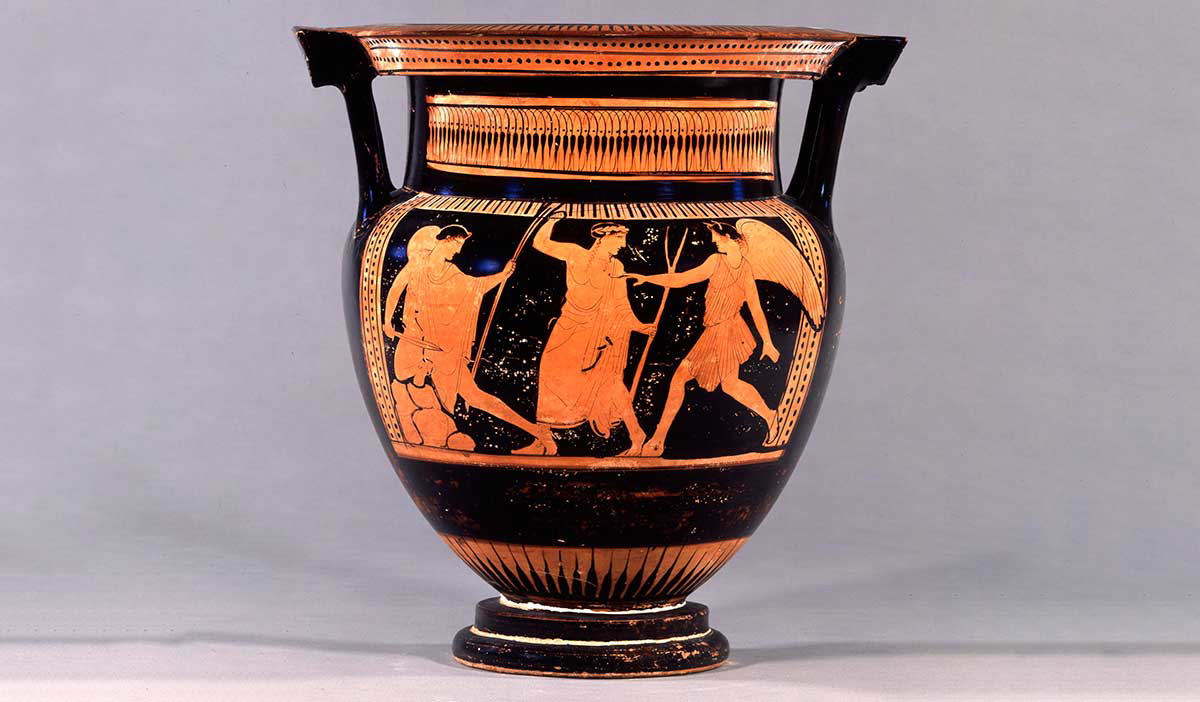
Standing before Athena, the Furies claimed that it was their right to drag Orestes into the underworld for eternal torment for his crime of matricide. Orestes pleaded that killing Clytemnestra was a legal execution sanctioned by Apollo. Rather than decide the case herself, Athena created the Areopagus, a permanent court of twelve Athenian citizen jurors to hear and decide the case. While this new court would become a cornerstone of Athenian governance, in this case, the jury was split. Athena cast the deciding vote in favor of Orestes.
The Erinyes were forced to free Orestes, and he returned to Argos as king. But the goddesses were outraged and threatened to unleash a deadly blight on Athens. To appease their anger, Athena offered them worship and a sacred shrine beneath the Areopagus in Athens. The Erinyes accepted Athena’s offer and became known as the Eumenides, which means “kindly ones,” transforming their role in the divine order. Their change in nature changed the nature of justice. It signaled that it was no longer acceptable to resolve disputes through ongoing blood feuds. Crimes were to be decided by society as a whole through the power of the courts. The Eumenides were now the guardians of this legal process.