
For centuries, humans have treasured works of art, preserving them despite their fragility and the effort required to protect them. Yet even the most cherished masterpieces are often lost to fire, war, or human malice. Some survive only in textbooks or archives, and at best, a few black-and-white photographs hint at their former glory. These six masterpieces survive only in memory, photographs, and history books.
1. Famous Artworks Lost in Fire: Gustav Klimt’s Faculty Paintings
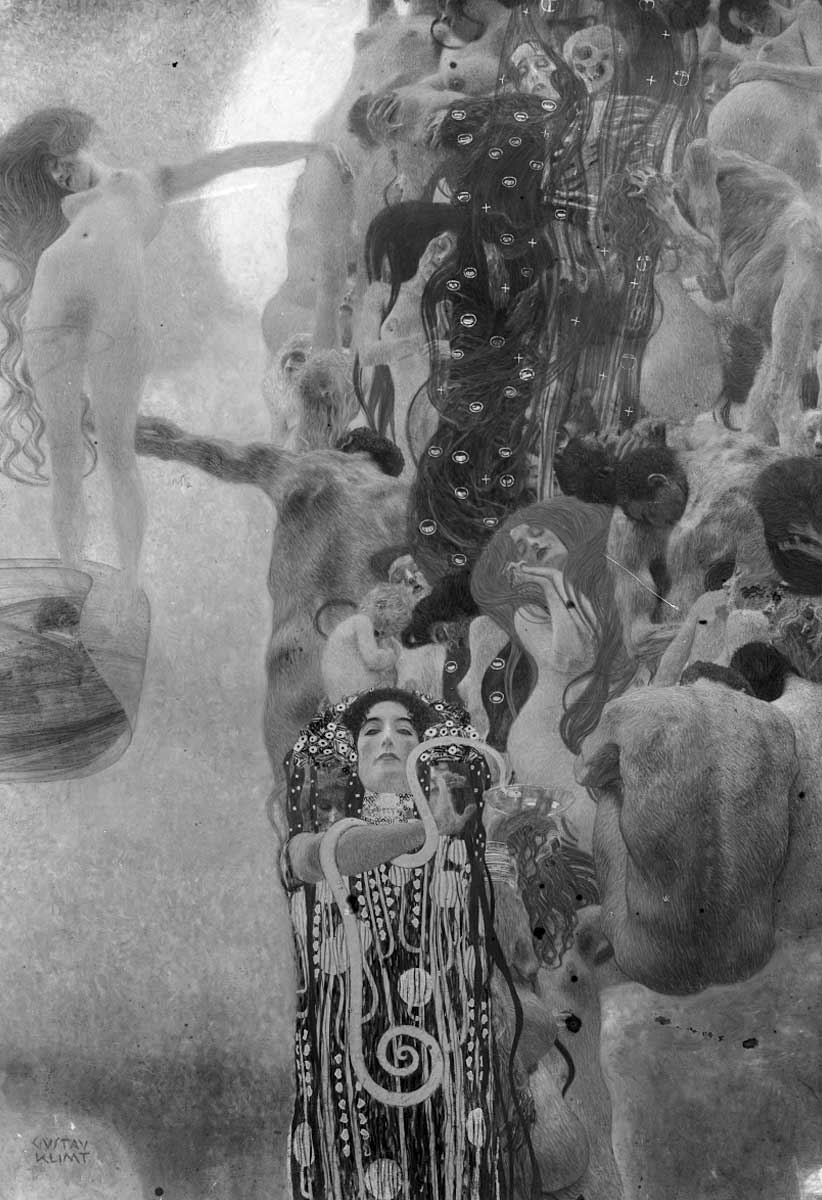
Perhaps the most ambitious project ever done by Gustav Klimt, his series of paintings for the University of Vienna, was a unique and bold experiment that polarized the Viennese elites and found admirers among the most unusual public—the Nazis. The University commissioned three panels that would reflect the spirit of three major disciplines: medicine, jurisprudence, and philosophy. The academics expected to see works glorifying the age of reason and rationality, of humanity dominating the realm of thought.
However, Klimt viewed it differently. His works highlighted the flaws of human perception and the futile egocentrism. In Klimt’s. version, medicine could not defeat death, and jurisprudence was powerless before evil. Offended, the faculty members protested the paintings and demanded Klimt return the government’s investments. One of Klimt’s patrons repaid the debt and retained the paintings in his collection.
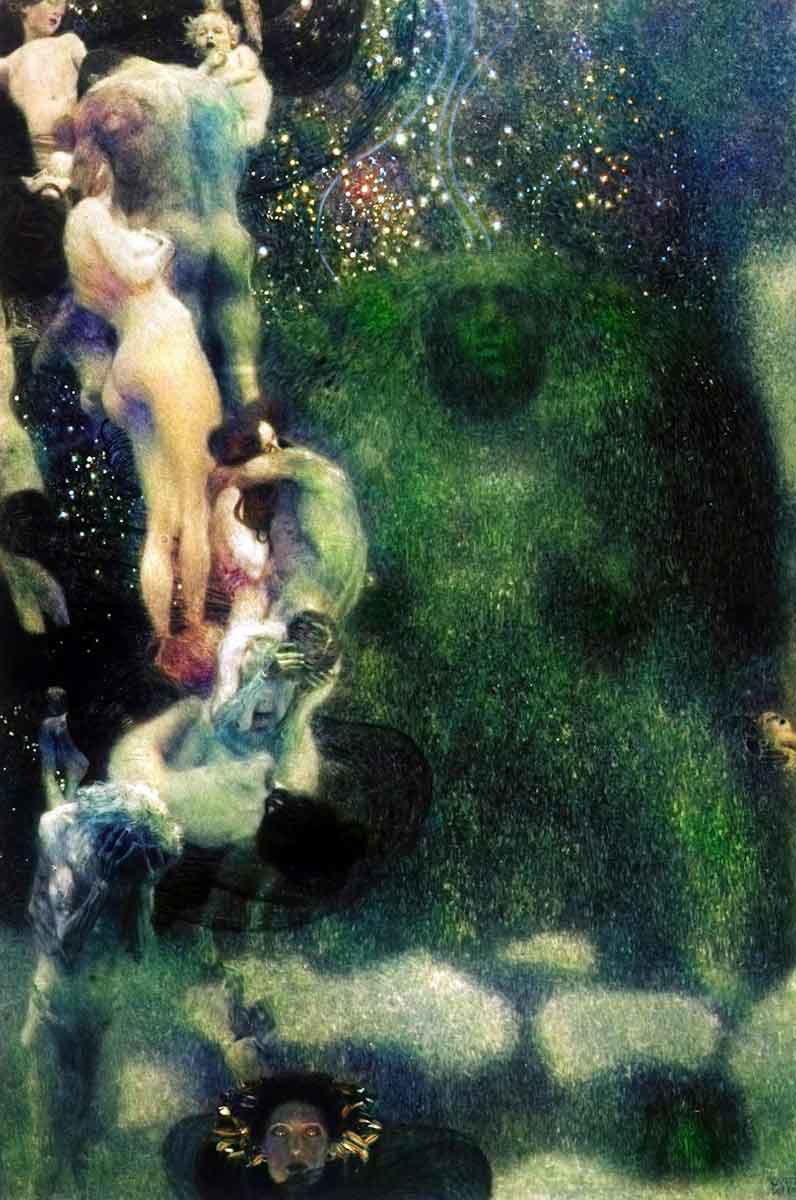
Immediately after the Nazis came to power, they launched an unprecedented attack on modern art. One of the artists who posthumously avoided prosecution was Gustav Klimt, who was actually favored by Hitler. Many of Klimt’s paintings, including the Faculty series, were seized from Jewish collectors for the benefit of the state.
For protection, in 1943, they were transferred to the Immendorf castle in Austria. However, while retreating in May 1945, the Nazis set fire to the castle. No remains of paintings were ever found in the ruins, with only a small collection of black-and-white photographs remaining to convey their scale and detail. In late 2021, Google launched an AI-based project that could colorize images; however, the results were deemed unsatisfactory.
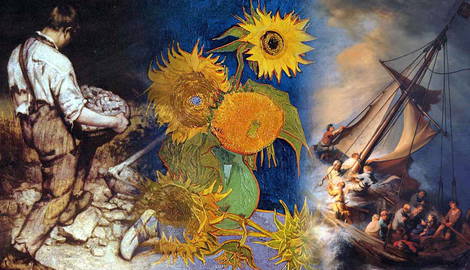
2. The Stone Breakers by Gustave Courbet
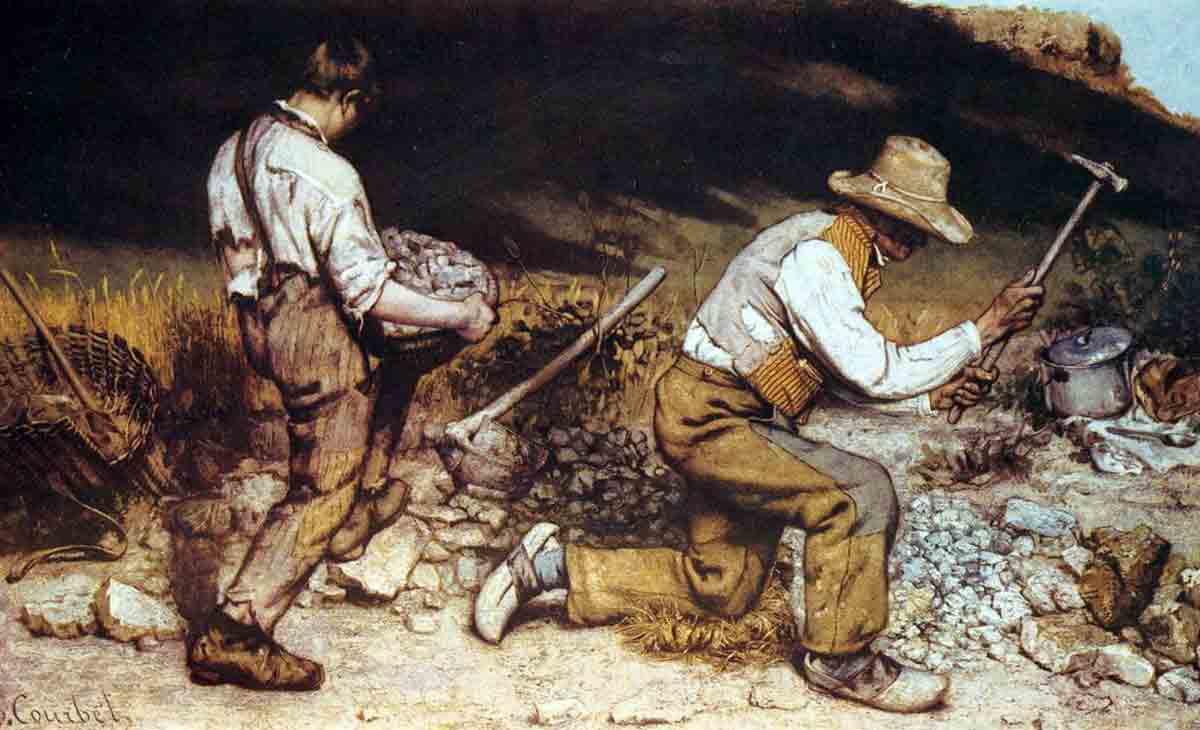
Gustave Courbet, the famous Realist artist, enjoyed a controversial yet carefully cultivated reputation. Courbet’s work constantly provided material for scandal. Elitist groups of art critics and collectors could not accept the idea that something as low and unappealing as the life of the working class was worthy of appearing in a work of art. Politically, Courbet aligned himself with the anarchists and deliberately worked on “low” subjects to illustrate the class difference and the cruelty of the social system. He met the stone breakers on his way to a painting session and was so struck by their poverty and the way their hard labor transformed them that he arranged a meeting in his studio.
Despite the controversy, the painting moved through several private collections before finally finding a home in the Dresden Gallery in 1909. The Stone Breakers was perhaps the most famous victim of the Dresden bombing carried out by the Allies in February 1945. It was destroyed, along with 150 other works, during their urgent transport from the Gallery to secure storage outside Dresden. Fortunately, Courbet painted two versions of the work. The second one, a smaller reversed image slightly different in tone, survived and remains in a museum in Switzerland.
3. Five Sunflowers in a Vase by Vincent van Gogh
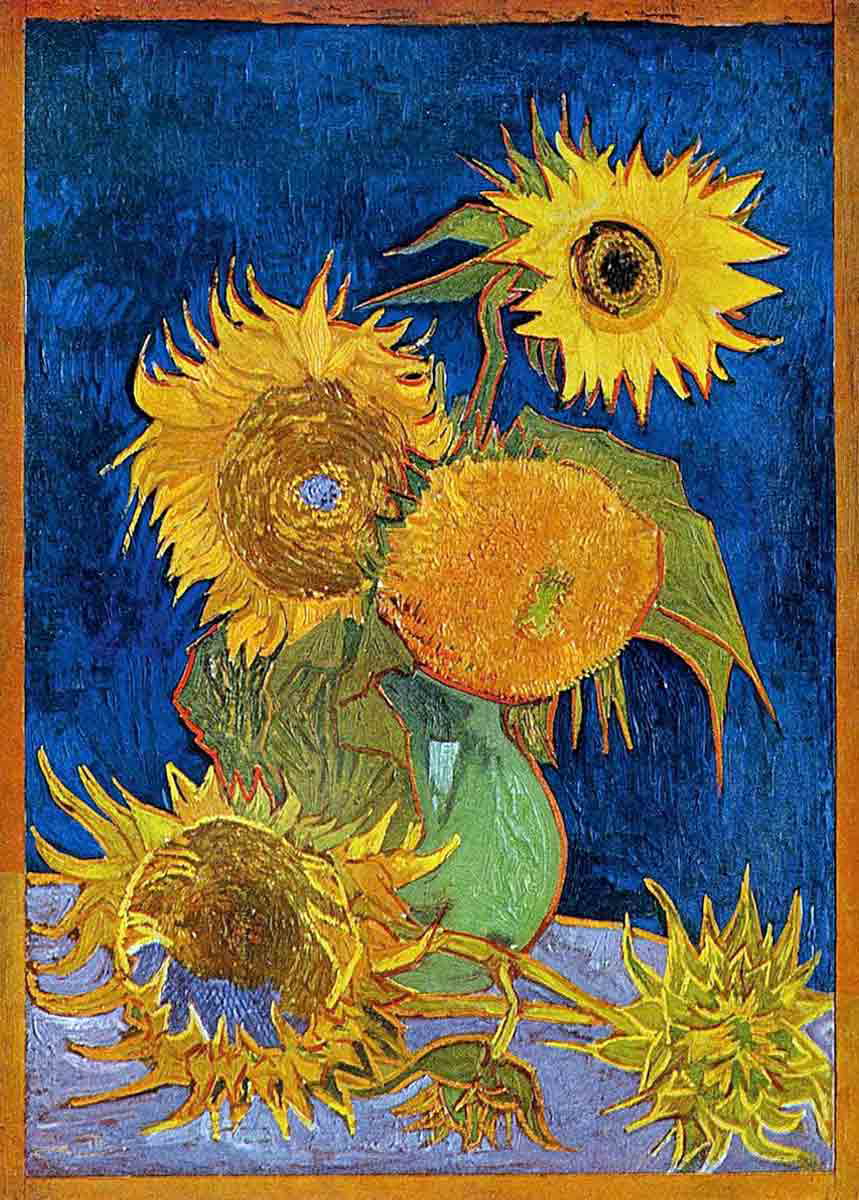
Overall, experts on Vincent van Gogh recognize eleven known sunflower paintings by the artist, produced across different periods of his life. However, some believe that at least two of them may have been painted not by Van Gogh but by Paul Gauguin or their friend Émile Schuffenecker. Initially, Vincent van Gogh painted sunflowers to decorate Gauguin’s guest room. Later, these flowers became a recurring motif in his work.
The particular sunflower composition in question is one of the undoubtedly attributed ones, clearly identifiable through Van Gogh’s notes. In 1920, a Japanese art collector, Yamamoto Koyota, purchased the painting from France to Japan. During the first public display, the original orange frame, chosen by Van Gogh himself, was accidentally destroyed, and Yamamoto, outraged, refused to exhibit the painting again. He kept it in his home until August 1945.
On the same day that the US army destroyed Hiroshima, bombs fell on Osaka as well. Yamamoto’s house caught fire and collapsed with all his possessions inside. Only in 2013 did art historians uncover a rare color print that revealed the painting in full, including the unusual choice of frame color.
4. Caravaggio’s Nativity with St. Francis and St. Lawrence
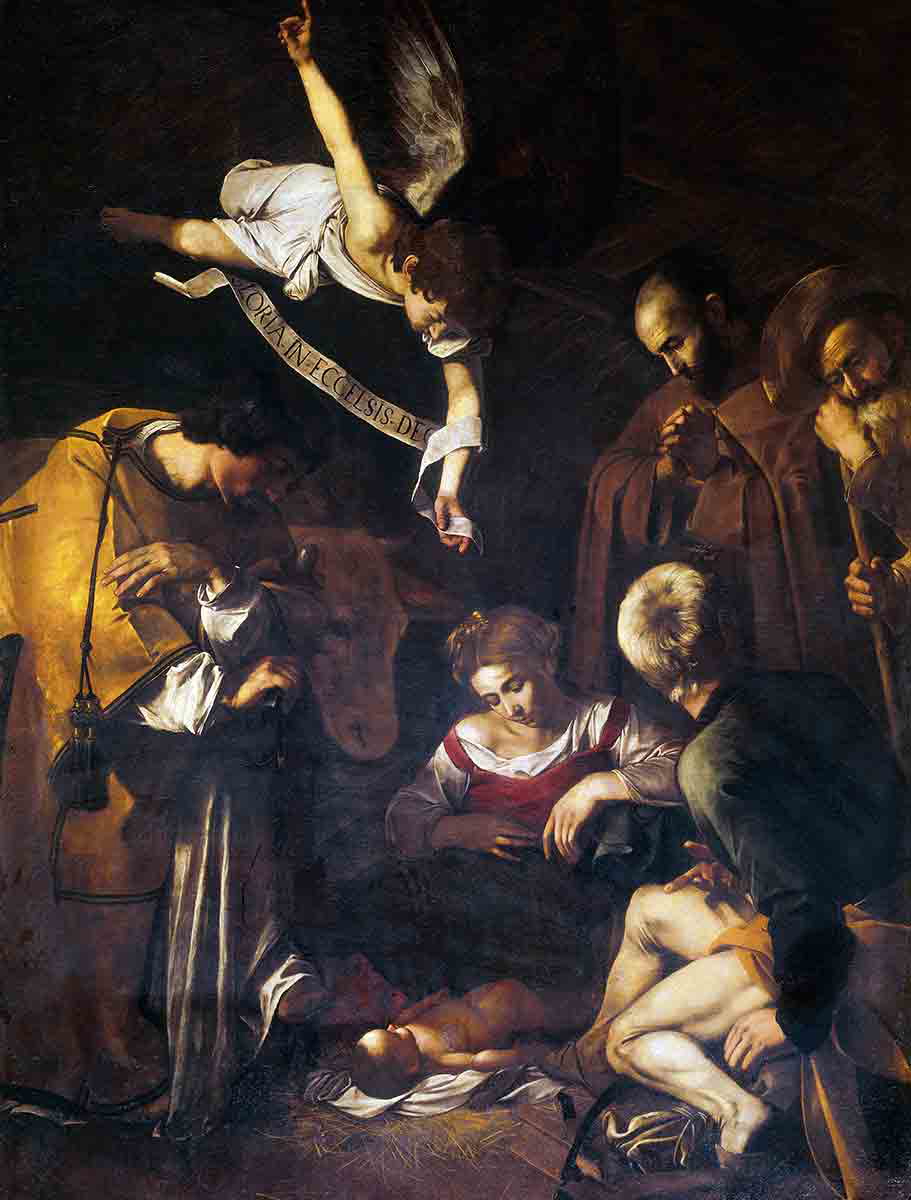
The traditional Christian subject of the Nativity refers to the birth of Jesus and the visits by the wise men and saints. Caravaggio painted this work in Sicily during the last year of his life. He spent several months there, narrowly escaping yet another threat of a prison sentence and possible execution. In 1609, his mental health was at an all-time low. His paranoia reached its peak—he slept fully clothed and armed, destroyed his paintings, and never stayed in one place for too long. Still, he made enough enemies in Sicily as well, so nine months later, he had to flee back to Naples.
The Nativity painting had a remarkable and dramatic life of its own. In 1969, two Sicilian Mafia members stole the painting from the Oratory of St. Lawrence in Palermo, cutting it from the frame and rolling it into a carpet lying nearby. In the early 2000s, several prominent Mafia members began to discuss the painting’s fate. According to the most popular version, it was stolen by a commissioner who refused to pay after seeing the damage caused by a messy theft. Hidden in a barn for several years, it was damaged by pigs and later burnt.
5. The Trench by Otto Dix
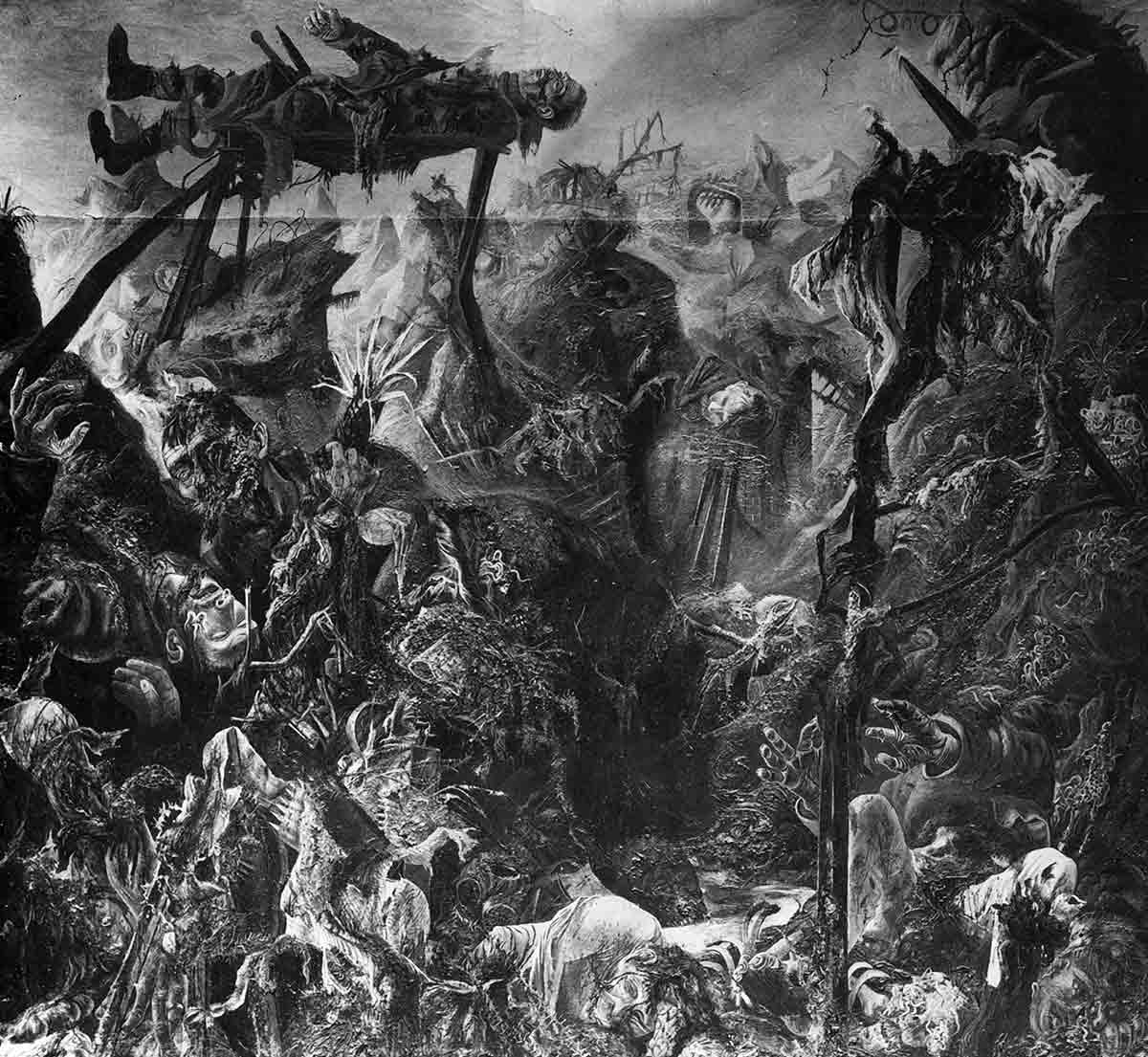
For the German painter Otto Dix, service in World War I was deeply traumatizing and shaped his approach to art. Instead of the metaphysical abstractions or the subjectivity of Expressionism, Dix and his colleagues sought to pursue a new radical realism. Calling their movement New Objectivity, these artists focused on reality in its most raw, repulsive, and absurd forms. Their images of war were the opposites of heroic and glorious.
By the 1920s, the European masses tried hard to forget the recent war, suppressing the traumatic memory of it. Dix decided to do just the opposite. He wanted to keep the remainder of the war present, as gruesome and gut-wrenching as it could be. The Trench showed the chaos of dismembered bodies, torn uniforms, gore, and dirt. Immediately, Otto Dix faced accusations of public indecency and disrespect to German soldiers.
After the Nazis came, the situation became worse. Due to the “military sabotage” of the country’s newly acquired war-mongering ideology, Dix’s works were seized, and some of them, including the monumental and horrifying The Trench, were destroyed in the chaos of World War II.
6. Rembrandt’s Famous Artwork Christ in The Storm
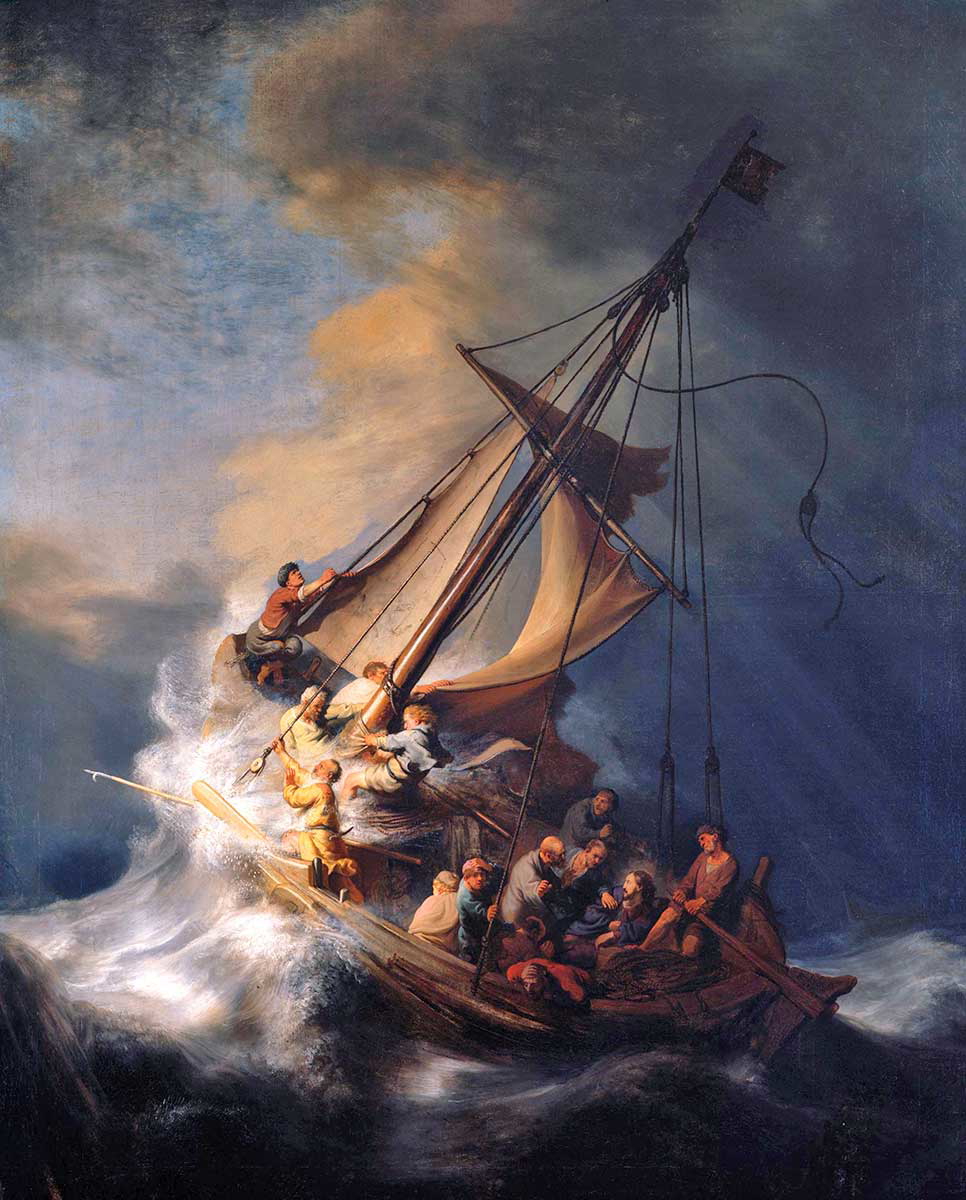
The unique and astonishing work was the only known seascape painted by the Dutch master Rembrandt van Rijn. It was lost during the most famous case of museum heist in history. In 1990, two unidentified men looted the Isabella Stewart Gardner Museum in Boston, stealing thirteen works, including three made by Rembrandt and one by Johannes Vermeer. These works vanished without a trace.
In 1997, the Boston Herald journalist Tom Mashberg allegedly saw Christ in The Storm. It was shown to him by his informant, a notorious criminal and art dealer. Mashberg only saw a fragment of it, but he was convinced that it was the right Rembrandt, crudely cut from its frame and rolled into a tube. The paint cracked and chipped, further damaging the precious work. However, after the police raided the dealer’s warehouse, they found nothing there.
Although no concrete evidence of the work’s destruction has ever been presented by the officials, the optimism remains unreasonable. Art crime experts are convinced that none of the stolen works have survived the thirty years since the theft. As with the case of Caravaggio’s Nativity, the conditions for safe storage of such an important and fragile work are too hard to create without attracting extra attention.
Quick Guide to Famous Lost Artworks
| Artwork | How it was lost | Surviving evidence |
| Faculty Paintings (Medicine, Philosophy, Jurisprudence) by Gustav Klimt, 1900–1901 | Burned in May 1945 by retreating Nazis at Immendorf Castle, Austria | Black-and-white photographs; partial AI colorizations |
| The Stone Breakers by Gustave Courbet, 1849 | Destroyed in February 1945 during the Dresden bombing | A second version survives in Switzerland |
| Five Sunflowers in a Vase by Vincent van Gogh, 1888 | Destroyed in August 1945 fire in Japanese collector’s home during the Osaka bombing | Rare colored print |
| Nativity with St. Francis and St. Lawrence by Caravaggio, 1609 | Stolen in 1969 by the Sicilian Mafia; likely destroyed | Photographs and archival documentation |
| The Trench by Otto Dix, 1920–23 | Seized and destroyed by the Nazis in the 1930s–1940s | Photographs and historical catalogue entries |
| Christ in the Storm on the Sea of Galilee by Rembrandt van Rijn, 1633 | Stolen on March 18, 1990, in the Isabella Stewart Gardner Museum heist, Boston | Photographs; empty museum frame displayed as tribute |