From its earliest beginnings, Rome was at war, conquering its neighbors in a many centuries-long quest for domination. But which was larger, the Roman Republic or the Roman Empire of the Caesars? While Rome reached its greatest territorial extent during the reign of Trajan in the early 2nd century, most of its expansion occurred during the final 200 years of the Roman Republic. Why did the Republic expand into an Empire so quickly, and why did growth stagnate under imperial rule?
Early Days: Rome Expands Into Italy
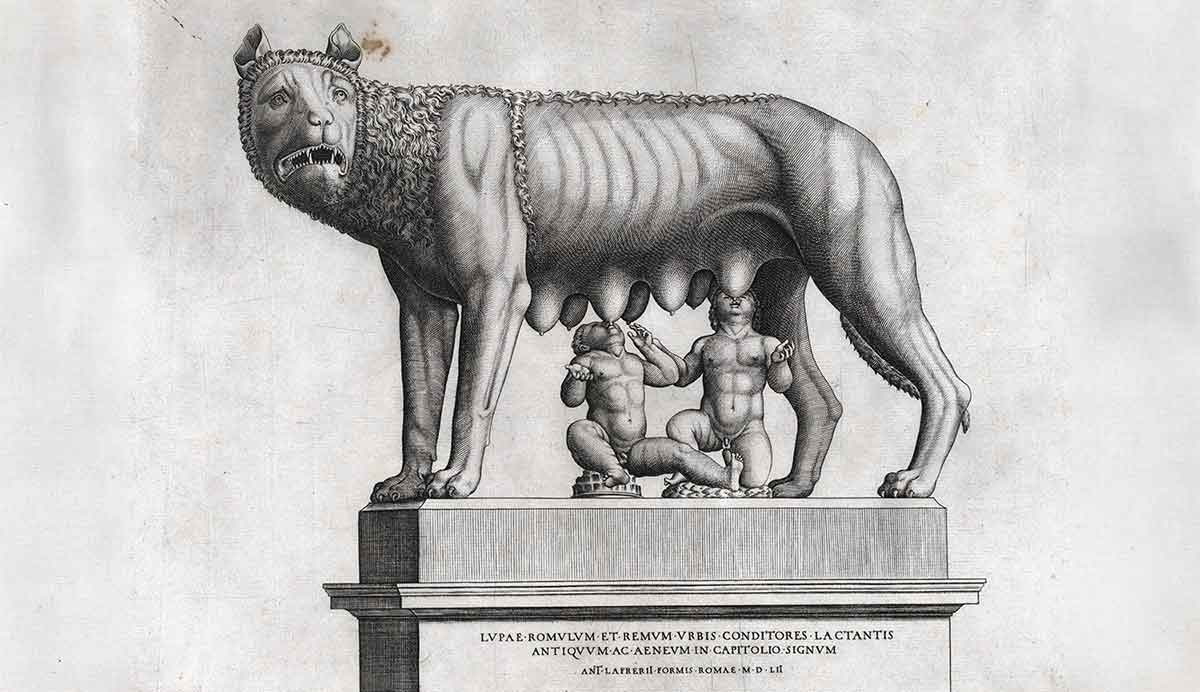
The early days of Rome are shrouded in mystery, with fact, myth, and legend mixed in a knot that is impossible to untie. Rome’s mythical founder, Romulus, engaged the neighboring communities, expanding the burgeoning city of Rome’s territory. The later kings followed suit and were almost constantly at war. Nevertheless, when the last king was deposed and the Republic established in 509 BC, Roman territory was limited to the area around the city itself. Rome’s conquests under the Republic got off to a slow start, focusing on securing central Italy from their neighbors, including the Etruscans and the Samnites, who were a constant thorn in the Roman side for centuries.
Rome would eventually expand outside of central Italy, securing the north of the Italian peninsula as a buffer against the Gallic tribes there, which had sacked Rome in 390 BC, leaving a scar on the Roman psyche. The Romans then turned their attention south, seizing southern Italy from the Greek colonists there in the early 3rd century BC.
The Republic: Building an International Empire
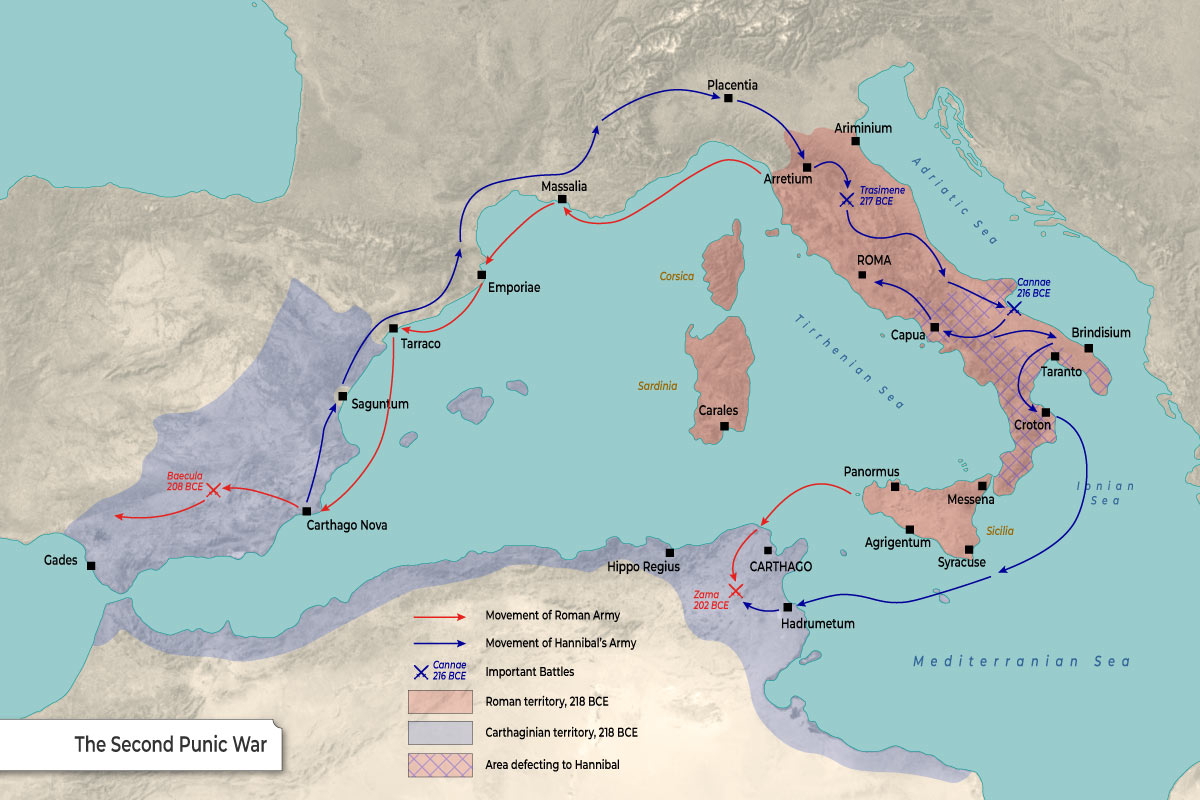
With Italy now under Roman control, Rome faced its greatest challenge yet. A dispute starting in Sicily (264 BC) led to three long and brutal wars against their greatest rival, Carthage. Despite catastrophic defeats and titanic casualties, the Romans managed to prevail in three separate Punic Wars. This left them in control of Carthaginian territory in parts of North Africa, Sicily, the Iberian peninsula, Sardinia, and Corsica. Their victory had given Rome an international Empire.
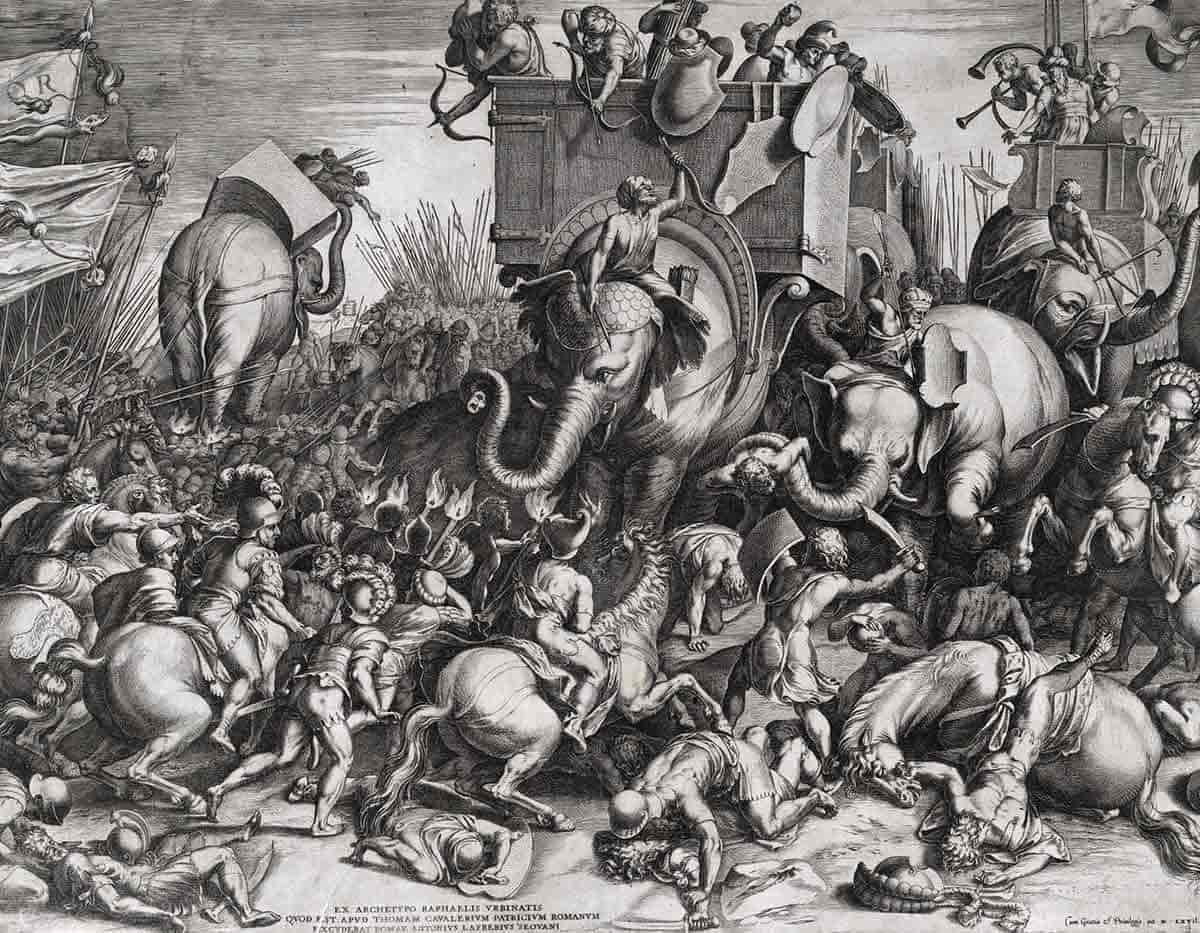
An international Empire gave birth to international ambitions and Rome turned its attention to the East. It conquered Greece and the Balkans, Syria and the Levant, and Anatolia. An expedition against Parthia ended in disaster, which limited further Roman expansion in the East.
The last major territorial acquisition made under the Republic occurred under the leadership of Gaius Julius Caesar. He marched the legions under his command north, conquering Gaul, which is modern day France, Switzerland, and the Low Countries. Rome then descended into decades of civil war.
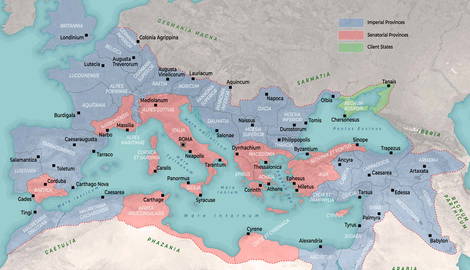
By the time the dust settled, Caesar’s heir, Octavian, reigned supreme and became the first emperor, taking the name Augustus in 27 BC. His ascension to the throne saw the end of the Republic and the beginning of imperial rule. He inherited an Empire that stretched from the Atlantic Ocean in the west to the Levant in the east, and included all territories in the Mediterranean basin as well as Gaul to the Rhine.
The Emperors Take Over: Consolidation
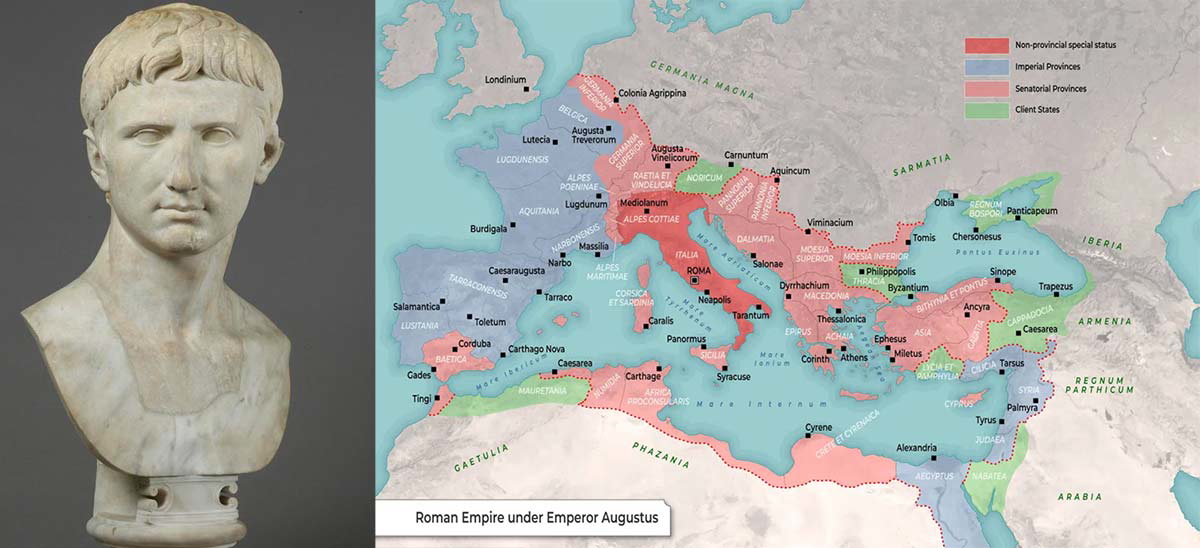
Augustus was more concerned with consolidating his power than expansion and Roman territory grew very little under his reign. His most important acquisition was Egypt, previously made a client kingdom by Caesar, which he annexed officially.
Popular history states that there was an attempt to conquer Germania, but after the disaster at the Teutoburg Forest in 9 AD, Rome retreated to the Rhine. This is untrue. Rome did expand past this border a little, but Roman incursions into modern Germany were limited. Eventually the Rhine and the Danube became the borders of the Empire. Beyond these modest gains, Rome’s borders were relatively stable for the next 100 years. The only other major expansion during this period was the invasion of Britain under the emperor Claudius in 43 AD. His unexpected rise to power meant that he had to prove his military credentials, and Britain was his chosen target.
Renewed Expansion: The Emperor Trajan
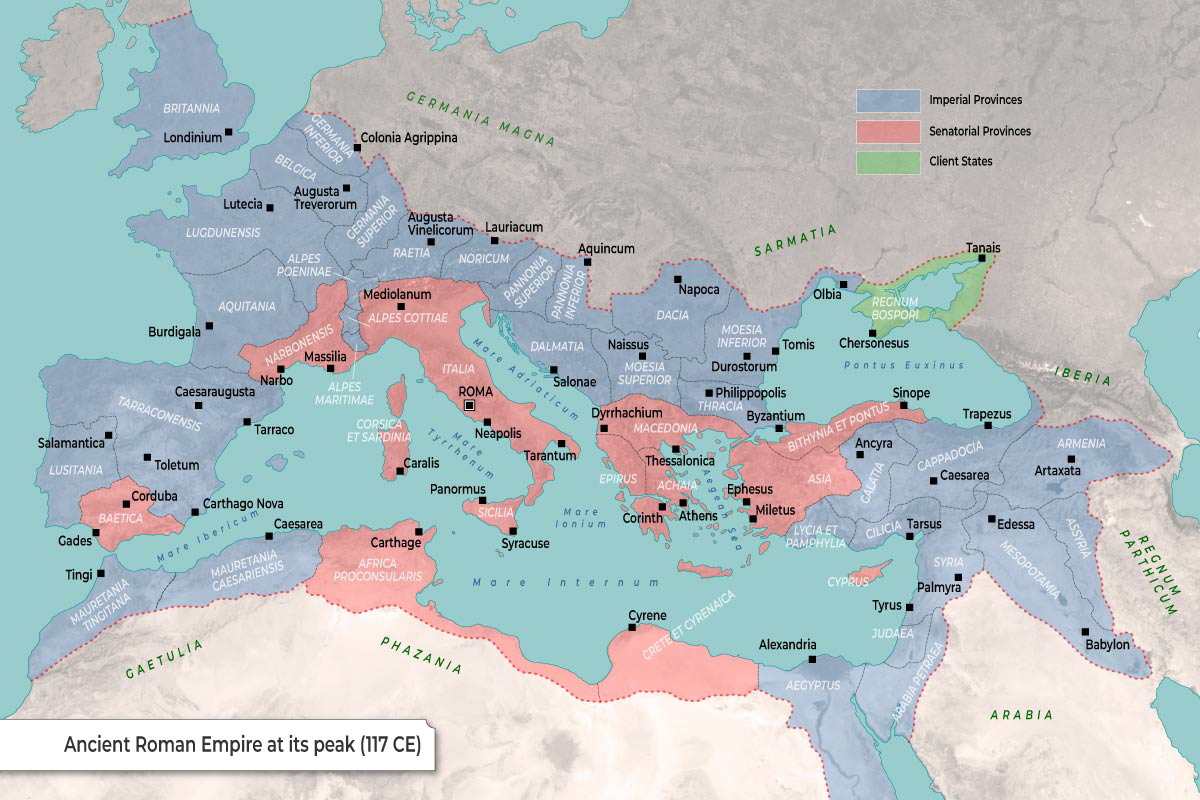
The next period of expansion only came under the emperor Trajan. In 106 AD, he conquered Dacia, modern day Romania and Moldova. He also pushed Rome’s territory eastward, taking Babylon and Mesopotamia, Armenia, and pushed into the Parthian heartland. At his death in 117 AD, Rome was at its greatest extent, from the Atlantic Ocean in the west to Iran in the east, Britain in the north and Egypt to the south. Afterwards, his successor Hadrian was again concerned with consolidation, and solidified Rome’s borders. He famously built a wall in Britain against the Picts of Scotland and reaffirmed the Parthian border.
Over the next few centuries, Rome would lose and regain territory until the combined pressures of near constant civil wars, economic crisis, and outside threats broke apart the Empire bit by bit. This would result in the splitting of the Empire into East and West in the 4th century AD, with the Western Empire steadily losing territory until the fall of Rome in 476 AD.
Why Did Rome Expand Under the Republic?
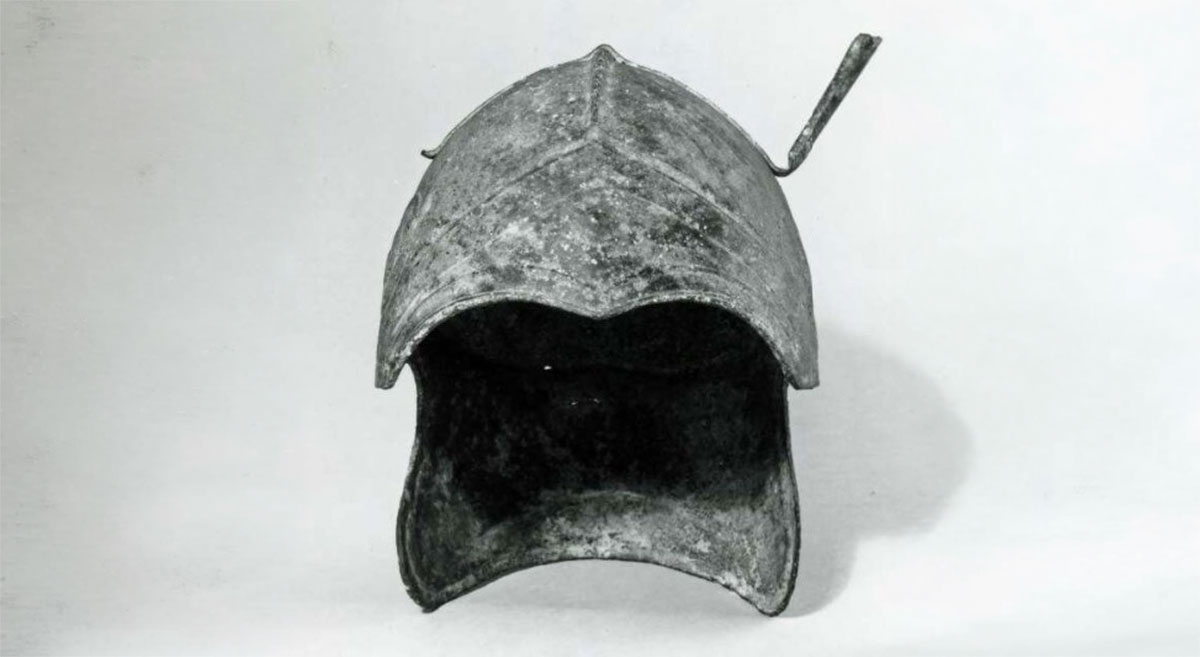
Why did Rome expand so much more under the Republic than under the Roman emperors, despite having armies in the field throughout their reigns?
Expansion began as a response to fear and paranoia. From its earliest days, Rome was surrounded by enemies. They had been subjugated by the Etruscans for much of their early history, with most of their kings being Etruscan. Once they shrugged off the Etruscan yoke, the Romans found themselves in a long struggle with the Samnites, hill tribes that were a plague to Roman territory. Rome was then sacked by the Celtic tribes in northern Italy, which seemed to have left a permanent scar on the Roman psyche.
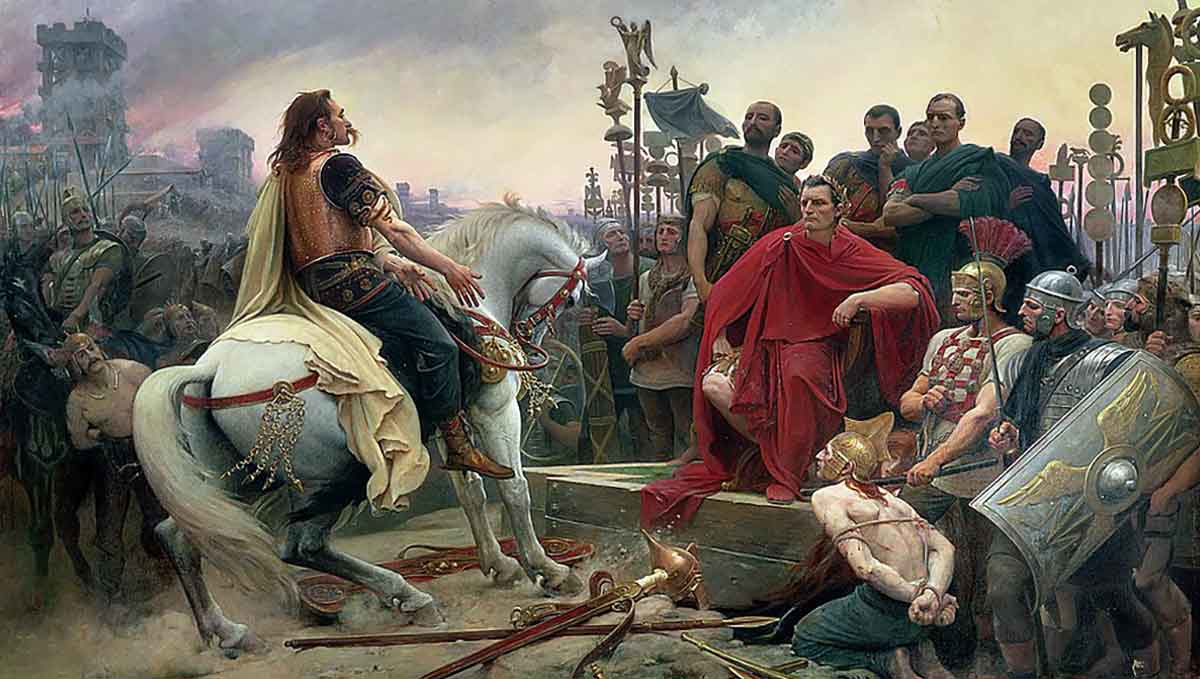
These early threats manifested in an insatiable desire to expand to provide a buffer zone between Rome and the outside world. With each new territory gained, new potential enemies threatened Rome’s land. This meant that new conquests had to be initiated to fend off new enemies. This led to new conquests, which spiraled into almost endless wars and expansion. When Julius Caesar launched his conquest of Gaul, he tapped into the almost primal fear the Gallic tribes elicited in Rome after the sack of the city in 390 BC, helping to justify his campaign.
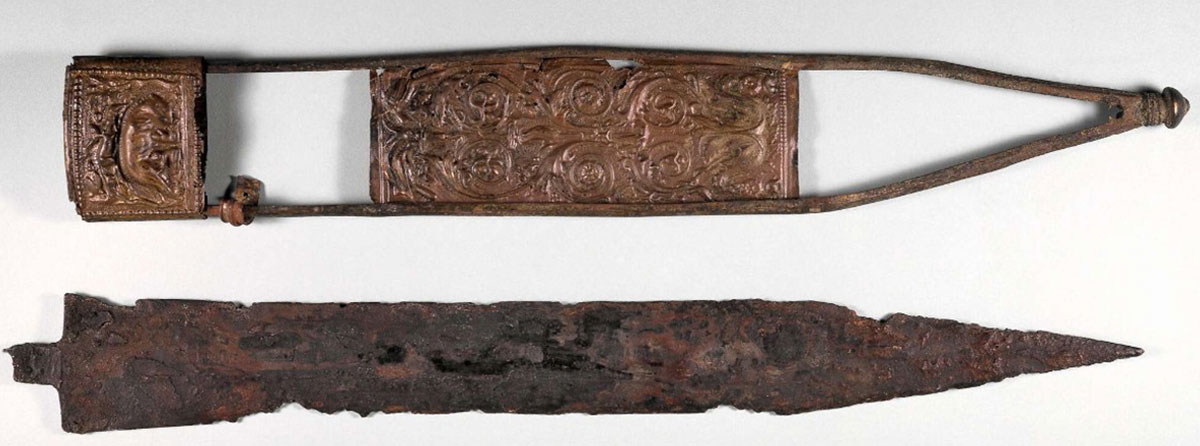
Political ambition also played a role. Political and social advancement required military successes, so ambitious men sought victory on the battlefield to boost their position. Initially, only the consuls, Rome’s chief magistrates, could lead armies, and they could only hold the position once every ten years. This gave them the drive to pursue war while in office to prove themselves. Eventually the need for qualified generals led to a changing of the rules, and Julius Caesar conducted his Gallic campaigns after his term as consul, with proconsular imperium to lead his army.
This dynamic meant that Roman leaders would look for any excuse to wage war against their neighbors, resulting in an aggressive foreign policy. The Romans would always try to justify their military conquests as a response to threats, often with extremely flimsy excuses. It led to the joke that Rome conquered the world in self defense.
Why Did Expansion Stagnate Under the Emperors?
Under the Caesars, the situation was very different. Controlled by a central authority, generals and other military appointments were given by the emperor, or at least in his name. Advancement came not from winning victories, but by loyalty to the emperor. A general who took it upon himself to invade another territory was more likely to earn the ire of the emperor than reward.
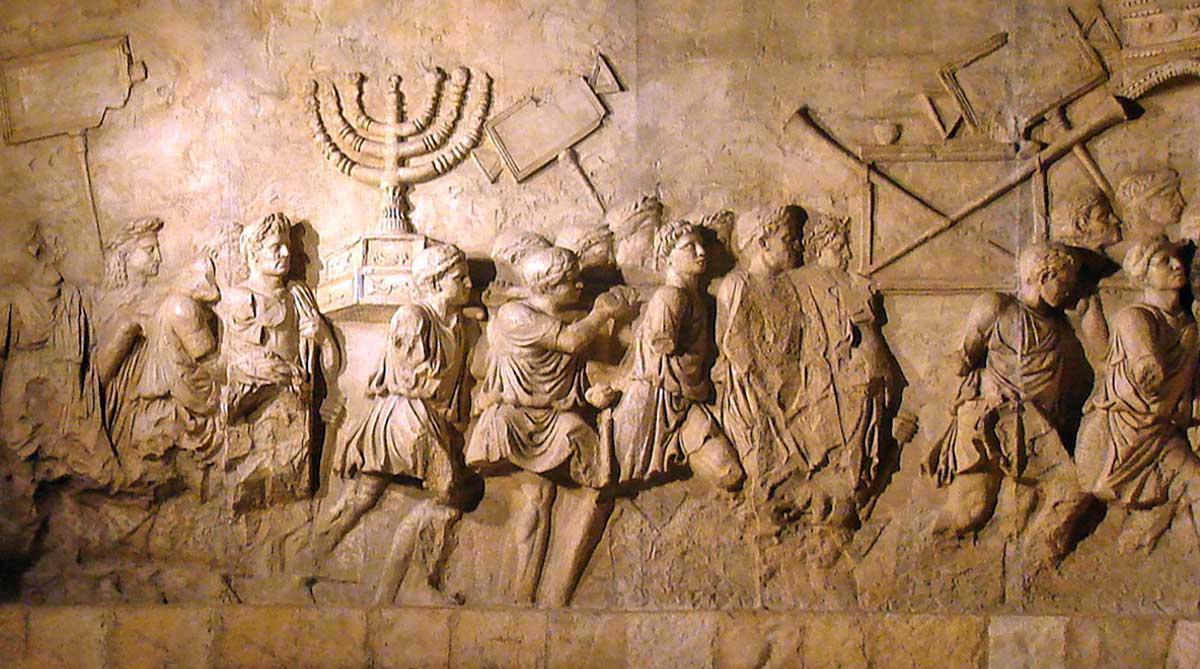
Military incursions were now a centralized strategic decision under the auspices of the emperor, even if he was not present, such as Claudius’ conquest of Britain and Vespasian’s subjugation of Judaea. This campaign was ordered by Nero, but the command gave Vespasian sufficient power to make himself the new emperor in the civil war of 69 AD that followed. This shows exactly why the emperors were reluctant to grant major commands that could result in new territorial expansion.
The number of viable territories also dwindled. Border territories such as northern Britannia or east of the Rhine were inhospitable lands filled with fierce barbarians, and more importantly, no real resources as a reward. Conquering a territory required significant resources to marshal the necessary forces and logistics systems. Campaigns could take months or years, with no guarantee of success. Even if the new territory was secured, new administration and infrastructure would have to be set up, garrisons established, all of which required money and effort. If the new province was wealthy, the cost could be made up through plunder, slaves, and eventually farmland, mineral deposits, and taxes. It just wasn’t worth it.
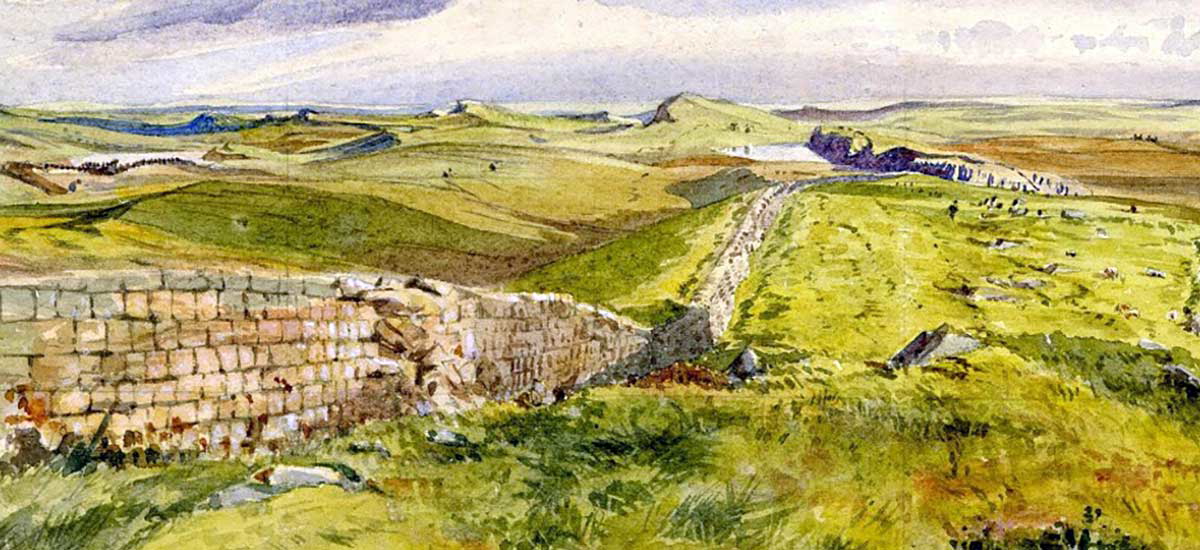
That does not mean that there were no attempts. While Hadrian’s Wall is often considered the northernmost border of Roman Britain, the Romans briefly pushed beyond it. The further border is marked by the Antonine Wall, about 100 miles further north. But this new territory was abandoned after a few decades.
An End to Expansion
Although Rome expanded the most under the Republic, the most expansionist ruler was the emperor Trajan, who added Dacia and parts of the Middle East. This was an exception rather than the rule. The amount of effort needed to maintain and control the existing Empire required most of Rome’s military resources, leaving little available to march into foreign lands. Moreover, the neighboring lands not already under Roman control were powerful enough to hold back the Romans, such as the Parthians and later the Sassanid Empire.