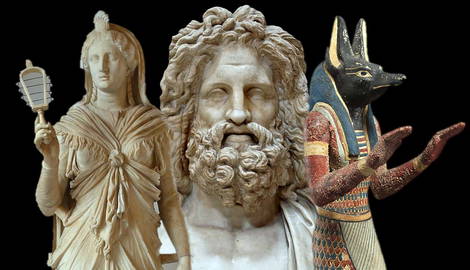

When Alexander the Great conquered Egypt from the Achaemenid Persian Empire in 332 BC, the native Egyptians received him as a liberator. To solidify his authority over this vast land, he made sacrifices to the Egyptian gods. This showed the Egyptians and their priests that, unlike the Persians, the Greeks would respect their gods. Soon after, Alexander was declared the son of Amun-Ra, at the god’s oracle in Siwa, soon syncretized as Zeus-Ammon.
This was the beginning of a process that would unfold over centuries, as Alexander’s empire fragmented upon his death. In this article, we will look at seven Greco-Egyptian gods who were the result of these long-running cultural interactions and royal patronage.
1. Zeus-Ammon
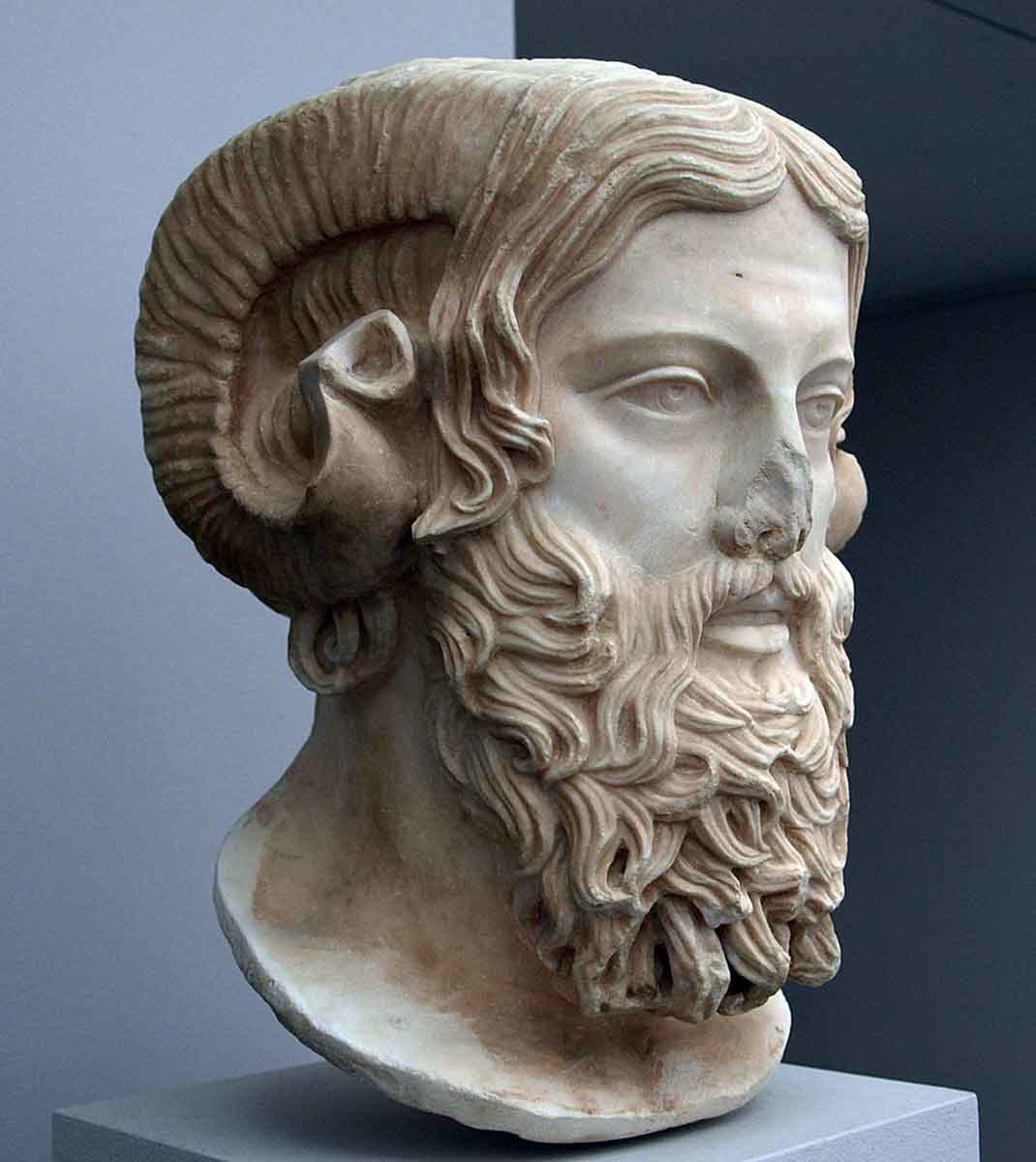
Interestingly enough, Amun or Amun-Ra was known to the Greeks before Alexander set foot in Egypt, and was worshiped in places like Thebes and Sparta. The Spartans in particular were said to have consulted the same oracle Alexander visited, on numerous occasions, and the citizens of Aphytis in Chalcidice, in northern Greece, were said to honor the god Ammon no less than the Libyans at his own sanctuary (Pausanias, Description of Greece, 3.18.3). Closer to home, at the Greek colony of Cyrene and its surrounding territories, in modern-day northeastern Libya, Ammon also appears to have been worshiped, and the Cyrenians dedicated a chariot with the effigy of the god to the Panhellenic sanctuary of Delphi (Pausanias, Description of Greece, 10.13.15).
Therefore, the syncretization of Ammon with Zeus, the supreme deity of the Hellenic pantheon, was a natural development, especially after Egypt came under Greek control and Alexander was proclaimed Ammon’s son. Amun-Ra was associated with the sky and the sun, and had been favored by pharaohs in the past, such as Amenhotep III and Tutankhamun, as a supreme deity over the other Egyptian gods. Thus, he was associated with Zeus, who held an equivalent position among the Greek gods who also had dominion over the skies.
Zeus-Ammon became a royal god, his previous, Egyptian ram-like characteristics syncretized to the mere presence of ram’s horns on a bearded Zeus, more in line with Greek religious sensibilities. His association with Alexander meant that the Greek conqueror’s coins would thereafter feature the presence of ram’s horns, to underline this connection!
2. Serapis
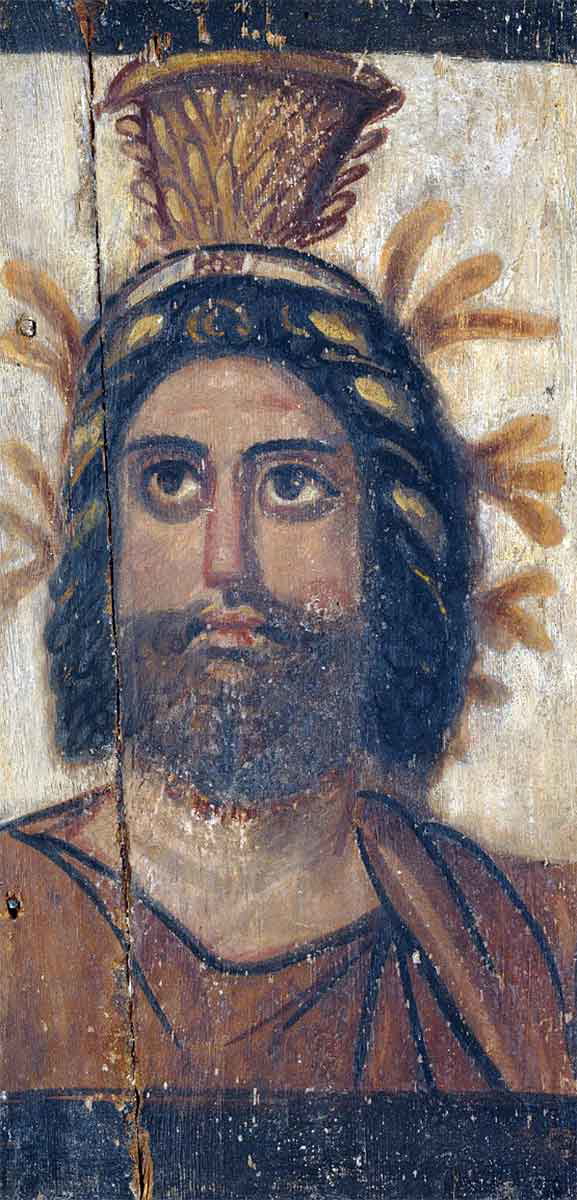
Serapis, more than any other Graco-Egyptian god, was the result of the efforts of the Ptolemaic royal administration to foster dynastic loyalty among its mixed, Greek and Egyptian population. The Greeks would never willingly adopt the theriomorphic Egyptian gods, and the Egyptians’ loyalties lay chiefly with the various priesthoods interspersed in cult-centers like Memphis and Thebes. Thus, the Ptolemies began sponsoring a divinity embodying the ultimate fusion of the two cultures: Serapis, a god that looked Greek but was profoundly Egyptian.
“Serapis” is the Hellenized name for the Egyptian Osorapis, the union between Osiris, god of death and resurrection, and Apis, the sacred bull of Memphis, symbol of the ruling pharaoh’s power. He was associated with several Greek gods, including Zeus, Pluton (Hades), Asclepios, and even Dionysos, and his attributes included divine power, fertility, health, and abundance.
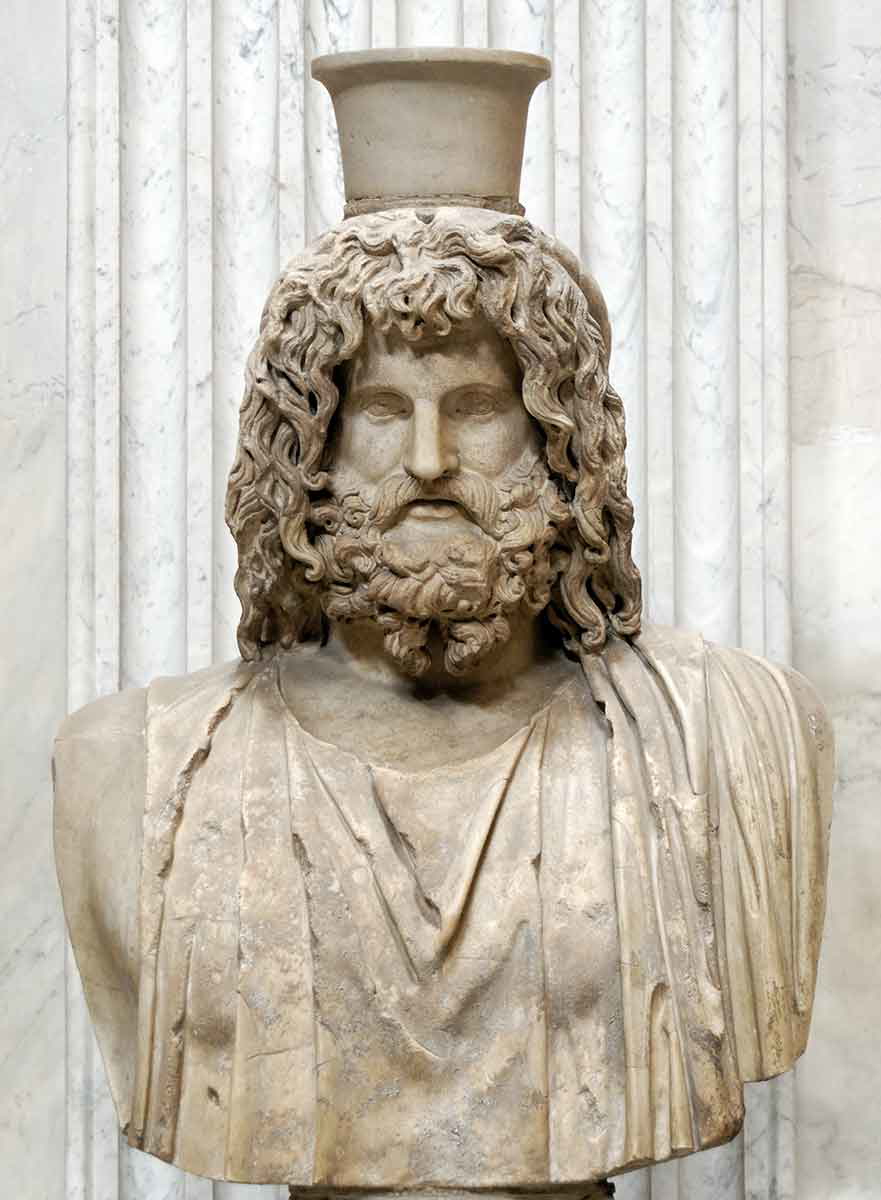
Very soon, Serapis became part of a Greco-Egyptian divine triad, with his wife (Osiris’s wife), Isis, and their son Harpocrates, both of which we will read about below. They were the new manifestation of the old Egyptian Osiris-Isis-Horus triad.
Serapis was depicted much like Zeus or Hades, as a bearded man, wearing the modius on his head, a grain-measuring basket signifying his role as bringer of fertility to Egypt’s crops, and holding a scepter, symbol of his regal authority, with Cerberus at his feet, to underline his connection with death and the Underworld.
His principal sanctuary was the Serapeion of Alexandria, seat of the Ptolemaic Dynasty, where the god was worshipped the most. Part temple, part library, and part healing sanctuary, it was visited by thousands of pilgrims seeking knowledge or healing from the god. Under the Roman Empire, the worship of Serapis would spread outside of Egypt as well, until 391 AD, when Christian mobs would destroy the god’s statue and sanctuary in Alexandria, bringing his worship to an end.
3. Isis
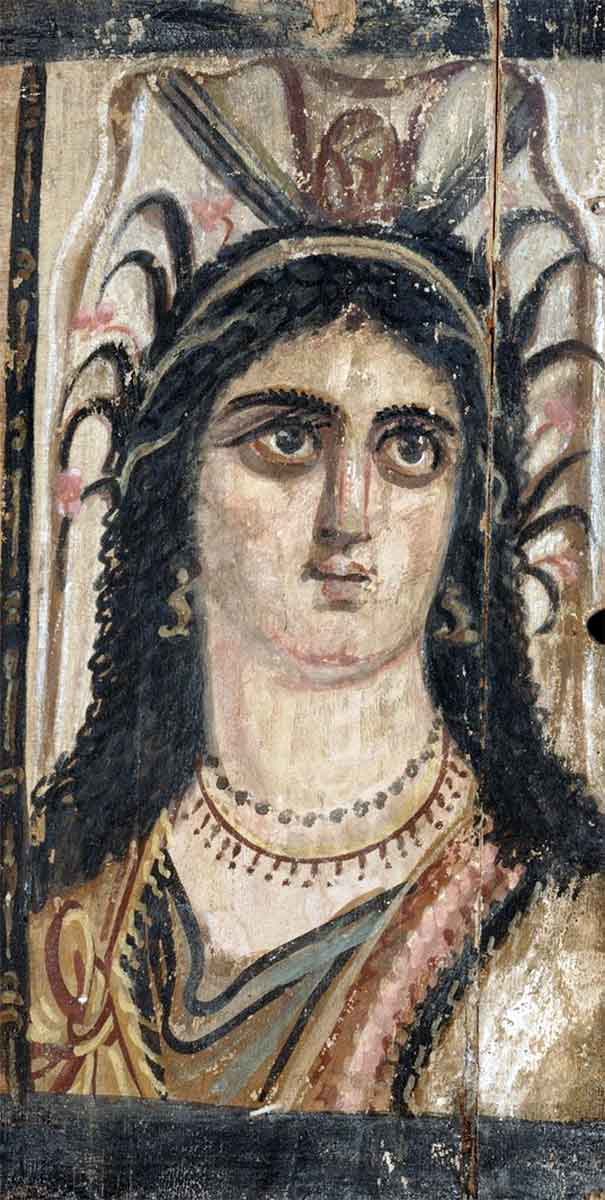
As the wife of Osiris and mother of Horus, Isis already possessed an important position in the Egyptian pantheon, chiefly as a funerary, mourning goddess. In the Hellenistic Period, however, she assumed much greater importance, perhaps as a result of Serapis’s (Osiris-Apis) own elevation. However, her role soon went far beyond that of the wife of Serapis.
What began as an association with Demeter, as both were mourning mother-goddesses, associated with fertility and the harvest, soon snowballed to subsume almost every major Greek female deity. As patroness of the city of Alexandria, alongside Serapis, Isis became the mistress of its port as well, and was connected to Aphrodite Euploia, protectress of ships and sailors. Soon, she was also known as Isis Pharia, of the Pharos of Alexandria, as sailors from far and wide would leave dedications to her, thanking her for their safe entry to the port, guided by the flame of the great lighthouse. As the divine wife, she was also connected to Hera and was even associated with Tyche, goddess of fate and fortune.
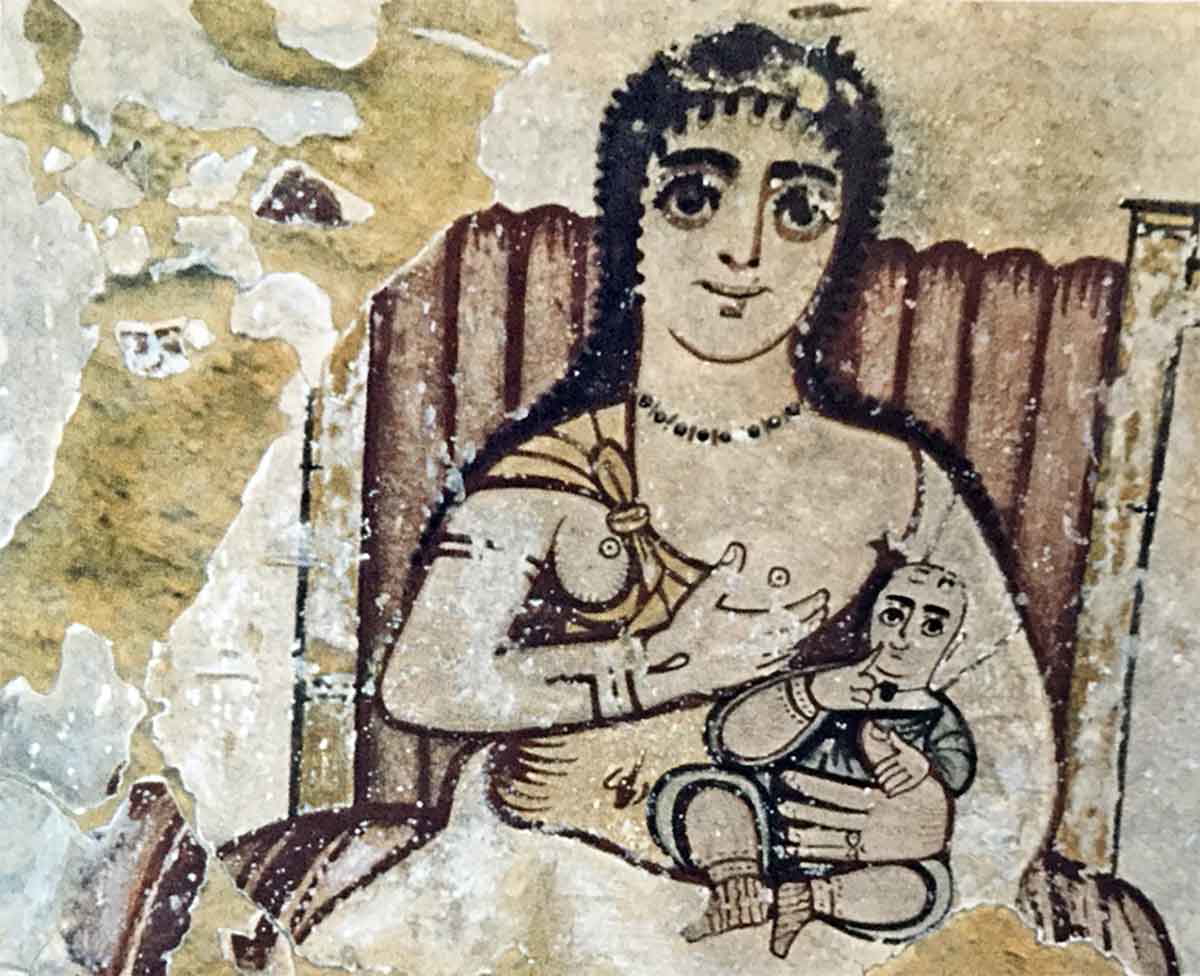
Such was her authority that she became known as Isis Myrionymos, “Isis of the Ten Thousand Names,” understood as a universal goddess. Under the Roman Empire, her worship exploded in popularity, and by the 3rd century AD, evidence of it could be found as far away as Spain, Gaul, and Britain! Such was her influence that some have theorized that the figure and importance of the Virgin Mary is closely tied to that of Isis, and images of Isis with her infant son, Harpocrates, instantly evoke similarities with Mary and the baby Jesus.
4. Harpocrates
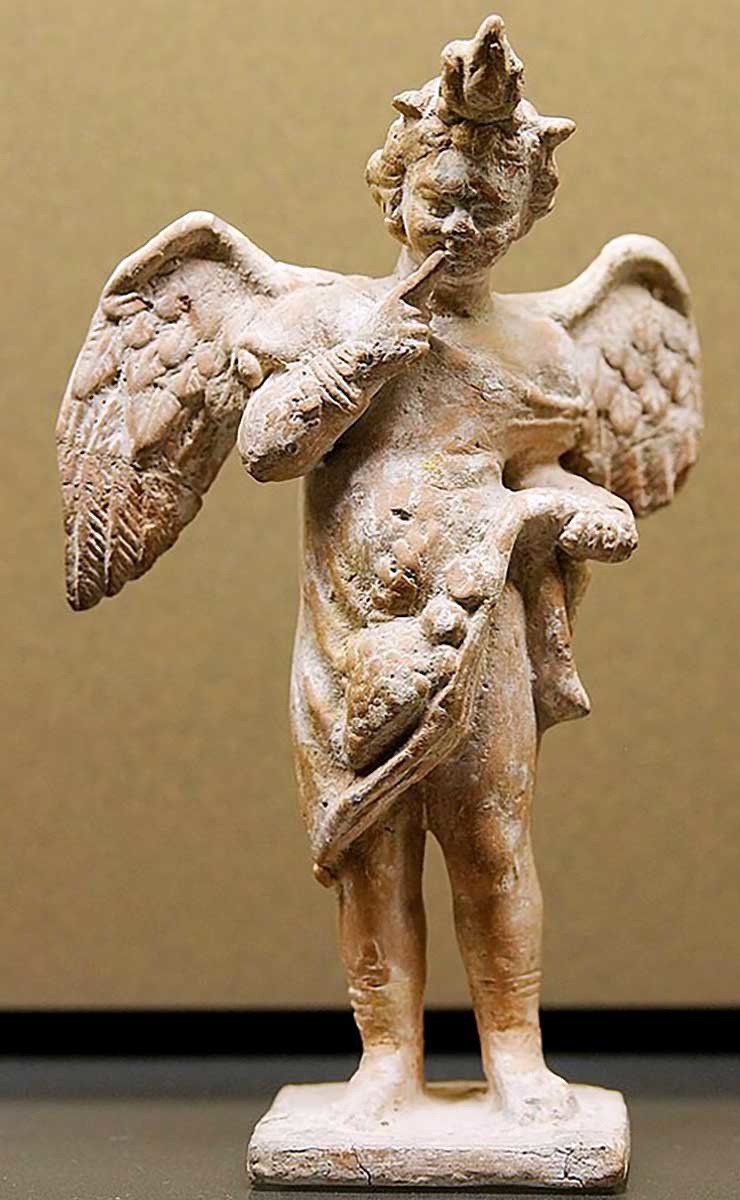
The child of the Greco-Egyptian couple, Serapis and Isis, was Harpocrates. The origin of his name lies in the Hellenization of the Egyptian Heru-pa-khered, “Horus the child.” What is most striking, however, is the way the Greeks misunderstood the original role of the infant Horus in Egyptian religious tradition and iconography, thereby giving rise to a very different god.
As a child, Horus was depicted with a shaved head and single knot, known as the “Horus knot” or “sidelock of youth,” and sucking his thumb, an easily recognizable sign of his infancy for the Egyptians. The Greeks, however, understood the thumb-in-mouth motif as the raising of a finger to one’s lips! Thus, Harpocrates became the god of silence, secrets, and discretion. No longer was he the child destined to be a sun-god, but rather he became associated with the mysteries of religious cults, such as that of Isis-Demeter, which emulated Demeter’s Eleusinian Mysteries in Greece.
Due to the infant Horus’s naked representations, soon enough Harpocrates was also connected to the chubby, naked Eros (or Cupid, for the Romans), as the son of Aphrodite, who had already been syncretized with Isis, also the mother of Horus. This tasteful alignment meant that Harpocrates symbolized the importance of keeping secrets for the flourishing of love, often in the form of affairs… One of the most interesting and fascinating gods was born out of a cultural misunderstanding!
5. Hermanubis
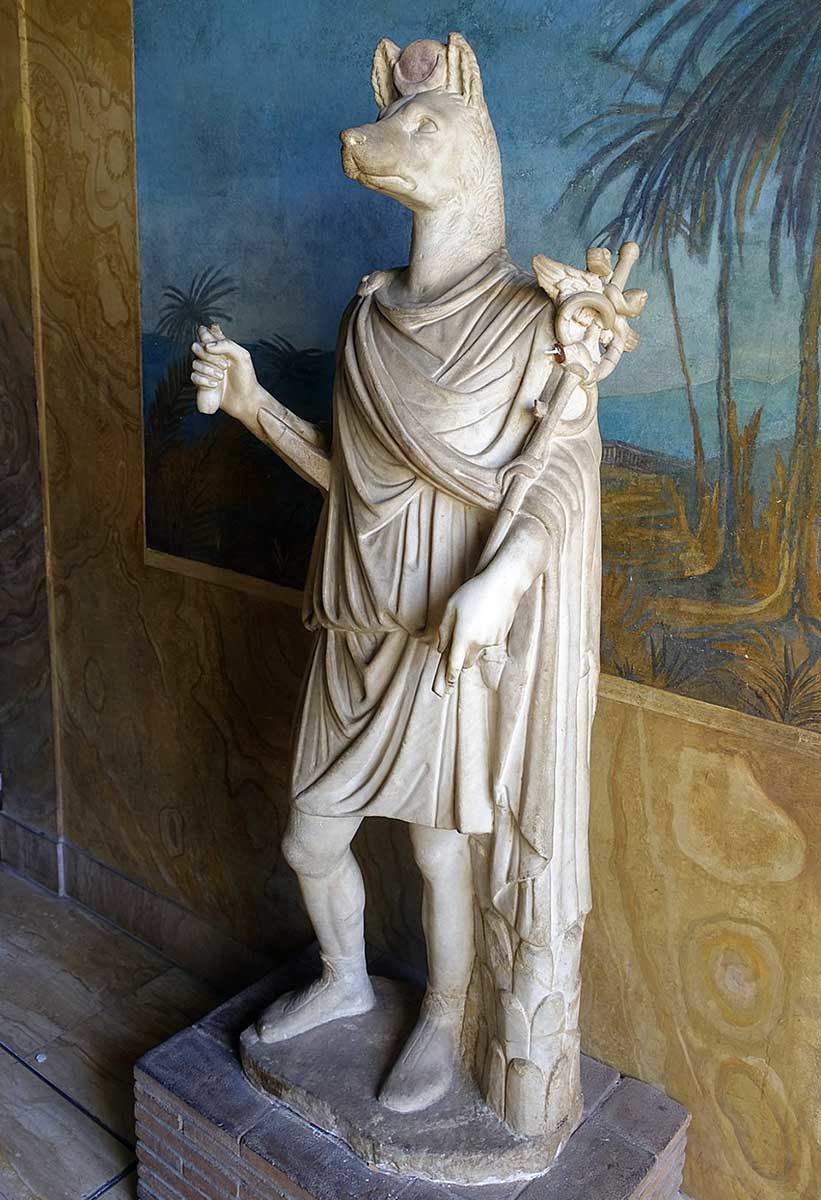
Hermanubis is one of the cases in which Greek sensibilities conceded to the Egyptian precedent, perhaps due to how neatly the gods in question fit together. Both Hermes and Anubis, the jackal-headed god, were seen as conductors of the souls of the dead to the Underworld, also known as “psychopomp” gods. Hermes, able to travel between the worlds of the living and the dead, took the souls to the ferryman Charon, to be ferried across the river to the Underworld. Anubis took the souls of the deceased to the “Hall of Truth,” where their hearts would be weighed against the feather of Ma’at, goddess of truth and justice.
As Greeks and Egyptians lived together and engaged in mixed marriages, they needed a god who would be able to properly navigate and conduct their souls and their loved ones’ souls safely to the Greek and Egyptian afterlife. This syncretization was as inevitable as it was expedient, in a bicultural society where death played a major part in religious life.
Thus, in breaking with Greek norms, Hermanubis retained his jackal’s head but on a Greek body, wearing a himation (cloak), holding Hermes’s caduceus scepter with the intertwining snakes on one hand, and a palm branch on the other, signifying victory over death. Sometimes he also wears the modius, linking him to Serapis.
6. Hermes Trismagistos
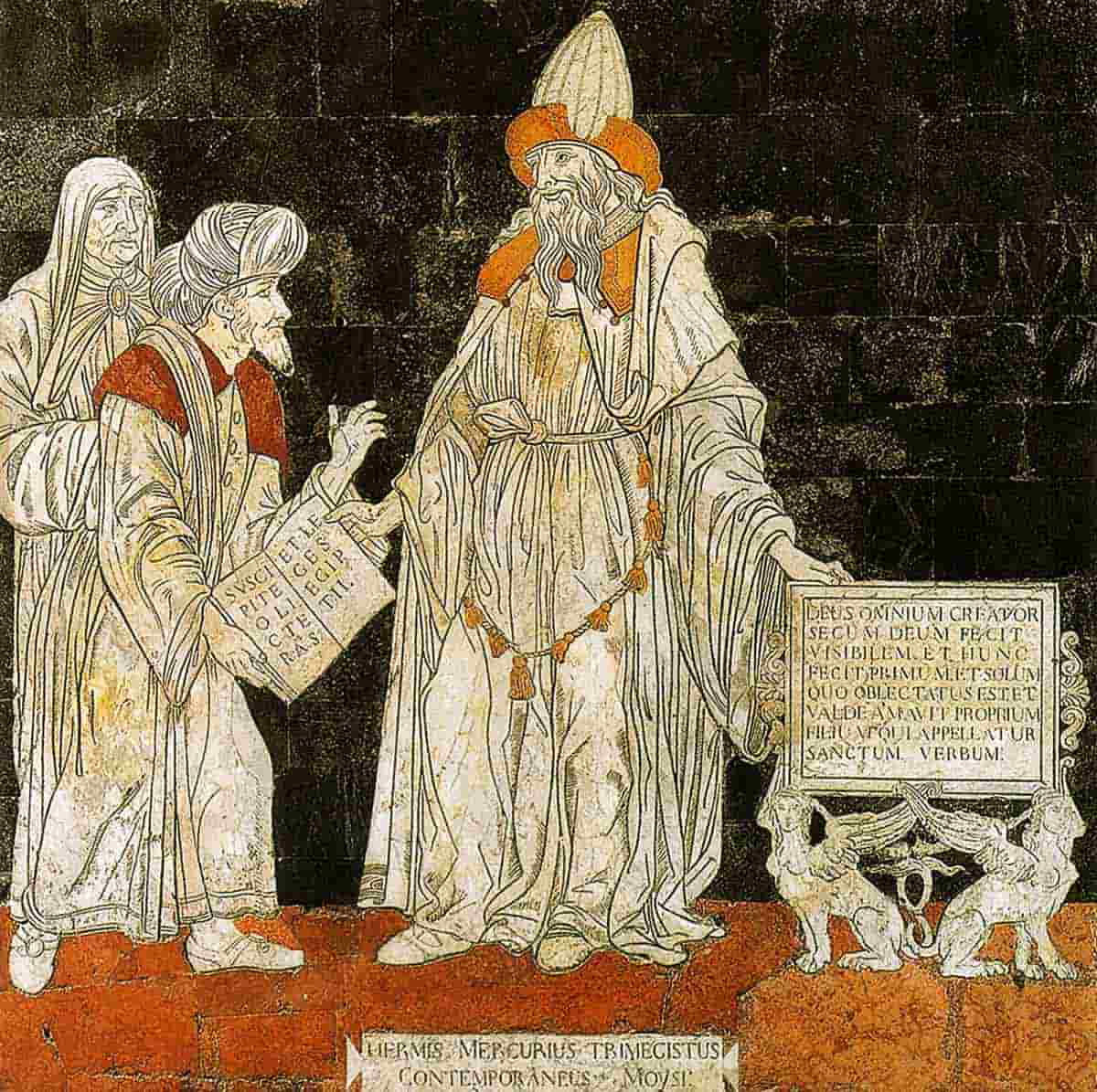
Just as we thought we were done with Hermes, he persists, this time associated with another Egyptian god, Thoth. As the messenger of the gods, Hermes was tied to the written word, language, and its logical interpretation (hermeneutics). To the Egyptians, the ibis-headed Thoth was the god of wisdom, chief scribe of the gods, inventor of the hieroglyphs, and wielder of heka (magic).
The union of the two gods gave rise to a new divinity who was master of the combined knowledge of two immense and ancient civilizations, zealously safeguarding the secrets of the cosmos. His name came from the Egyptian invocation of Thoth as “aa, aa, aa,” three-times the greatest, translated to Greek as “Trismegistos.”
In the Middle Ages and the Early Modern Period, alchemists would understand these three parts as referring to Alchemy, Astrology, and Theurgy (the operation of the divine). The god himself was understood as the author of the Corpus Hermeticum, a collection of cryptic texts written in the first three centuries AD, which expanded on the idea that only by understanding the physical world, through science and observation, could one understand the divine, as the former was a reflection of the latter.
Rediscovery of such texts during the Renaissance meant the rediscovery of Hermes Trismegistos himself, who came to be venerated by the scholars of that and later periods, as a philosopher-god who survived Christian obscurantism and preserved the secrets of ancient science and magic, moving far beyond his Greco-Egyptian origins.
7. Agathodaimon
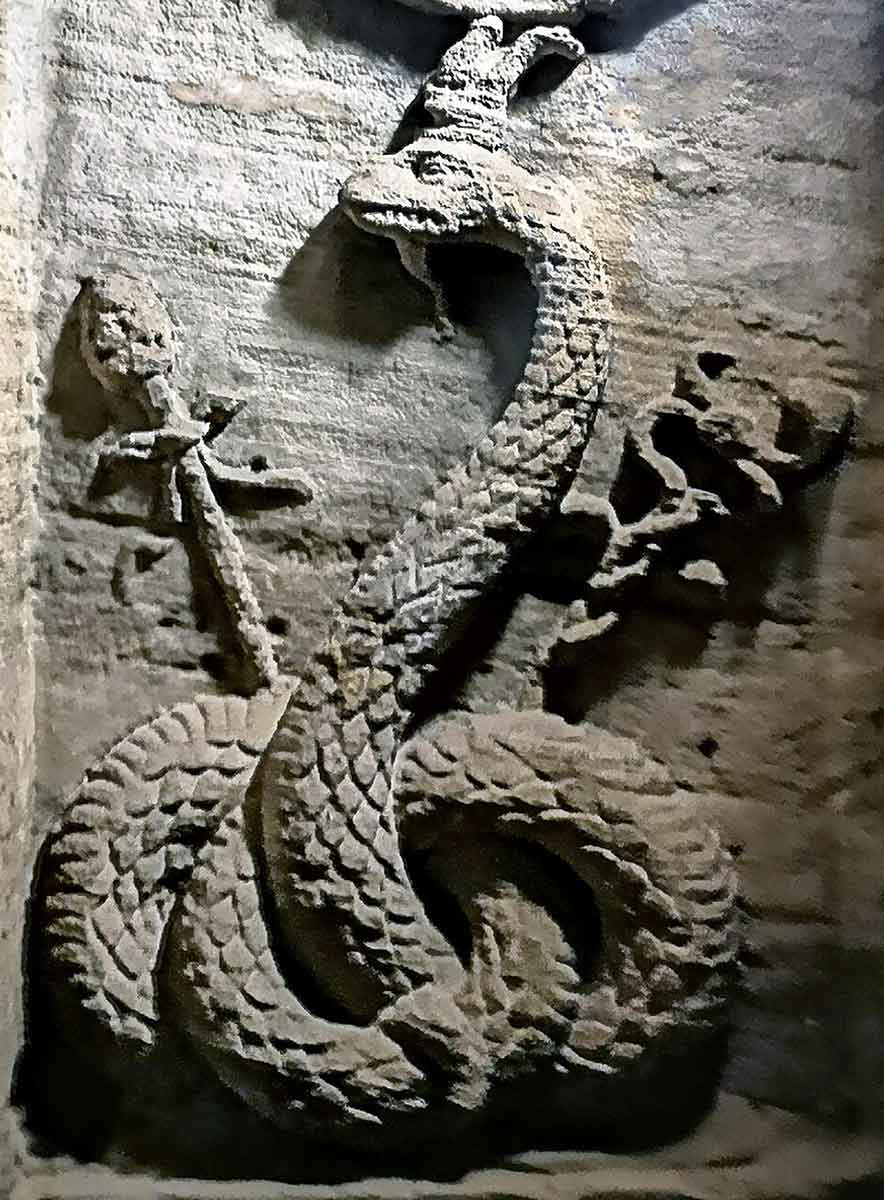
Agathodaimon was technically not a god but rather the manifestation of the gods’ positive influence on the world. “Daimon” in ancient Greece meant “spirit,” the essence of something, and “agathos” meant benevolent. It existed as a notion before the Greeks set foot in Egypt, as a positive influence or energy in one’s household, which protected its members and brought prosperity, as a kind of guardian spirit.
When the Greeks came to Egypt, before and after Alexander, they connected their idea of this household protector to Shai, the Egyptian god of fate and destiny, as well as the local belief in benevolent snakes that protected a household by eating the rats that destroyed the grain. As such, Agathodaimon was a benevolent household spirit represented as a snake.
Agathodaimon or the Agathoi Daimones (plural), as with many different serpentine protectors, was also worshiped as a civic patron or guardian of the entire city of Alexandria. He was often presented as a bearded man’s head on the body of a snake, wearing the Pschent, double crown of Upper and Lower Egypt, symbolizing his authority over the land, and holding a sheaf of grain, signifying abundance, and a caduceus, connecting him to Hermes. He was sometimes understood as a manifestation of Serapis, whose wife was Isis-Tyche or Isis-Thermouthis, the serpentine form of the goddess.