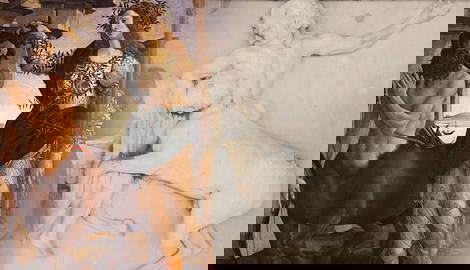

The centaurs of Greek Mythology are amongst the most famous composite creatures of antiquity. They were half-men and half-horse beings representing an intermediate stage between human civilization and savage nature. The ancients portrayed them as barbarians unable to control their primeval instincts, with an important exception in the character of Chiron, a teacher of some of Greece’s greatest heroes. Born from the clouds and unable to hold their wine, discover the centaurs with nine fascinating facts.
1. The First Centaur Was Born From A Cloud
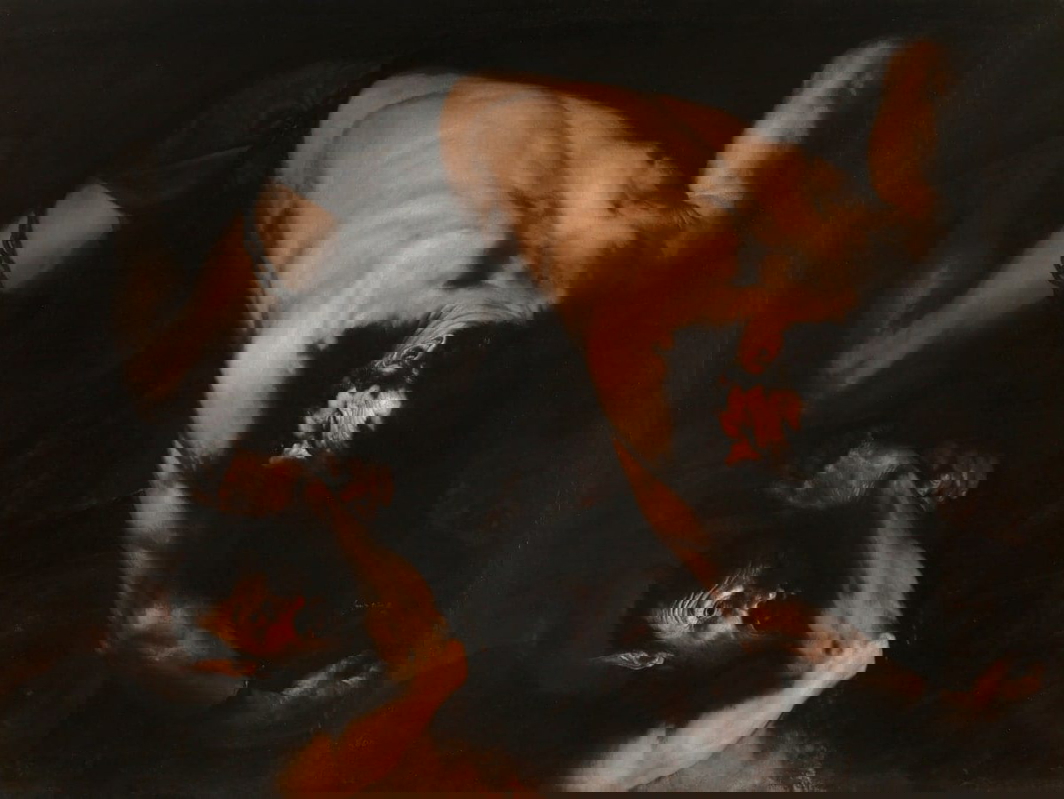
The origin of teh centaurs is linked to Ixion, the king of the Thessalian tribe of the Lapiths, who assassinated his father-in-law while the latter was his guest. This breach of the ancient law of xenia was deemed so terrible that Ixion fell from his rank as king to live as an outlaw. Zeus took pity on poor Ixion and invited him to live with the gods on Olympus in a rare show of mercy.
However, instead of returning the kindness, Ixion proved ungrateful. Zeus suspected that his guest lusted after his wife, Hera. Ixion had not crossed any lines yet, but Zeus would not wait for him to do so.
The king of the Olympian gods created a cloud (called Nephele in Greek) which assumed Hera’s form. Zeus then lured Ixion into mating with this fake Hera, and Ixion, misguided and ignorant, fell right into the trap. Zeus was now sure that the mortal was up to no good and gave him an eternal punishment, comparable to those of Prometheus and Sisyphus. Ixion was doomed to be tied on an eternally spinning fiery wheel. However, from his union with the cloud, a terrible creature was born: a centaur. The terrible savage entity who mated with the magnesian mares and produced the centaurs’ race.
2. The Centaurs Lived In Thessaly
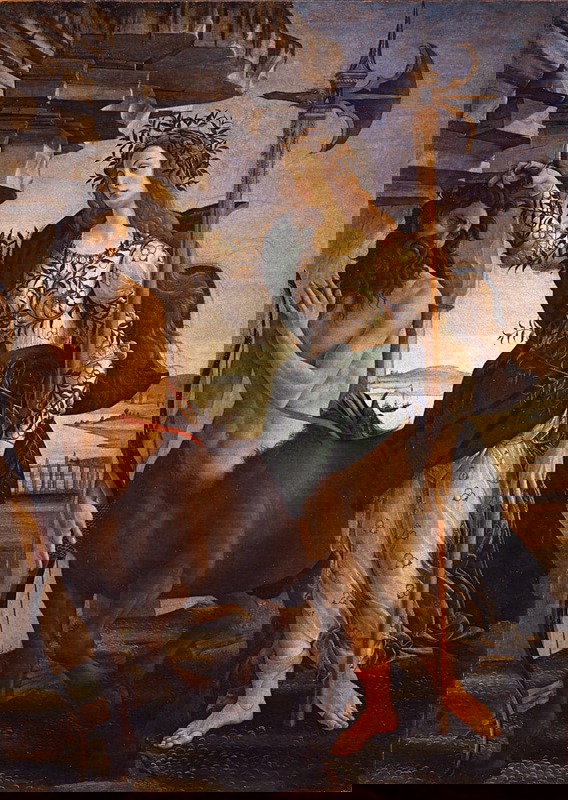
The centaurs in Greek Mythology were said to reside in Thessaly, and more specifically in the forests of Mount Pelion.
The Thessalians were famous riders and horse breeders, probably resulting in their close connection to the idea of creatures that were half-man and half-horse. According to the legend, the Thessalians were the first in Greece to ride horses. If this is true, then it would be plausible that someone unused to the sight of a horse rider believed that this was, in fact, one creature. Something similar happened when the Aztecs, who had never seen a horse before, saw Conquistadores riding for the first time.
Even though Thessaly was the centaurs’ home, ancient authors wrote about centaurs who lived in the Western Peloponnese. There, according to a story, they picked a fight with Heracles, who managed to repulse them with his bow and arrow. Other centaurs were also said to have resided in Crete and Cyprus.
3. They Could Not Handle Wine, Resulting in a Wedding Brawl
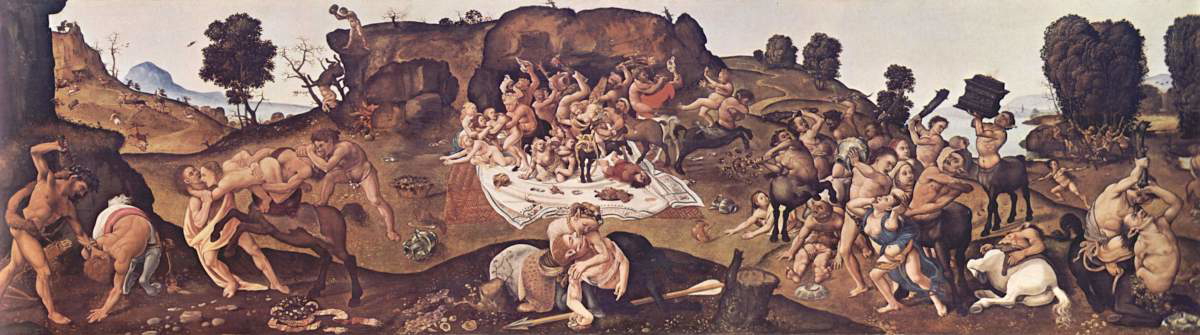
The most famous story involving centaurs in Greek Mythology is the famous Centauromachy, the battle between Centaurs and the Lapiths.
According to this story, Peirithous, the king of the Lapiths, invited the centaurs to his marriage with Hippodameia. The centaurs were known savages, but Peirithous invited them on the grounds of their common ancestry, as Lapiths, since the centaurs descended from Ixion.
Everything was going great, and the centaurs appeared to be behaving, but then wine began being served. At that point, one of the centaurs named Eurytion got drunk almost instantly and attempted to run away with the bride. The other centaurs, suddenly in a drunken frenzy, also attempted to force themselves on the female guests.
The Lapiths drew their swords and spears to oppose the centaurs. The legendary hero Theseus, who also happened to be invited to the wedding, played a major part in the battle, helping the Lapiths win and successfully repulse the centaurs who were thus driven from Thessaly.
4. The Parthenon Frieze Featured a Centauromachy
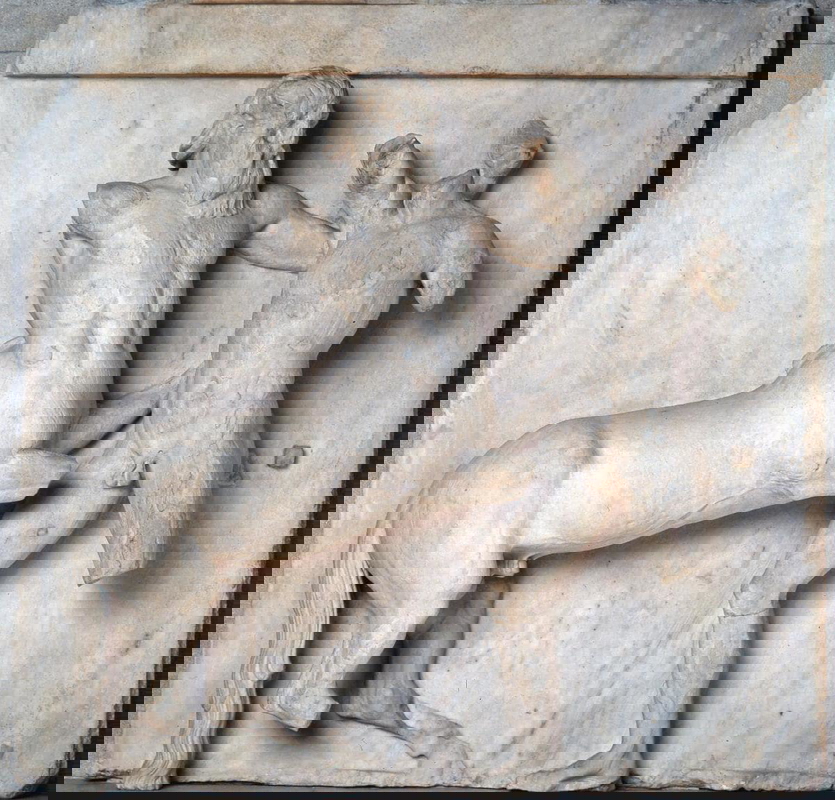
The most famous depiction of a centauromachy is the sculptured decoration on one of the Parthenon’s metopes.
The frieze features a series of scenes from the battle between the Lapiths and the centaurs in striking poses. Many have tried to explain why the Athenians of the 5th century chose to depict this theme on the south metopes of the Parthenon frieze.
A straightforward answer is that the story is part of Theseus’ legend, as the hero who founded Athens took part in the centauromachy. However, scholars have seen further layers of meaning in these depictions. A common and widely accepted explanation is that the centauromachy symbolized the struggle of the city of Athens against the Persians. For the Greeks, the Persians were barbarians who lacked impulse control. They were drawn to excess and savagery, just like the centaurs. Furthermore, the Persians sacked Athens in 480 BC, showing disrespect towards the city the same way that the centaurs had disrespected the wedding of Peirithous and Hippodameia.
5. Their Existence Was Debated In Antiquity
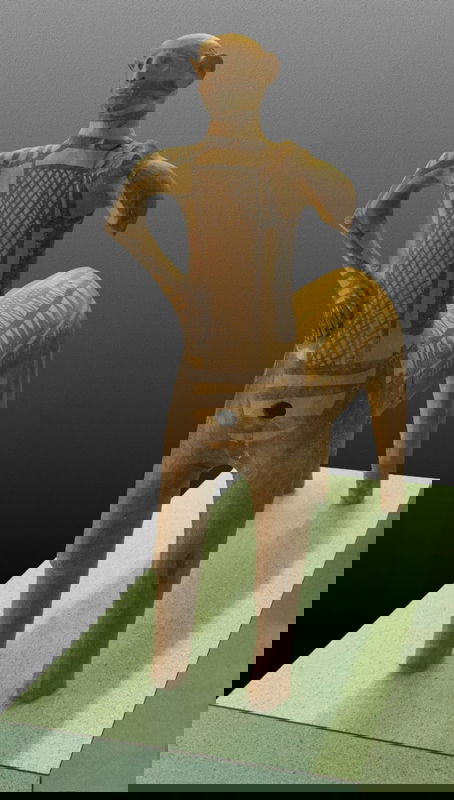
Lucretius, the first-century Epicurean philosopher, wrote a poem arguing against the existence of centaurs.
But Centaurs ne’er have been, nor can there be
Creatures of twofold stock and double frame,
Compact of members alien in kind,
Yet formed with equal function, equal force […](Lucretius, De Rera Nature 5.878)
His main argument was that it would be paradoxical for a half-man and half-horse creature to exist. Why? Because humans and horses reach their prime at a different age. Horses reach their prime at the age of three, but humans are still infants at that age. That also means that when the horse part of the centaur is getting old and closer to dying, the human part is just beginning its journey in life. As such, Lucretius concludes that:
So never deem, percase,
That from a man and from the seed of horse,
The beast of draft, can Centaurs be composed
The interesting part of Lucretius’ poem is that it attempts to approach the issue from a scientific point of view using logical arguments to disprove the existence of a mythological creature.
6. Centaurs Had Families
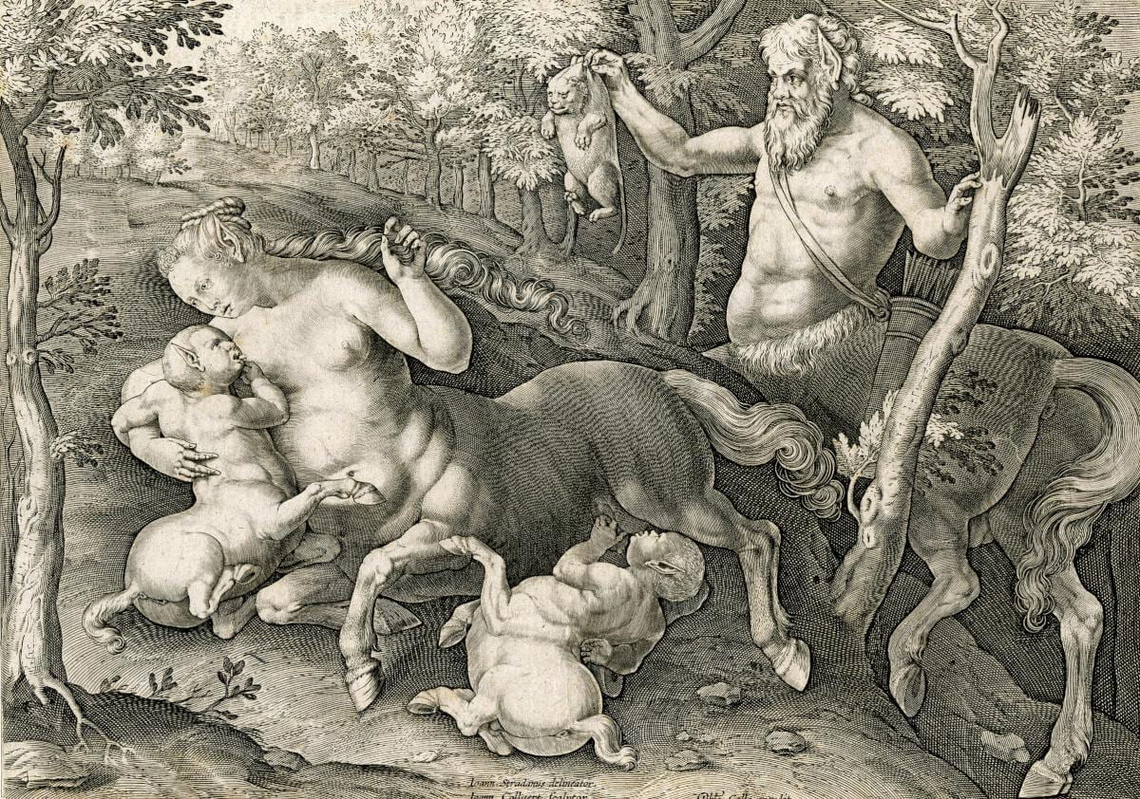
The Greek painter Zeuxis was famous for his life-like paintings. However, one of his most famous works was not praised for its technique but its theme. That painting was called the Hippocentaur, and it depicted a family of centaurs. This theme was so novel that everyone stood in awe, impressed by this depiction that did not present the centaurs as mere savages but humanized them for the first time.
The Roman writer Lucian provided a detailed description of the painting. In the center stood a female centaur nursing a pair of infant centaurs, and in the background, a male centaur. The father held a lion in his right hand to terrify his children as a joke. This centaur family with a compassionate mother, playful children, and a caring father was a radically new conceptualization for the time. Following Zeuxis, women centaurs, called Centauridai, became commonplace in Greco-Roman art.
7. Chiron Was A Special Centaur
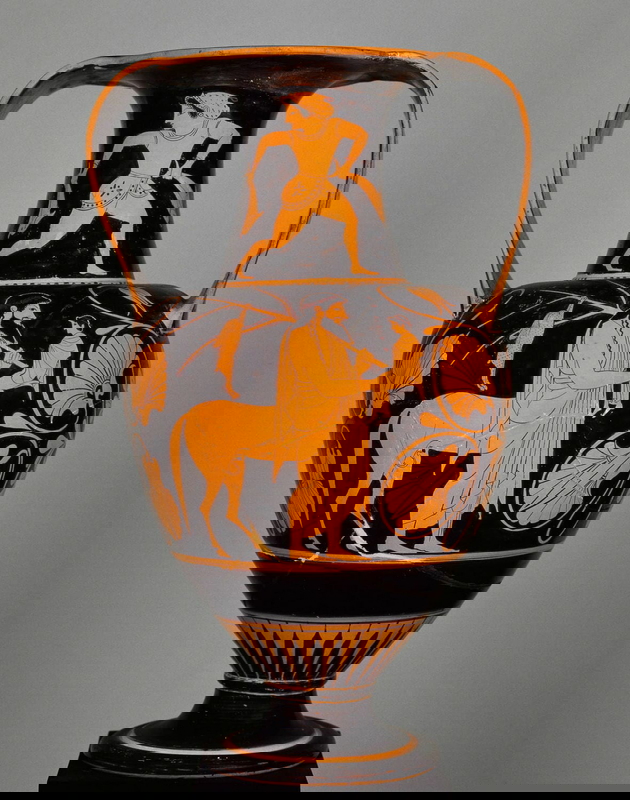
While the centaurs descended from Ixion and Nephele, Chiron was an exception. He was the son of the Titan Cronus. He transformed into a stallion to hide an affair with the nymph Philyra from his wife, Rhea. Horrified by the hybrid child she birthed, Philyra abandoned Chiron at birth. Apollo and Artemis took him in, teaching him music, medicine, archery, and prophecy.
Chiron was not just another Centaur. Aside from being blessed with the gift of immortality, he was an astronomer, doctor, prophet, and one of the wisest figures in Greek Mythology. His knowledge was incomparable, and he was not afraid to share it, as he was also a famous teacher of great heroes. The most notable included Jason, Achilles, Castor and Pollux, Theseus, Actaeon, and many more. Asclepius, the Greek God of medicine, was also one of Chiron’s students, learning what he knew about medicine from the centaur.
Chiron represented an ambivalent tendency in Greek Mythology. On the one hand, the Greeks portrayed the centaurs as savage brutes closer to animals than humans. On the other hand, they imagined one of the centaurs, Chiron, as the exact opposite; a divine being of wisdom beyond measure.
It has been suggested that in Greek art, Chiron was depicted with human front legs in stark contrast to his fellow centaurs. However, it is equally plausible that the image of the centaurs was not standardized in archaic Greek art, as different mythological traditions depicted them differently. This possibility is further strengthened by the fact that in early Greek art, we also encounter centaurs with wings, as well as Medusa heads. Besides, more than one centaur is presented with human front legs, indicating that Chiron was not the only one to appear in this form.
8. A Centaur Killed Heracles
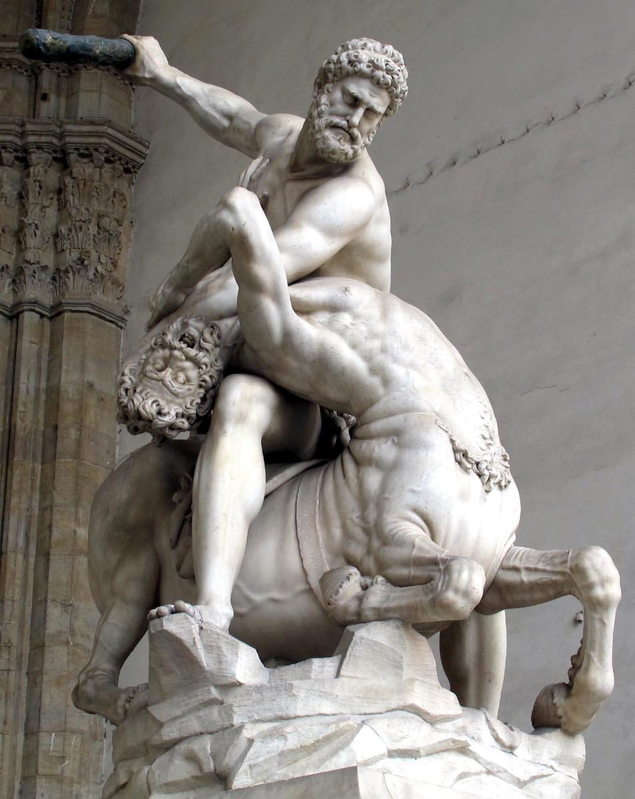
Heracles was the most popular Greek hero and famous for his 12 labors. He had a few encounters with centaurs.
During one of his travels, Heracles passed by Laconia and the cave of the centaur Pholus. Pholus invited Heracles to his cave and, as a hospitable host, decided to open a cask of wine. The odor of the drink was so strong that a group of centaurs smelled it. The centaurs attacked the cave in a mad frenzy.
Heracles defended himself and shot arrows, killing many of the attackers. During the battle, Heracles killed his friend and, according to some traditions, a teacher, Chiron, with one of his arrows by mistake. While Chiron was immortal and could not die, the wound left him in excruciating pain. Zeus took pity on him. He allowed Chiron to exchange his immortality for the freedom of Prometheus, and then transformed him into the constellation of Centaurus, thus making him immortal. Pholus also got injured and died.
This was not the only encounter Heracles had with centaurs and certainly not his last. His last one was when a centaur named Nessus attempted to rape his wife Deianira, but Heracles shot the centaur with his arrows that were dipped in the venomous blood of the notorious Lernaea Hydra. In his last moments, Nessus offered his tunic, which was soaked in his blood, to Deianira, telling her that it was a magic gift for “reviving a waning love,” and that Heracles should wear it. Later on, when Deianira became afraid that Heracles would leave her for another woman, she gave him Nessus’ tunic. Unsuspecting, Heracles wore the tunic, which began burning his flesh. As he tried to tear it off, it pulled his skin, exposing his bones.
In unendurable pain, Heracles built a pyre on Mount Oeta and climbed atop it. When his companion Philoctetes agreed to light the wood, Heracles gifted him his legendary bow and poison-tipped arrows in gratitude. As the flames burned away the mortal flesh inherited from his human mother, Zeus struck the pyre with lightning. Heracles’ divine half ascended directly to Mount Olympus, where he achieved true immortality, reconciled with Hera, and married Hebe, the goddess of youth.
9. Modern Scholars Are Reimagining The Centaurs Of Greek Mythology
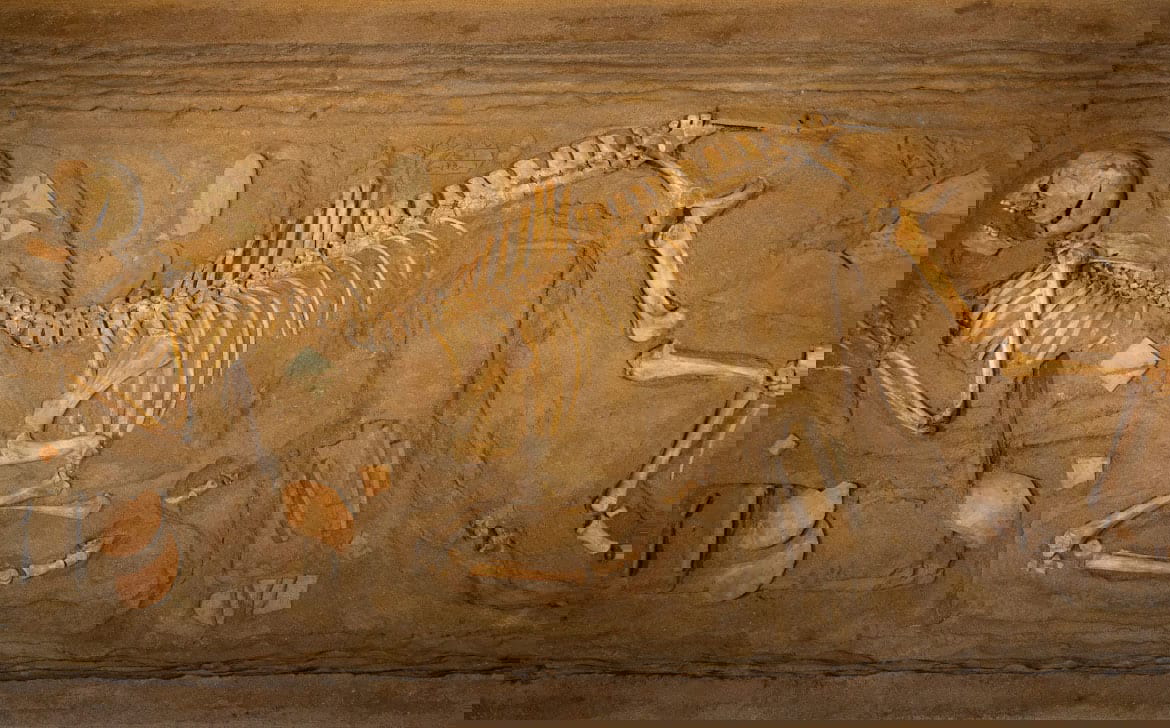
While few people believe in centaurs today, a few recent entertaining experiments have tried to reimagine what a centaur would look like in real life.
If you ever visit the Jack E. Reese Galleria in the Hodges Library of the University of Tennessee, you will face a truly confusing exhibit called The Centaur Excavation at Volos. The exhibit is nothing but the body of a centaur. Of course, this is no real centaur, but “an elegantly constructed showcase, complete with a faux marble base and simulated wood panels…along with various inscribed clay tablets.” The exhibit uses the conventions of scholarship to make the centaurs of Greek mythology come to life, presenting something fictional as authentic. As for the skeleton, it was made “from the tea-stained bones of a pony and a deteriorating human skeleton.”
But what is this experiment seeking to accomplish? According to the university:
“a valuable object lesson on the importance of skepticism. Many students are conditioned to believe the word of authorities, whether they be academic, political, scientific or religious. This work of academic parody functions as a conscious form of self-critique, deconstructing the authority of the library itself.”
Another exciting experiment belongs to Dr. H.C. Reinhard V. Putz, a researcher at the Ludwig Maximilian University of Munich. Putz published a paper called Anatomy of the Centaur in the Annals of Improbable Research. The paper used mythological mentions and images from ancient art to reconstruct the anatomy of centaurs as if they were real. The paper found that a centaur would have two hearts, two digestive systems, and double respiratory and urinary apparatuses.