
Many wonders of ancient Egyptian civilization remain standing after more than three millennia. They tell the story of a sophisticated civilization that captures the modern imagination. The Nile Valley’s monumental architecture attracts millions of international tourists each year. From temples to tombs, if you visit Egypt today, these 15 ancient monuments should be on your must-see list!
1. The Great Pyramids of Giza
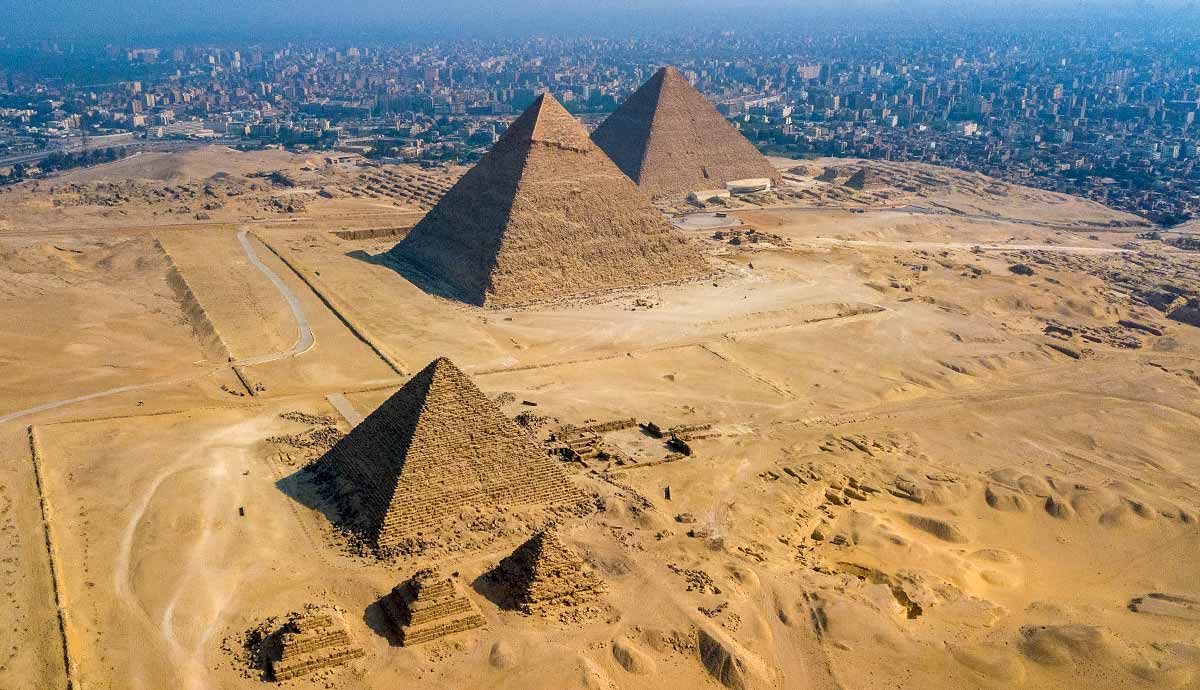
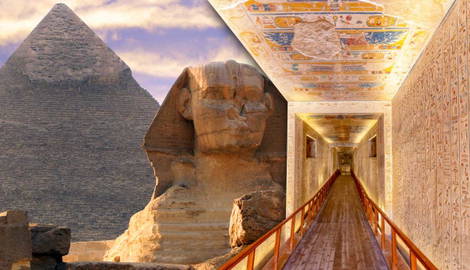
The Great Pyramid of Giza rises from the desert to astound visiting travelers. The Great Pyramid is the largest of the three pyramids on the Giza plateau, constructed by Khufu (known as Cheops by the Greeks) in c. 2566 BC during the 4th Dynasty. The 139-meter-tall pyramid took over twenty years to complete. An estimated 100,000 skilled craftsmen were employed, and the project used more than 2.3 million stone blocks. It was counted among the Seven Wonders of the World, and is the only one still standing.
The second Pyramid was built by Khufu’s son Khafre and stands 136 meters tall. It looks to be the largest of the three but was built at a higher elevation. The third and smallest pyramid (65 meters) was constructed by Menkaure and completed around 2510 BC. All were built as funerary monuments for the pharaohs, and were believed to transport them into the afterlife to live among the gods.
2. The Great Sphinx, Giza
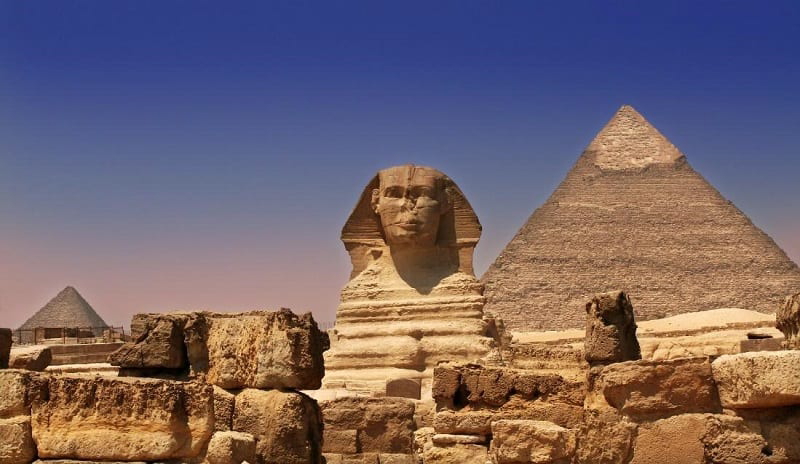
The Great Sphinx at Giza is Ancient Egypt’s most unique monument. It is speculated that the 4th Dynasty Pharaoh Khafre built the mythical creature from a massive rock by adding his face and giving it the body of a lion, as the Sphinx lies close to his valley temple complex and the causeway leading to his Pyramid. Facing the sun, it was meant to ward off evil spirits and protect the pyramids.
It was rumored that Napoleon‘s soldiers blew off the Sphinx’s nose with their muskets. It is more likely that it was removed by Muslims in the late 1300’s who defaced the stone to stop local farmers from giving offerings to the statue.
3. Abu Simbel
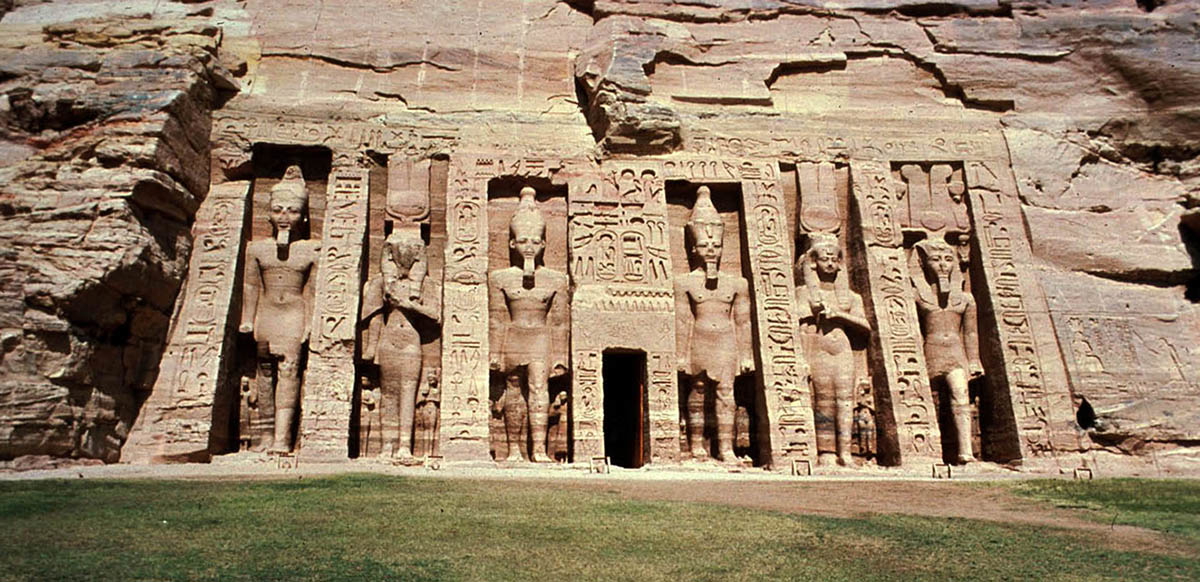
The mighty Abu Simbel temple was carved directly into rock by Ramesses the Great at the peak of the 19th Dynasty in the 13th century BC as a reminder to Ancient Egypt’s Nubian territory that he was to be worshipped as a living god.
Four 20-meter-tall Colossal statues of Rameses II dominate the small entrance to the Great Temple. Inside, hieroglyphs describe his victory at the Battle of Kadesh. The Great Temple is dedicated to Rameses alongside the gods Ra-Harakhty, Amun Ra, and Ptah. The Small Temple is dedicated to his wife Queen Nefertari and the goddess Hathor. The facade features six standing 10-meter-tall statues, four of Ramesses and two of Nefertari.
The construction of the Aswan Dam in the 1960s created Lake Nasser, which threatened to submerge both temples. Therefore, between 1964 and 1968, a massive international UNESCO effort moved the temples 200 meters back and 65 meters higher up the mountain, and reassembled them inside two massive artificial concrete domes to recreate their original cliff setting.
4. The Colossi of Memnon
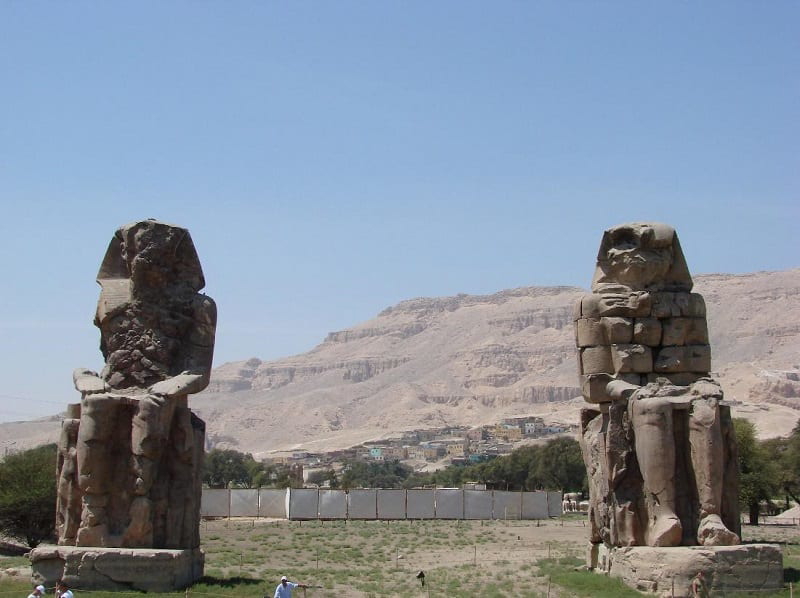
The Colossi of Memnon are two 20-meter-tall representations of pharaoh Amenhotep III, called Memnon by the Greeks in honor of the hero of the Trojan War. Built around 1350 BC, the sitting statues were part of his lost mortuary temple in the Theban Necropolis on the east bank of the Nile at Luxor. Over the past few decades, excavations of the grounds behind the statues have uncovered dozens of previously buried royal statues, lion-headed figures of the goddess Sekhmet, and additional fallen colossi.
The statues were carved from single blocks of quartzite sandstone quarried near modern-day Cairo and transported over 400 miles overland to Luxor, rather than floated down the Nile. The Colossi’s stones have been restored numerous times over the centuries, including by Roman Emperor Septimius Severus.
5. The Valley of The Kings
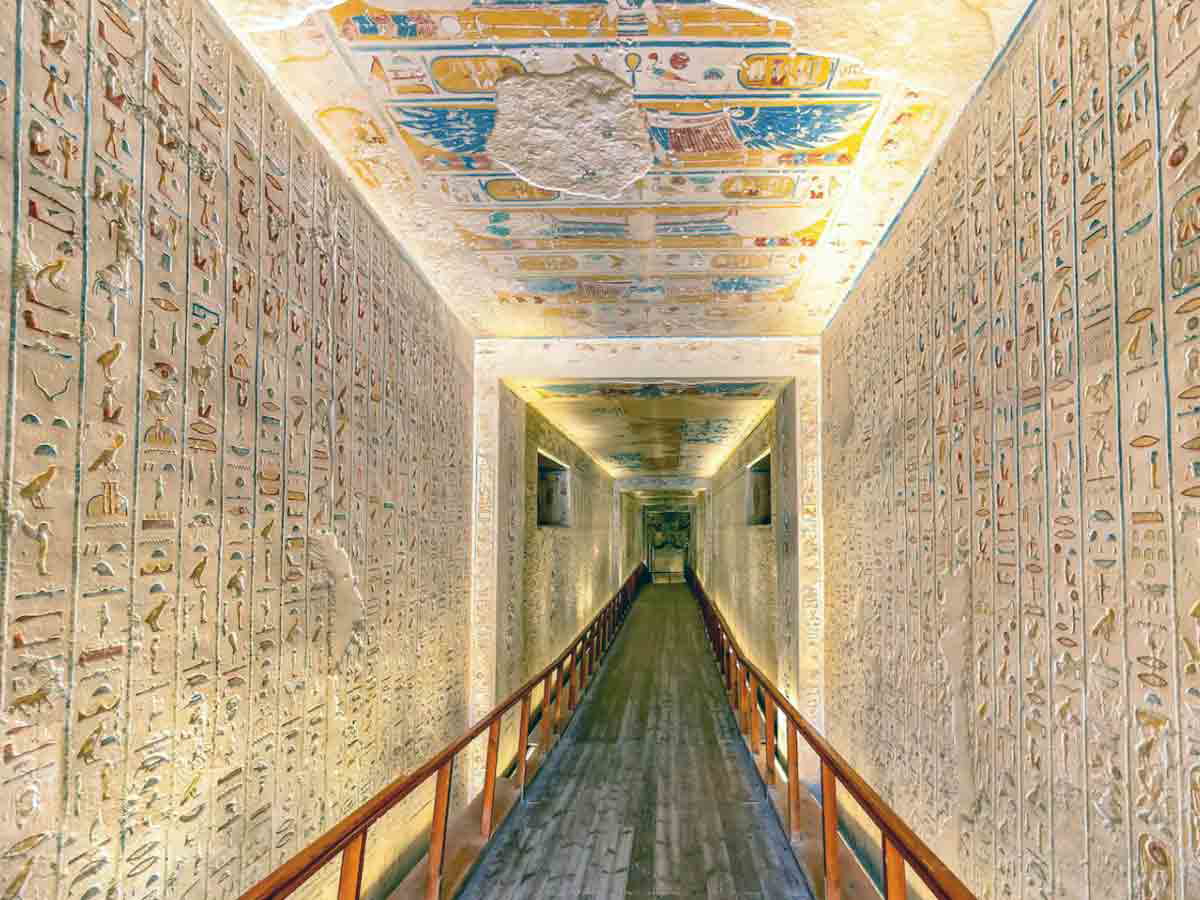
The Valley of the Kings lies on the Nile’s west bank near Luxor and is the cemetery for the pharaohs of Ancient Egypt’s New Kingdom (1539 – 1075 BC). Many different tombs of the elite from this period have been discovered in the desert valley, ranging in size from single coffins to elaborate underground tombs housing entire families on their journey to the afterlife.
The most famous tomb from the Valley of the Kings is that of the boy King Tutankhamun, found intact by British archeologist Howard Carter in 1922. Later pharaohs such as Horemheb and Ramesses II (both buried close by) tried to have Tutankhamun removed from Egypt’s histories, which meant robbers and adventurers were unable to disturb his tomb for almost 3,500 years.
6. Temple of Edfu
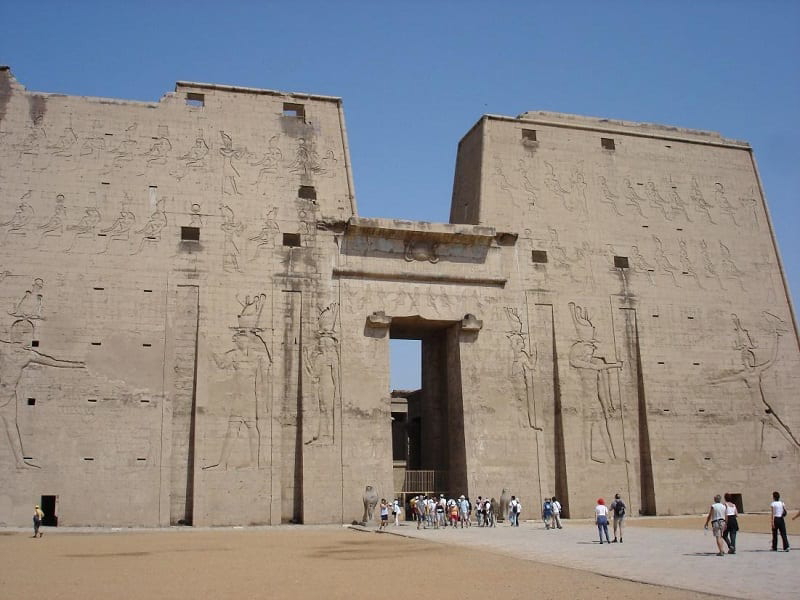
The Temple of Edfu was built during the Ptolemaic Kingdom, the period from the death of Alexander the Great to Cleopatra, after whose death Egypt became part of the Roman Empire. Edfu is dedicated to Horus, the god of kings and the sky, and his consort Hathor.
Edfu fell into disuse as a temple during the latter stages of the 4th century AD due to the rise of Christianity and the outlawing of pagan worship at the end of that century. The hypostyle hall was badly burnt by arson, and many reliefs were defaced. Edfu was eventually built over by villagers and nearly buried. By the late 18th century, when European explorers first documented the area, the temple was almost entirely subterranean. Only the very tops of the 36-meter-tall entrance pylons peeped out above the village floor. Excavations began in the 1860s.
7. The Step Pyramid of Djoser
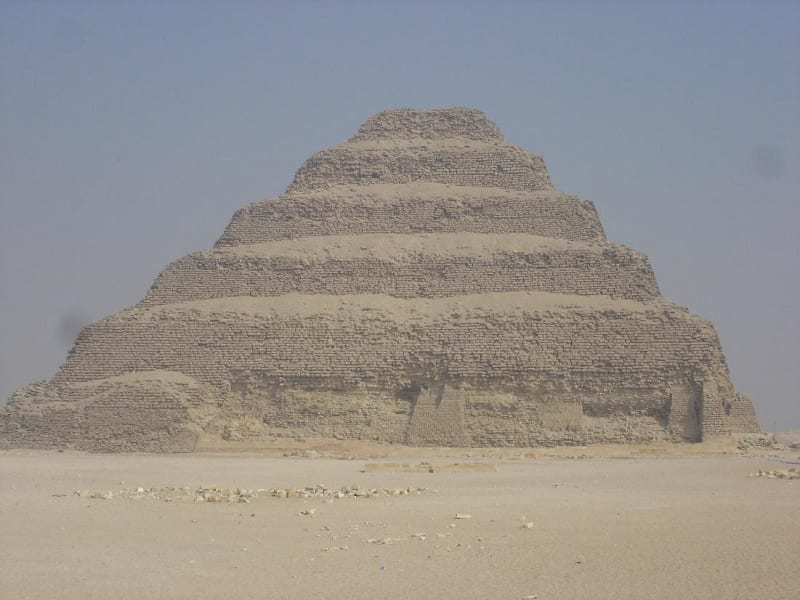
The Step Pyramid of Djoser at Saqqara was the very first pyramid built by the Ancient Egyptians. Standing nearly 62 meters tall, it was the earliest large monument built with stone, an architectural feat different in scope from the mud-brick construction of earlier mastaba royal tombs.
The Step Pyramid was originally a mastaba tomb, an underground burial chamber with ground-level rooms above to store gifts and offerings to the pharaoh. Djoser’s Royal Architect Imhotep built on the mastaba to make the Step Pyramid look like a giant staircase, so the spirit of his king could get closer to the sun during his journey in the afterlife.
8. Luxor Temple
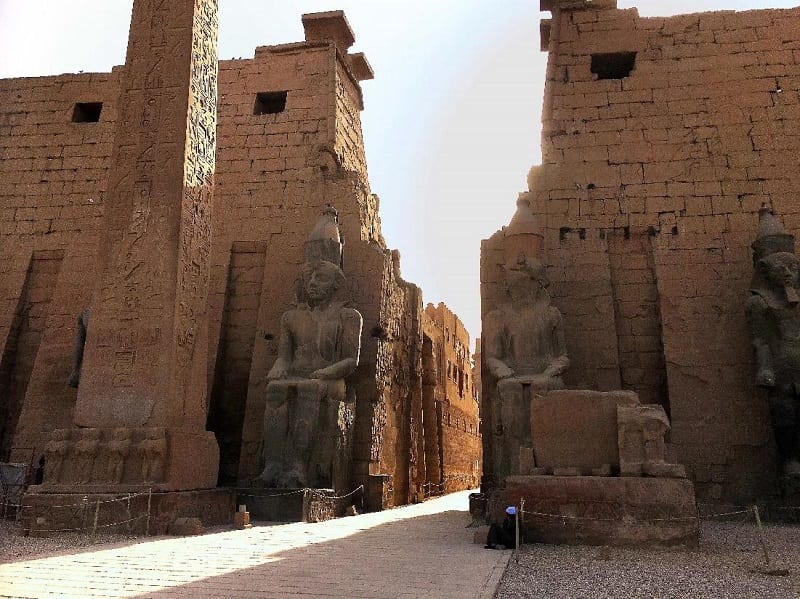
The Luxor Temple was built around 1400 BC and was used by New Kingdom pharaohs to celebrate the Opet festival, during which the pharaoh was ritually reborn. The core of the sanctuary was built by Amenhotep III. It was later expanded with a monumental pylon and courtyard by Ramesses II, with additional reliefs and chambers added by Tutankhamun, Horemheb, and even Alexander the Great.
Notable monuments within Luxor Temple include the Colonnade of Amenhotep III, the Great Court of Ramesses II, the First Pylon, and the Standing Statue of Ramesses II. Ramesses II also erected two 25-meter red granite obelisks at the main entrance gateway. One still stands in Luxor today, while the other was transferred to France in 1833 and now stands at the center of the Place de la Concorde in Paris.
9. The Bent Pyramid and Red Pyramid of Sneferu
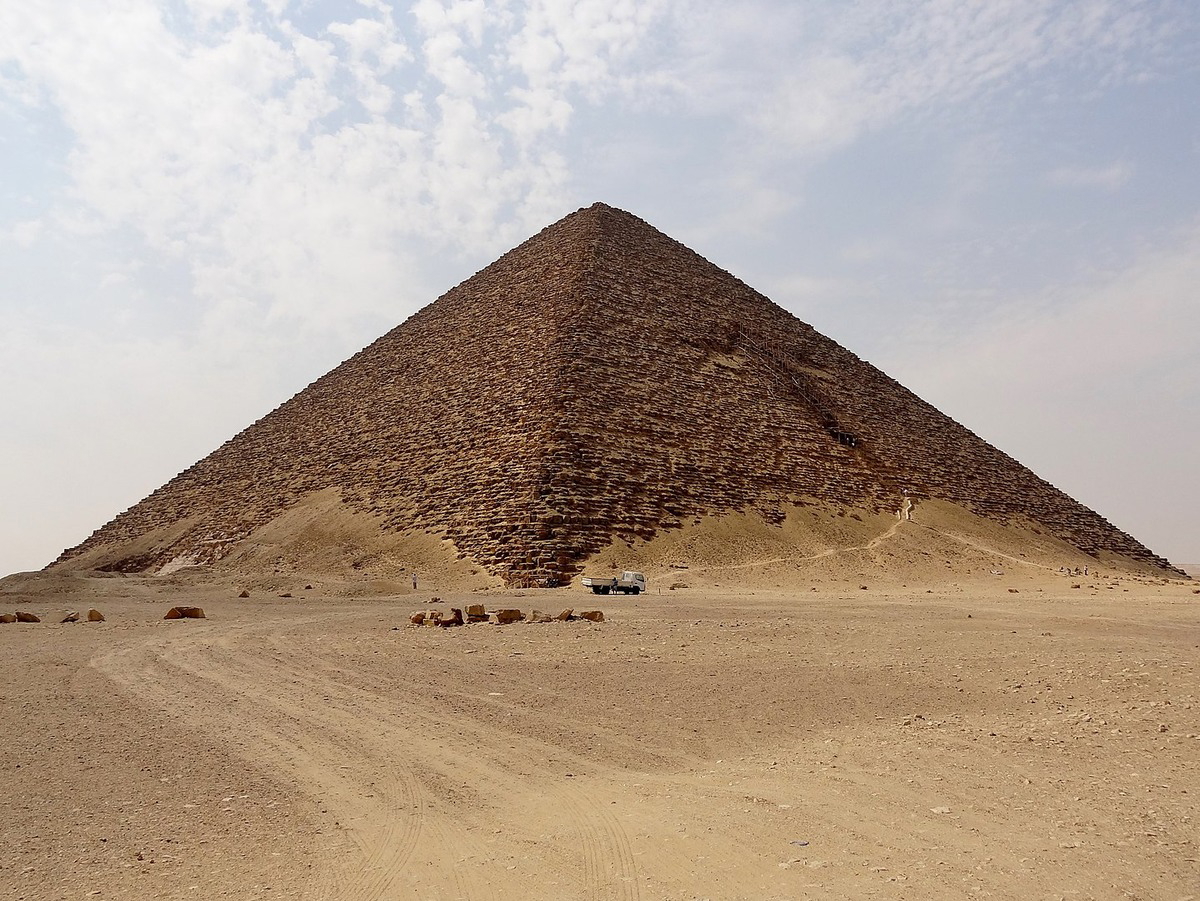
Sneferu was the first pharaoh of Ancient Egypt’s 4th Dynasty and the father of the pyramid builder Khufu. He ruled for approximately 50 years, which allowed him to build three pyramids, two of which are at Dahshur.
The Bent Pyramid got its name because architects realized they were building the pyramid too steeply and had to change the angle. Halfway up the sides, the pyramid changes shape, making it look bent. It was made of large limestone blocks and rendered with better quality smooth limestone that can still be seen on the outer walls.
His second pyramid at Dashur is called Red Pyramid because the limestone’s oxidation gives it a noticeable reddish color. It was originally covered with white limestone, but because the structure was a perfect pyramid, the sides were flat enough for robbers to walk along the surface easily and steal the white stone, leaving only the red behind.
10. The Mortuary Temple of Hatshepsut
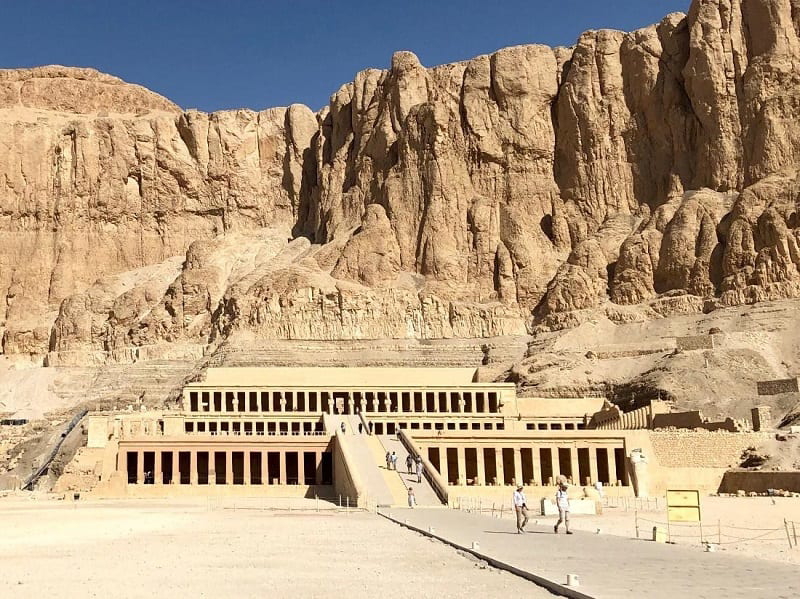
The Mortuary Temple of Hatshepsut was constructed in the 18th Dynasty and can be found close to The Valley of The Kings on the West Bank of the Nile, below the rugged cliff face at Deir el Bahari. The mortuary temple of the female pharaoh Hatshepsut (1479-1458 BC) was designed for her by Royal Architect Senenmut and dedicated to the god Amun.
The temple features three massive, stacked terraces connected by long central ramps. The linear, colonnaded design creates a visual harmony between the built structure and the natural rock face behind it. Wall carvings on the middle terrace detail a historic, peaceful trading voyage to the mysterious Land of Punt. The reliefs vividly depict imported items, including frankincense, gold, ivory, exotic animals, and living myrrh trees.
11. Karnak Temple
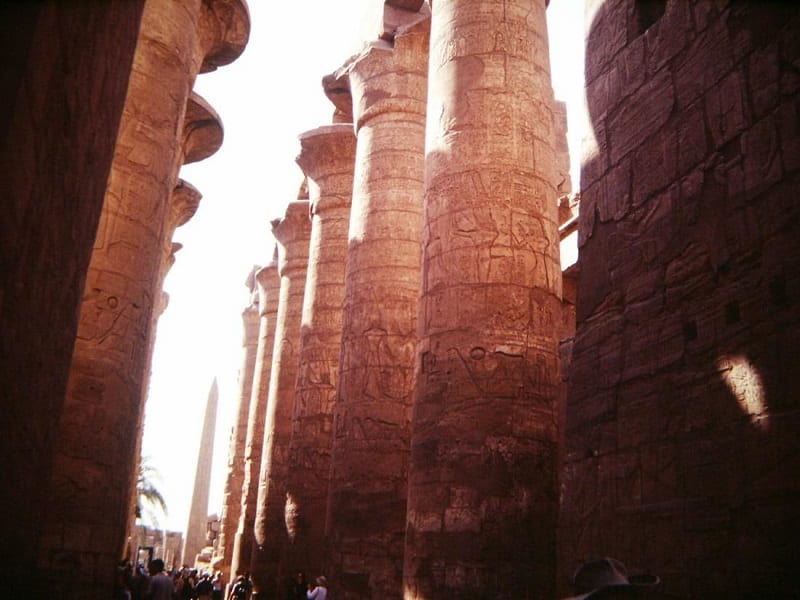
Karnak was the central site of worship for Amun-Ra and is one of the most holy places in Egypt. The complex was a center for festivals in the city of Thebes (now Luxor). Covering over 20 acres, the temple complex was built on, added to, and changed over the more than 2,000 years of continuous use. Rebel king Akhenaten even built a temple to Aten at Karnak; however was torn down.
The heart of the complex features a grid of 134 massive sandstone columns standing up to 21 meters high. The main west entrance features an avenue of ram-headed sphinxes, each cradling a small statue of Ramesses II between its paws.
12. Temple of Philae
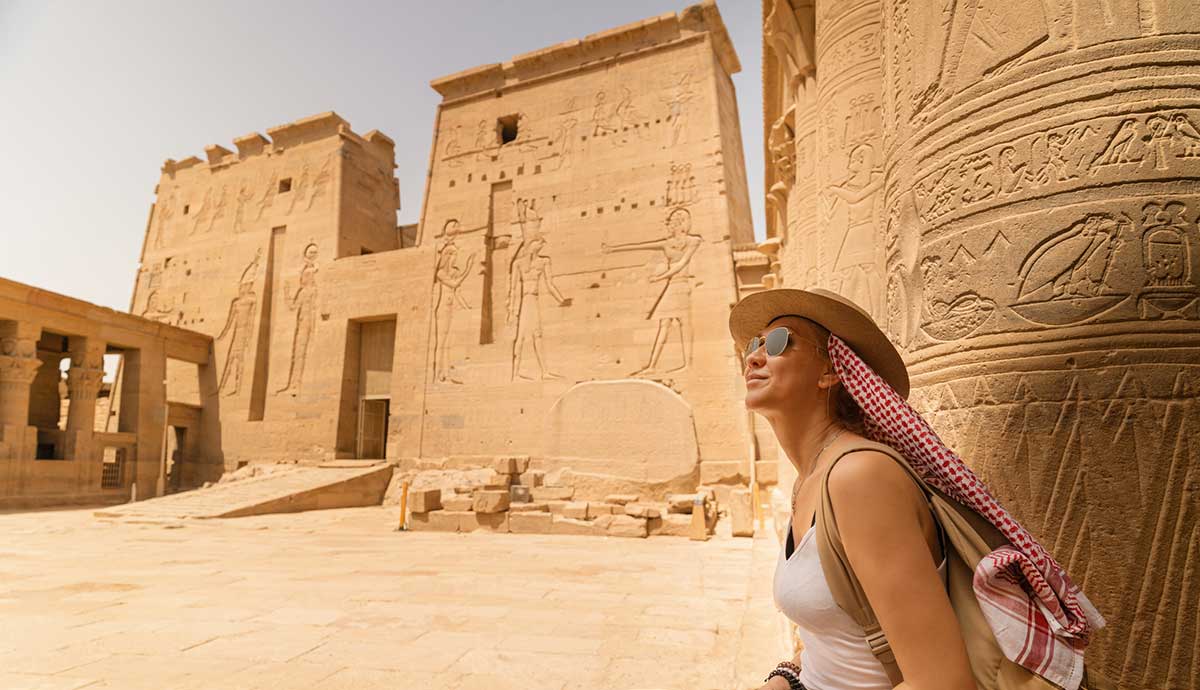
Located on Agilkia Island near Aswan, the Temple of Philae is an island sanctuary dedicated to Isis built during the Ptolemaic and early Roman periods to be the focus of her worship across the Mediterranean. One of its most iconic structures is an open-air pavilion surrounded by 14 massive columns. The main courtyard holds a shrine celebrating the divine birth of Horus by Isis.
Philae was one of the very last active pagan temples in Egypt, remaining open until the Christian Byzantine Emperor Justinian forcibly shut it down around AD 537. The temple walls bear the Graffito of Esmet-Akhom, carved on August 24, AD 394, which is recognized by historians as the last known ancient Egyptian hieroglyphic inscription ever written.
13. Dendara Temple
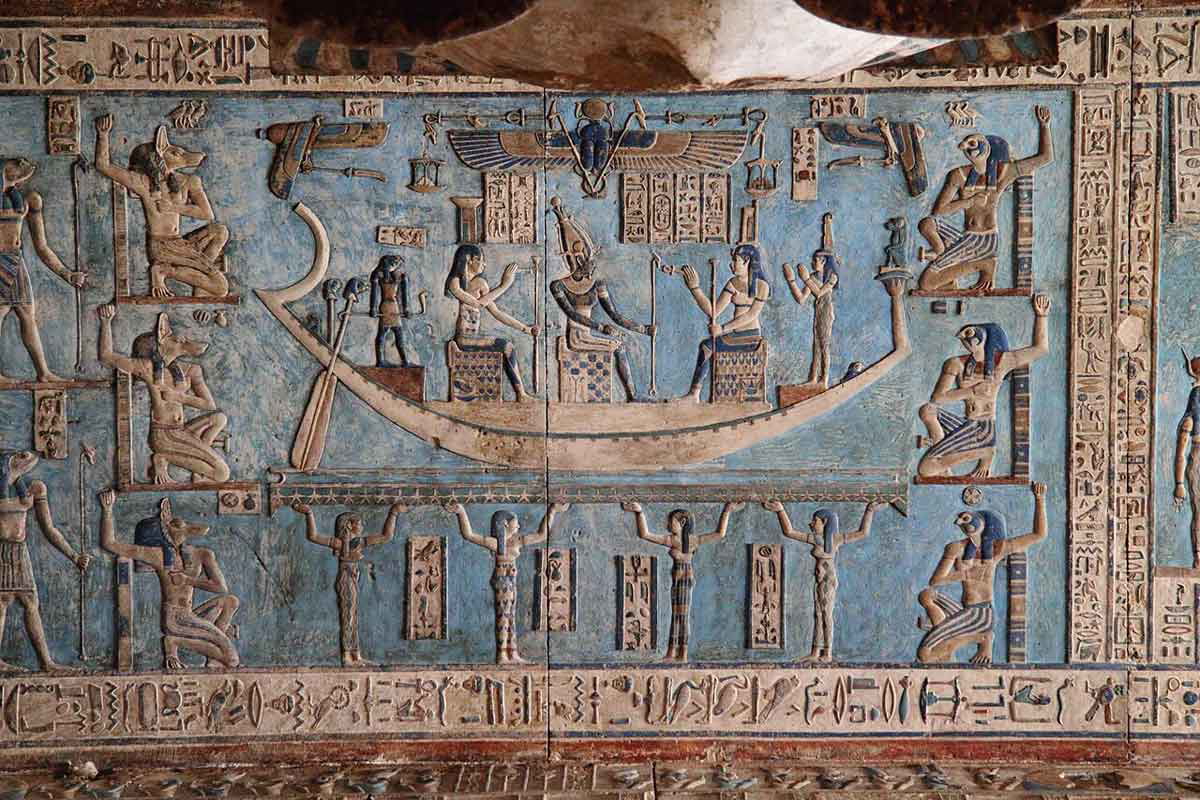
Located on the west bank of the Nile in Qena, the Dendera Temple Complex is one of Egypt’s best-preserved ancient sanctuaries, renowned for its vivid ceiling colors and astronomical reliefs. The main temple honors Hathor and features 24 massive columns topped with four-sided carved capitals depicting Hathor with bovine ears.
Extensive cleaning projects over recent years removed centuries of black soot and grime, revealing stunningly vibrant, original blue and green ceiling frescoes depicting the sky goddess Nut, constellations, and solar barques. The temple was the original home of a famous circular bas-relief sky map carved into a rooftop chapel ceiling. In 1821, French excavators removed the original stone slab and sent it to Paris, where it remains on display in the Louvre.
14. Temple of Kom Ombo
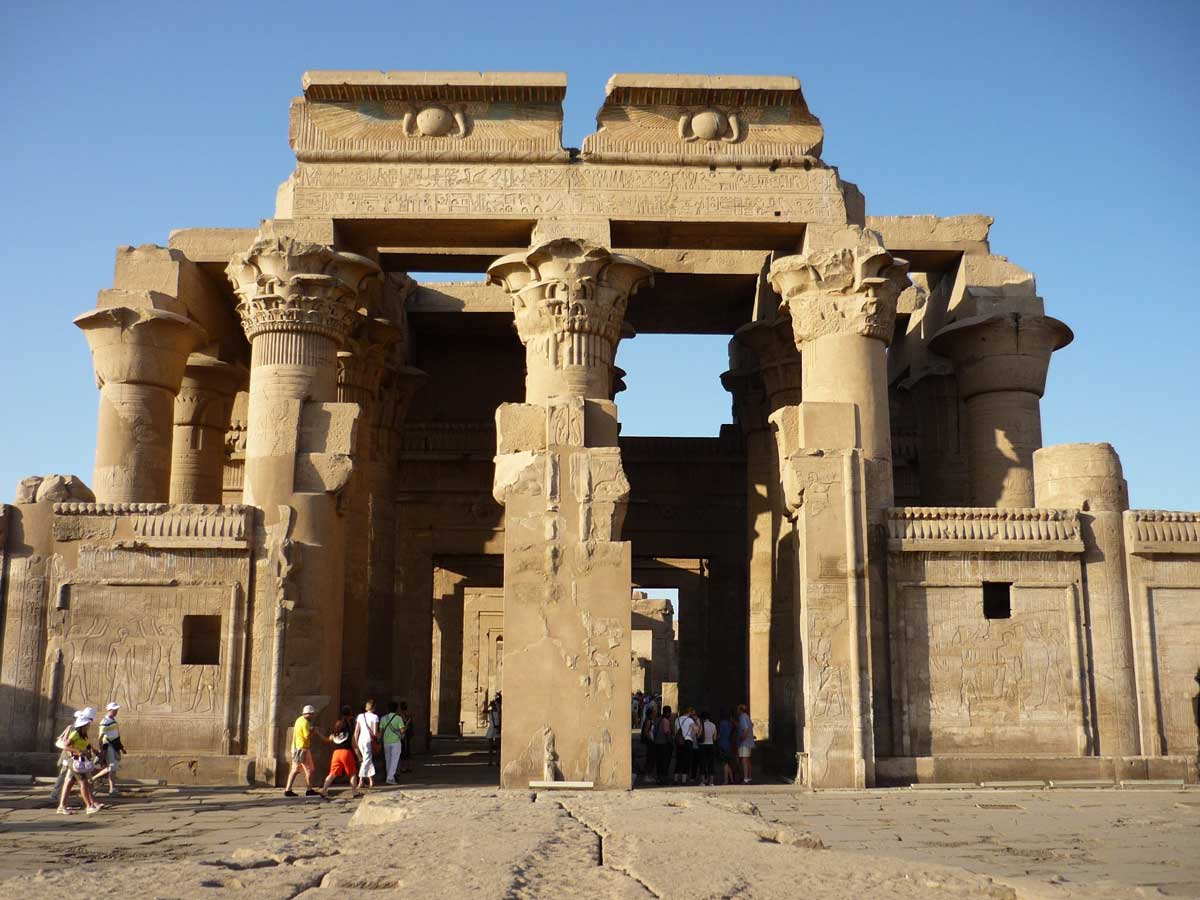
Perched on a high promontory overlooking a bend in the Nile between Edfu and Aswan, the Temple of Kom Ombo is a rare double temple with the southern half dedicated to the crocodile god Sobek and the northern half to the medicine god Haroeris.
Because the riverbanks here were once infested with wild Nile crocodiles, the Egyptians worshipped them as physical manifestations of Sobek. Archaeologists unearthed hundreds of mummified crocodiles nearby. On an outer enclosure wall, a famous bas-relief depicts a set of specialized medical instruments, including scalpels, forceps, bone saws, suction cups, and a birthing chair. Many historians view this as evidence of advanced ancient Egyptian surgical practices or medical pilgrimage rituals.
15. Temple of Seti I
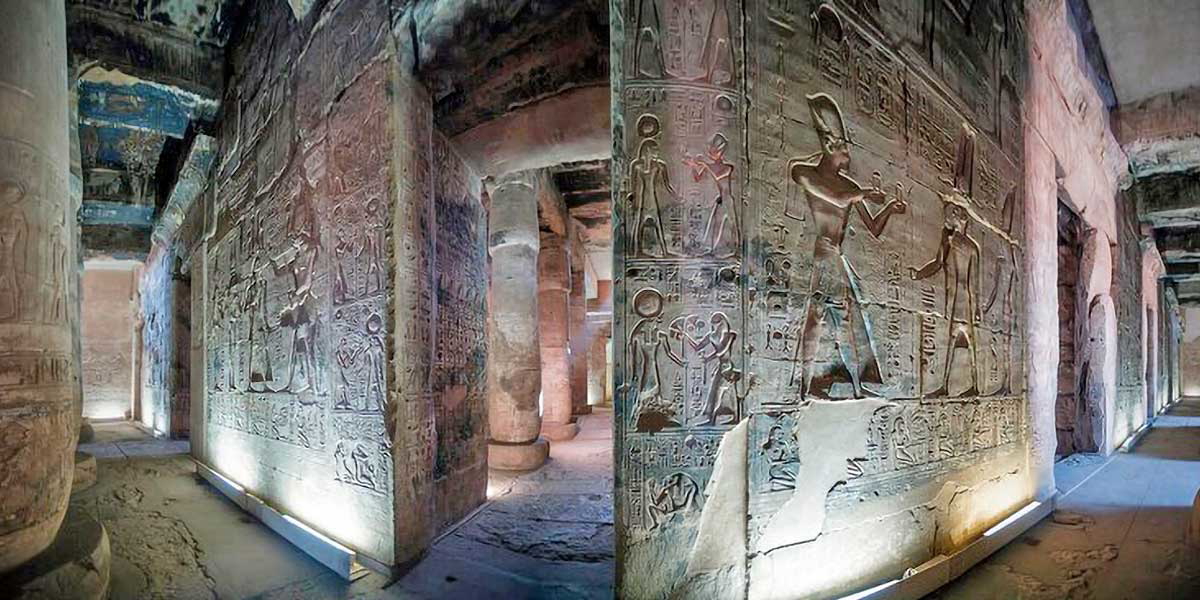
Located at Abydos, one of Egypt’s oldest sacred sites, the Temple of Seti I (c. 1290–1279 BC) is renowned for housing some of the finest, most delicate raised relief carvings in ancient Egyptian art. The temple features several parallel chapels dedicated to Osiris, Isis, Horus, Amun-Ra, Ra-Horakhty, Ptah, and the deified Seti.
The temple also contains the Abydos King List. A long carved corridor features the sequential cartouches of 76 pharaohs from Menes to Seti I, intentionally omitting controversial rulers like Akhenaten, Tutankhamun, and Hatshepsut.